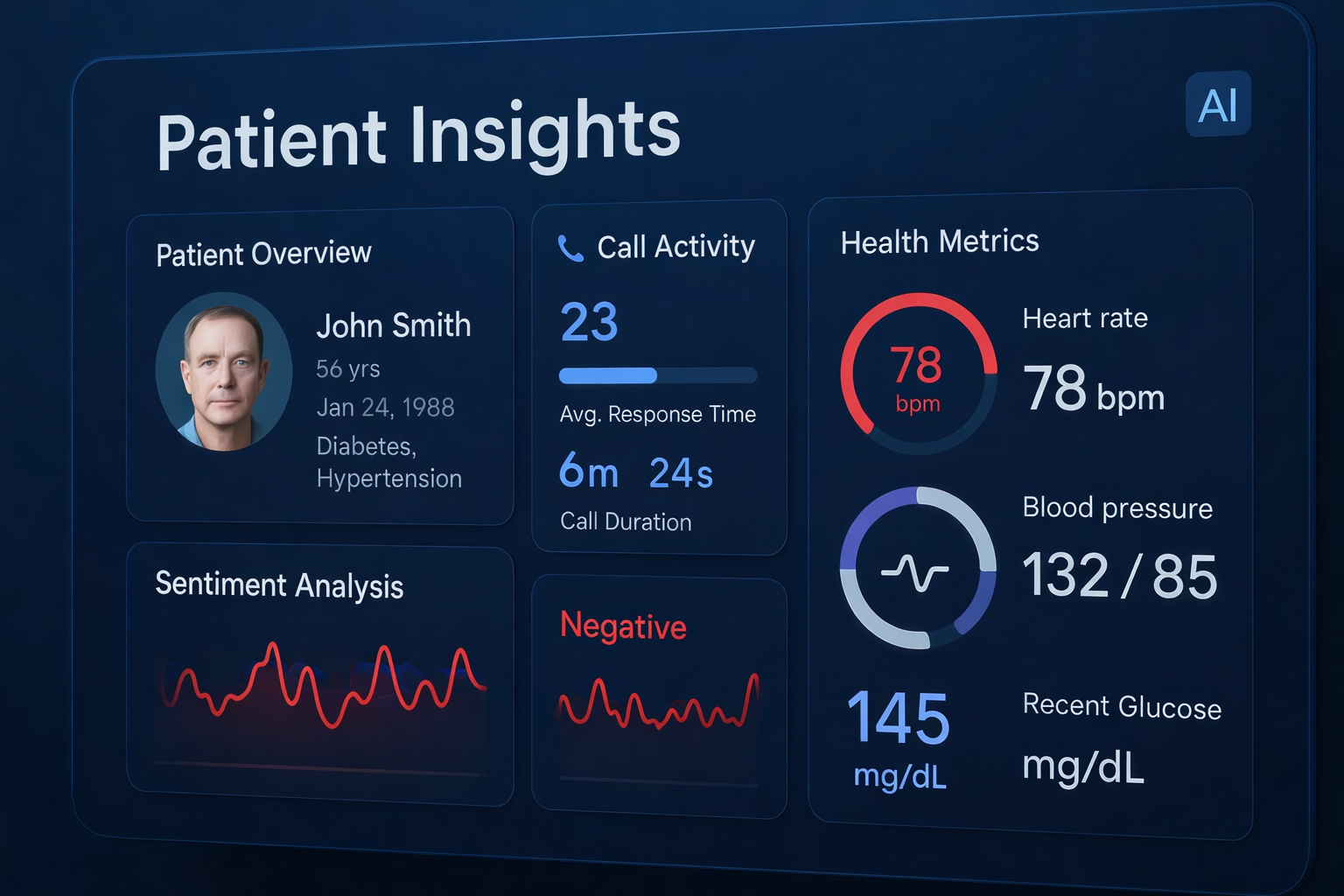
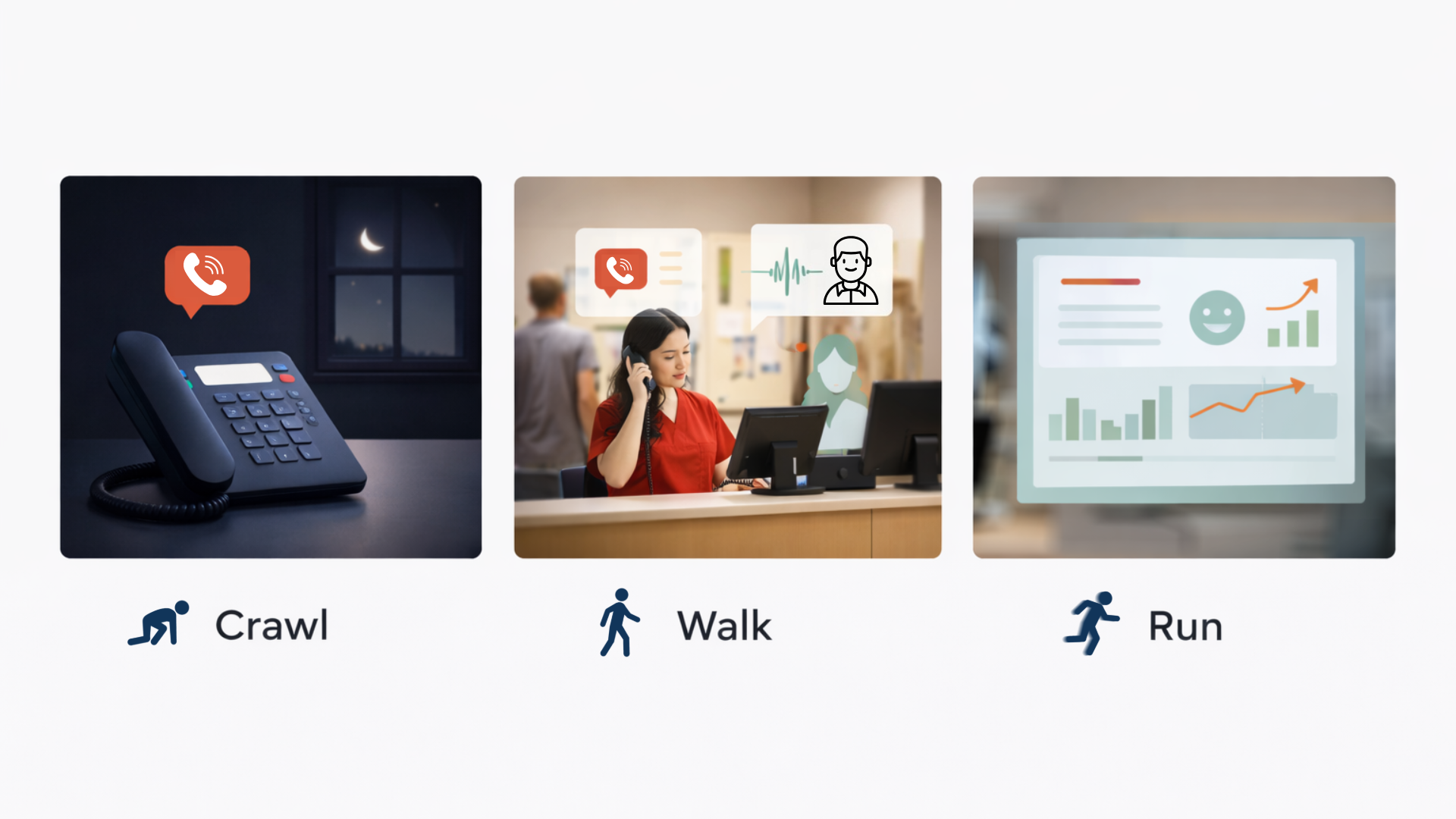
If your phone system already has AI built in, you may not need anything else. But it depends on what you want the AI to do. Built-in tools are good at helping the person on the call. They're less good at telling a manager what's going wrong across hundreds of calls, and getting it fixed.
Phone systems like Dialpad and RingCentral now include AI features as standard or as add-ons, and more providers are adding them every quarter. So it's a fair question, and one we hear often: if the phone system already transcribes and summarizes calls, what's left?
Here's an honest answer, including when built-in AI is all you need.
What does built-in phone system AI usually do?
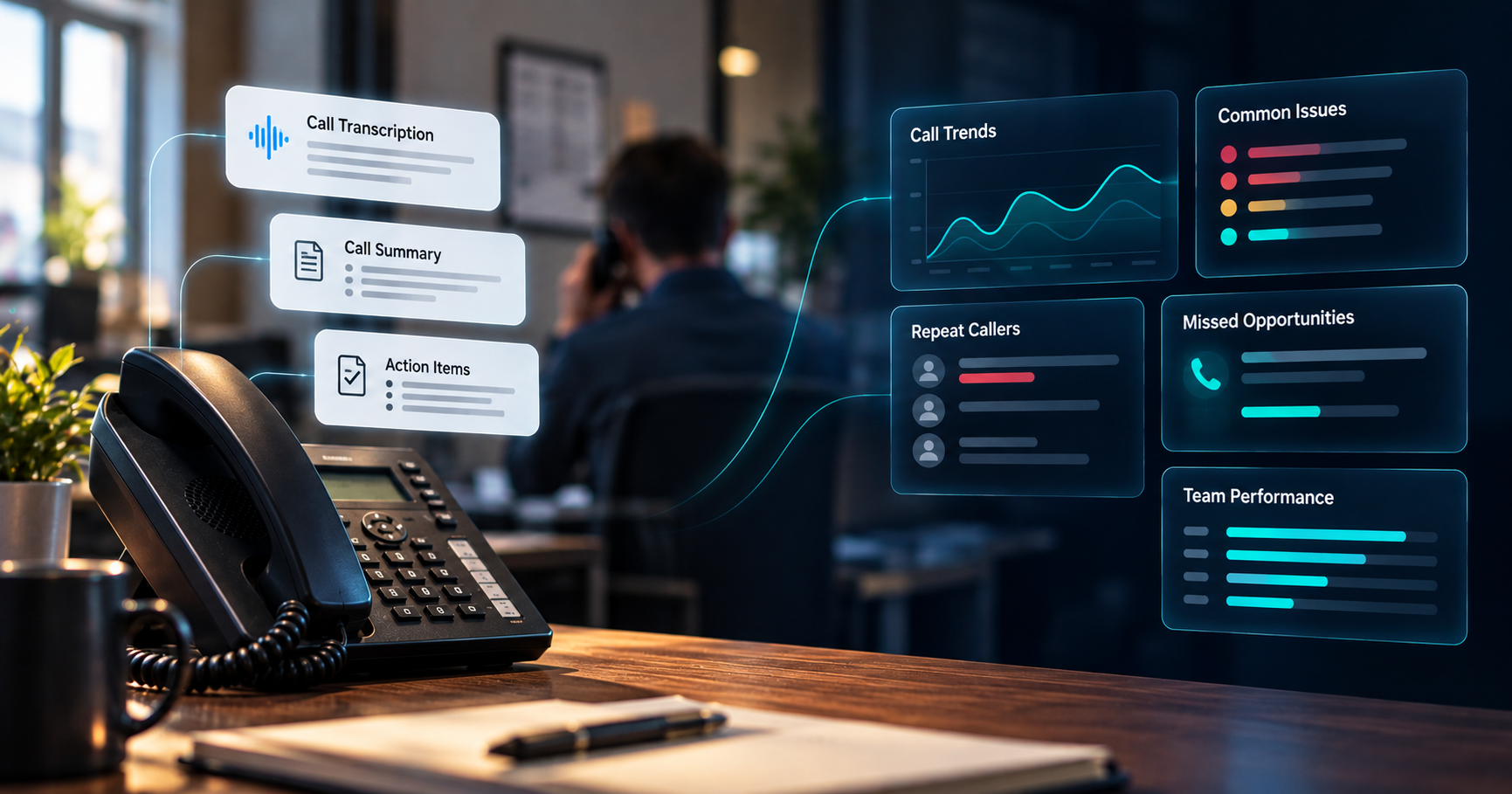
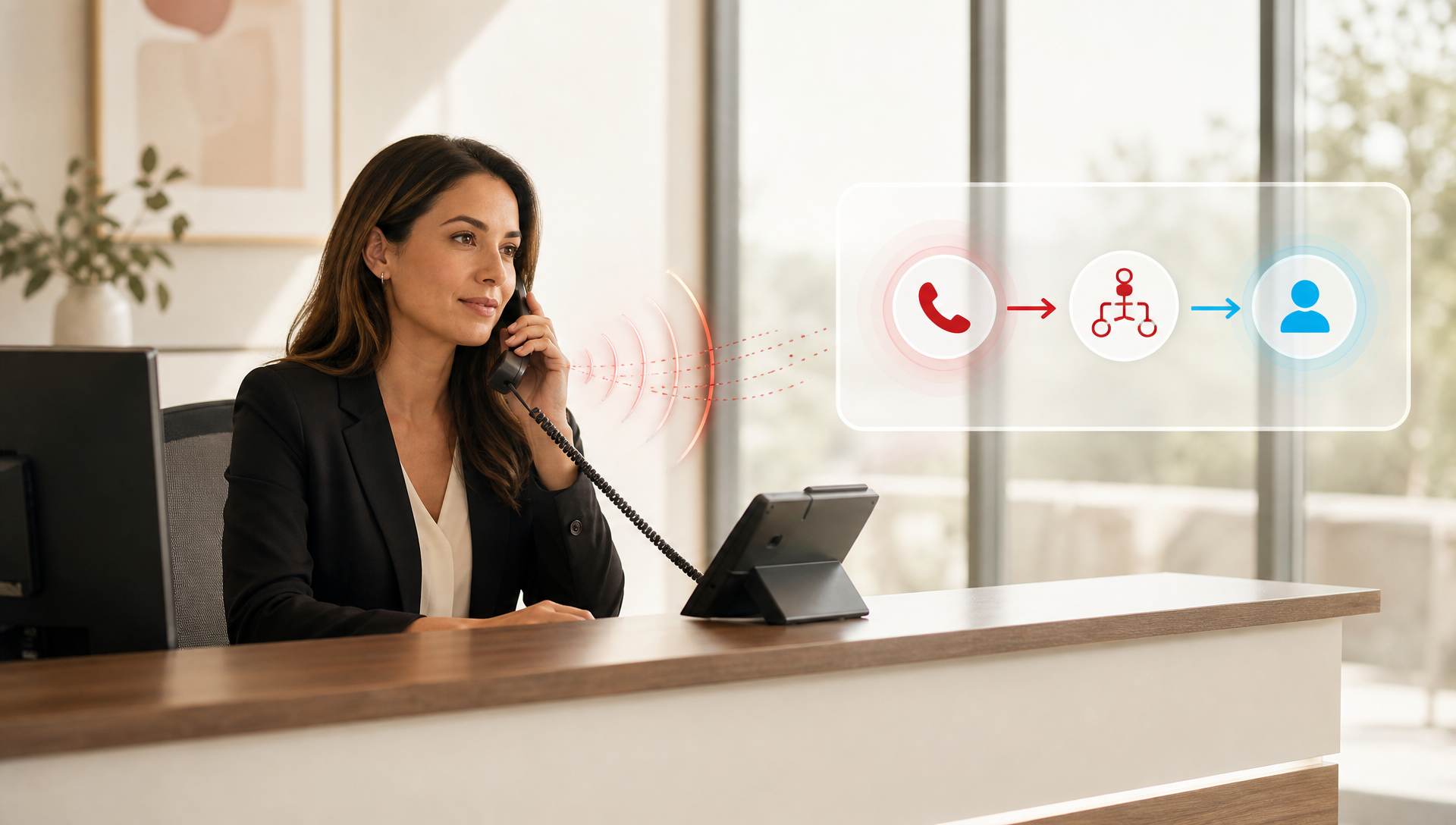
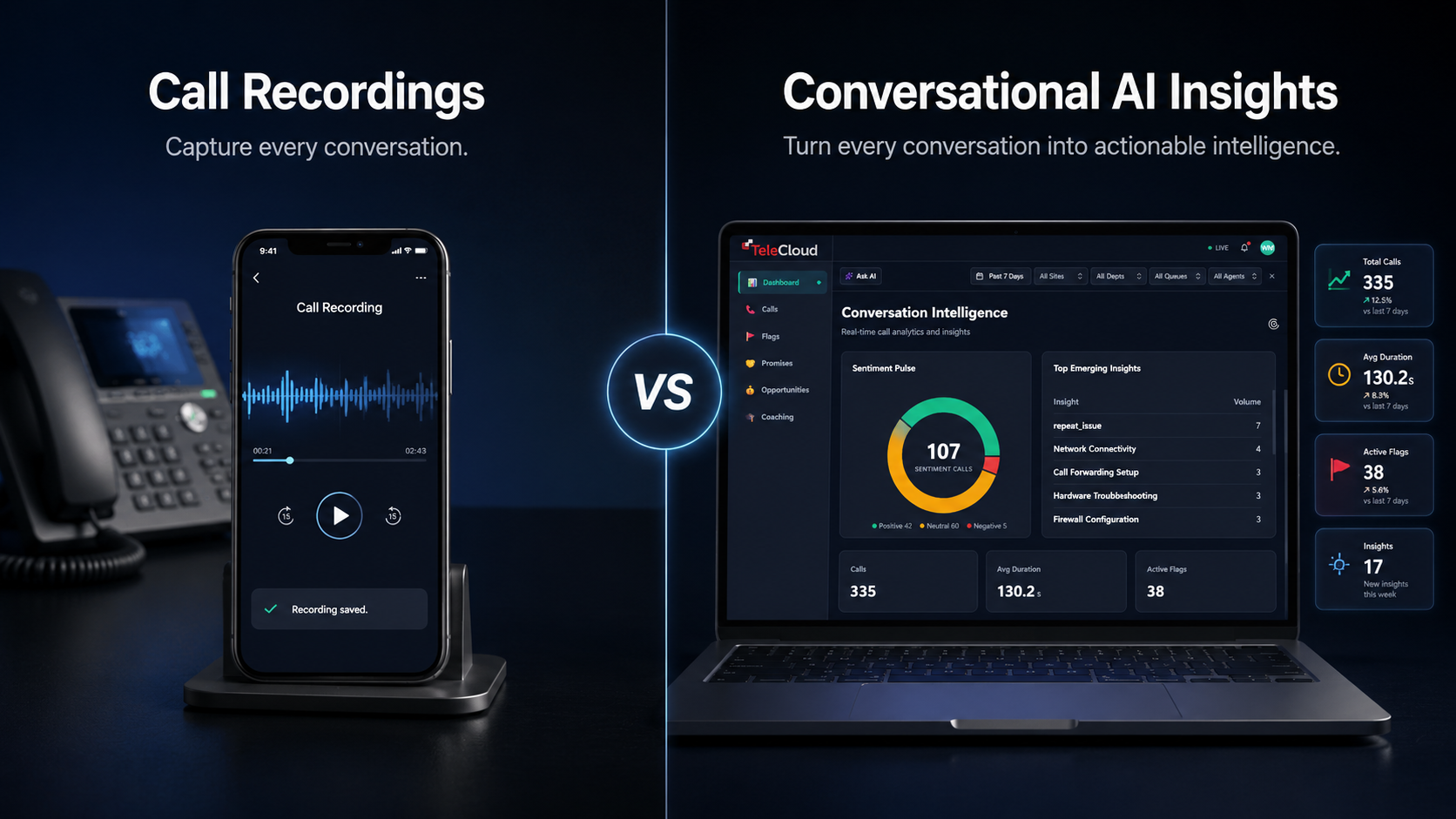
It varies by provider and plan, but most built-in AI centers on the individual call:
- Transcripts of each call, so you can read or search what was said.
- Summaries and action items after the call ends, so the person on it doesn't have to write notes.
- Scorecards that grade calls against criteria you set. These often come with a contact center plan or an add-on rather than the standard phone plan.
Dialpad, for example, includes transcription and post-call recaps with its business phone product, and keeps scorecards and predicted satisfaction scores with its contact center products. RingCentral's phone system has an assistant for call notes and summaries, with transcription and team scorecards available as an add-on. Check your own plan, because what's included changes often.
Where is built-in AI genuinely enough?
If what you want is a better record of each call for the person who took it, built-in AI may be all you need. Notes write themselves, follow-ups get captured, and nobody has to remember what was promised on a call last Tuesday.
That's real value, and if it's what you're after, we'd tell you to use what you have.
Where does it stop?
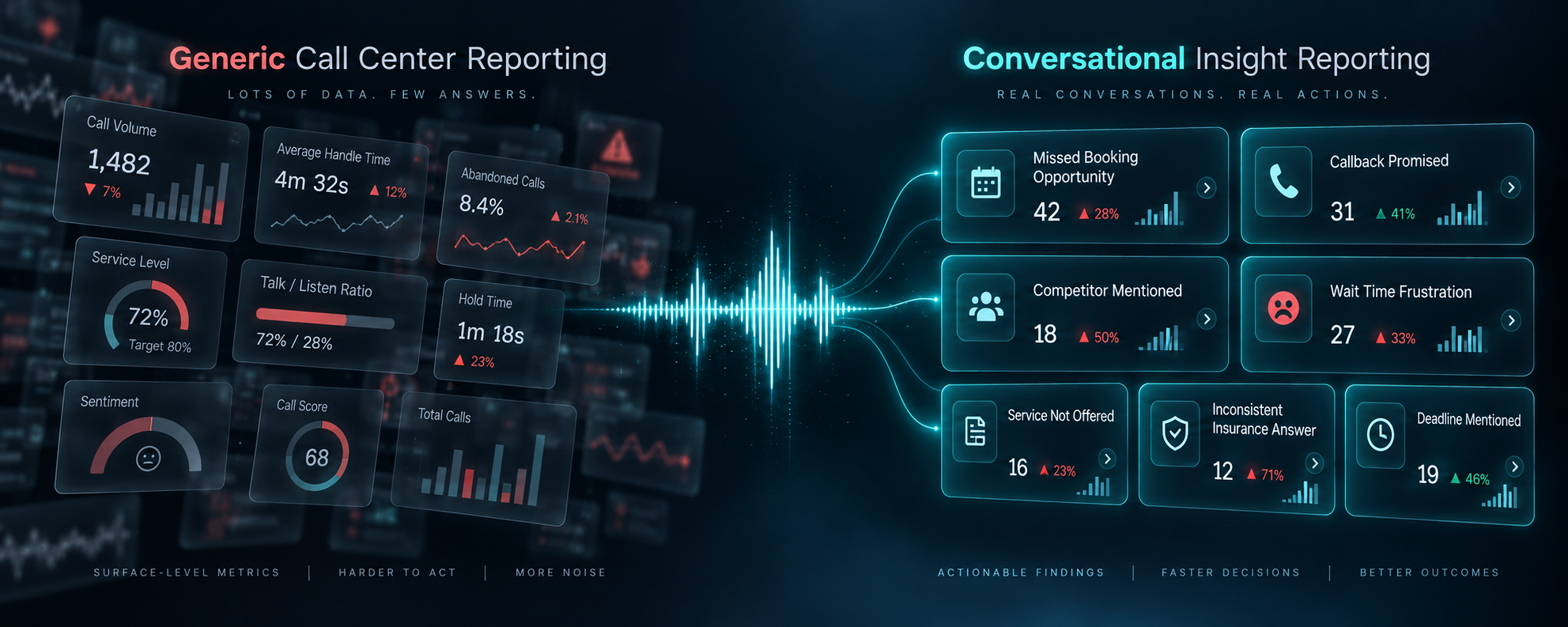
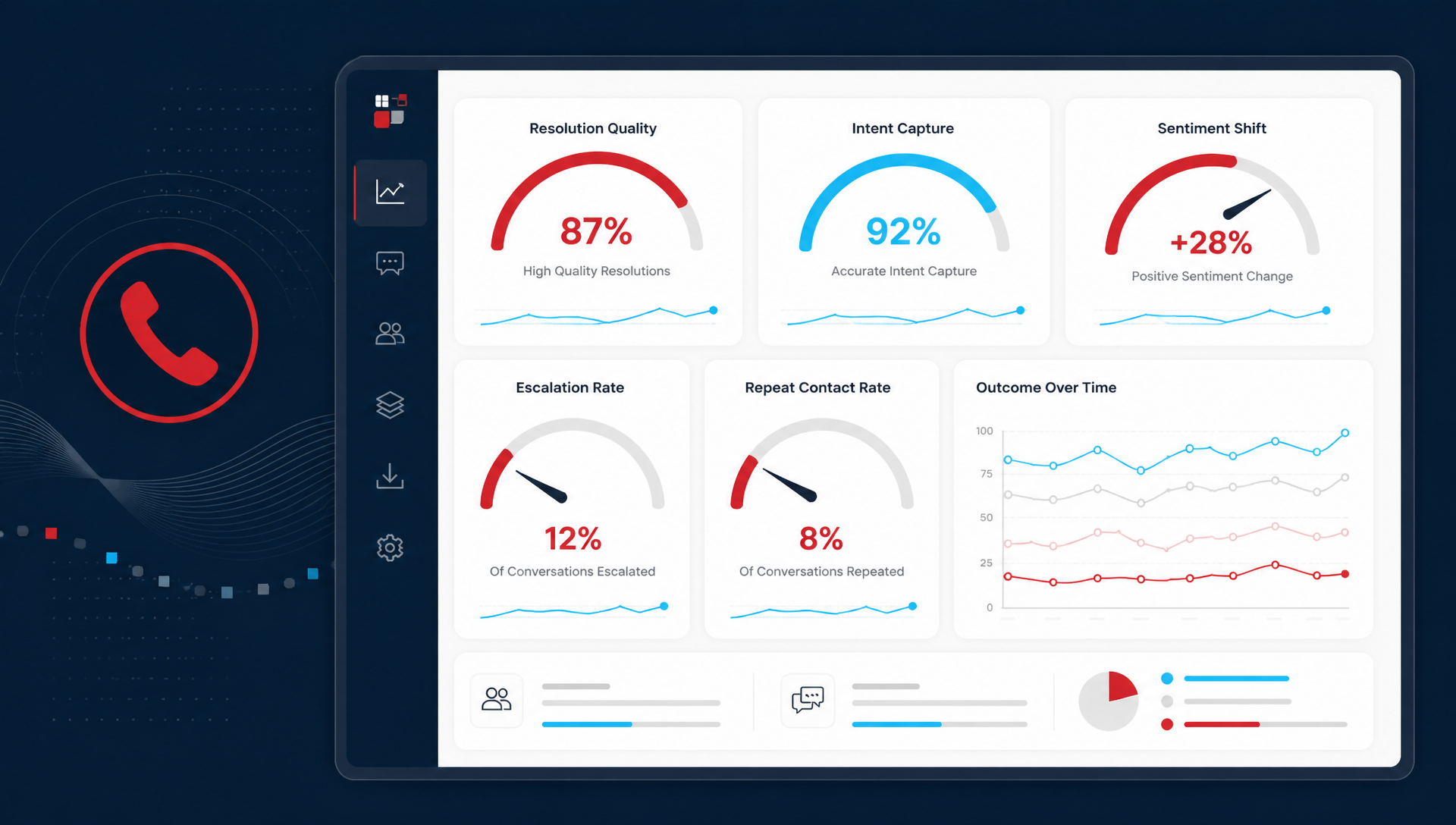
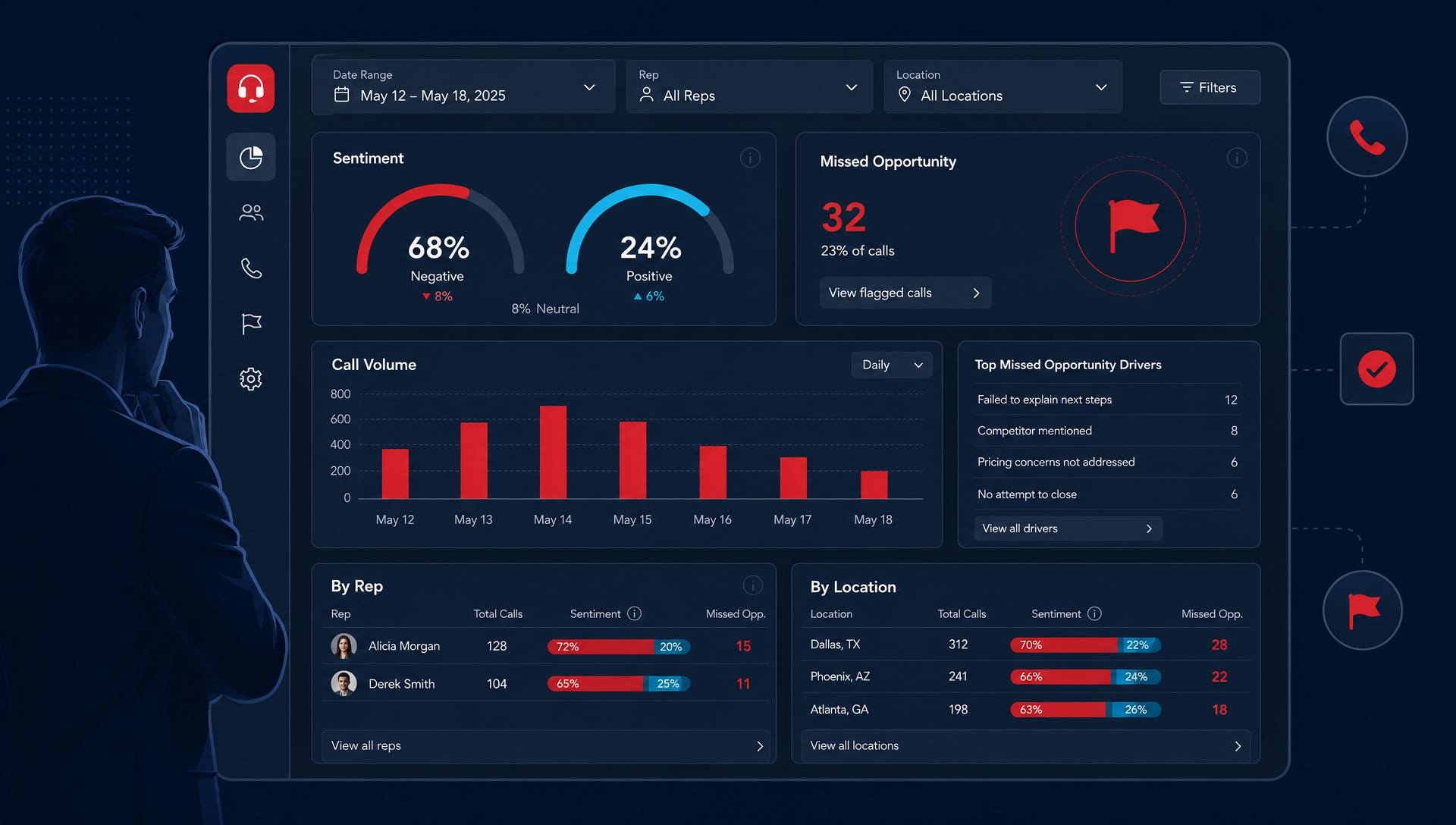
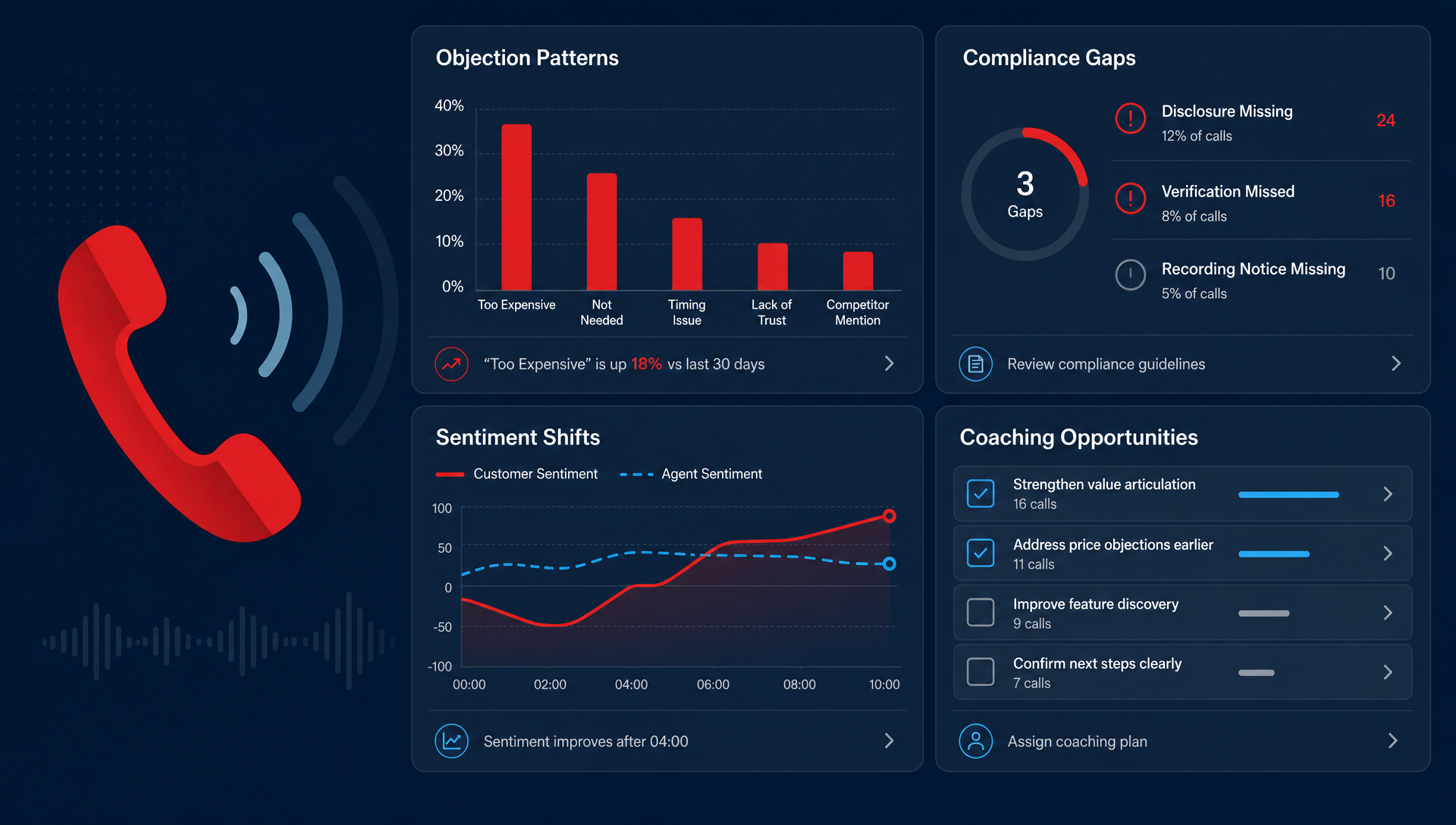
The gap shows up when the question changes from "what happened on this call?" to "what's going wrong across all our calls, and who's going to fix it?"
One call at a time. A summary tells you about the call in front of you. It doesn't tell you that the same customer has called three times this month about the same problem, or that bookings are being asked for and not made on one location's line.
Someone has to set it up and keep it right. Scorecards only grade what you tell them to. Someone has to decide what a good call sounds like for your business, write it in, check whether it's catching the right things and change it when it isn't. In most small businesses, that someone doesn't have the time.
Someone has to go looking. Dashboards wait for you to log in. A finding nobody opens is the same as no finding. There's more on that in why most call insights never reach your team.
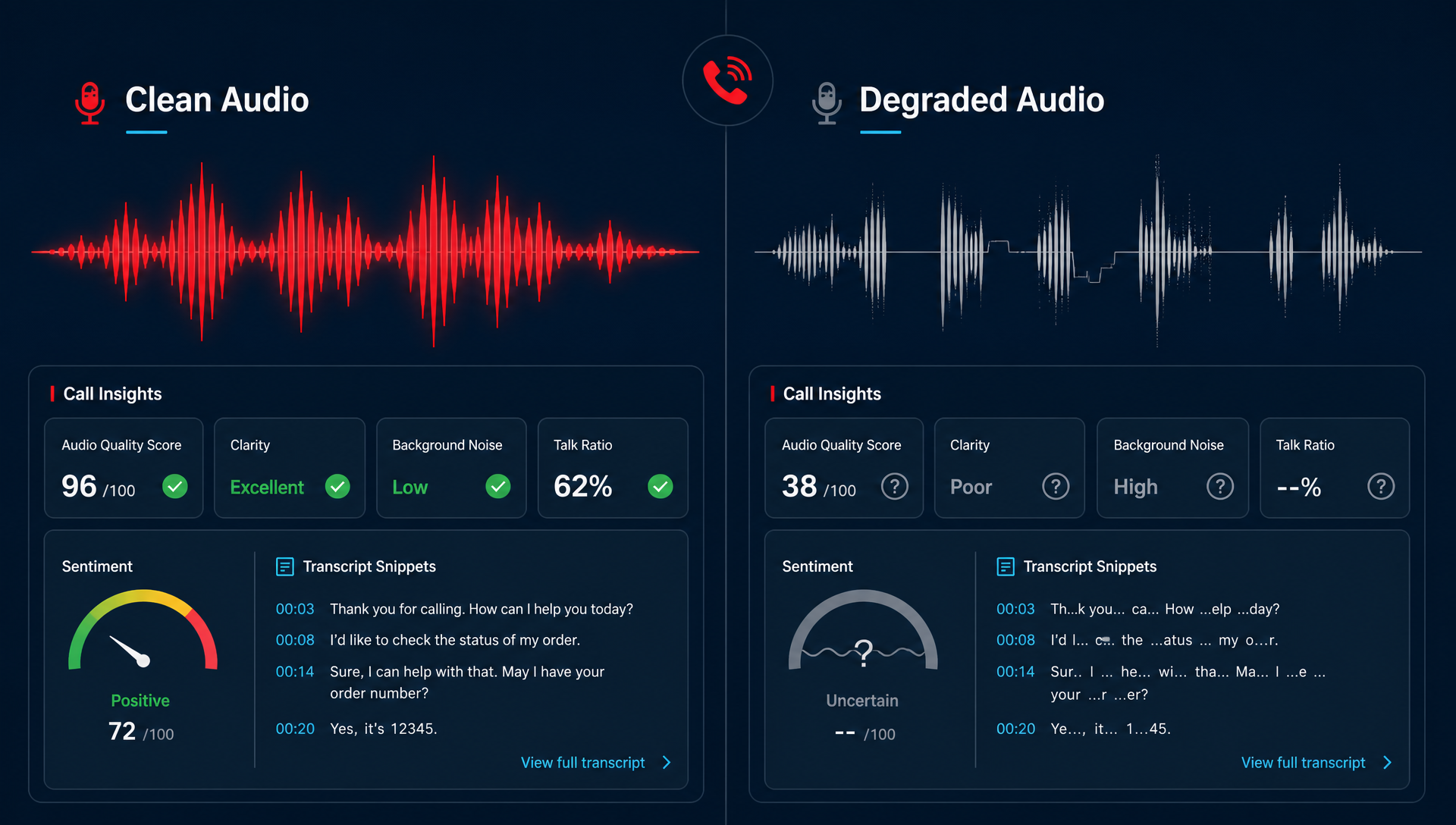
It only sees part of the picture. A transcript shows what was said. It doesn't always show how long the caller waited, how many times they were transferred, or whether they hung up and called back.
What does a managed approach add?
This is where TeleCloud Sentinel Conversational Insights fits. It's built around the part built-in tools leave to you.
- It reads every call you record, and looks across them. Repeat callers, broken promises, bookings that never happened, callers bounced between departments.
- The rules are written with you. We learn what a good call sounds like for your business, test the rules against your real calls, and tune them as we go. That's why generic scoring falls short (more on that here).
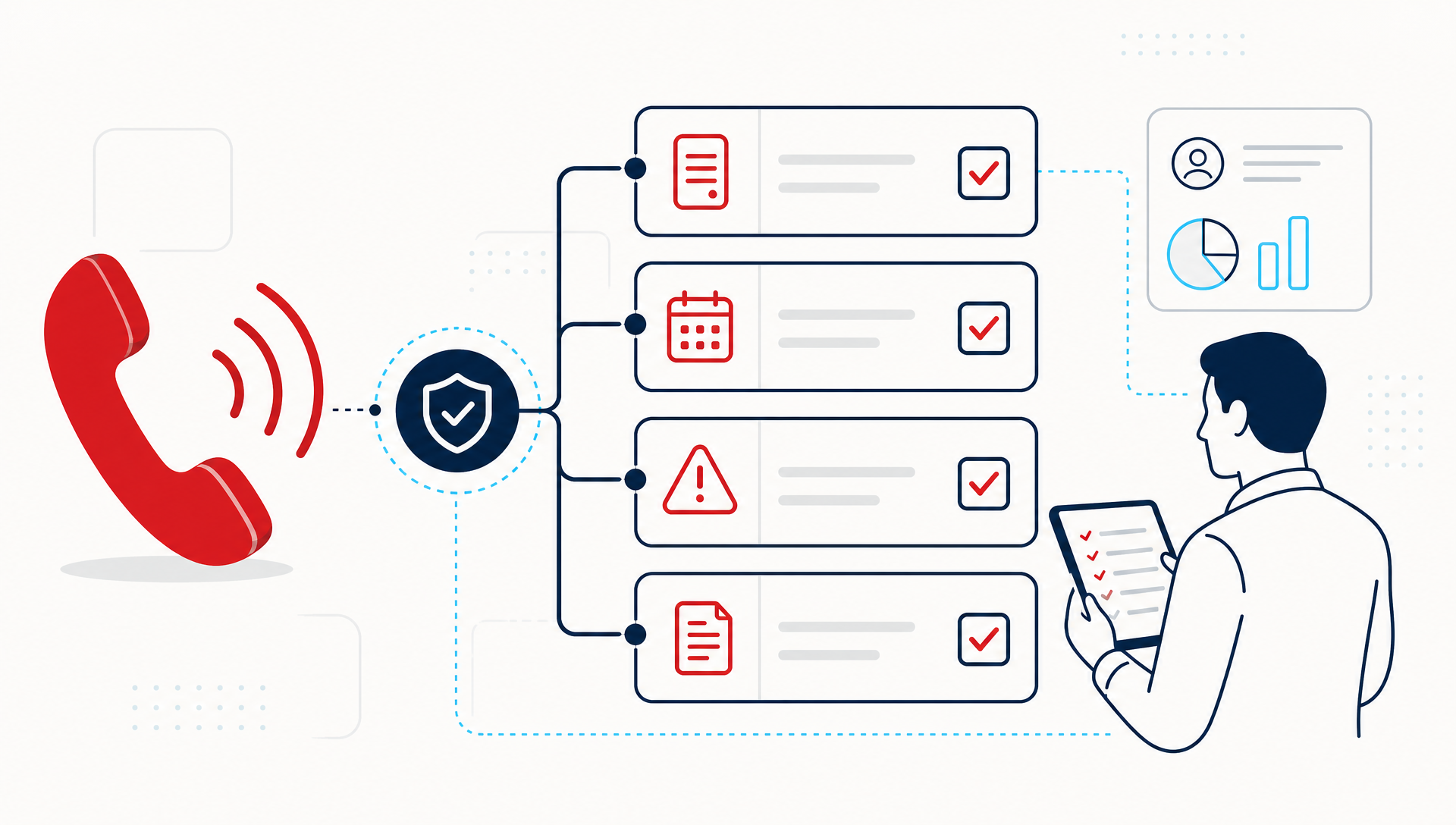
- Findings go to a named person. The person you choose gets an email when something needs them. Nobody has to log in to find out.
- It checks whether the fix worked. Sentinel finds the problem, tells the right person, then checks whether the number moved.
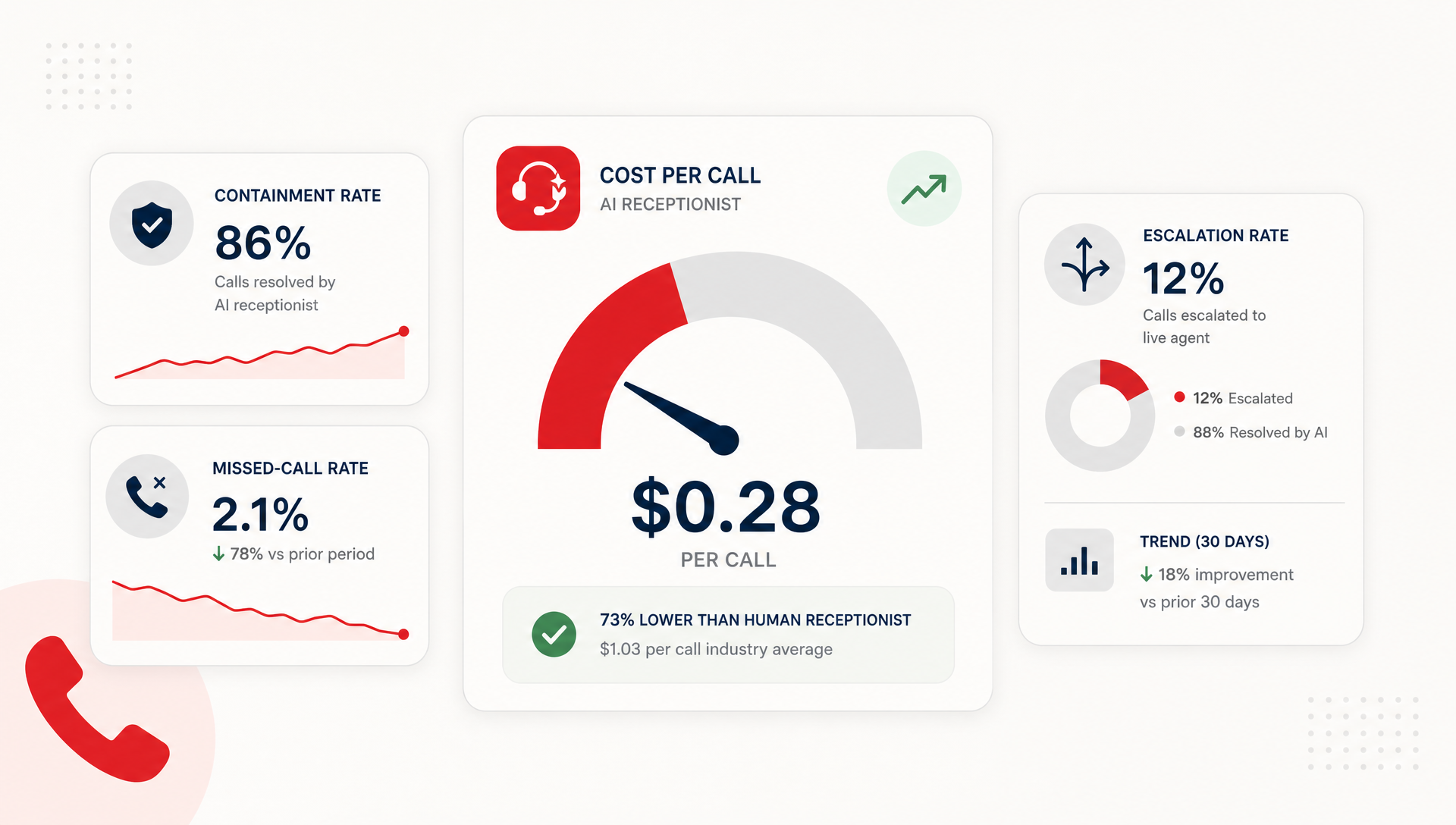
- It uses the call data, not just the words. On TeleCloud, where we run the phone system too, we also see wait times, transfers, hang-ups and repeat calls.
It works with other phone systems too, as long as we can get the recordings out, which we can usually check on the first call.
It isn't magic, and it has limits of its own. We wrote them down plainly in what conversational insights won't do for you.
How do you decide?
Ask what you'd do with the output.
- "I want better notes from my own calls." Built-in AI is probably enough.
- "I want to know what's going wrong across the business, and have it land with the right person without anyone digging." That's the gap Sentinel is built for.
- "I'm not recording calls yet." Start there. Nothing can read a call nobody captured.
If you're not sure which side you're on, we're happy to talk it through and tell you honestly.
Every call is a customer experience. The question is whether anyone hears about the ones that went wrong.
FAQ
Does Dialpad or RingCentral have conversation intelligence built in?
Both include AI features such as transcripts and call summaries, and both offer call scoring, generally with contact center plans or add-ons. What's included depends on the plan, so check yours.
Can I use Sentinel if I'm not on TeleCloud?
Usually, yes. Sentinel reads recorded calls from other phone systems as long as we can get the recordings out. We can check yours on the first call.
Is built-in AI the same as conversational insights?
They overlap. Built-in AI mostly helps the person on each call. Conversational insights looks across all your calls, flags what needs attention and sends it to the person who should act on it.
Does Sentinel replace my phone system's AI?
No. You can keep using your phone system's notes and summaries. Sentinel works alongside them.
Will Maddox
Will Maddox is the Digital Marketing Coordinator at TeleCloud, overseeing content, brand, and outbound strategy for the company. He writes about cloud communications, AI tools for business, and what SMBs and urgent care operators need to know to run better phone systems. Connect with Will on LinkedIn or email him directly to learn more.