
If you only review 2% to 5% of calls, you are making coaching and retention decisions from a thin slice of reality. The Monday-morning fix is not another spreadsheet or a bigger QA queue, it is a system that reads every call and turns the patterns into actions your team can use.
That blind spot shows up fast. A dispatcher keeps hearing the same complaint, the front desk keeps missing the same objection, and the quality team keeps coaching the same script issue because the pattern lives in calls nobody reviewed. In a lot of contact centers, the real problem is not that the team lacks data, it is that the data is trapped in recordings and summaries that never get read end to end.
Why do most call insights get lost?
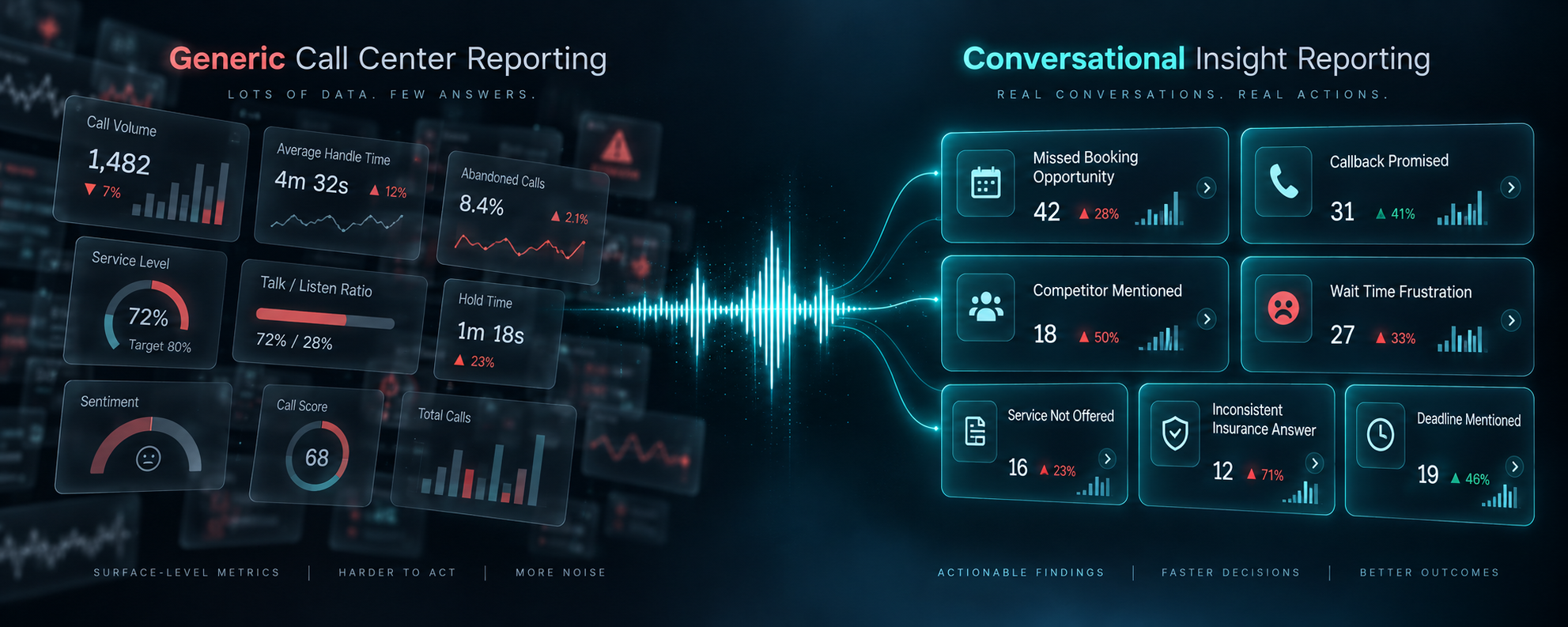
Most teams still depend on manual QA, sampled reviews, and dashboards that only show what someone had time to tag. That means the loudest calls get attention, while the recurring problems hiding in the middle of the stack never make it to coaching, retention, or process fixes.
In the Puzzel State of Contact Centres 2026 report, contact centers often analyze only 2% to 5% of customer interactions, which leaves the rest unexamined. That is a real visibility problem, because the missed patterns are usually the ones that cost you repeat work, churn, and frustrated callers. Puzzel reports this gap here.
What does 100% call analysis change in practice?
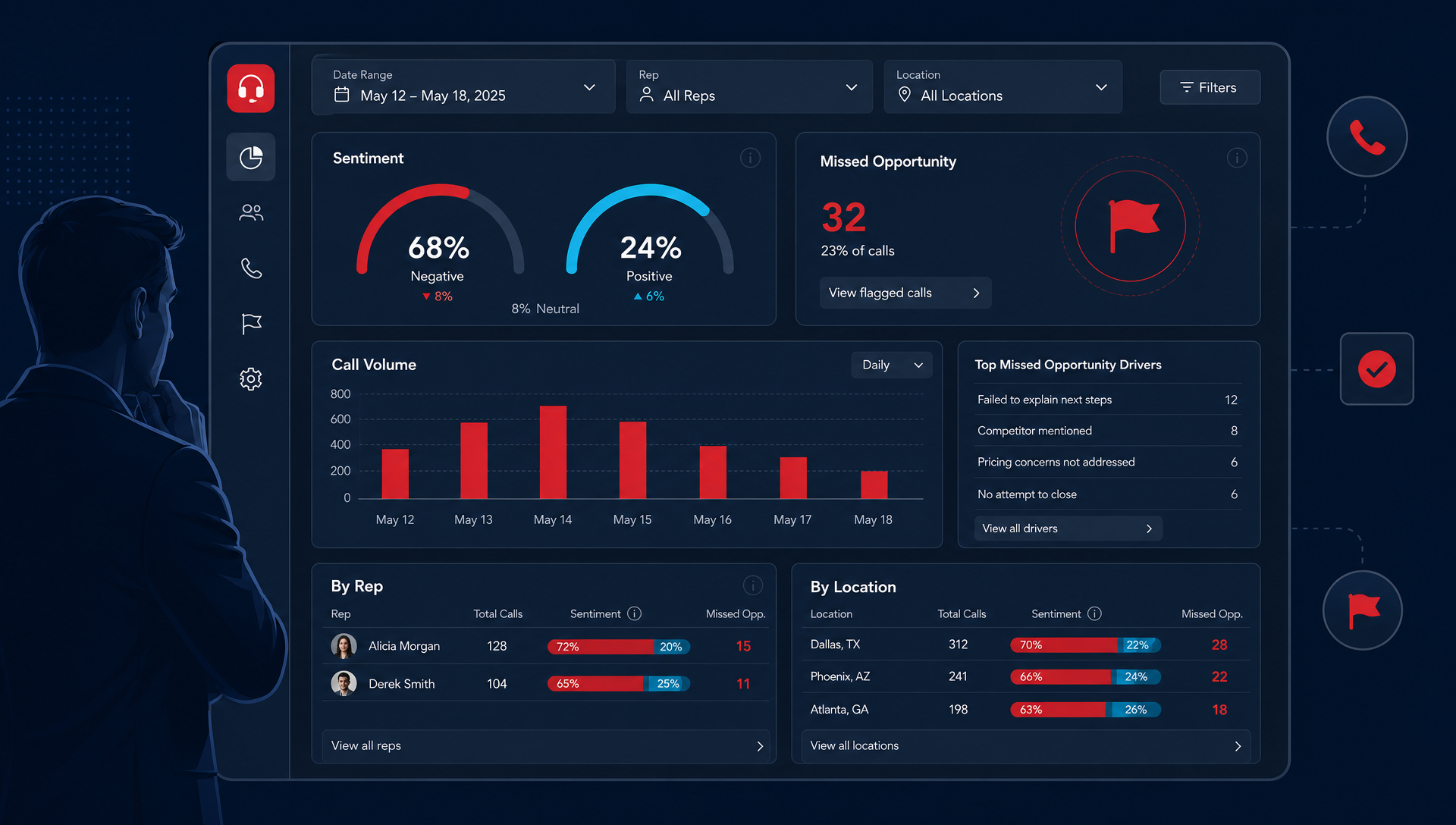
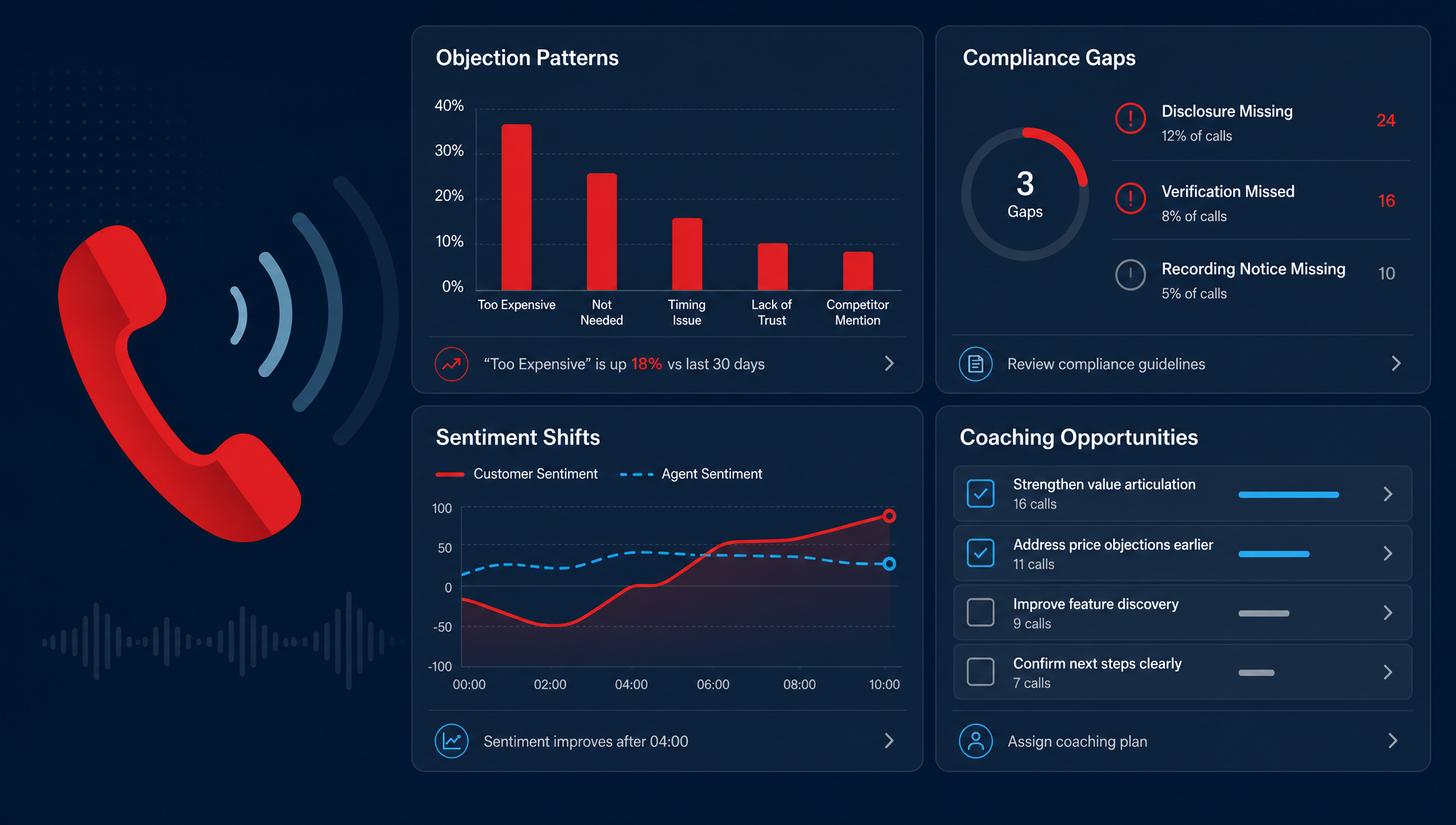
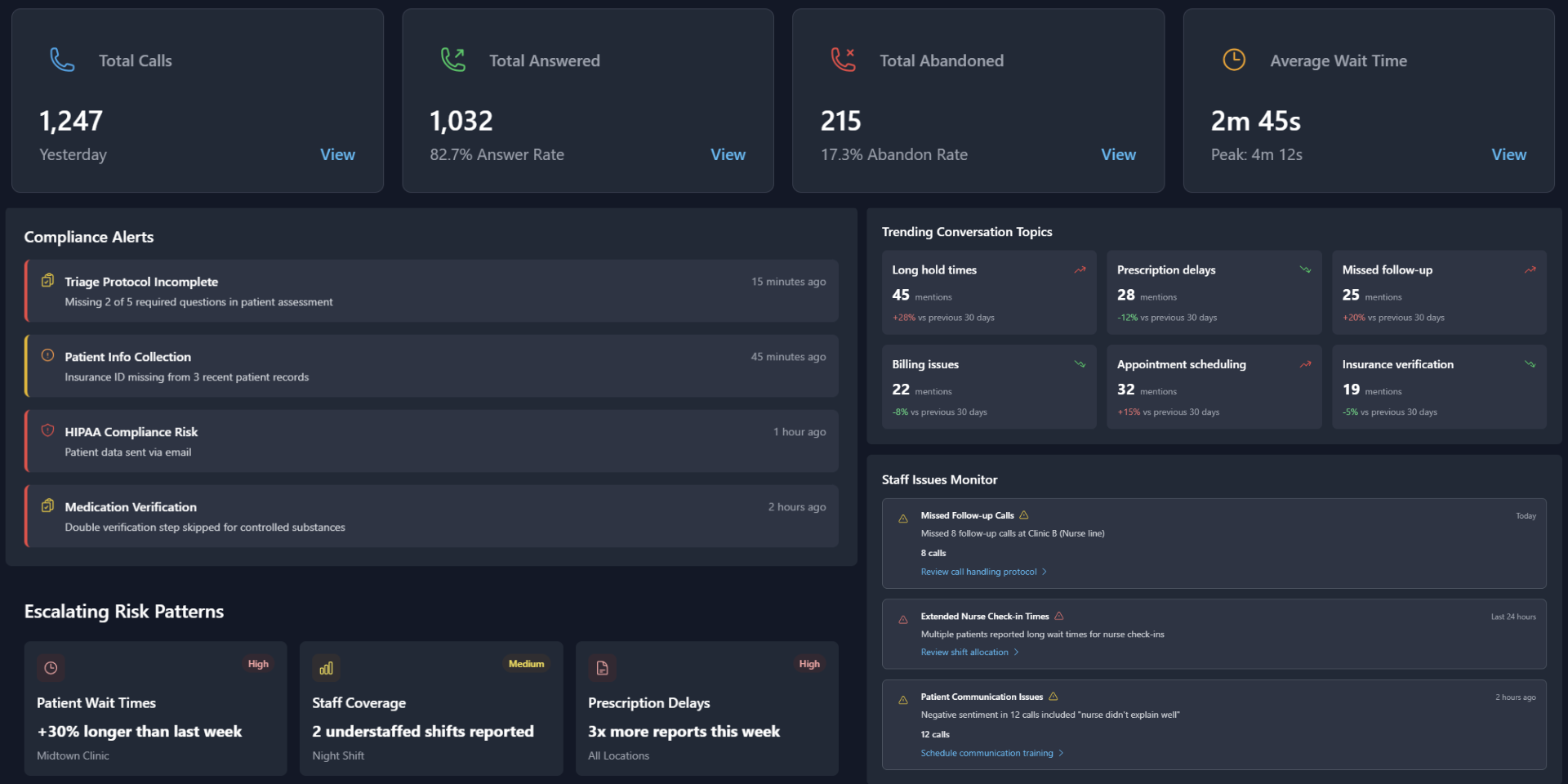
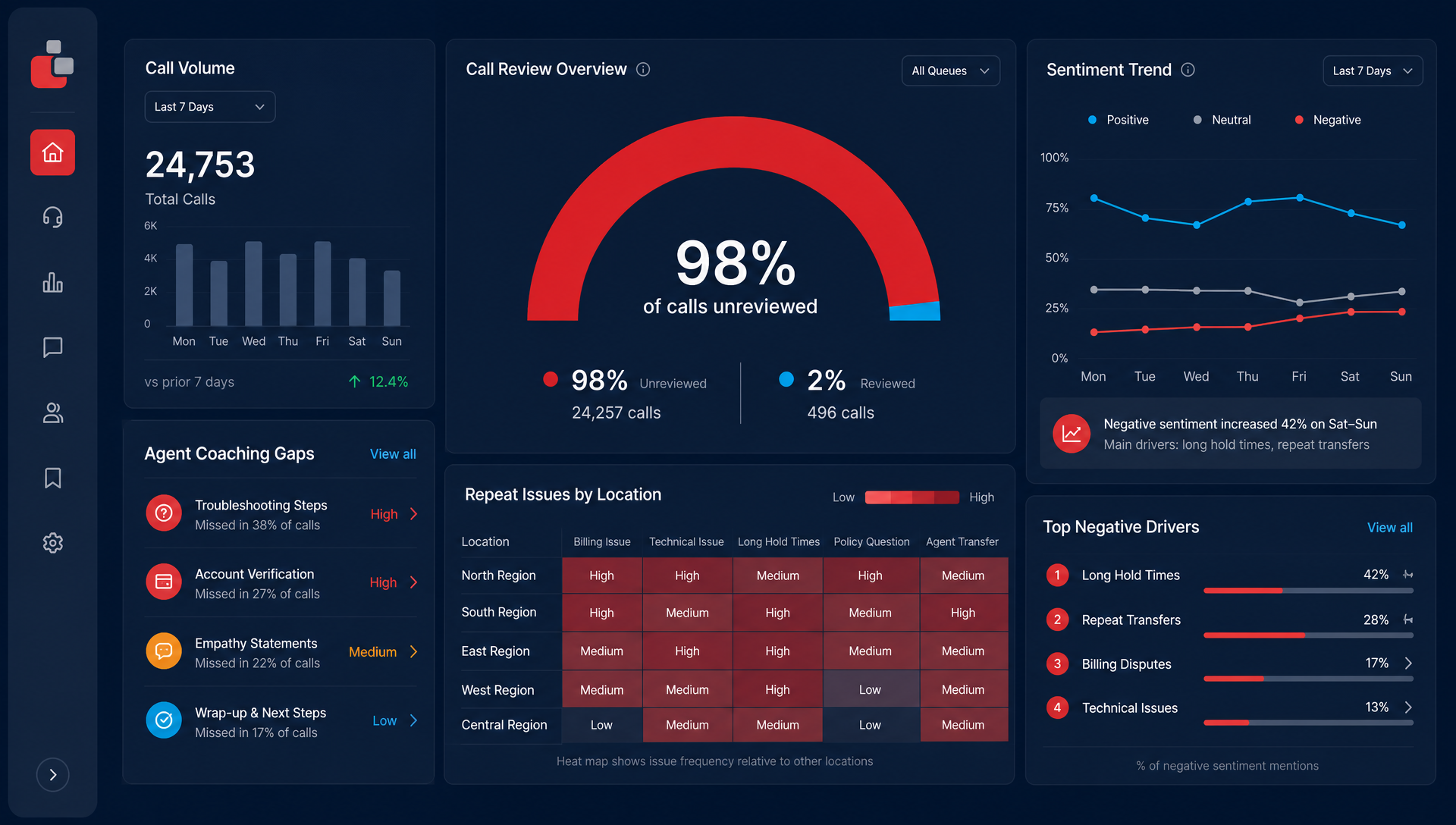
When every call is processed automatically, you stop guessing which issues matter most. You can see repeat complaints by location, spot agent coaching gaps faster, and notice when callers are getting stuck on the same question before they hang up or call back.
That changes the work for the people who run the floor. The quality lead does not have to wait for a weekly sample review. The ops manager can see which call types are driving friction, and the supervisor can coach to a real pattern instead of a one-off example.
What should ops leaders look for first?
Start with the signal that keeps showing up across teams, not with every possible metric. The useful first pass is usually:
- repeat issues by location or queue
- customer frustration or sentiment shifts
- long hold times before a bad outcome
- agent phrases that trigger callbacks
- missed opportunities to schedule, route, or resolve on the first call
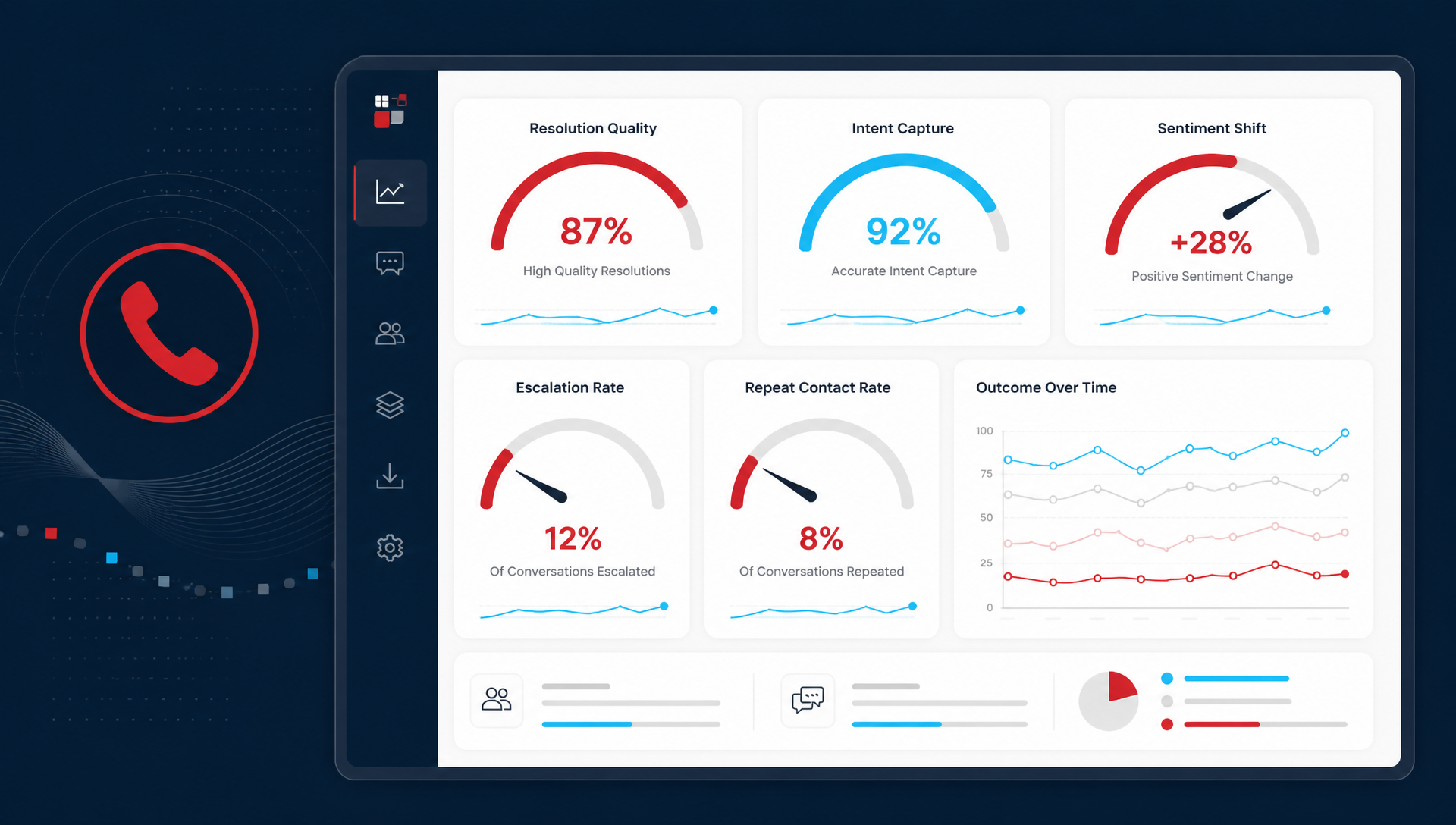
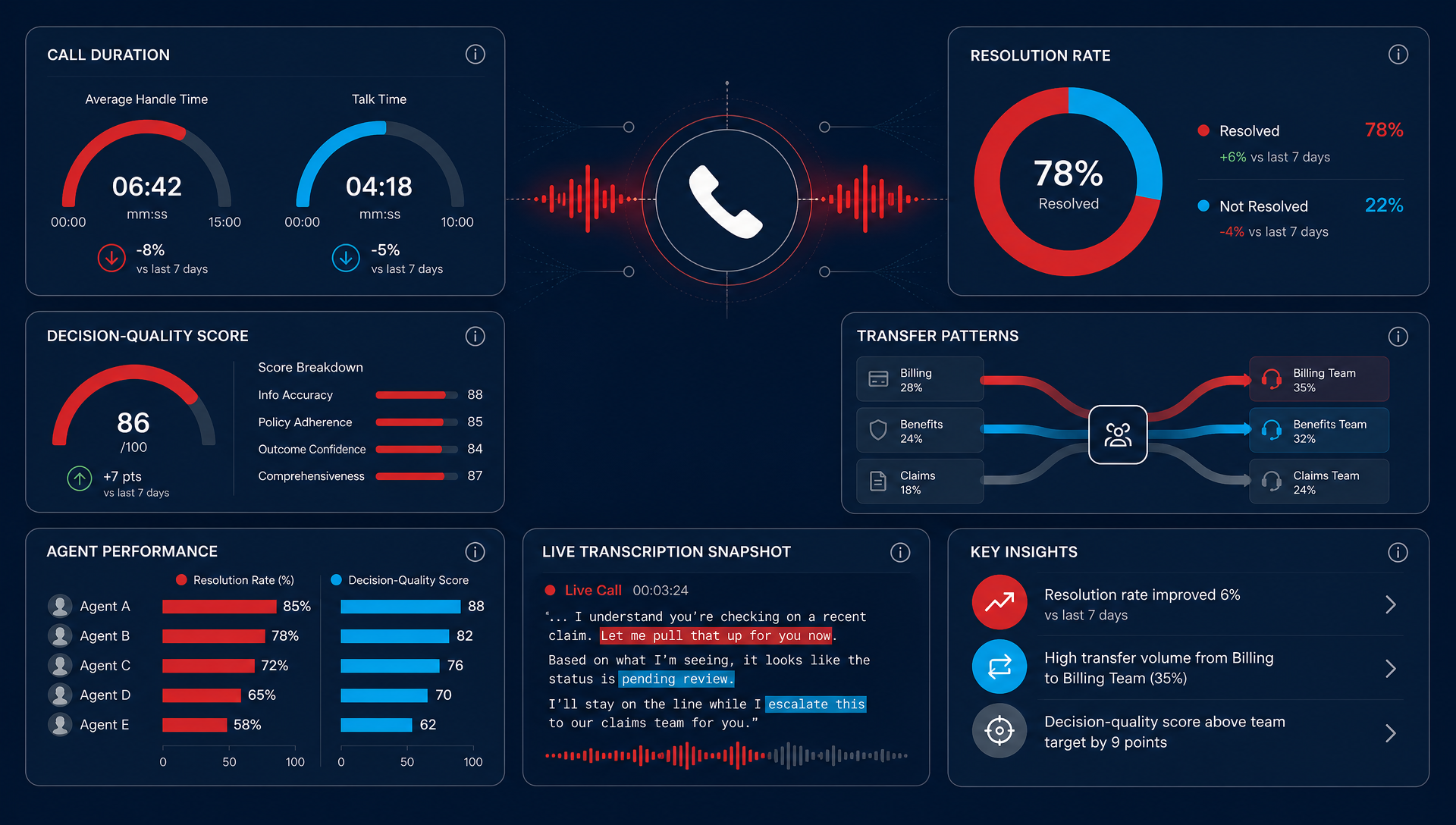
That is where Conversational AI Insights fits. It reads recorded calls automatically and turns them into structured signals, like sentiment, intent, talk ratios, keyword trends, and outcome patterns, so the team can stop hunting through random call samples and start working from the full picture.
Why recordings alone are not enough
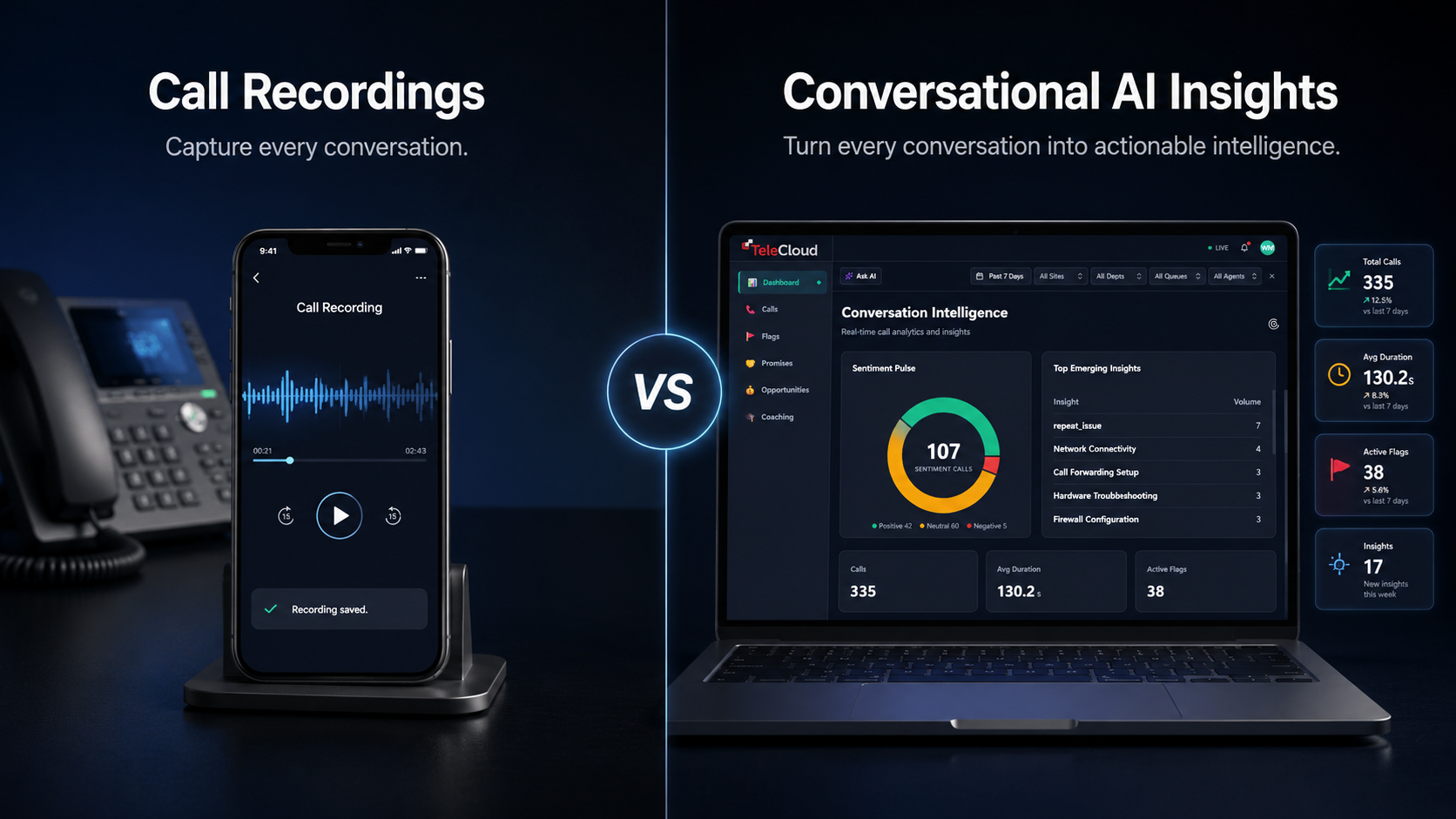
Recordings are the raw material. On their own, they are just a pile of files that somebody has to listen to, flag, and summarize. If you are only listening to a small sample, you are still making decisions from a small sample.
That is why the shift matters. The operational win is not “more recordings,” it is faster recognition of what is actually happening across the floor. A team can hear the same complaint from 14 callers in a day and still miss it if nobody has a way to surface the pattern automatically.
Where this hits contact center leaders hardest
For workforce engagement and QA leaders, the pain is usually inconsistency. One rep handles a situation well, another rep creates a callback, and the root cause does not show up until the queue is already noisy.
For retention-focused teams, the problem is even sharper. You do not need a perfect model to know that recurring friction on the phone can push callers away. You need a clean way to find the calls where that friction starts, then fix the script, the routing, or the process before the issue spreads.
What TeleCloud does with that signal
TeleCloud’s Conversational AI Insights is built for the gap between recordings and action. It processes calls automatically, surfaces the patterns that matter, and gives ops leaders a way to coach on real data instead of intuition.
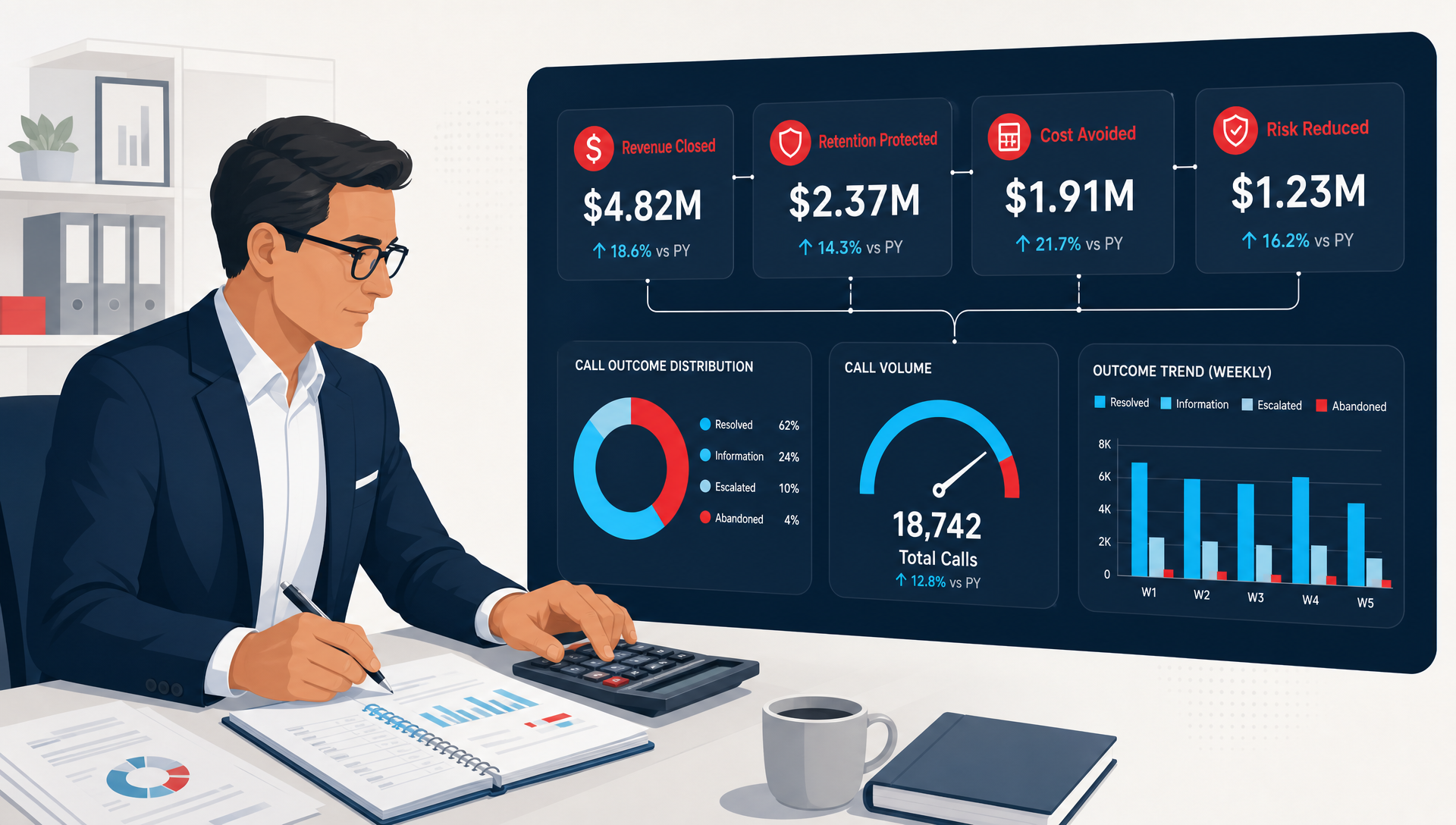
In our deployments, the value usually shows up in three places: coaching, escalation review, and customer experience fixes. The point is not to replace your team, it is to help your team see the 95% of calls that manual review would never touch.
When this is not the right fit
If you only handle a handful of calls a week, full-call analysis may be more than you need. The same is true if nobody owns follow-through on the findings, because insight without action is just another report.
This works best when the team already has a reason to improve call quality, reduce repeat problems, or tighten coaching. If the calls matter to revenue, retention, or service quality, the hidden 98% matters too.
What to put in place before your next call spike
The right move is to define what your team wants to catch earlier, then let the system listen at scale. Start with one or two outcomes, like reducing callbacks, speeding up coaching, or spotting the top friction points by queue.
That keeps the work practical. You are not buying a fancy dashboard, you are giving your supervisors a way to see the same patterns they keep hearing about, but across every call, not a tiny sample.
FAQ
Is full-call analysis better than manual QA sampling?
Yes, if your team needs to see recurring patterns across a large call volume. Manual QA still has a place for deep review, but sampling alone will miss issues that only show up across hundreds or thousands of interactions.
How quickly can ops leaders use the insights?
Usually the first win is in the first coaching and QA cycle, once the team knows what patterns to look for. The exact timing depends on how many calls you have and how quickly you act on the findings.
Does this replace call recordings?
No, recordings are still the source material. The difference is that Conversational AI Insights helps turn those recordings into structured call intelligence your team can use without listening to everything manually.
What teams get the most value from call insights?
Quality teams, contact center supervisors, and operations leaders usually get the fastest return. Any team that needs to spot repeat issues, coach reps, or track customer friction across locations will see the most use.
Can this help with customer retention?
It can help you find the patterns that often lead to churn, like repeated complaints or unresolved friction. It does not guarantee retention, but it gives your team a much better shot at catching issues early.
Will Maddox is the Digital Marketing Coordinator at TeleCloud, overseeing content, brand, and outbound strategy for the company. He writes about cloud communications, AI tools for business, and what SMBs and urgent care operators need to know to run better phone systems. Connect with Will on LinkedIn or email him directly to learn more.