
Conversational AI Insights vs. Call Recordings: What's the Difference?
June 16th, 2026
6 min read
By Will Maddox
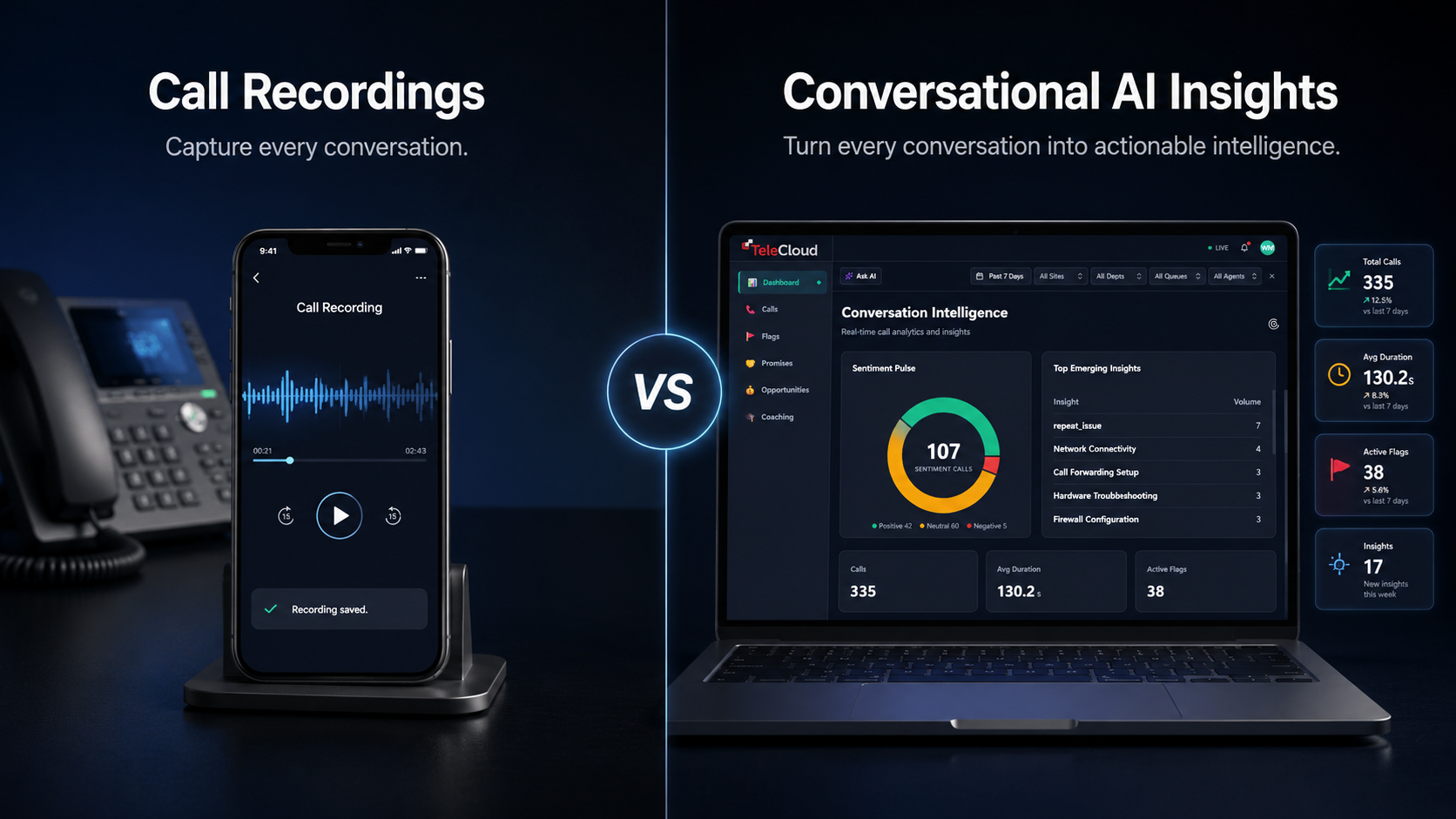
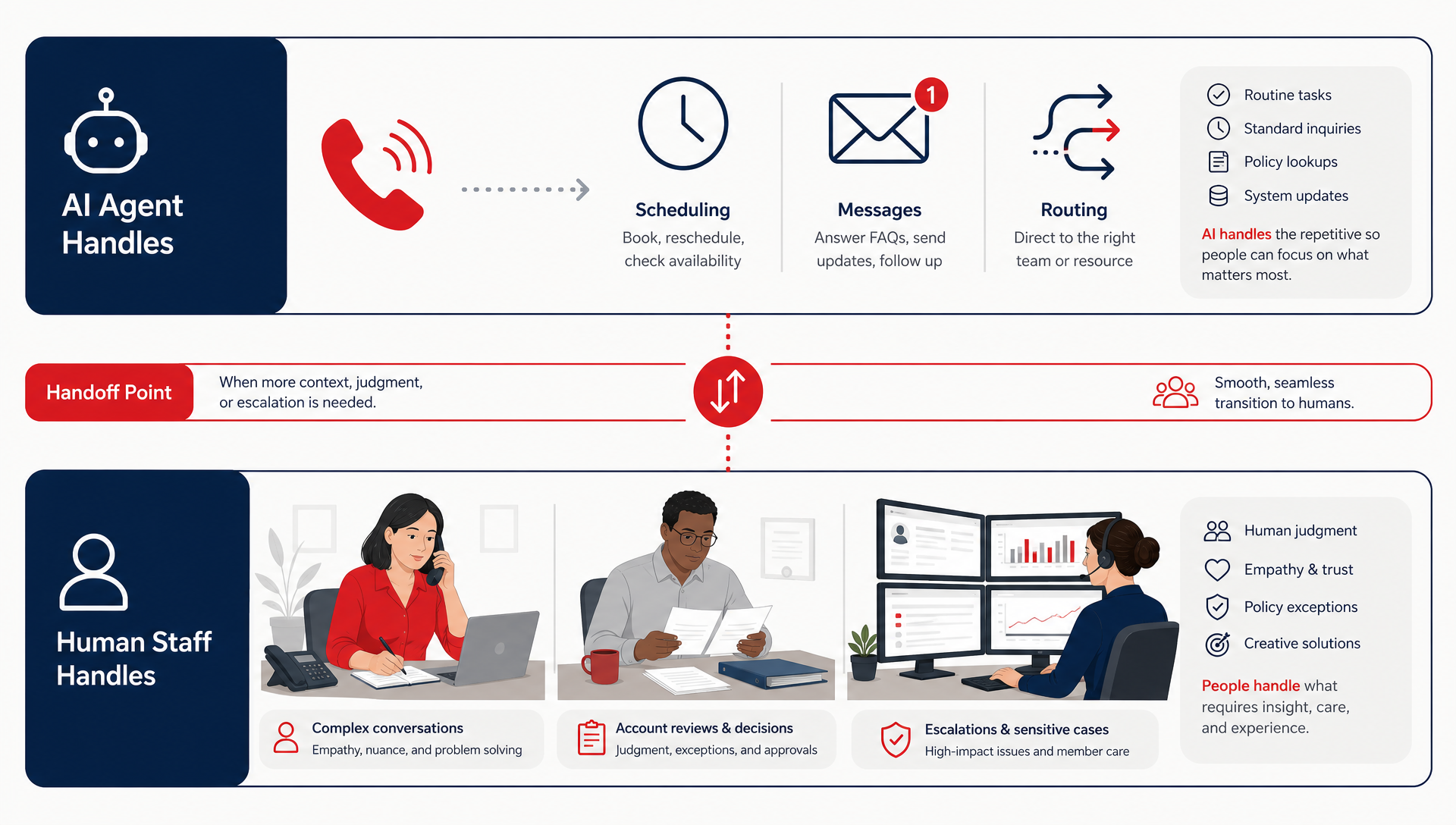
Call recordings capture audio. Conversational AI Insights analyzes it. Recordings tell you a conversation happened. AI Insights tells you what was said, how the customer felt, whether the issue got resolved, and what patterns are emerging across all your calls, automatically.
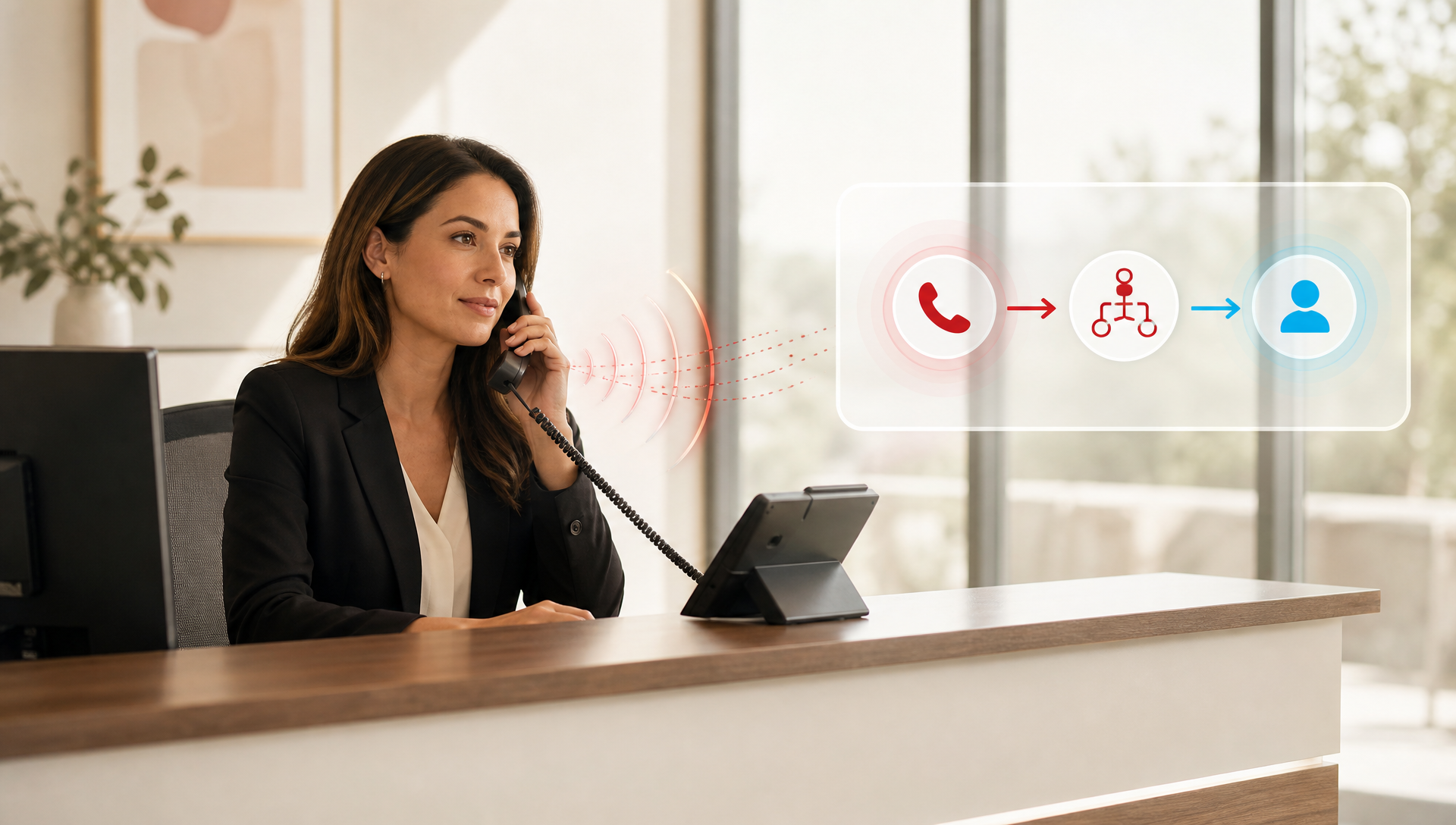
If your business records phone calls, you are already ahead of the operators who have no record of what is happening in their conversations. Call recordings have real value. They create accountability, support compliance, and give managers a way to revisit interactions that warrant a second look.
But a lot of businesses assume that because they are recording calls, they have visibility into their call performance. Those are two different things. Recording a call and understanding what happened in it are not the same, and the gap between them is where most of the operational intelligence gets lost.
This post breaks down exactly what call recordings do, what Conversational AI Insights adds on top of them, and how to think about which capability your business actually needs.
What Do Call Recordings Actually Do?
Call recordings do one thing: they store a copy of the audio from a phone conversation. That is genuinely useful in a number of contexts.
- Compliance and liability: Recorded calls create a defensible record of what was communicated, which matters in regulated industries and in situations where a dispute arises.
- Individual call review: When a specific interaction needs to be revisited, whether because a customer escalated or a staff member needs coaching, the recording is there to pull.
- Training examples: Managers can select recordings of strong calls to use as models and recordings of problem calls to illustrate what to avoid.
- Quality spot-checks: Supervisors can periodically sample calls to get a sense of how conversations are going.
The limitation is structural. All of these use cases require a human to find the recording, listen to it, and draw a conclusion. In a business taking dozens or hundreds of calls per day, manual review covers only a fraction of what is actually happening. Most calls get recorded and never heard again.
What Does Conversational AI Insights Add That Recordings Do Not?
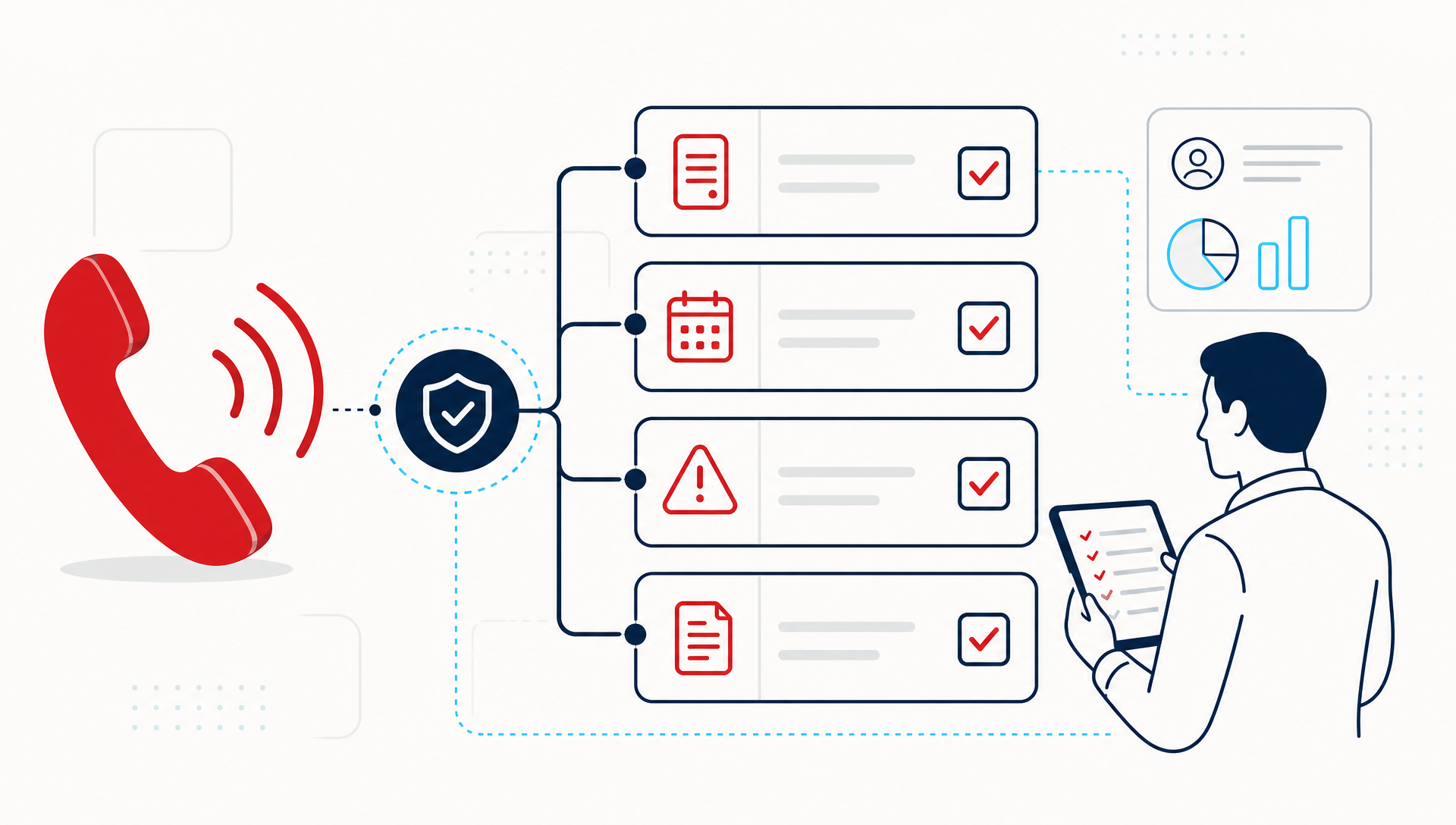
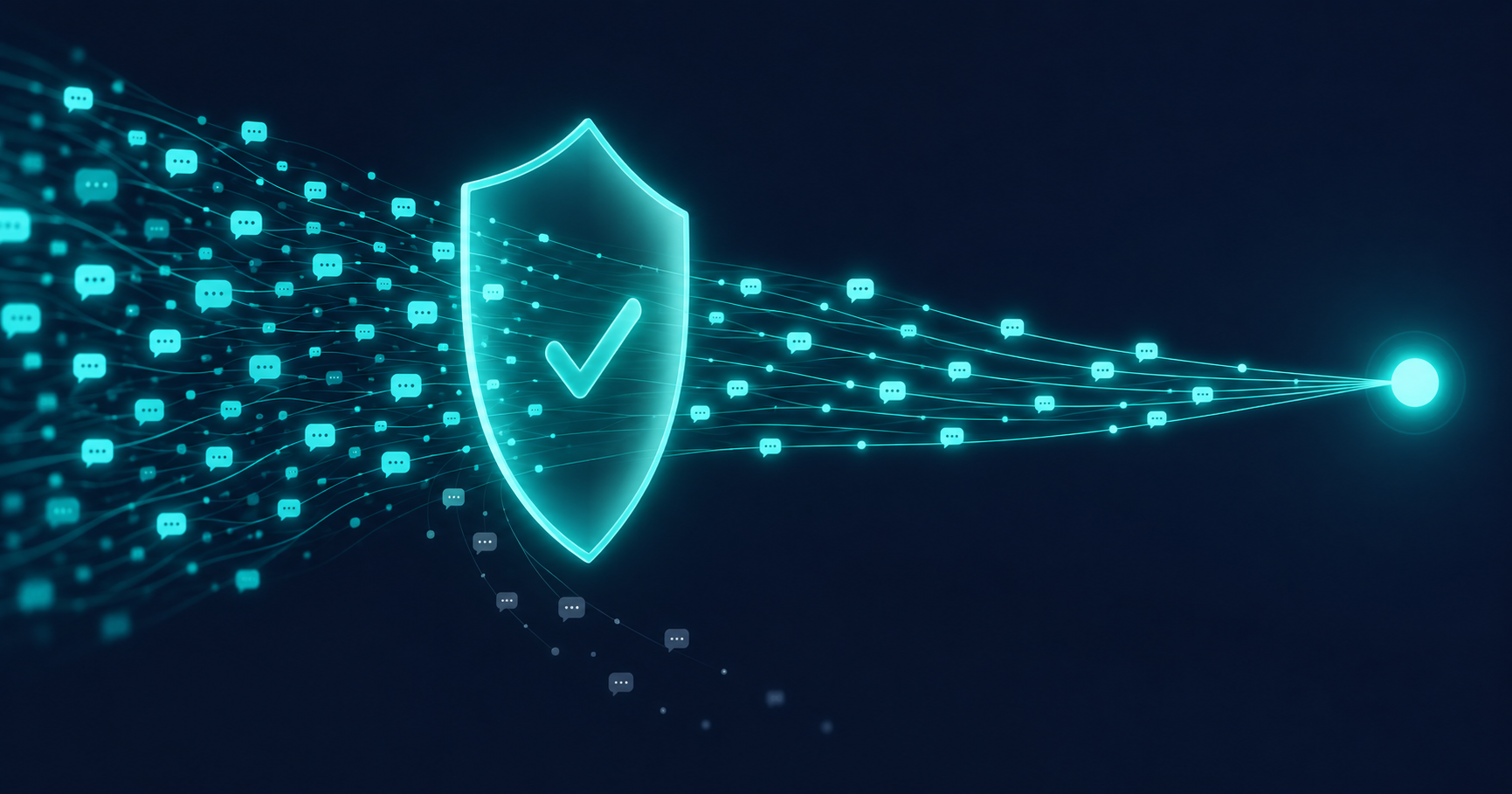
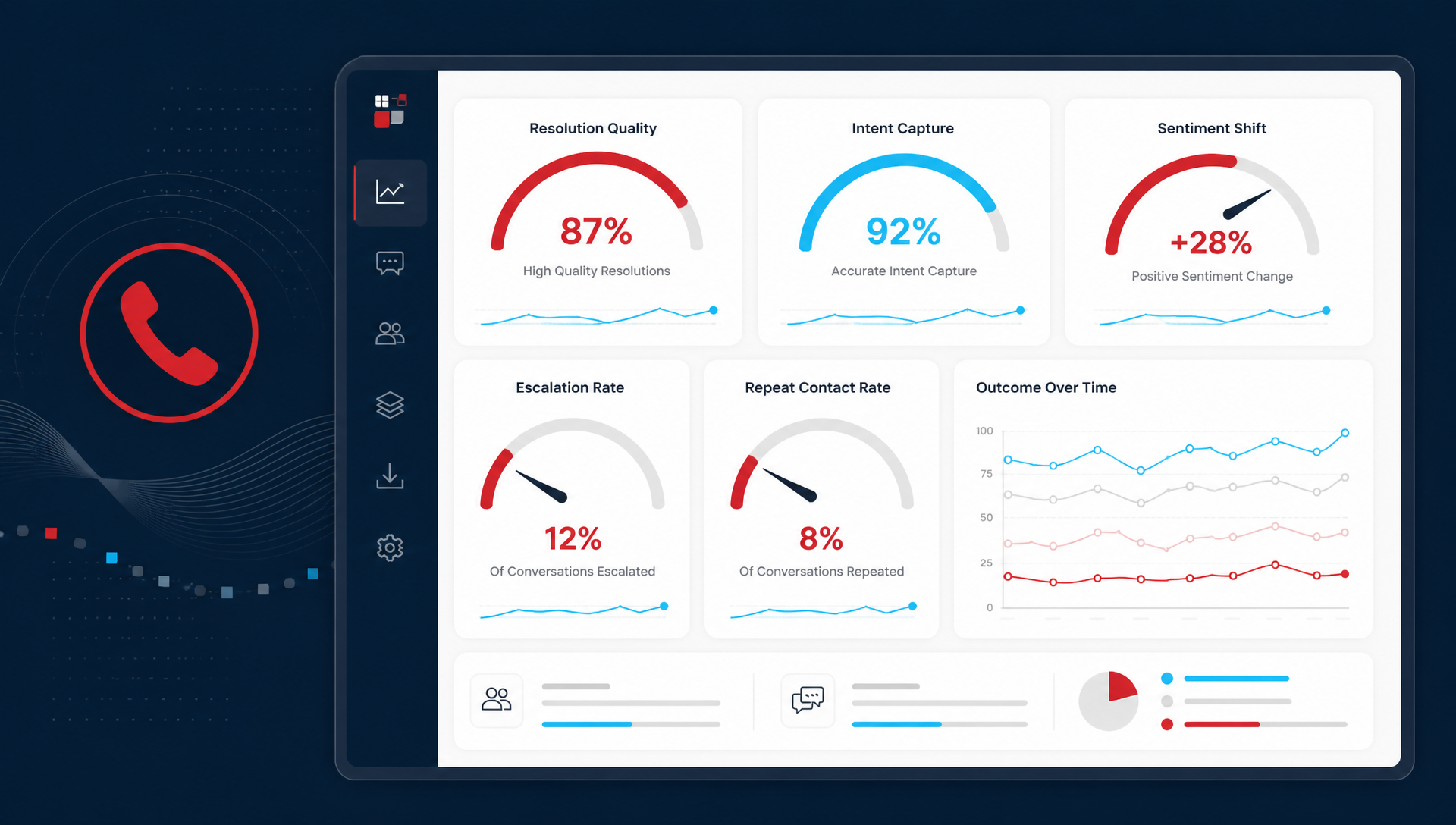
Conversational AI Insights starts where call recording ends. Rather than storing audio for potential future review, it processes every call automatically to extract what happened, how it went, and what patterns are emerging across the full volume.
Here is what that means in practice.
Transcription That Makes Calls Searchable
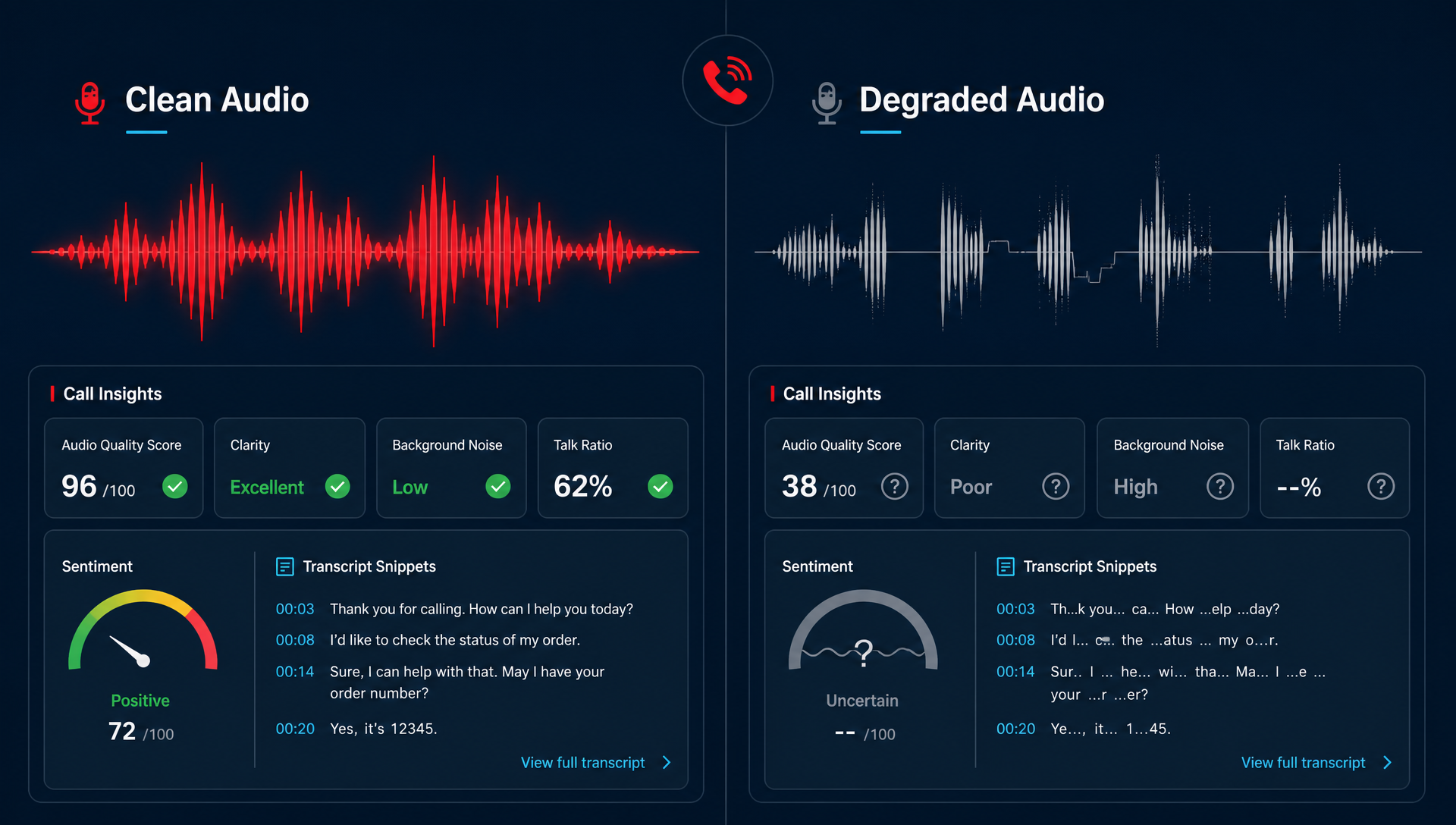
Every call is converted to a full text transcript automatically. This means you can search across thousands of calls for a specific topic, phrase, or question type in seconds. If you want to know how many calls in the last month mentioned insurance, or wait times, or a specific service, the answer is in the data without anyone having to listen to a single recording.
Sentiment Analysis That Flags What Needs Attention
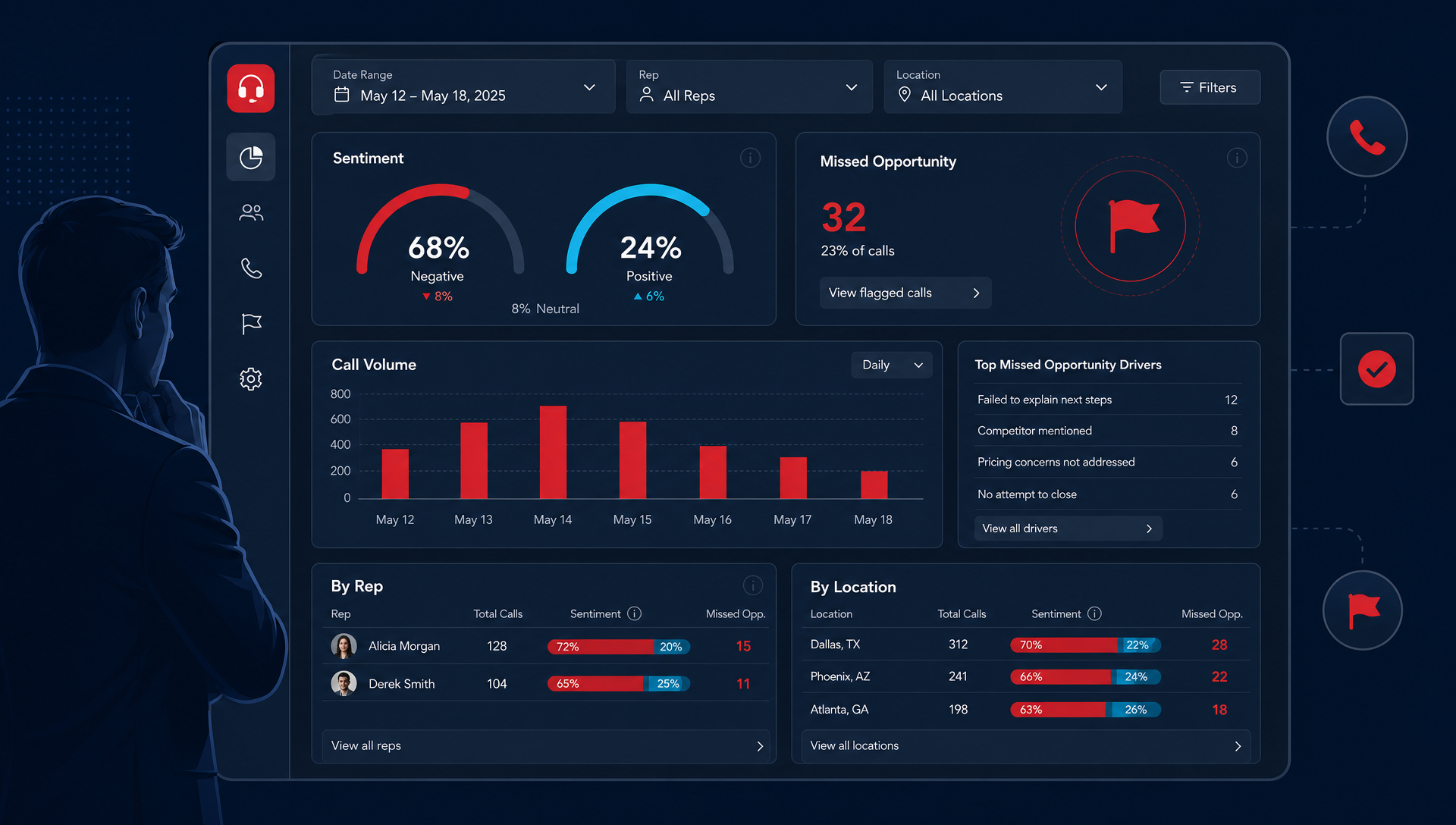
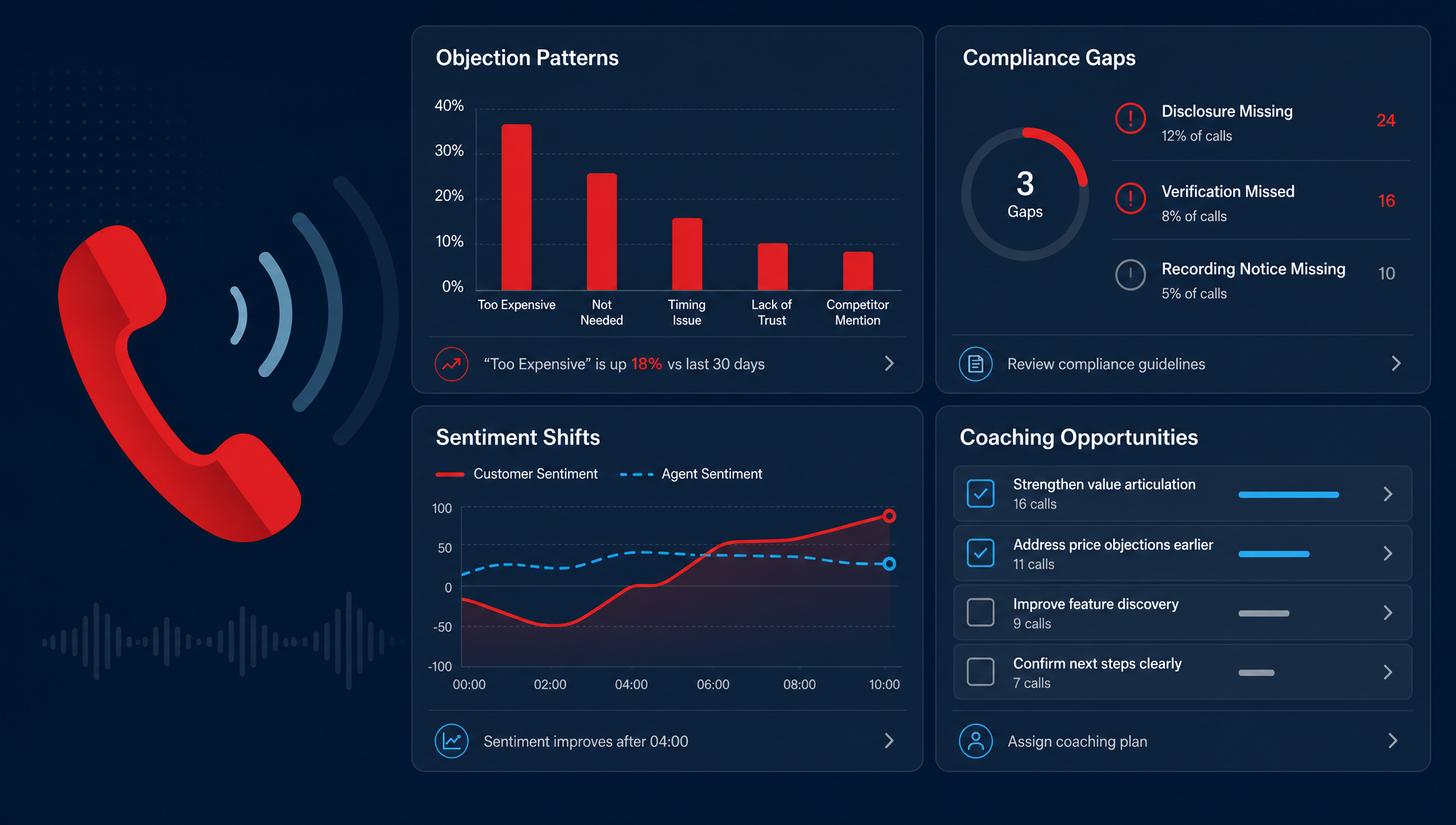
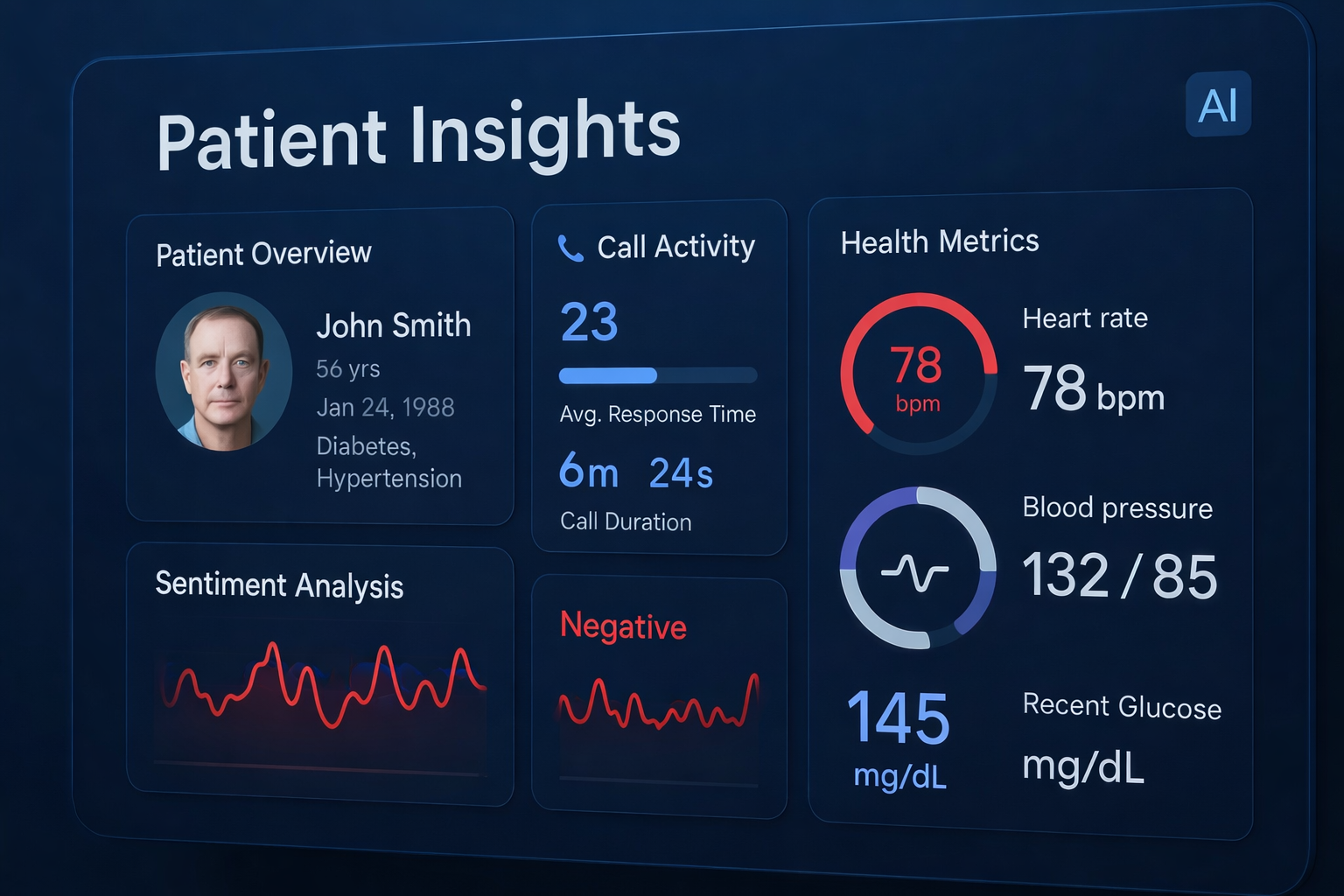
Call recordings do not tell you when a customer was frustrated. Conversational AI Insights does. Every call is scored for sentiment based on tone, pacing, and language patterns. Calls with negative sentiment are flagged automatically, which means supervisors are looking at the calls that actually need attention rather than pulling recordings at random and hoping they find something useful.
This also makes trend detection possible. If negative sentiment is increasing across calls from a specific location, or during a specific time window, or around a specific topic, that pattern surfaces without anyone having to notice it manually.
Resolution Tracking That Catches What Falls Through the Cracks
One of the most common sources of customer frustration is the call that technically happened but did not actually resolve anything. The customer asked a question, got transferred, and ended up back where they started. Or a callback was promised and never happened. Or the issue was too complex for the staff member who answered.
Conversational AI Insights identifies calls where no clear resolution occurred. These are not calls anyone flagged as problematic. They are calls that looked routine from the front desk's perspective and felt unresolved from the customer's. Without AI analysis, these calls are invisible. With it, they generate an automatic follow-up flag.
Call Topic Classification at Scale
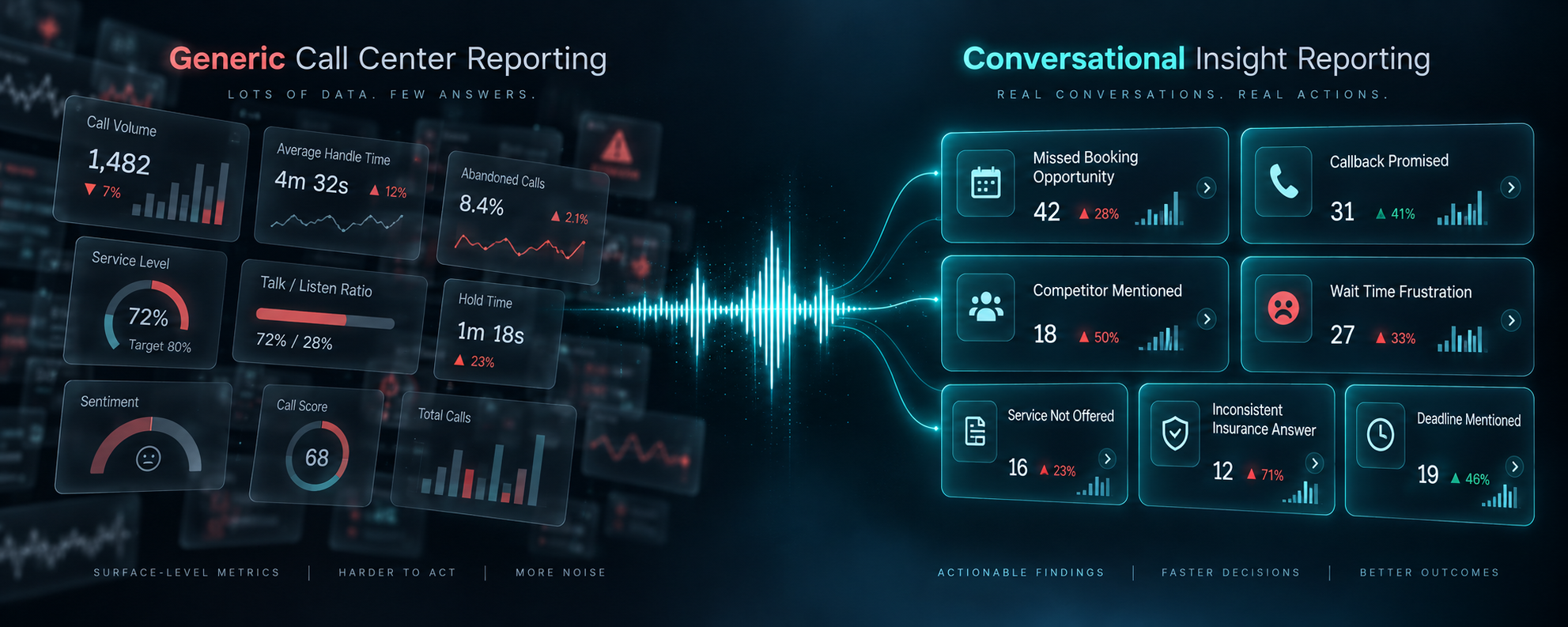
Manual review tells you what happened in a specific call. AI analysis tells you what is happening across all of them. When every call is classified by topic, scheduling, insurance, billing, clinical questions, and wait times, operational patterns become visible at a scale that changes how decisions get made.
If 35 percent of your inbound calls are asking about insurance acceptance, and that number has grown from 20 percent over the last 90 days, that is a signal worth acting on. You would never see it by reviewing individual recordings. You see it because every call has been analyzed and classified.
Multi-Location Performance Visibility
For businesses operating multiple locations, call recordings create isolated silos. Each location has its own recordings, and comparing performance across sites requires coordinated manual review that rarely happens in practice.
Conversational AI Insights aggregates data across every location into a single view. Call volume, sentiment trends, resolution rates, and topic breakdowns are visible at the portfolio level, not just the site level. This is what makes it possible to identify an underperforming location before it shows up in visit counts or revenue figures.
Call Recording vs. Conversational AI Insights: A Side-by-Side View
|
|
Call Recording |
Conversational AI Insights |
|
What it captures |
Audio file of the conversation |
Audio + transcript + sentiment + topic + resolution status |
|
Review process |
Manual, one call at a time |
Automated across every call simultaneously |
|
Scalability |
Limited by available listening time |
Analyzes full call volume regardless of size |
|
Sentiment detection |
Requires human interpretation |
Flagged and scored automatically |
|
Unresolved call detection |
Not identified without review |
Surfaced automatically by pattern analysis |
|
Multi-location visibility |
Siloed by location |
Aggregated view across all sites |
|
Churn signal detection |
Not available |
Tracked across customer interaction history |
|
Training use |
Requires someone to select and share clips |
Patterns surface without manual curation |
|
Revenue impact visibility |
Not calculated |
Missed scheduling calls and friction points flagged |
Do You Need Both, or Just One?
This is a fair question, and the honest answer is that they are not really competing options. Call recording is a foundational capability. Conversational AI Insights is a layer that runs on top of it.
Most businesses that use Conversational AI Insights still maintain call recordings for compliance and legal purposes. The recordings exist as the defensible record. AI Insights is what makes those recordings operationally useful rather than just stored.
If your business is currently recording calls but has no systematic way to analyze them, you already have the raw material. What you are missing is the layer that turns that raw material into something you can act on.
|
A useful way to think about it: call recordings are an archive. Conversational AI Insights is an analyst working through that archive in real time, surfacing what matters before it gets buried under the next day's volume. |
What Types of Businesses Get the Most Value From Conversational AI Insights?
The value of AI call analysis scales with call volume and with the operational consequences of missed signals. The businesses that benefit most tend to share a few characteristics:
- High inbound call volume, where manual review covers only a small fraction of interactions. Urgent care clinics, field service dispatch operations, and multi-location professional services firms all fit this profile.
- Revenue tied directly to call outcomes. When a missed or mishandled call translates to a missed appointment, a lost service booking, or a customer who does not return, the stakes of call quality are financial, not just experiential.
- Multiple locations or teams, where comparing performance and identifying outliers requires aggregated data rather than site-by-site anecdotes.
- Compliance-sensitive environments, where knowing what was said in a conversation matters not just for training but for regulatory or liability reasons.
Businesses with low call volume and simple, routine interactions may find that recording alone is sufficient. But for any operation where the phone is a meaningful revenue driver, the gap between recording and analysis tends to be where the most actionable operational intelligence is hiding.
What About Privacy and Compliance When Using AI Call Analysis?
This is a legitimate concern and worth addressing directly. Conversational AI Insights operates on call data that has already been recorded, which means the same consent and notification requirements that apply to call recording apply here as well. If your business is already compliant with applicable two-party or all-party consent laws for recording, AI analysis of those recordings does not introduce new legal obligations.
Recording Tells You It Happened. AI Tells You What It Means.
Call recordings are not going anywhere. They serve real purposes and belong in any business communication stack where accountability and compliance matter. But they are a starting point, not a finish line.
The businesses getting the most out of their call data are the ones that have moved beyond storage and into analysis. Not because they are listening to more recordings, but because they have stopped relying on listening at all as the primary way to understand what is happening in their conversations.
If your calls are being recorded but not analyzed, most of what they could tell you is sitting untouched. Conversational AI Insights is what changes that.
|
Want to see what your call data is already telling you? TeleCloud's Conversational AI Insights platform turns every recorded call into actionable intelligence, automatically. Request a free assessment at telecloud.net. |
Frequently Asked Questions
Do I need to replace my call recording system to use Conversational AI Insights?
No. Conversational AI Insights works alongside your existing call recording infrastructure rather than replacing it. Recordings remain in place for compliance and archival purposes. AI Insights processes those recordings to surface patterns, sentiment, and resolution data automatically.
Can Conversational AI Insights analyze calls that were recorded before it was implemented?
In most cases, yes. If historical recordings are accessible in a supported format, AI analysis can be applied retroactively. This can be valuable for establishing baseline sentiment trends or identifying patterns that predate the implementation.
How much call volume do you need to make AI call analytics worthwhile?
The value of AI call analysis increases with volume, but it does not require enterprise-scale call centers to deliver meaningful insights. Businesses taking 50 or more calls per day are typically generating enough data for pattern detection to be useful. For smaller operations, the compliance and resolution-tracking benefits may be the primary value driver rather than trend analysis at scale.
What is the difference between call transcription and Conversational AI Insights?
Transcription converts audio to text. Conversational AI Insights uses that transcript as the starting point for a broader analysis: sentiment scoring, topic classification, resolution detection, and pattern tracking across your full call volume. Transcription is a component of AI Insights, not the same thing as it.
Will Maddox is the Digital Marketing Coordinator at TeleCloud, overseeing content, brand, and outbound strategy for the company. He writes about cloud communications, AI tools for business, and what SMBs and urgent care operators need to know to run better phone systems. Connect with Will on LinkedIn or email him directly to learn more.