Most vendors tell you what their product does. This post is about what ours doesn't do. If you know the limits before you start, you can tell in about ten minutes whether conversational insights fits your business, and you won't find out three months in that it was never going to.
This comes up on almost every first call. Someone has seen a demo or read a page, and they've pictured something a little bigger than what it is. That's not their fault. The category is crowded and the claims get louder every quarter.
So here's what TeleCloud Sentinel Conversational Insights won't do, why it won't, and what that means for you.
Will it analyze calls you never recorded?
No. Sentinel reads recorded calls. If a call wasn't captured, there's nothing to read.
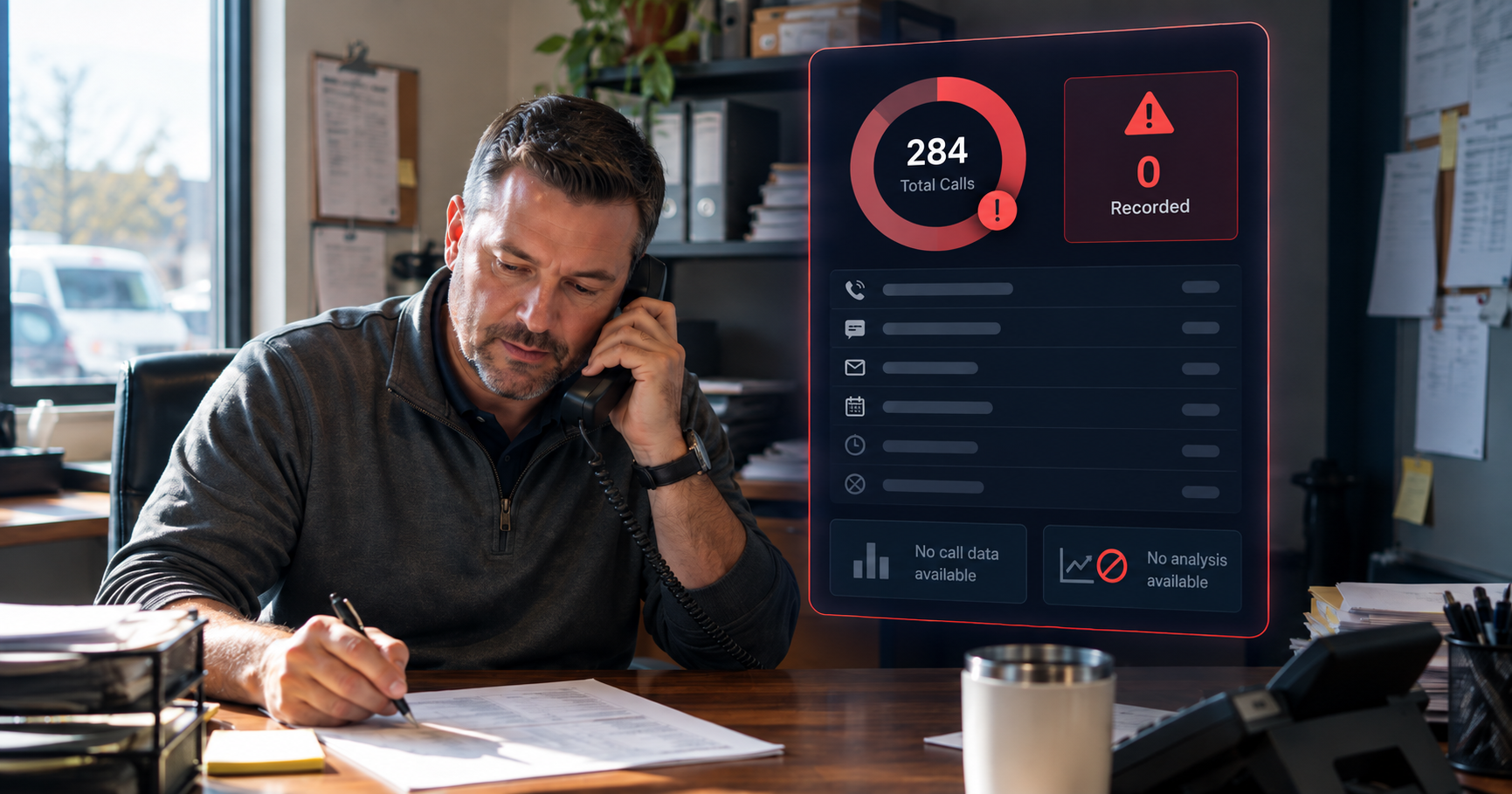
This sounds obvious, but it catches people out. Plenty of businesses think they record everything and find gaps when they look: one department left off, a queue that was never switched on, mobile calls that go around the system entirely. Before you judge any call insights product, find out how much of your calling it would actually see. The coverage audit walks through how.
If you're not recording yet, that's step one, and it's a short one if you're on TeleCloud.
Will it flag a problem while the call is still happening?
No. Sentinel isn't real time. It reads each call after it ends, and the calls that need someone reach that person the same day.
That's a deliberate choice. Live alerts during a call sound useful, but in practice they ask a manager to drop what they're doing and jump in on a conversation they've heard ten seconds of. Same-day review of a whole call is slower and far more useful. You see what was asked, what was promised and how it ended, not one bad moment out of context.
If you need someone to step into calls live, that's a supervisor with a headset, and your phone system can already do it.
Will it fix what it finds?
No. People fix things. Sentinel finds the problem, tells the right person, and then checks whether it got better.
A caller asked for an appointment and never got one. A quote was promised and never sent. The same customer called three times about the same issue. Sentinel can find all of those. It can't call the customer back, send the quote or change how your front desk handles a reschedule. Someone on your team has to.
This is the most common reason call insights projects fail, at every size. The flags arrive and nobody owns them. Before you start, name the person who'll read the findings each week. If you can't name them, sort that out first.
Will it replace your supervisors or your QA process?
No. It tells your supervisors which calls to listen to.
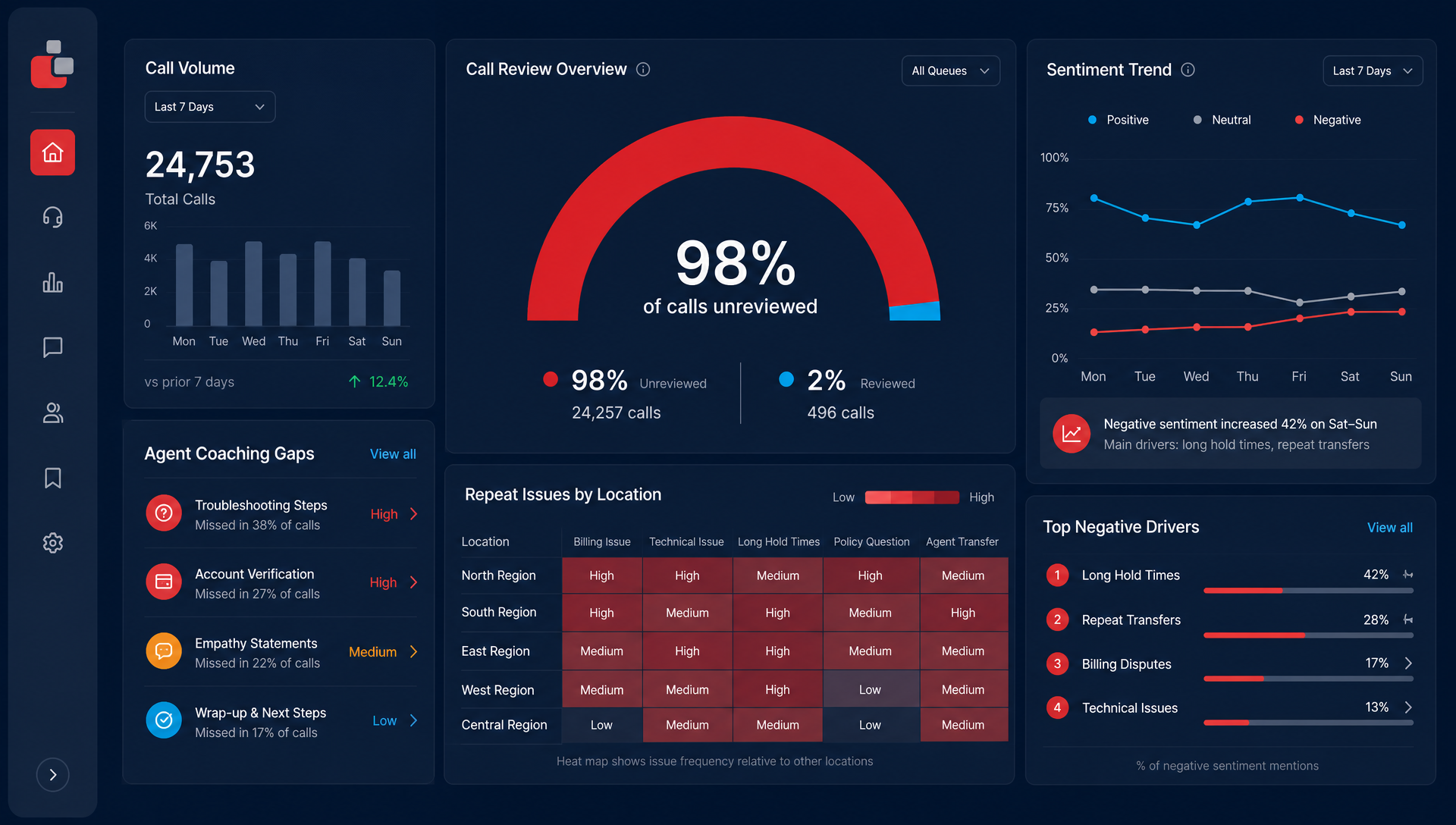
In our experience, most teams review somewhere between 2 and 10% of their calls by hand, picked more or less at random. Sentinel reads every recorded call, so the manager's time goes to the calls that were flagged instead of the ones that happened to come up. The judgement is still theirs. A flag is a reason to listen, not a verdict.
Will it know what a good call sounds like on day one?
Not exactly, and anyone who says theirs does is selling you a generic score.
A good call at an urgent care looks nothing like a good call at a law firm or an HVAC dispatch desk. So we start with a set of rules built for your industry, test them against your real calls, and tune them at the week-two check-in once we've seen what they catch. The first version is always a little wrong. That's normal, and it's why the tuning is part of the setup rather than an extra. There's more on this in why generic call scoring is noise.
Will it put a dollar figure on the revenue you're losing?
Not on its own. Some of what Sentinel finds can be proven from the calls alone, and some needs your own numbers to go with it.
From the calls alone, it can show you who's handling the phones well, who needs coaching, which callers got passed around and which promises weren't kept. Those are counts you can check.
Missed bookings and customers who are thinking of leaving are different. Sentinel can spot them on the call, but turning that into a dollar figure needs data from your scheduling system or CRM: did the booking ever happen, did the customer come back. Without that, any dollar figure is a guess, and we won't hand you a guess dressed up as a result.
Will it score how your callers feel?
No. We don't hand you a mood score, because a mood score doesn't tell anyone what to do.
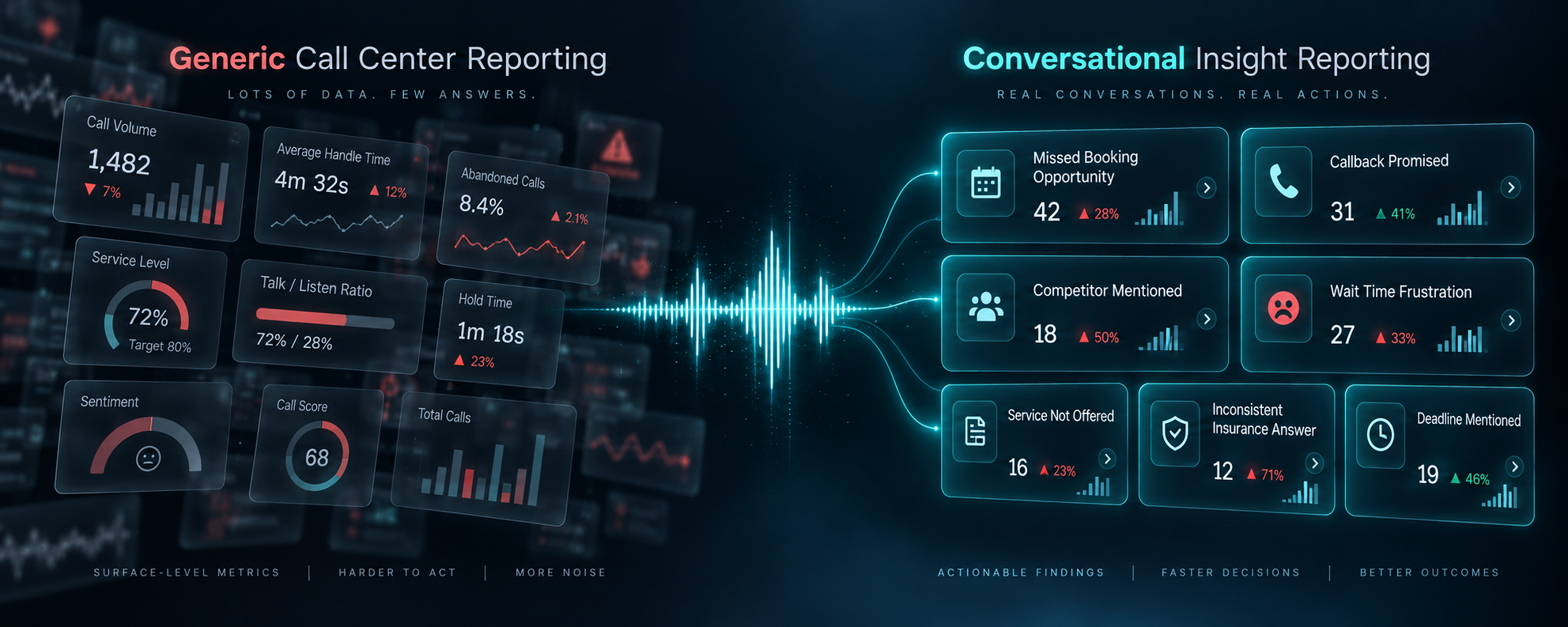
What Sentinel tells you is more specific: whether the caller got what they called for, and if not, what went wrong. A repeat issue, a broken promise, wrong information, a caller bounced between departments. Each of those points at a fix. "The caller seemed unhappy" doesn't.
Will nobody ever see your calls?
Not quite, and you should know exactly where the line is.
Everything runs in TeleCloud's own AWS account. Your recordings are never used to train models, and never sold or shared. Recordings are kept for 90 days and the analysis for 180. Designated TeleCloud staff can read a conversation when they're supporting your account, for example when tuning your rules.
If your policy says no vendor employee may ever read a customer conversation, Sentinel isn't the right fit, and we'd rather tell you that now than after you've signed.
So what does it do?
Short version: Sentinel reads every call you record, points out what went wrong, tells the right person to go fix it, then checks whether it got better.
It covers the front desk, service, dispatch and intake, not just sales. It works with other phone systems as long as we can get the recordings out, which we can usually check on the first call. And you don't have to log in to anything. The person you name gets an email when something needs them.
Is it a fit for you?
If you record your calls, your phone is how customers actually reach you, and someone on your team has twenty minutes a week to act on what it finds, it's worth a conversation. If any of those three isn't true yet, start there.
Every call is a customer experience. Knowing the limits up front is how you get the most out of the calls you're already recording. If you'd like to see what Sentinel would find on yours, we'll walk through it with you.
FAQ
Does conversational insights work if I'm not on TeleCloud?
Usually, yes. Sentinel reads recorded calls from other phone systems as long as we can get the recordings out, which often starts with an API key. On TeleCloud it's already connected. We can check yours on the first call.
Is conversational insights real time?
No. Each call is read after it ends, and the calls that need attention reach the person you name the same day.
Are my call recordings used to train AI?
No. Recordings are never used to train models and are never sold or shared. Everything runs in TeleCloud's own AWS account.
How long are recordings and analysis kept?
Recordings are kept for 90 days and the analysis for 180 days.
Do I need to log in to a dashboard to use it?
No. The person you name gets an email when a call needs them. The dashboard is there when you want the bigger picture.
Will Maddox is the Digital Marketing Coordinator at TeleCloud, overseeing content, brand, and outbound strategy for the company. He writes about cloud communications, AI tools for business, and what SMBs and urgent care operators need to know to run better phone systems. Connect with Will on LinkedIn or email him directly to learn more.