
Do you need consent to record and analyze customer calls with AI?
October 1st, 2026
5 min read
By Will Maddox

This is the question that quietly stalls more call recording projects than cost does. Somebody raises consent, nobody in the room is certain, and the whole thing goes back on the shelf for another quarter.
It deserves a straight answer rather than a shrug, so here is how the question is normally structured, what changes when AI reads the recording, and what to actually check.
One thing to say clearly up front: we are a phone company, not your lawyers, and none of this is legal advice. Consent law varies by state, it changes, and how it applies depends on facts about your business that we do not know. What follows is the practical shape of the problem so you can have a much shorter conversation with someone qualified to give you an answer.
What are one-party and all-party consent?
Almost every conversation about call recording in the United States reduces to this distinction.
One-party consent means it is enough that one person on the call agrees to it being recorded. If your own employee knows the call is recorded, that participant has consented. Federal law works this way, and so do most states, New Jersey among them.
All-party consent means everyone on the call has to agree. Roughly a dozen states take this position, including several large ones that most businesses will touch sooner or later. California, Florida, Pennsylvania, Illinois, Massachusetts and Washington are the ones that come up most often, and the list is not static, which is exactly why you want a current answer rather than a remembered one.
In practice this is why the announcement at the start of a call exists. A clear notice that the call may be recorded, followed by the caller choosing to continue, is the standard way businesses handle it. It is simple, it is cheap, and it removes the question in most situations.
What happens when calls cross state lines?
This is the part businesses most often get caught by, and it applies to more of them than expect it.
Being in a one-party state does not settle it if your caller is somewhere else. A New Jersey business taking a call from Pennsylvania has two states with different rules in play, and the cautious reading is that the stricter one governs. Most businesses with a toll-free number, any advertising outside their state, or customers who travel are in this position without having thought about it.
Which is why the common operational answer is to give notice on every call rather than trying to work out where each caller is. It costs you a sentence and it makes the question go away.
Does AI analysis change the consent question?
This is the question we get asked most and the answer is more reassuring than people expect.
Consent law is about the recording. The legal event is capturing the conversation, and that has already happened before any analysis takes place. A manager listening back to a call, a transcript being produced, and software reading that transcript are all downstream uses of a recording you were either permitted to make or not.
So the consent question does not get harder because you added analysis. If you were entitled to record, you are generally entitled to review what you recorded.
What does change is the second set of questions, and these are worth taking seriously even though they are not consent questions: where the recordings and transcripts are stored, how long they are kept, who can see them, and whether anything is done with them beyond serving you. Those belong in your vendor agreement rather than your call script, and they are reasonable things to ask any provider before you sign. Our comparison of the main conversation intelligence platforms is a reasonable place to start working out who you are actually asking.
What if you are in a regulated industry?
Healthcare, legal, and financial services all carry obligations that sit on top of consent law rather than replacing it.
A medical practice recording patient calls is handling protected health information, which brings its own requirements around safeguards, access, retention, and the agreements you need in place with any vendor touching that data. The same is true in different shapes for urgent care, where call volume spikes make ad hoc handling more likely, and for law firms, where an intake call can carry privileged information before anyone has been engaged. Getting consent right does not get you out of any of that, and meeting those obligations does not get you out of consent.
If you are in that position, or you have a carrier or client questionnaire you need to satisfy, bring it to the first conversation. Going through it line by line early is far less painful than discovering a gap in month two.
Where do your recordings actually go?
Since this is the question underneath the question, here is our answer rather than a general one. Ask any vendor you are considering for theirs in the same detail.
- Your own stack. Everything runs in Amazon Web Services, inside TeleCloud's own account.
- No model training. Your recordings, transcripts and findings are not used to train, fine tune or evaluate any model, and they are not sold or shared.
- Retention you can point to. Recordings are kept ninety days. Transcripts and the analysis built from them, one hundred and eighty.
- Who can read them. Designated staff here can read conversations to support your account and correct a rule that is firing wrong. If your policy is that no vendor employee may ever read a customer conversation, this product cannot meet that, and it is better you know now.
Obtaining the consents that recording requires where you operate is your obligation, under our addendum and under anyone else's. No vendor can take that on for you, and one that implies otherwise is worth a second look.
A practical checklist
Six things to work through. Most businesses can do this in an afternoon and a short call with their attorney.
- List the states your callers are actually in. Not where you are. Where they are.
- Check whether you are announcing recording today. Many businesses that record are not, and have not noticed.
- Check outbound as well as inbound. Outbound calls are easy to overlook and the rules apply to them too.
- Know your retention periods. For your own policy and for anyone who asks.
- Confirm your vendor agreement covers data handling. Storage, access, training use, and what happens to your recordings if you leave.
- Have someone qualified confirm it. An hour of your attorney's time is cheap against the alternative.
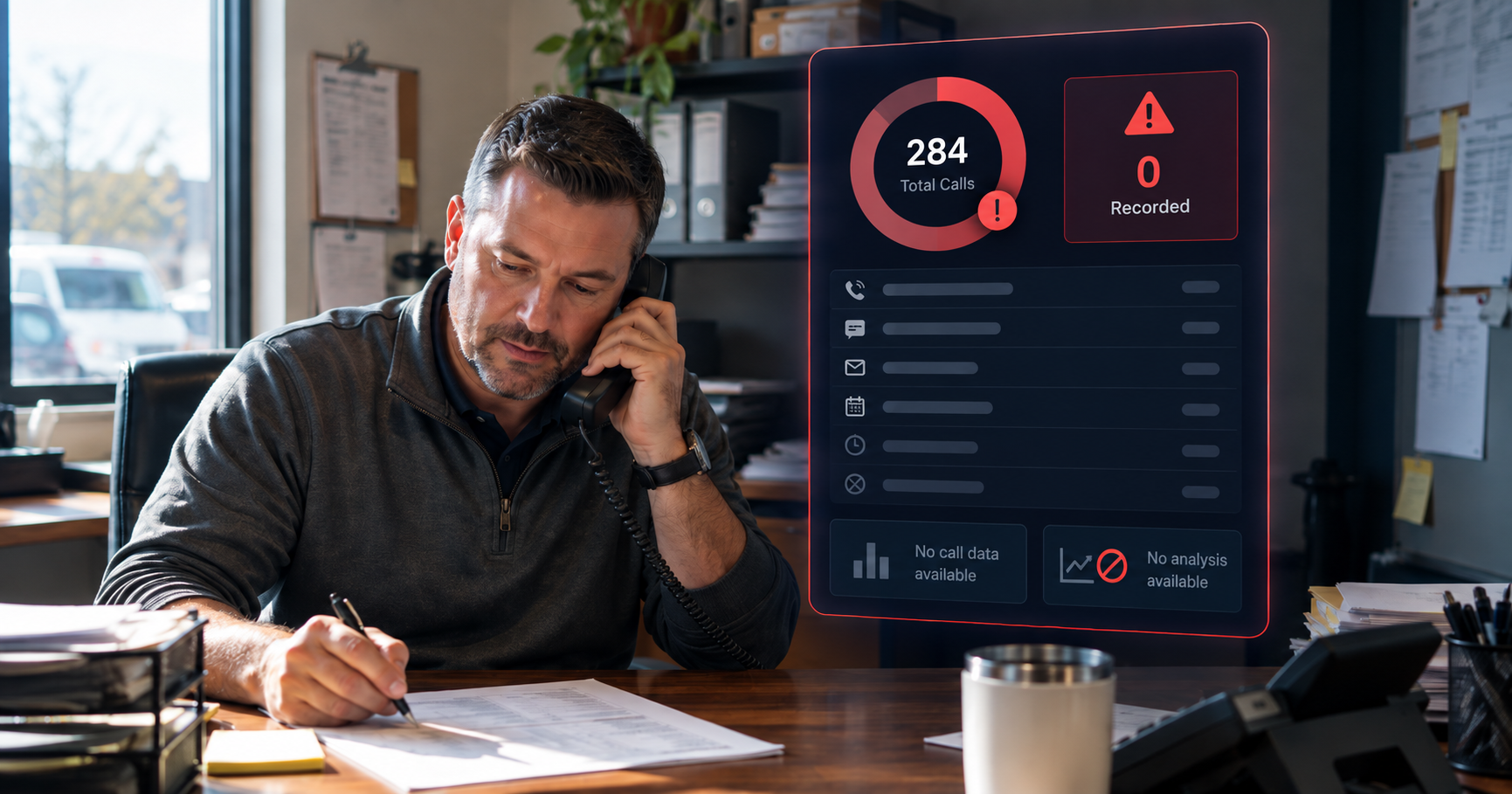
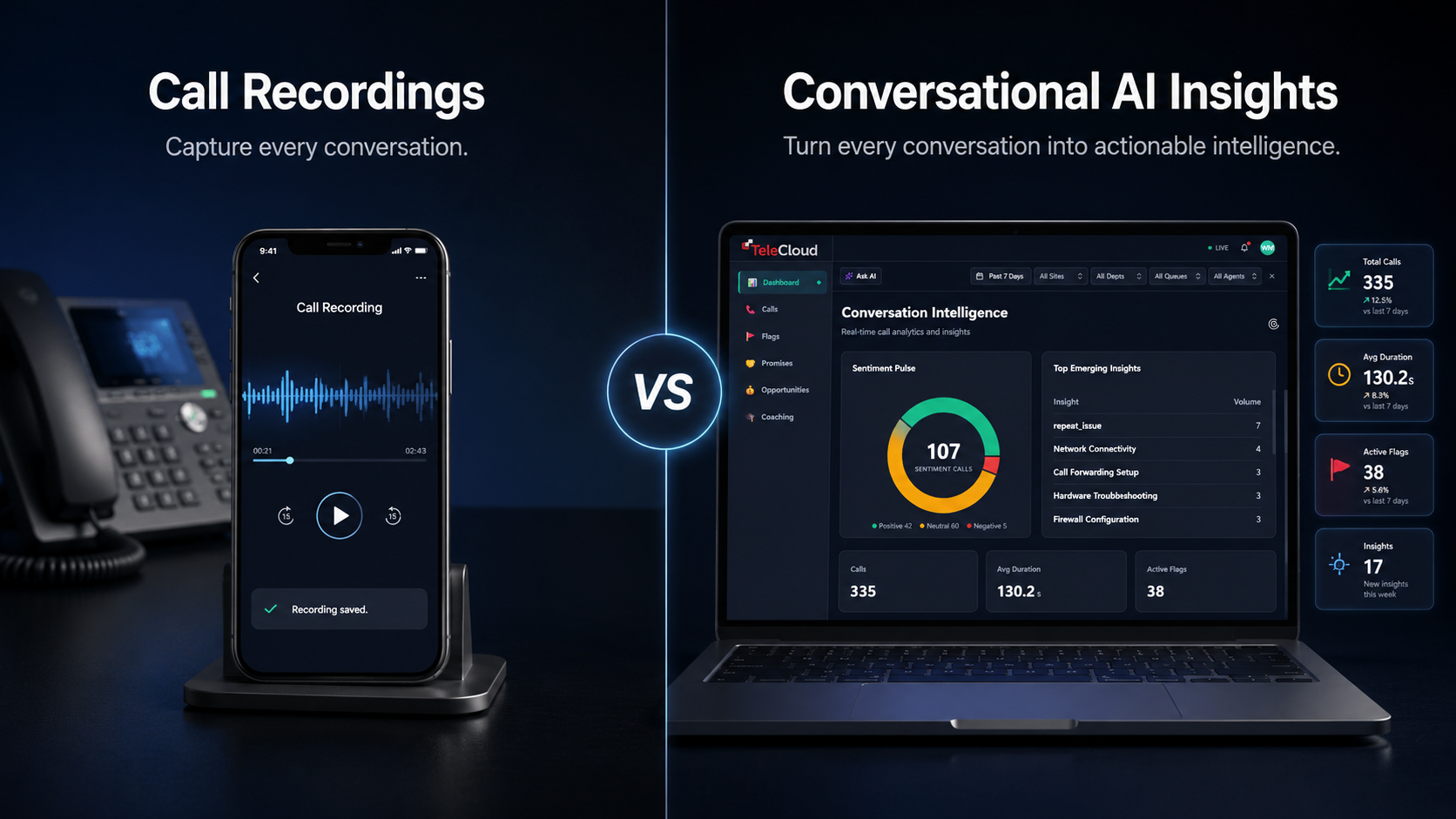
Once that is settled, the remaining question is whether your calls are being captured at all, which is a different problem and a more common one than most operators realise. The coverage audit covers that side, and if you are still working out what reading those calls would actually tell you, we wrote about the gap between call reports and conversational insights separately.
Every call is a customer experience, and being straight with people about recording is part of the experience. Handled properly, this is a sentence at the start of a call, not a reason to stay in the dark about your own phones.
FAQ
Is New Jersey a one-party consent state?
New Jersey follows the one-party rule, as does federal law, meaning consent from one participant is generally sufficient. That does not settle it on its own if your caller is in an all-party state, which is why most businesses announce recording on every call regardless. Confirm your own position with your attorney.
Do I need new consent to run AI analysis on calls I already record?
Consent law generally attaches to making the recording rather than to reviewing it afterwards, so analyzing a call you were entitled to record is usually treated as a downstream use. The questions that do change are about data handling: storage, retention, access, and whether anything is used for model training.
Does an announcement at the start of the call count as consent?
A clear notice followed by the caller choosing to stay on the line is the approach most businesses use, and in many situations it is treated as consent by conduct. Whether it is sufficient for you depends on your states and your industry, so have it confirmed rather than assumed.
Are our recordings used to train AI models?
Not by us. Your recordings, transcripts and findings are not used to train, fine tune or evaluate any model, and they are not sold or shared. It is a fair question to put to every vendor on your list, and worth getting the answer in writing.
How long are call recordings kept?
On our platform, recordings are retained for ninety days and transcripts plus the analysis built from them for one hundred and eighty. If your industry imposes its own retention requirements, those come first and should be part of the conversation before you configure anything.
Will Maddox is the Digital Marketing Coordinator at TeleCloud, overseeing content, brand, and outbound strategy for the company. He writes about cloud communications, AI tools for business, and what SMBs and urgent care operators need to know to run better phone systems. Connect with Will on LinkedIn or email him directly to learn more.
Topics: