
Generic call scoring is noise. Here is what to listen for instead.
September 29th, 2026
6 min read
By Will Maddox
The question most people ask about call analysis is whether the AI is any good. The question that actually decides whether it works is what you told it to listen for.
Every platform in this category can transcribe a call and tell you roughly how it sounded. That part is close to solved and it is not where these projects succeed or fail. They fail three weeks in, when the daily summary has become a wall of mildly interesting observations that nobody has time to read, and the tab quietly stops getting opened.
That outcome is almost always a configuration problem rather than a technology problem. So it is worth understanding what configuration means here, because it is the part buyers ask about least and the part that determines what they get.
Why does generic scoring produce noise?
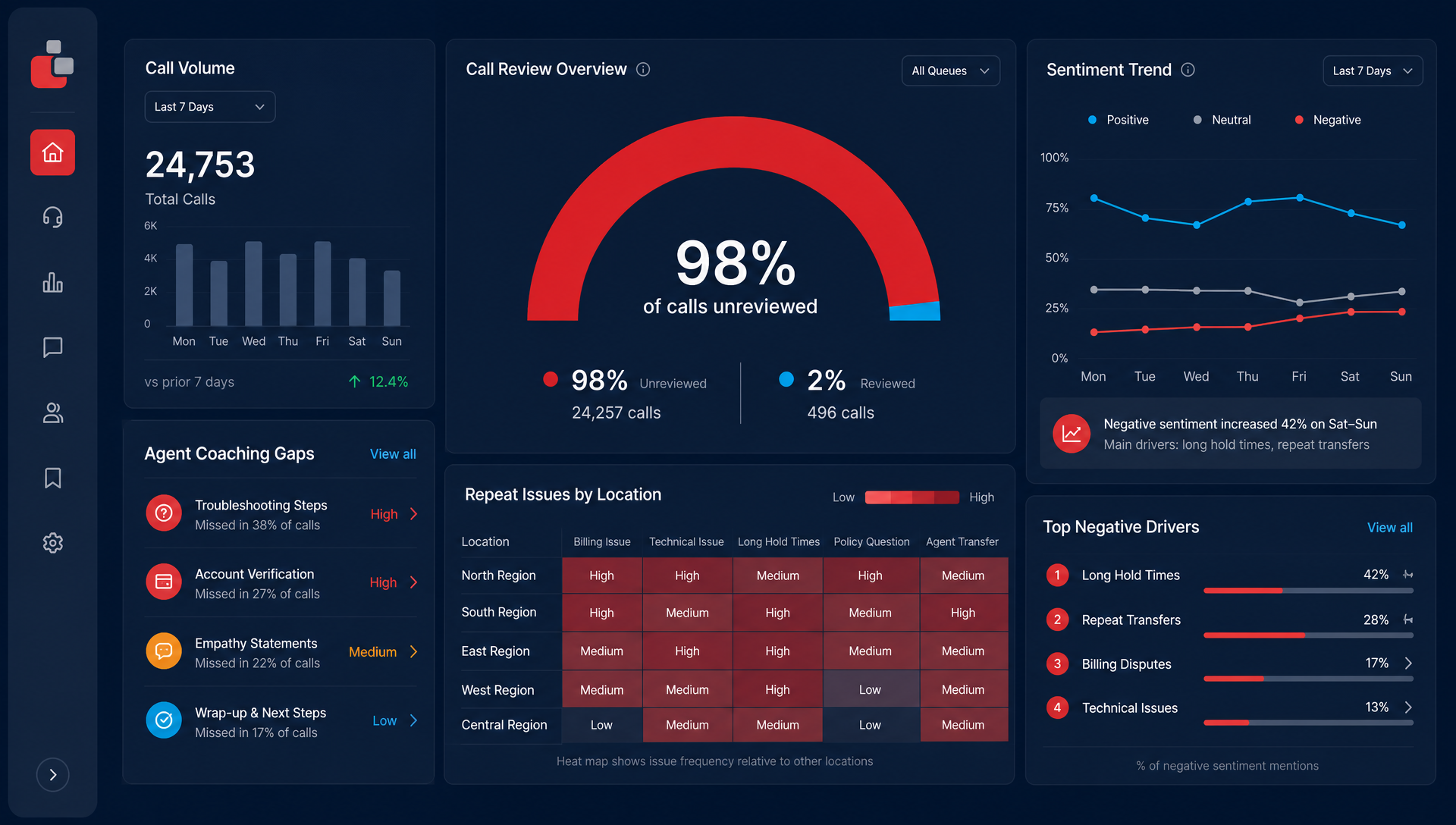
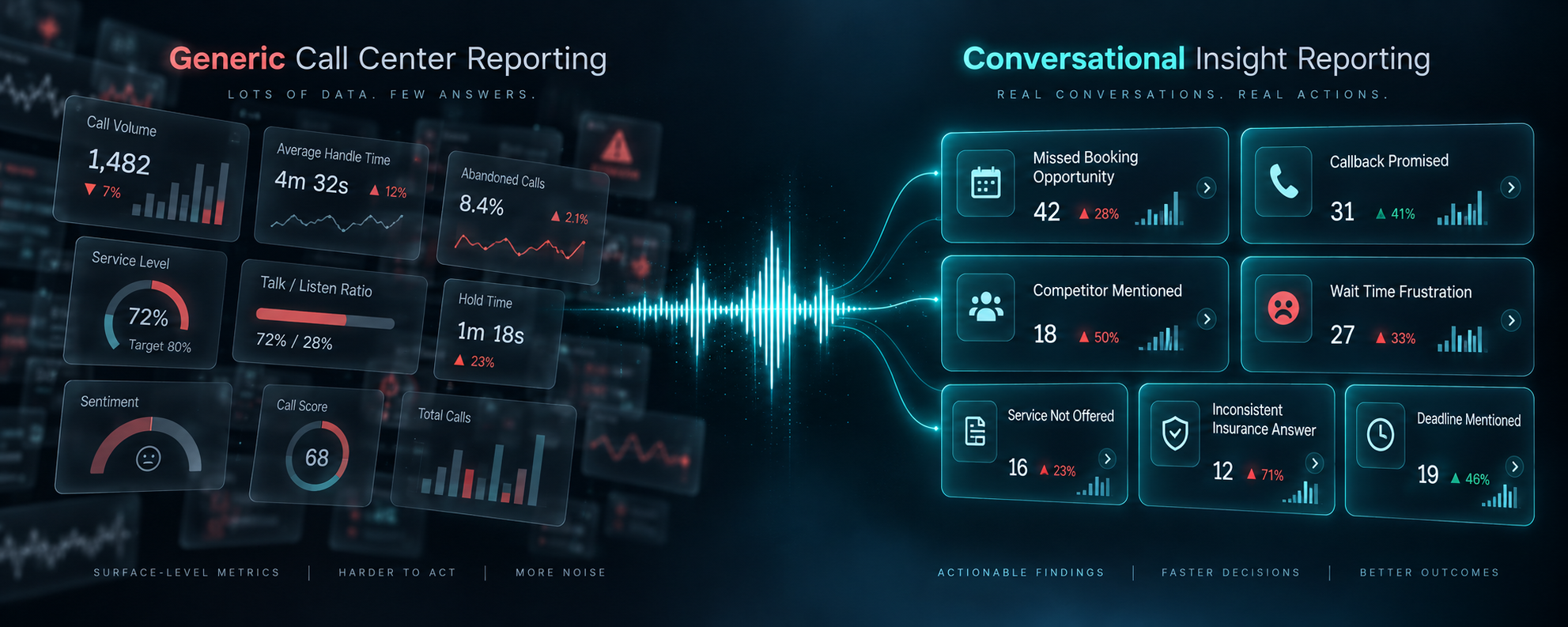
Out of the box, most tools give you something like this: a score for how positive or negative each call sounded, a list of frequently used words, talk-to-listen ratios, and flags on calls where someone seemed upset.
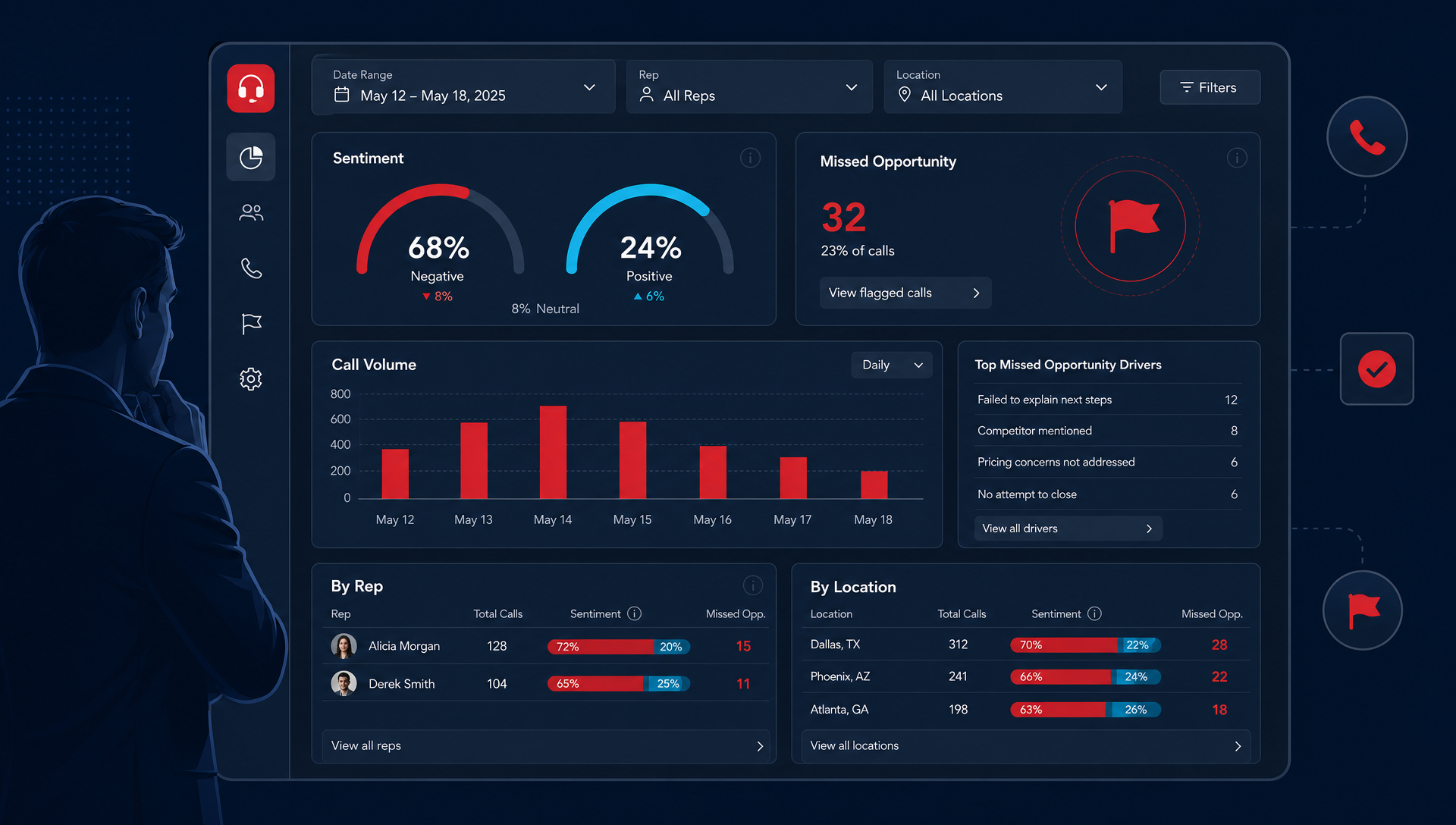
None of that is wrong, and the tone of a call is genuinely worth knowing. It is just not specific enough on its own to act on. A negative flag on a plumbing emergency call tells you a person with a flooded basement was stressed, which you could have guessed. Meanwhile the call where a caller politely asked about a service you do offer, was told you do not, and hung up sounds perfectly pleasant and scores neutral.
This is the same trap as judging your phones on a single headline metric. We have written before about why deflection rates hide what your calls really reveal, and generic scoring fails in exactly the same way: it produces a number that moves without telling you what moved it.
Generic analysis finds how people felt. What you need it to find is the specific thing that costs you money in your business, and that thing is different for a dental practice than it is for a roofing contractor.
What is a rule, in practice?
A rule is an instruction about what matters on your calls and what should happen when it appears. Less formally: the things you would tell a new manager to listen for if you could sit them down with every recording.
A useful rule has three parts. What to watch for, how confident it needs to be before it says something, and what happens when it fires. That last part matters more than people expect. A finding that goes into a weekly summary is a coaching input. A finding that sends an alert within the hour is an intervention. Very few things should be the second kind, and deciding which ones is a business decision rather than a technical one.
Get that balance wrong in the direction of alerting on everything and you end up with the failure we see most often, which is call insights that never actually reach the people who could act on them.
What do three different businesses listen for?
The clearest way to show the difference is to put three real-shaped examples side by side.
An urgent care clinic
- Callers asking about wait times who hang up before being given one.
- Insurance questions answered inconsistently between front desk staff.
- Callers directed to the emergency room, so the team can review whether that was right.
- Anyone told to call back later rather than being booked.
- Callers who needed a language the team could not offer.
More on that setting in how Sentinel works for urgent care centers.
A home services contractor
- Emergency calls that were not treated as emergencies.
- Any price or arrival window quoted on the phone, and whether it matched policy.
- Jobs outside the service area that got booked anyway.
- Callers who mentioned a competitor by name.
- Promised callbacks, so somebody can check they happened.
The after-hours dispatch version of this is covered in how Sentinel works for service trades.
A law firm
- Intake calls where the matter type was never established.
- Anything that sounds like legal advice given before engagement.
- Callers mentioning a deadline or filing date.
- Conflict-check questions that were skipped.
- Prospective clients who were never told what happens next.
The intake-line detail is in how Sentinel works for law firms.
Three businesses, three completely different lists, none of which a generic score would surface. This is why TeleCloud Sentinel Conversational Insights is configured per account rather than shipped as one universal setting, and why we start from a rule pack built for your industry instead of a blank page. The same logic applies whether you are a healthcare practice, an auto dealership, or a growing small business with one busy inbound line.
Who writes the rules, you or the vendor?
Both, and the split matters. An industry rule pack gets you most of the way, because the problems inside a vertical rhyme. What it cannot know is your service area, your policy on quoting over the phone, the product line you added last quarter, or the competitor down the road whose name keeps coming up.
So the rules are written against your own recorded calls rather than a template applied blind. That is the difference between a system that tells you something you did not know and one that tells you what happens in businesses like yours generally.
If a vendor tells you no configuration is needed, ask them what their system would flag on your calls this week. The answer will usually be a tone score. It is one of the questions worth putting to everyone on your shortlist, alongside the others in how to tell which AI call insights platform actually works.
Why the first version of your rules is always wrong
This is the part worth setting expectations on, because it is normal and it surprises people.
The first configuration is a set of educated guesses. Some rules fire constantly on something that turns out not to matter. Some never fire because the wording in real calls is not the wording anyone assumed. Some catch exactly what you hoped and immediately raise a better question.
That is why our setup includes a review at day fourteen rather than a handoff at go-live. Two weeks is roughly when there is enough real output to correct: what fired, what it missed, what it got wrong, and the rewrite that follows. A configuration nobody revisits after launch is the most reliable way to end up with a dashboard nobody opens.
It is also why the second rewrite usually matters more than the first. By then you are correcting against evidence instead of intuition.
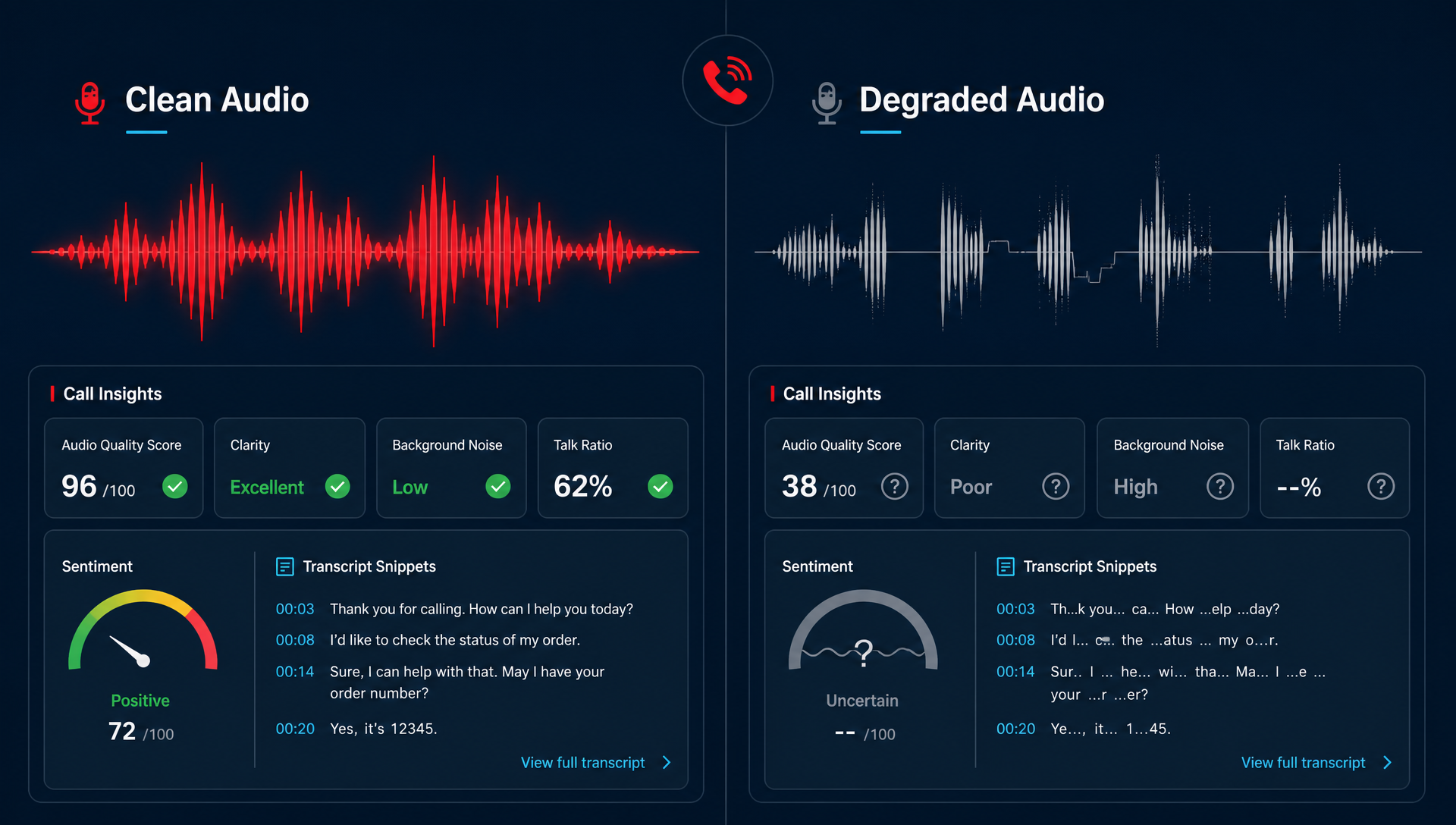
One thing that is not a configuration problem, and gets misdiagnosed as one: if the audio going in is poor, no rule will save it. Bad call audio quietly distorts everything downstream, and it is worth ruling out before you start rewriting rules.
What to bring to the configuration conversation
You do not need documentation. You need answers to a handful of questions, and most operators have them in their head already.
- What does a lost opportunity sound like here? Describe the call you would be angriest to find out about a week late.
- What are people allowed to promise? Pricing, timing, availability. If the boundary is fuzzy internally, the rule cannot be sharp.
- What changed recently? New services, new coverage, a new location. Recent changes are where inconsistent answers cluster.
- What would you want to know within the hour? Keep this list short. Everything else can wait for the summary.
- Who is going to read the output? Name one person. Not a department.
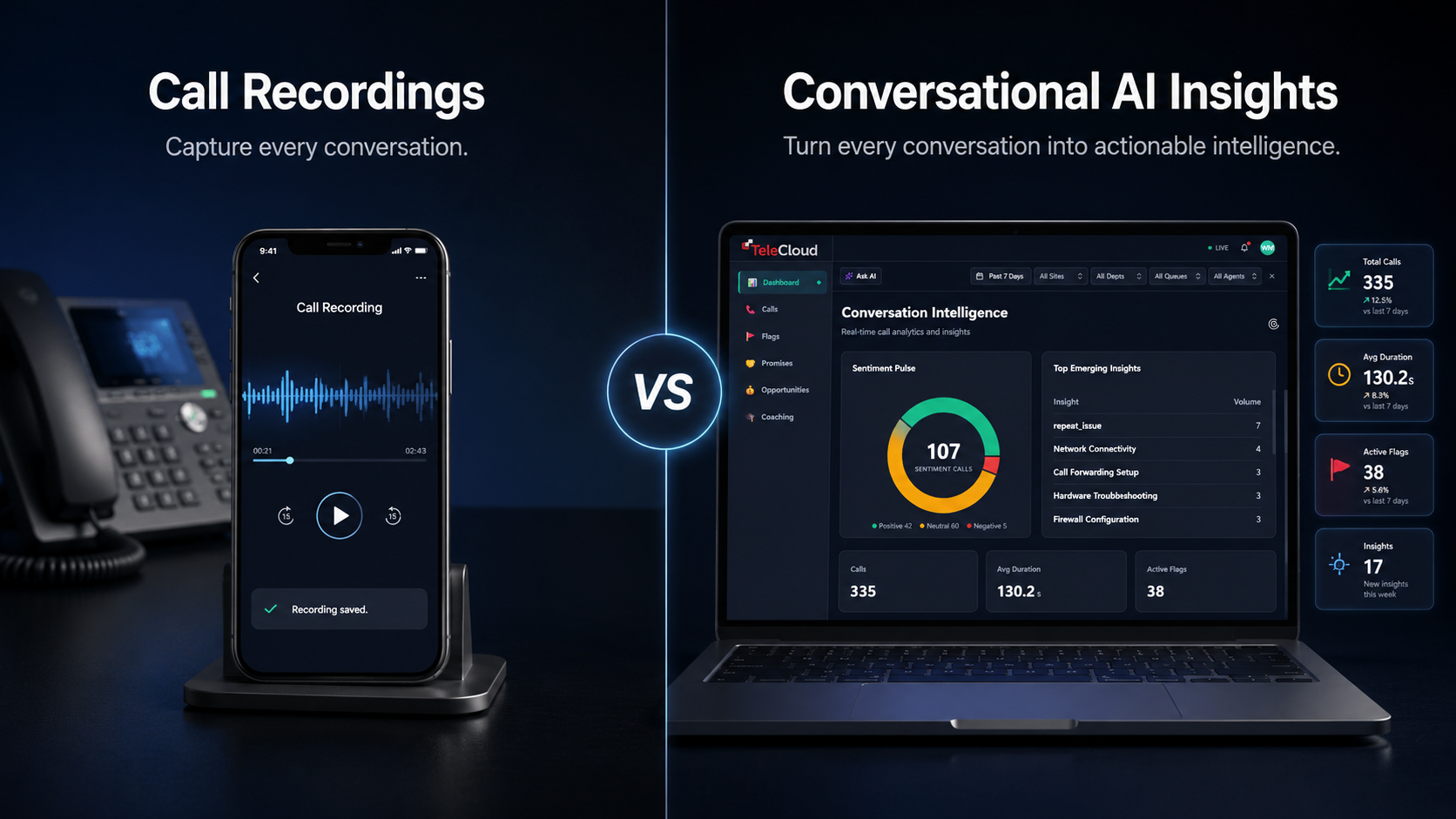
Before any of this is worth doing, the calls have to exist to read. If you have not checked what proportion of your calls are recorded, start with the coverage audit, because configuration on a partial set of calls gives you a confident answer about a fraction of your business. And if you are still weighing this against what your existing reports already tell you, call reports and conversational insights answer genuinely different questions.
Every call is a customer experience. What you choose to listen for is what you will get better at.
FAQ
What is an industry rule pack?
A starting set of things worth listening for in a specific kind of business, built from the problems that recur across that industry. It is a head start rather than a finished configuration, because the details that matter most are usually specific to your operation.
Do I have to write the rules myself?
No. We write them with you, against your own recorded calls, starting from the rule pack for your industry. What we need from you is context only you have: what people are allowed to promise, what counts as urgent, and what you would want to hear about immediately.
Can rules be changed after setup?
Yes, and they should be. A review two weeks after go-live is included precisely so the first version gets corrected against real output. Businesses change, and a configuration that is never revisited stops matching the business it was written for.
How is this different from keyword spotting?
Keyword spotting finds a word. A rule understands a situation. Callers asking about a service you do not offer will phrase it fifty different ways and may never use the word you thought of, which is why word lists tend to catch the obvious cases and miss the expensive ones.
What if we do not know what we want it to listen for?
That is the normal starting point and it is fine. Most operators cannot list their rules, but every one of them can describe the call they would hate to find out about a week too late. Working backwards from that is usually enough to get the first configuration written.
Will Maddox is the Digital Marketing Coordinator at TeleCloud, overseeing content, brand, and outbound strategy for the company. He writes about cloud communications, AI tools for business, and what SMBs and urgent care operators need to know to run better phone systems. Connect with Will on LinkedIn or email him directly to learn more.