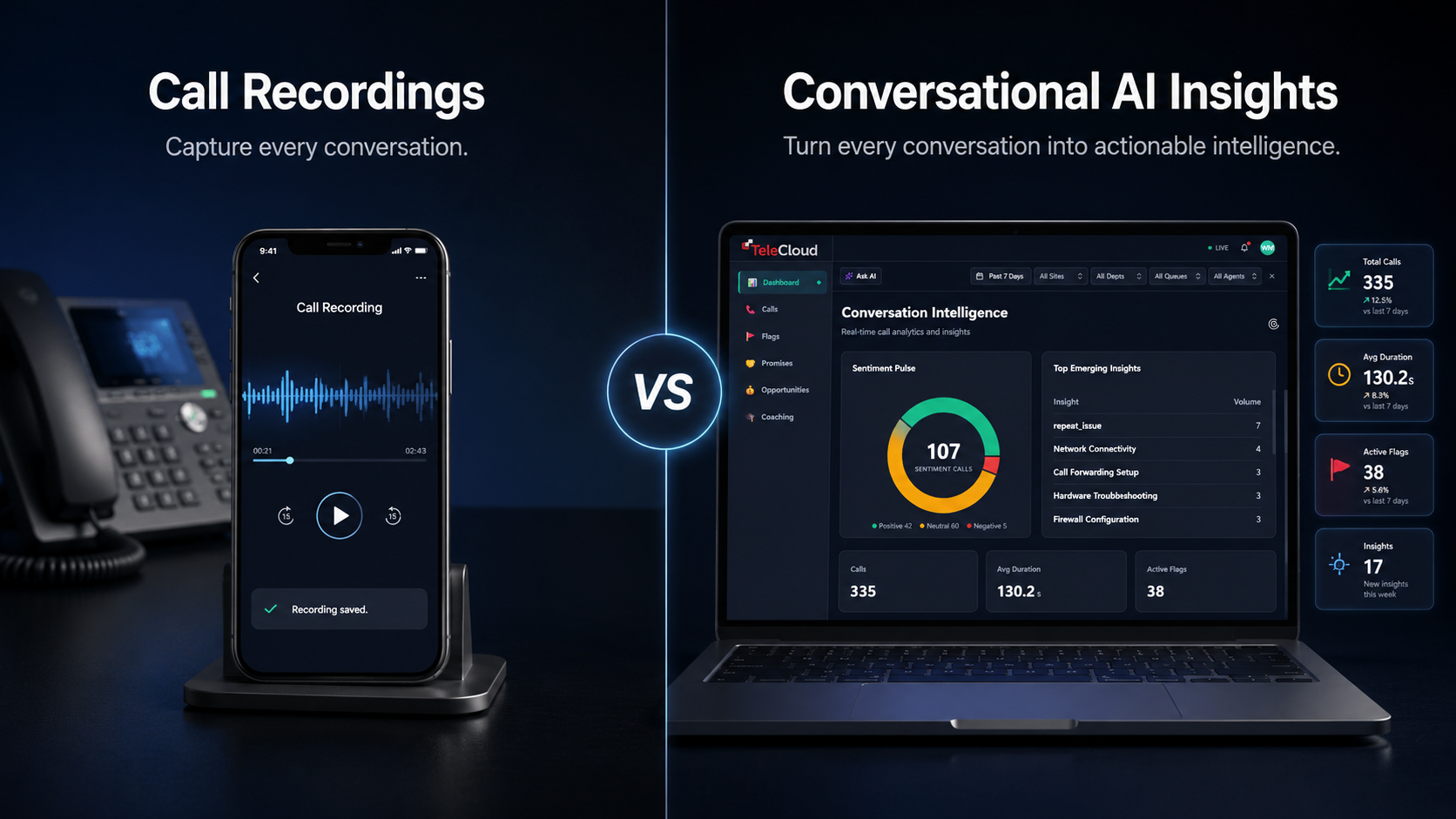

How Conversational AI Insights Can Predict Churn Before It Happens
April 28th, 2026
6 min read
By Will Maddox
|
Quick answer: Customer churn is rarely sudden. It is almost always preceded by friction signals in your call data: repeated callbacks on unresolved issues, declining sentiment across interactions, dropped after-hours calls, and questions that never got a clear answer. Conversational AI Insights surfaces these patterns early enough to act on them. |
Most customers do not tell you when they are done. They do not call to complain, submit a grievance, or announce they are leaving. They just go quiet. The calls stop. The appointments thin out. And by the time you notice the revenue drop, the decision to leave was made weeks ago.
This pattern plays out across industries. An urgent care patient who stops returning after a frustrating front-desk call. An HVAC customer who books a competitor after a missed service follow-up. A law firm client who goes cold after a billing question that never got answered. The context changes, but the mechanics are the same: friction accumulates quietly, and churn follows.
The good news is that those friction moments almost always happen on the phone, and phone calls leave data. This post breaks down how Conversational AI Insights reads that data to surface churn signals early, what those signals look like across different business types, and what you can actually do with the information.
Why Is Churn So Hard to See Coming?
In businesses where communication drives revenue, churn is especially difficult to detect because there is often no formal off-ramp. No cancellation button. Customers simply become less frequent and then absent.
A few structural problems make this worse:
- Transaction data tells you churn has happened, not that it is happening. By the time the numbers shift, the relationship has already deteriorated.
- Most dissatisfied customers say nothing before they leave. Research across service industries consistently shows that unhappy customers do not complain. They disengage.
- Staff turnover means context around specific customer interactions rarely survives long enough to be useful.
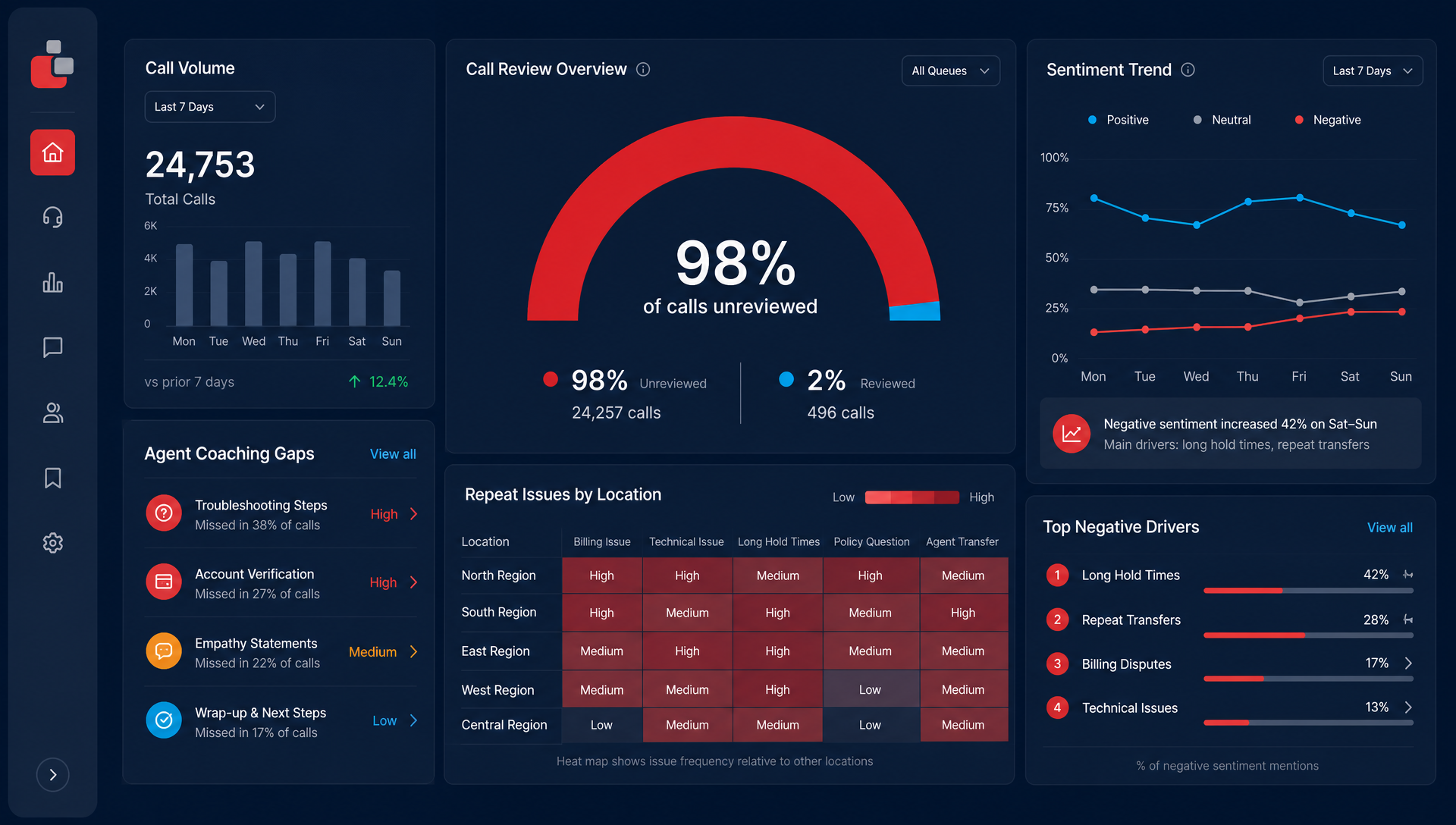
- Manual call review covers only a fraction of the total volume, so most early warning signals sitting in recordings go unread.
The result is that most operators manage retention reactively, responding to problems they can already see rather than catching them when the data first signals something is wrong. That is the gap Conversational AI Insights is built to close.
What Are the Early Warning Signals of Churn in Call Data?
When call data is analyzed systematically, the same friction patterns appear consistently before a customer disengages. None of these signals are definitive on their own, but together they form a recognizable profile.
Repeated Callbacks on the Same Unresolved Issue
When a customer calls more than once about the same thing, a billing discrepancy, an undelivered service, or an unanswered follow-up, it signals that something fell through the cracks. The first call was probably handled fine. The second means the resolution did not stick. By the third call, the customer is questioning whether this business is capable of handling their needs.
This pattern appears across industries:
-
An urgent care patient calling three times about a test result that was never communicated.
-
A field service customer following up on a repair that was never scheduled.
-
A business owner asking repeatedly about an invoice that keeps coming in wrong. The topic changes. The friction is the same.
Declining Sentiment Across Multiple Interactions
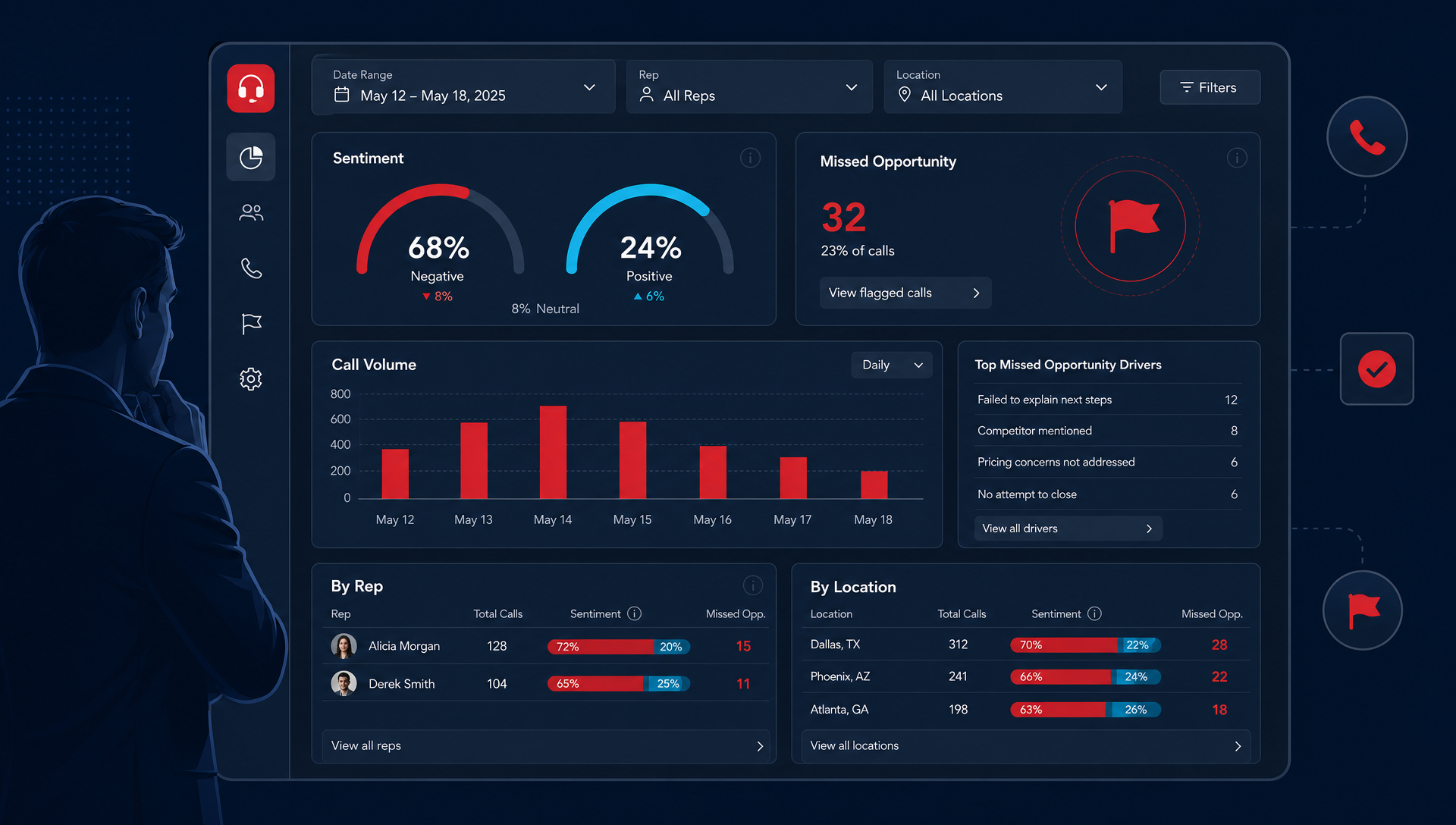
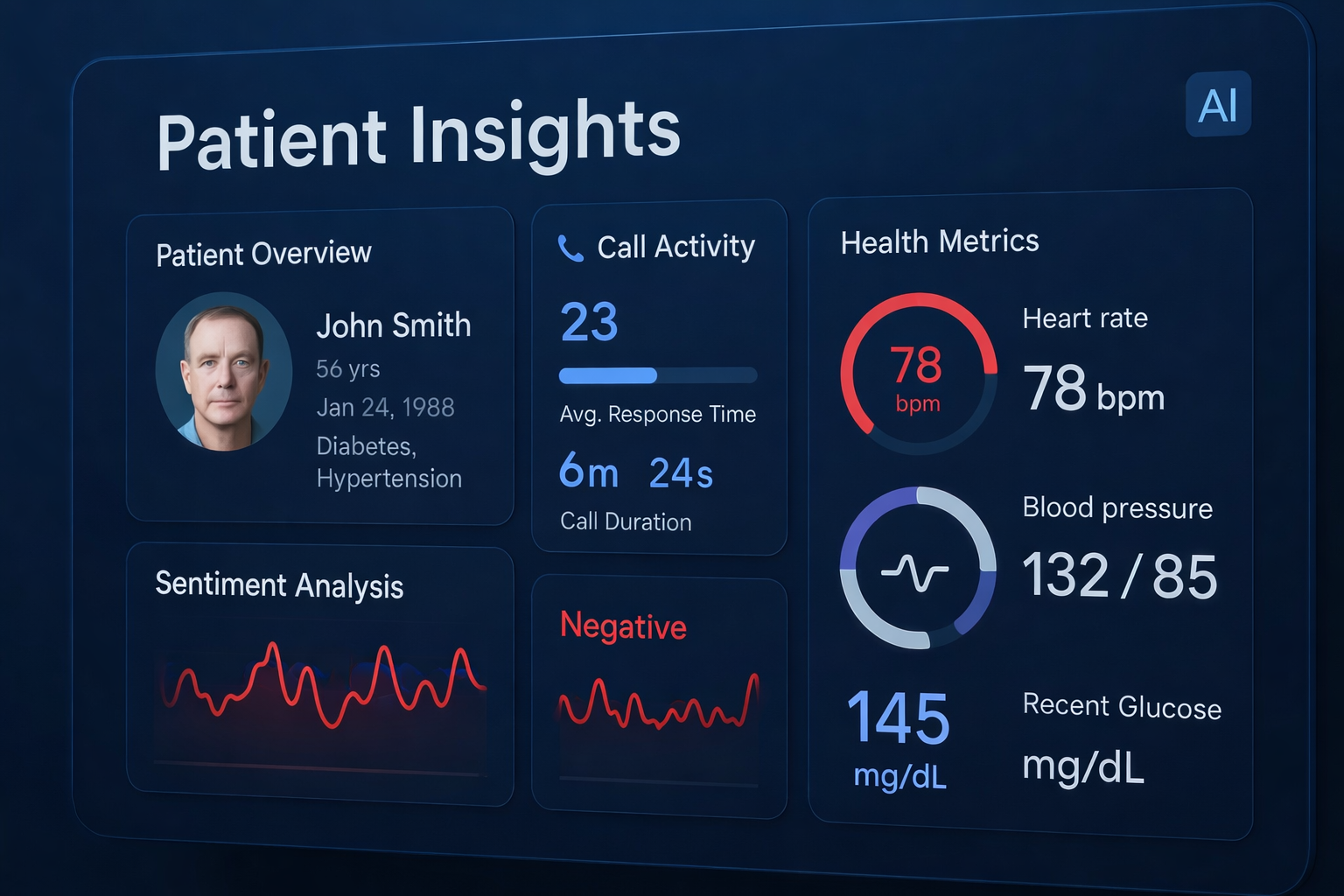
A single tense call is not a churn signal. People have bad days. But when sentiment analysis shows a customer's frustration trending negatively across two, three, or four interactions over a short period, that trajectory matters.
Conversational AI Insights tracks sentiment not just at the call level but across a customer's full interaction history, making it possible to see when a relationship is deteriorating over time rather than identifying isolated incidents. For multi-location operations, this view extends across all sites so leadership can spot which locations are generating consistent negative trends, not just one-off difficult calls.
Calls That End Without Resolution
One of the clearest churn predictors in call data is the unresolved interaction. The customer called with a question or problem and did not get an answer. They may or may not call back. If they do not, that unresolved issue is sitting in the background quietly eroding their confidence in your business.
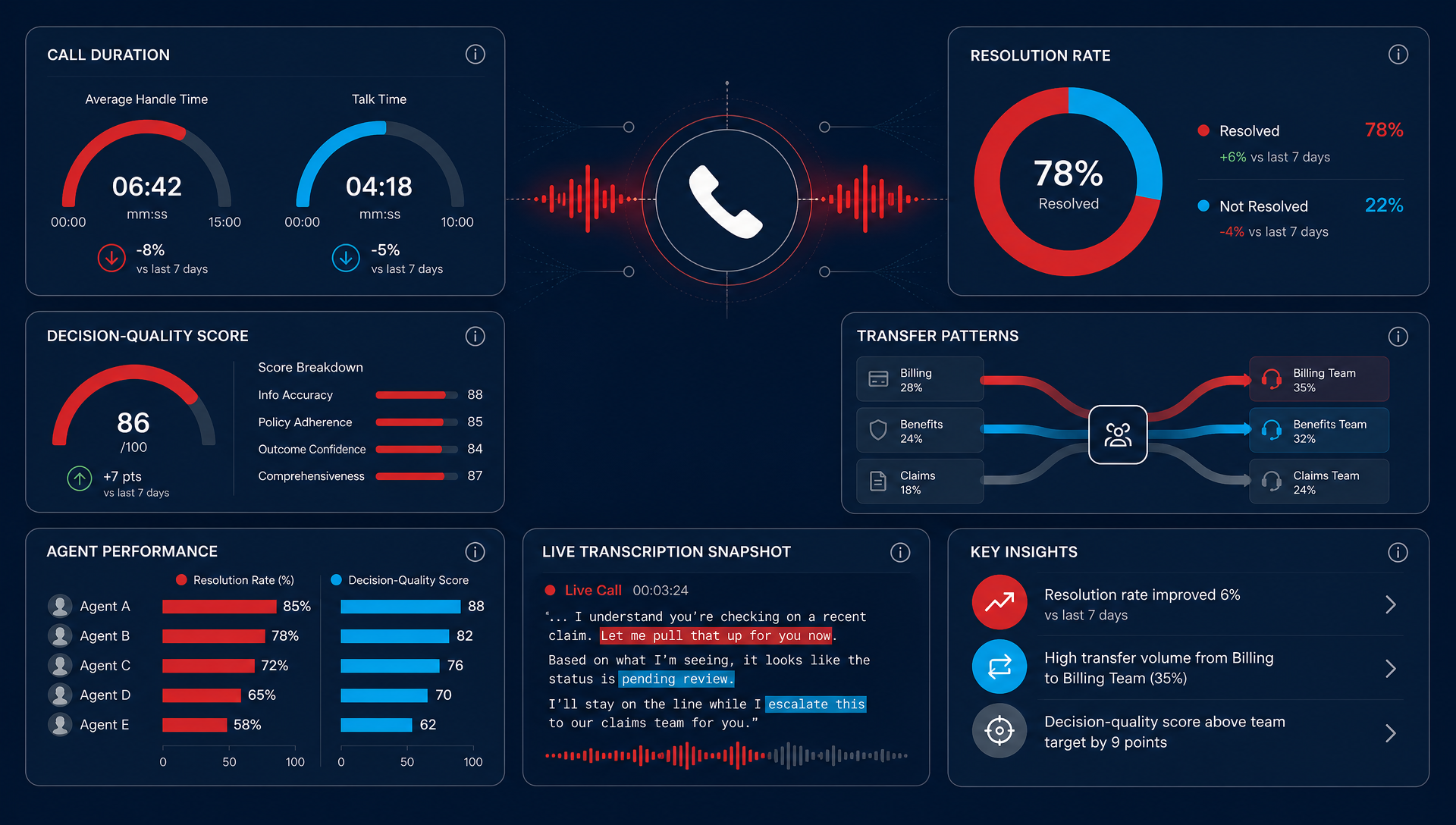
AI call analysis identifies these calls by looking for patterns that indicate no clear resolution occurred: the caller was transferred and never reconnected, a callback was promised but not logged, or the question was deferred without a clear next step. From the front desk's perspective, the call ended. From the customer's perspective, it did not.
After-Hours and Overflow Calls That Never Got a Response
A customer calling after hours is almost always high-intent. In urgent care, that might be a patient deciding between your clinic and the emergency room. In field service, it might be a commercial client with equipment down. A missed call that never receives a follow-up does not just represent a lost immediate opportunity. It communicates something about your reliability that the customer will not quickly forget.
|
Businesses that follow up on missed after-hours calls within the next business morning recover a significantly higher percentage of those customers than those that do not follow up at all. The window is short. The data makes it visible. |
How Does This Compare to Traditional Customer Feedback Tools?
Satisfaction surveys and NPS scores are useful for measuring experience at a point in time. But they have real limitations for churn prediction specifically.
- Surveys only capture customers who respond. The ones most likely to churn are often least likely to fill ouat a feedback form.
- Results are aggregated. A score of 4.2 out of 5 does not tell you which specific interactions drove the drop from last quarter's 4.5.
- Surveys are retrospective. By the time a customer reports a bad experience, the window for intervention has usually already closed.
- Surveys miss customers who never came back. If someone disengages before their next interaction, they are simply absent from your next feedback cycle.
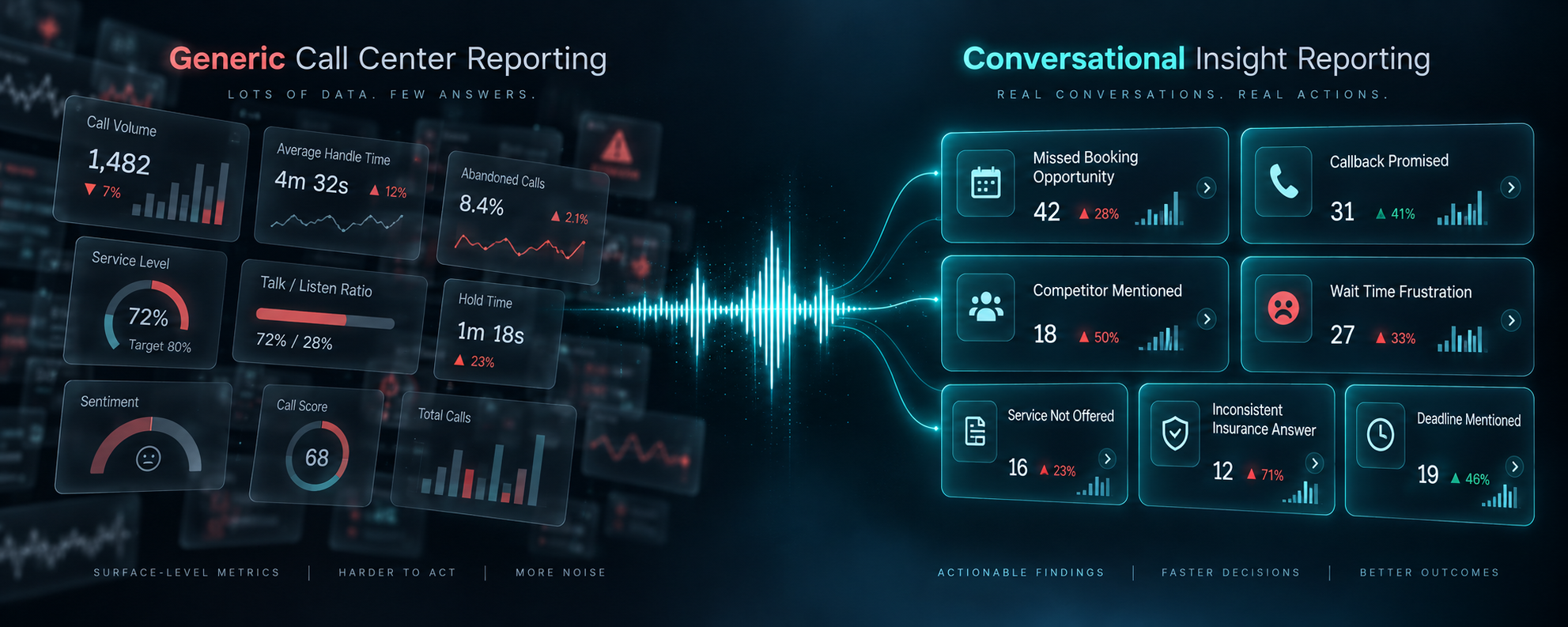
Call data works differently. It captures every interaction, not a sample. It is available in near real time. It is specific enough to identify exactly which calls, staff members, and topics are generating friction. And it includes the customers who are drifting away, because disengaging customers often call repeatedly before they go quiet for good.
|
Want to see what your call data is already telling you? TeleCloud's Conversational AI Insights platform surfaces churn signals, sentiment trends, and unresolved interaction patterns across your full call volume. Request a free assessment at telecloud.net. |
What Can Businesses Actually Do With This Information?
Close the Loop on Unresolved Calls
When AI flags a call that ended without resolution, the next step is simple: someone follows up. A callback within 24 hours, a clear answer to the original question, and a brief acknowledgment that the customer had to reach out more than once. This has an outsized effect on loyalty relative to the effort it requires. The hard part has never been making the follow-up call. It has been knowing which calls needed one.
Use Sentiment Trends to Drive Coaching
If negative sentiment is clustering around a specific staff member, time slot, or call topic, that is a training signal, not a performance review. For an urgent care front desk, it might mean the Monday morning rush needs a scheduling adjustment. For a field service dispatch team, it might mean a specific call type needs better communication protocols. Businesses that use sentiment data for coaching tend to improve retention metrics faster than those waiting for complaints to surface the same issues.
Build a Follow-Up Protocol for Missed Calls
For businesses where after-hours calls represent high-intent interactions, a consistent protocol recovers meaningful revenue. Any unanswered after-hours call gets a return call before mid-morning the next business day. The list is generated automatically from call data, not from anyone's memory of which calls they happened to notice.
Give Multi-Location Operations a Portfolio View of Retention Risk
For businesses managing multiple locations, Conversational AI Insights provides a consolidated view of where customer sentiment is declining and where retention risk is concentrated. This lets leadership allocate resources toward the locations that need it most, rather than discovering a problem site only after it shows up in the quarterly numbers.
The Customer Who Is About to Leave Is Still Calling You
Churn builds quietly across a series of small friction moments: an unresolved question, a missed call, a tone that left someone feeling like they were not a priority. By the time visit counts drop or revenue slows, the signal was already in the call data weeks earlier.
The shift Conversational AI Insights makes possible is from reactive to proactive. Instead of discovering a retention problem in your monthly numbers, you can see the early warning signs in real time and act before the customer makes a decision that is hard to reverse. That applies whether you are running an urgent care clinic, a field service operation, or any other business where the phone is a primary customer touchpoint.
The customers on the fence right now are still calling. Some called today. The question is whether anyone is paying attention to what those calls are already trying to tell you.
|
Conversational AI Insights does not just analyze calls. It tells you which customer relationships need attention before those customers quietly move on. Request a free assessment at telecloud.net and see what your call data is already trying to tell you. |
Frequently Asked Questions
What types of businesses benefit most from AI churn prediction through call data?
Any business where the phone is a primary customer touchpoint and where relationships are ongoing rather than one-time. Urgent care clinics, field service and dispatch operations, professional services firms, and multi-location businesses all fit this profile. In each case, the phone call is where friction accumulates and where early churn signals are most visible.
How does Conversational AI Insights identify churn risk?
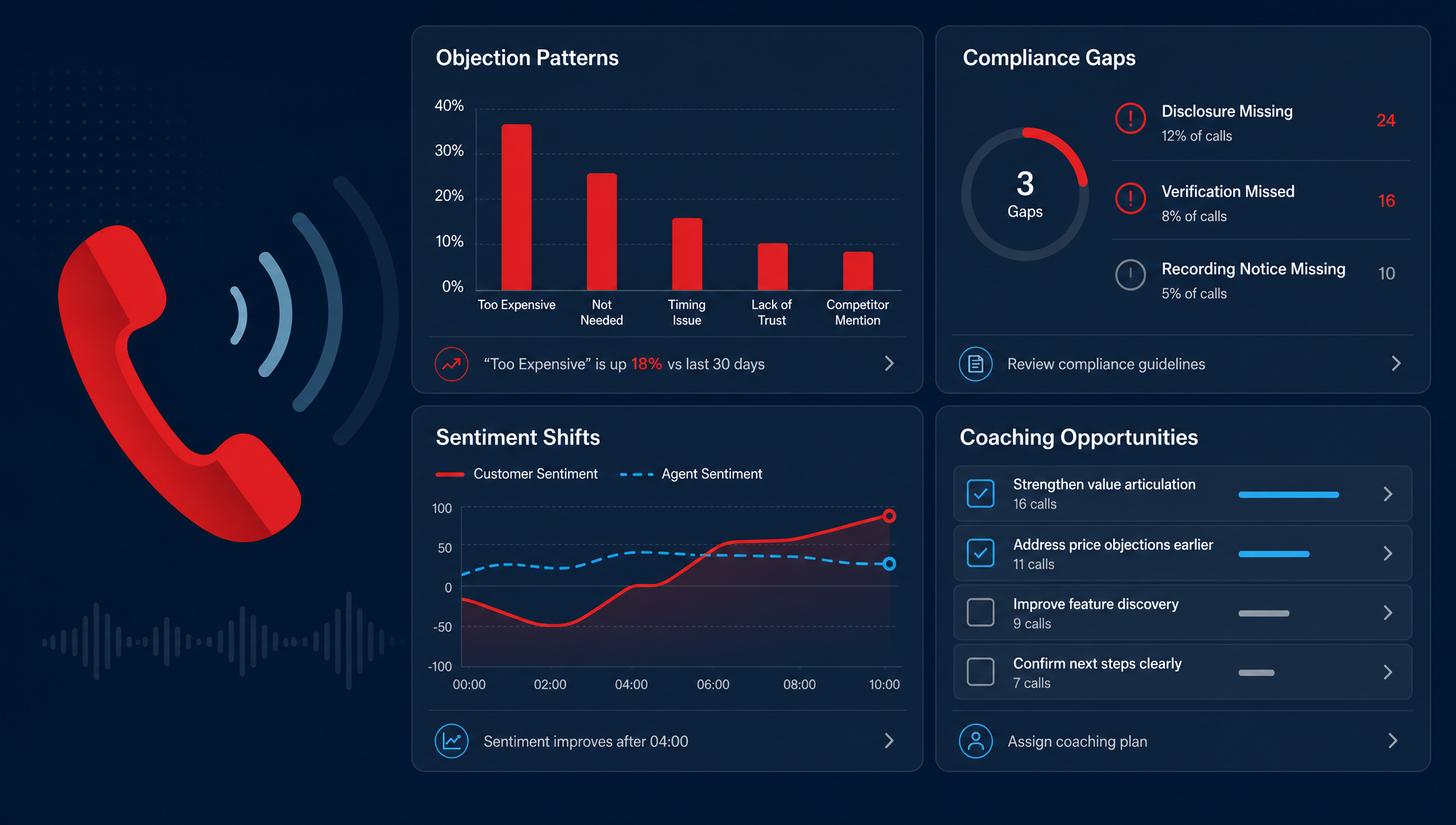
Conversational AI Insights analyzes every recorded call for patterns associated with customer disengagement: repeated callbacks on unresolved issues, declining sentiment across multiple interactions, calls that ended without clear resolution, and after-hours calls that received no follow-up. These signals are tracked over time to identify customers and locations at elevated churn risk.
Is call sentiment analysis reliable enough to act on?
Modern conversational AI analyzes tone, pacing, word choice, and interaction resolution patterns across every call. It surfaces patterns at a scale no manual review process can match. The value is in identifying recurring trends across staff members, call topics, time slots, or locations, not in drawing conclusions from any single call in isolation.
How is this different from customer satisfaction surveys or NPS scores?
Surveys capture a self-selected sample of customers, retrospectively. Call data captures every interaction in near real time, including the customers most likely to churn, who rarely respond to surveys but often call repeatedly before going quiet. Surveys tell you how customers felt after the fact. Call data tells you what is happening right now.
Does a small or single-location business need churn prediction tools?
Smaller businesses are often more exposed to churn than large ones because there is less volume to absorb customer losses before they show up in revenue. The same call data visibility that helps enterprise operators monitor performance across dozens of sites helps smaller operators identify the specific customer relationships that need attention before those customers find a competitor down the road.
Will Maddox is the Digital Marketing Coordinator at TeleCloud, overseeing content, brand, and outbound strategy for the company. He writes about cloud communications, AI tools for business, and what SMBs and urgent care operators need to know to run better phone systems. Connect with Will on LinkedIn or email him directly to learn more.