
How TeleCloud Sentinel Conversational Insights Helps Service Trades
September 3rd, 2026
6 min read
By Will Maddox
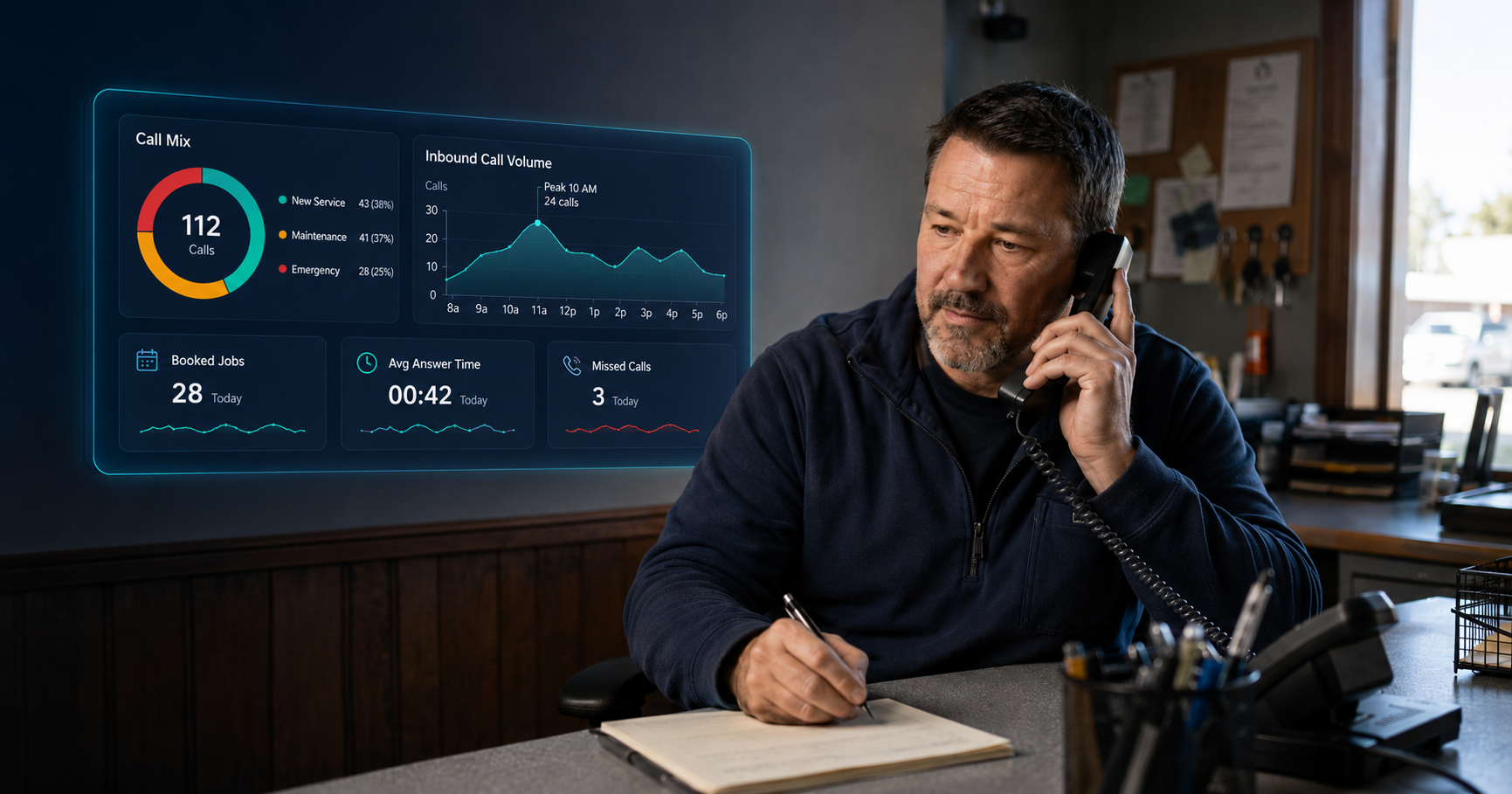
Every day, your CSRs and dispatchers are on the phone with someone who has no heat in January, a leak spreading under the sink, or a system that's been acting up for months and just quit. Some of those calls end in a job booked right, with the right address, the right access instructions, the right system type on file. Others end in a job booked wrong, or in a caller who asked what it costs and hung up, or in a promise made after hours that nobody in the office even knows was made.
None of that shows up in your call volume report. It shows up later: as a truck roll that didn't go according to plan, a maintenance plan that never got mentioned, or a customer who called your competitor instead of calling back.
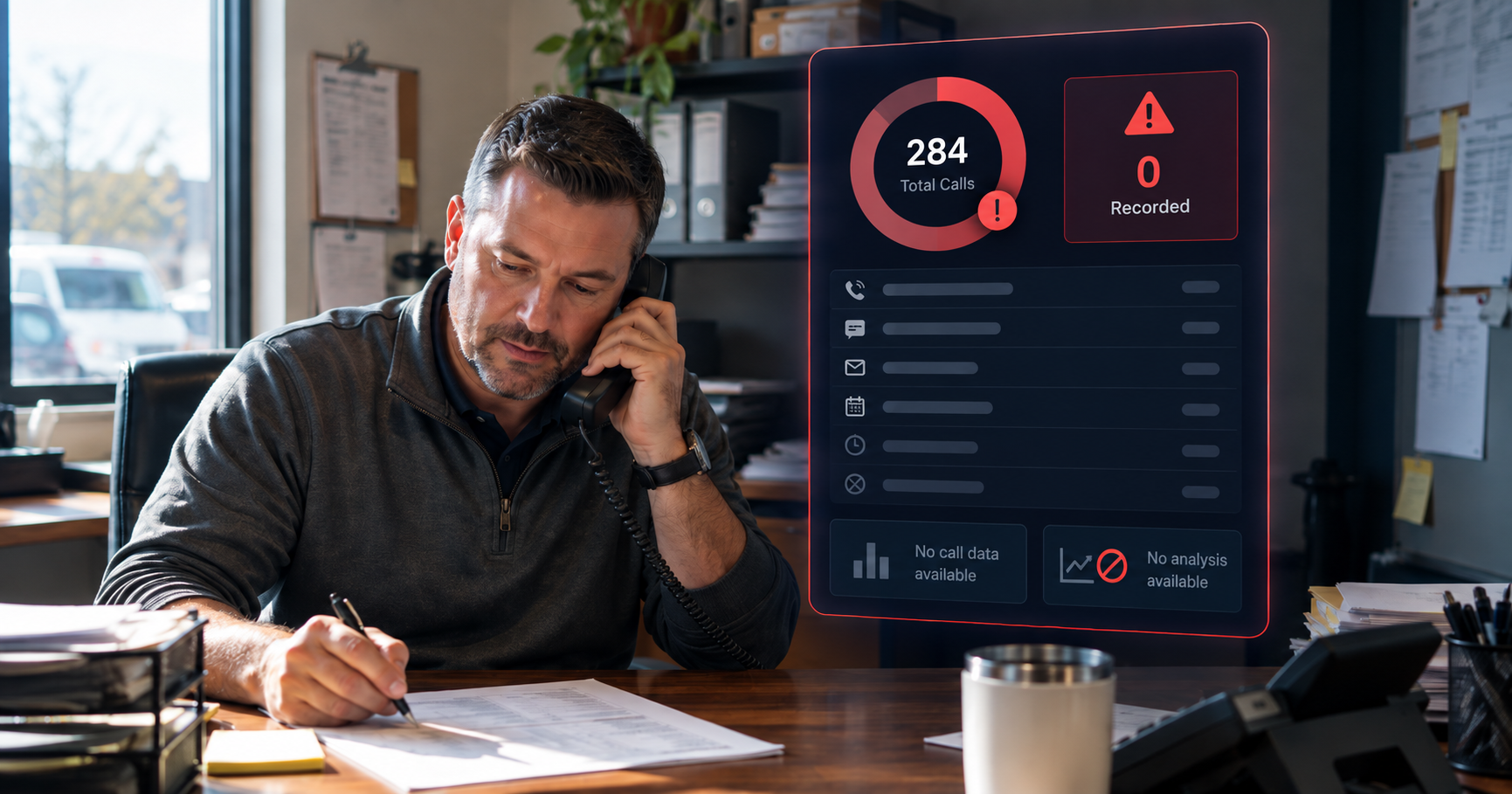
You can't fix what you can't see, and most service trade businesses are reviewing somewhere in the range of 2 to 10% of their calls on a good day, whatever a manager has time to spot-check between everything else on the schedule.
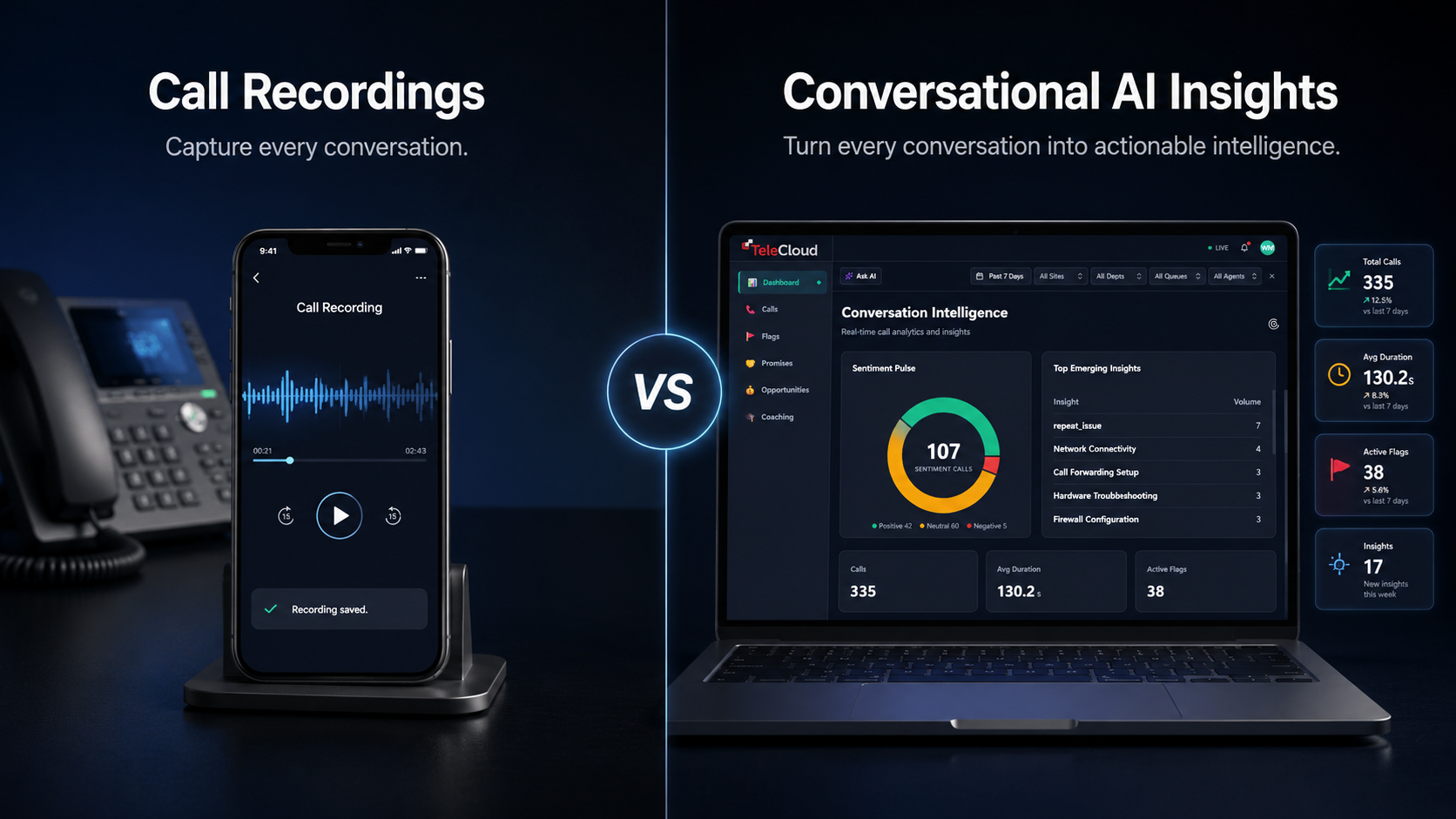
This is what TeleCloud Sentinel Conversational Insights was built to change. Not by asking your team to review more calls, but by making every call reviewable automatically, and turning that visibility into a working picture of what it's worth.
What's Actually Happening on Your Service Calls?
Every call into a home services business carries information your team needs but doesn't have time to extract:
- Did the emergency call, the one with no heat or a burst pipe, get treated with the urgency it needed, or did it sit in the same queue as a routine tune-up request?
- Did the booked job actually capture what the tech needs to succeed: system type, address, access instructions, the real nature of the problem?
- Did the caller who asked about price get an actual attempt at booking, or did the call end the moment the number came up?
- Did anyone mention the maintenance plan to the customer who said "this keeps happening" or "the unit's pretty old"?
- What got promised on last night's after-hours call, when no manager was there to hear it?
Individually, each of these is one call. Across hundreds of calls a week, they add up to wasted truck rolls, lost revenue, and customers who quietly stop calling, and almost none of it is visible without listening to the actual calls.
Why Manual Review Was Never Going to Solve This
The instinct is to spot-check: pull a few recordings, listen for red flags, coach where needed. It's reasonable, and it's also nowhere near enough. A manager sampling calls by hand catches a fraction of what's happening, and almost never in time to stop the outcome that mattered: the truck that rolled to the wrong job, the price-shopper who hung up, the maintenance plan that never got offered.
The problem was never that service trade owners and managers didn't care about call quality. It's that there was no practical way to review 100% of calls without adding headcount whose only job was listening to recordings, and most businesses in this industry don't have that headcount to spare.
How Sentinel Changes What's Visible
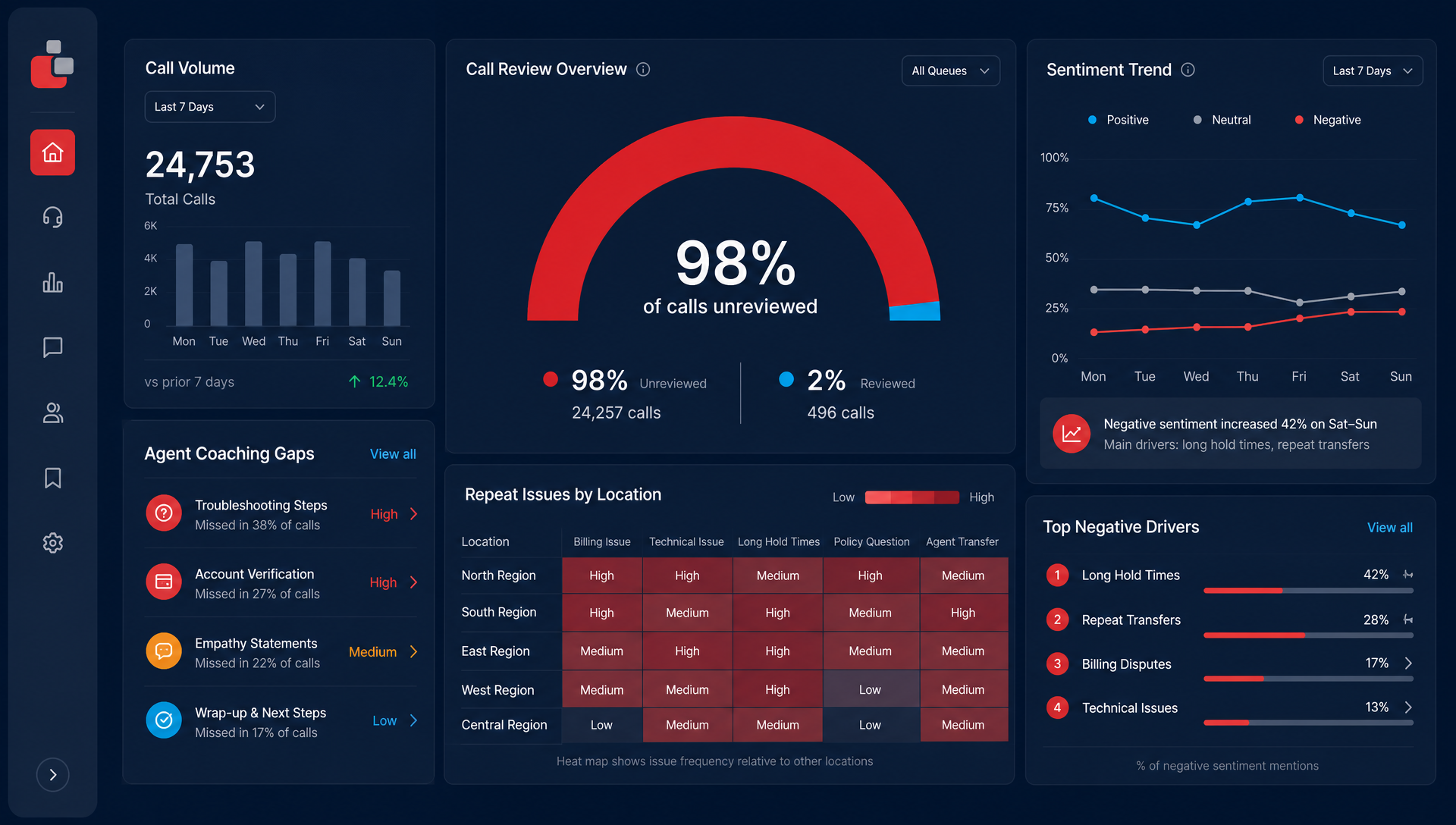
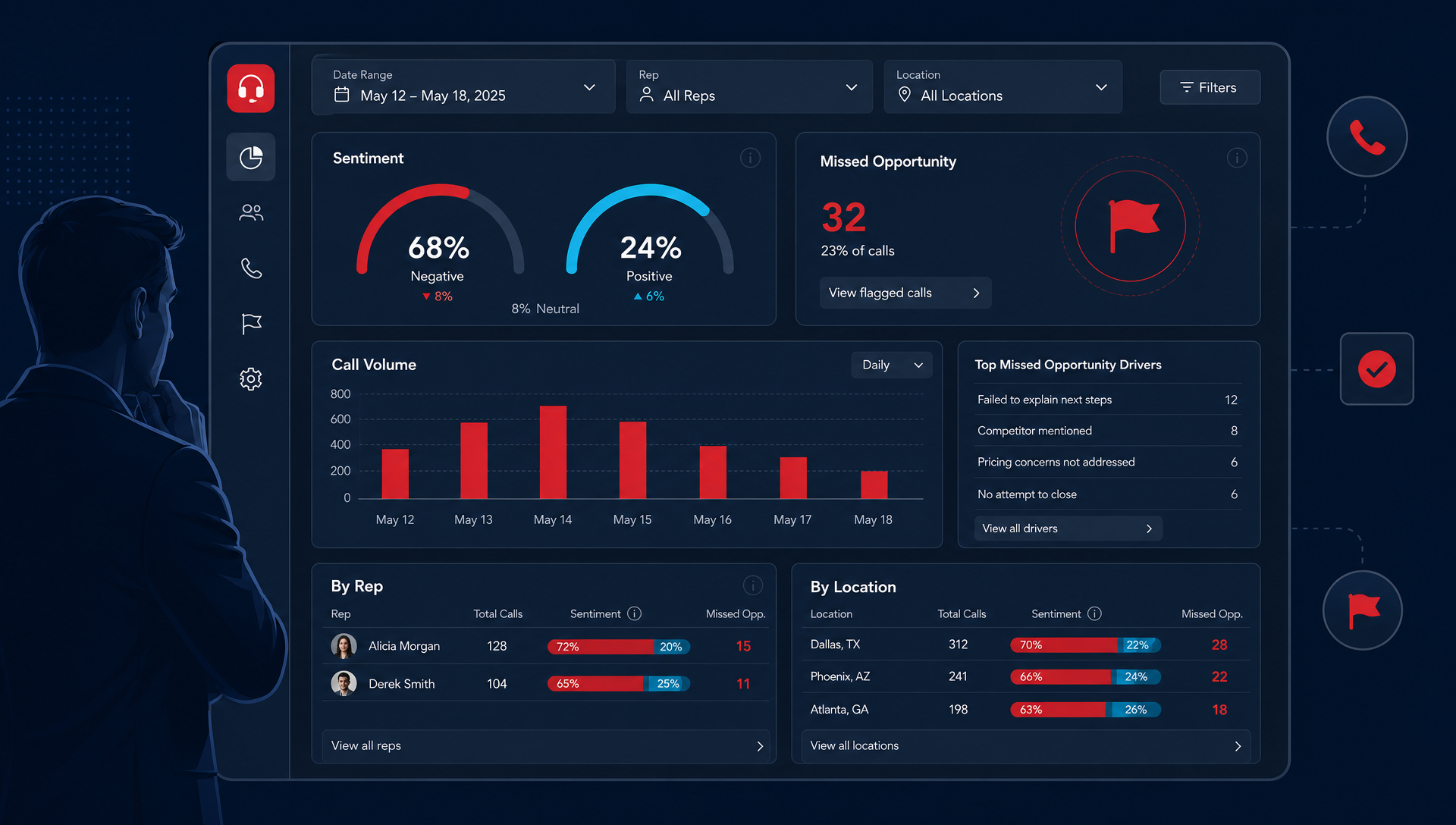
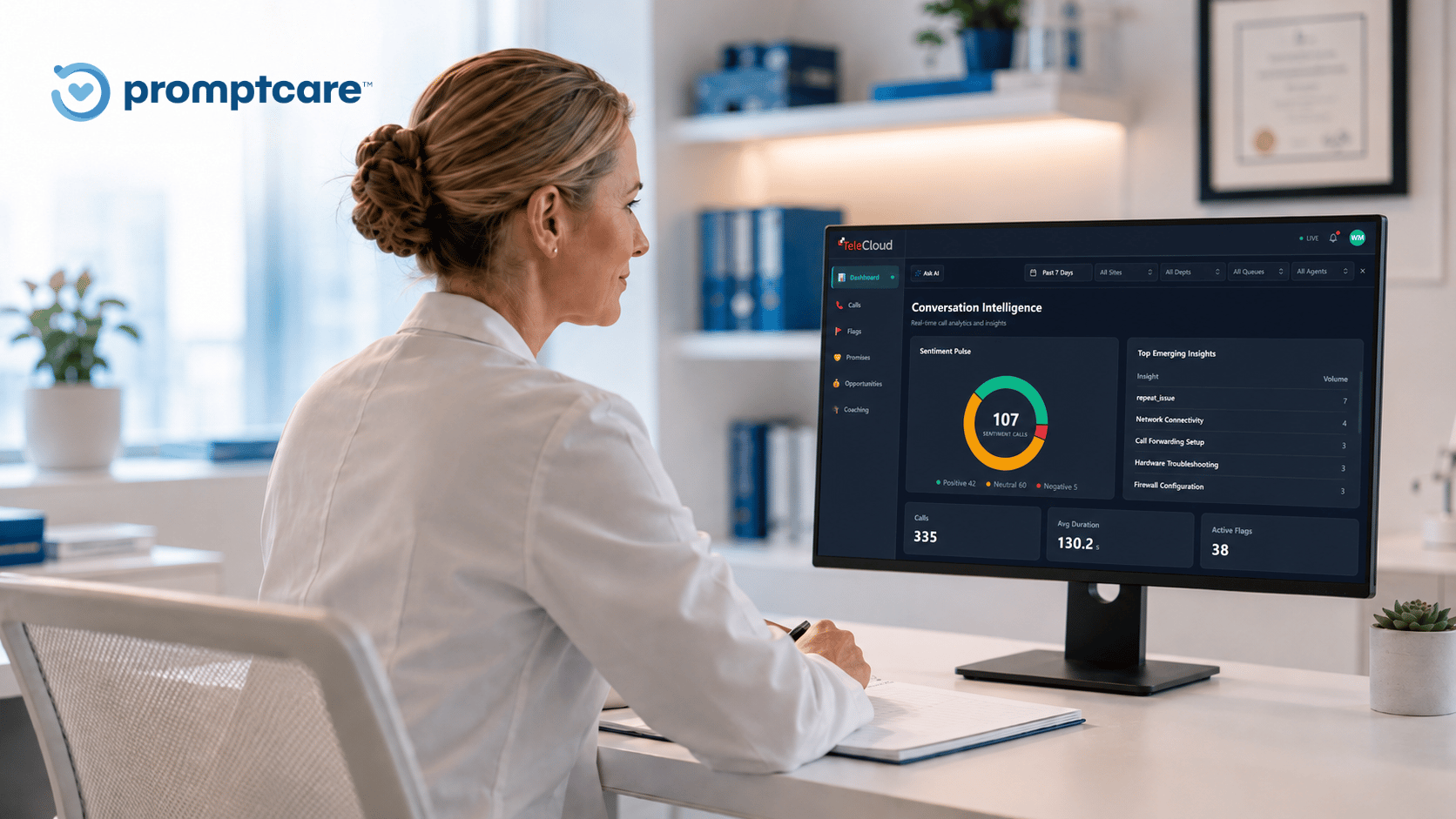
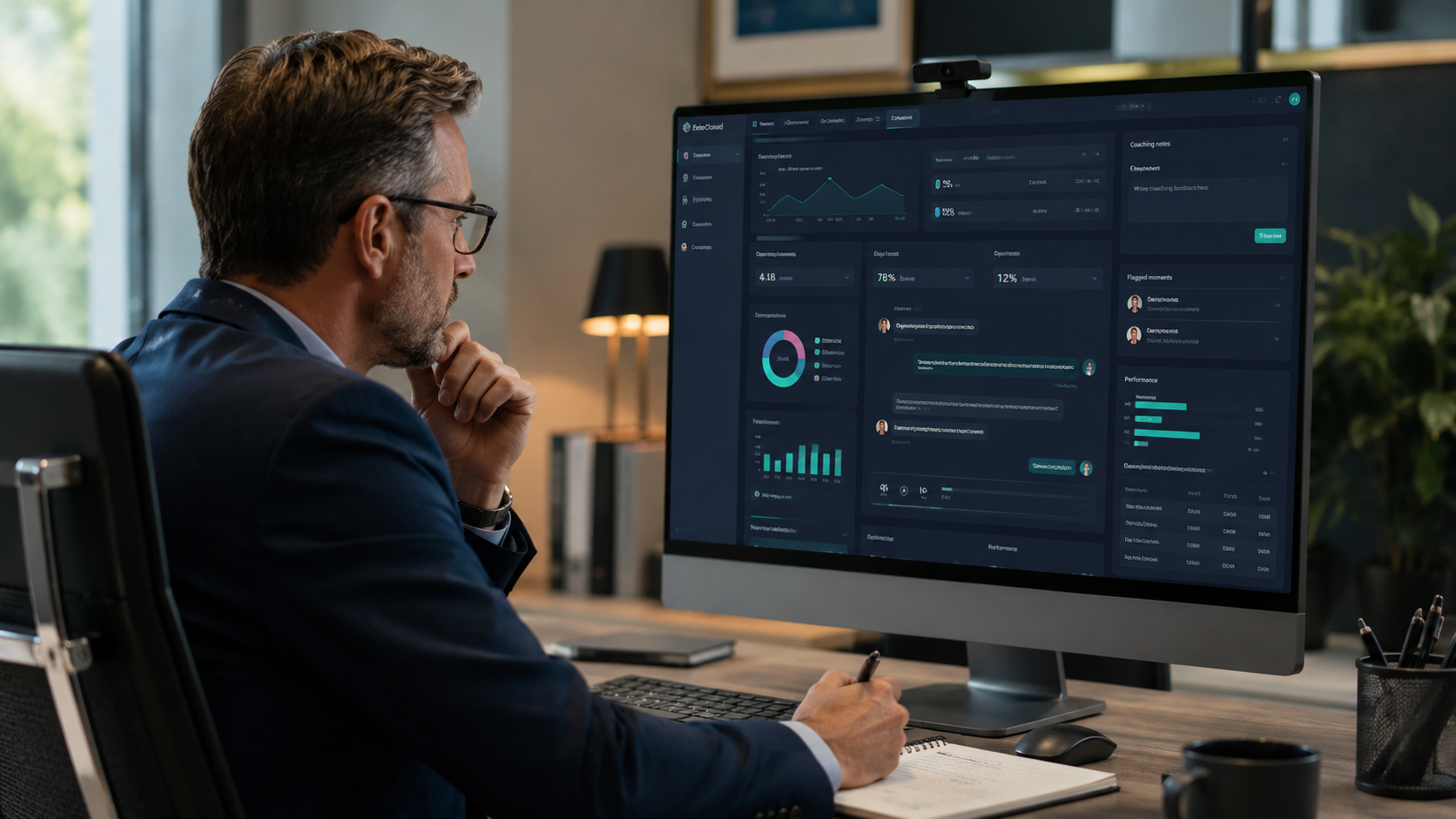
TeleCloud Sentinel Conversational Insights transcribes and analyzes every recorded call automatically after it ends, and flags the ones that matter the same day. No sampling, no end-of-week review sessions, no manager listening to hours of audio. It surfaces:
- Mishandled emergencies. Calls with urgent language, no heat, no AC, a leak, a safety concern, that weren't escalated or responded to with appropriate urgency.
- Incomplete bookings. Jobs scheduled without the details a tech needs to succeed on the first visit: address, access instructions, system type, the actual problem.
- Price-only fall-off. Callers who asked about cost and hung up, with no attempt made to move them toward booking.
- Missed upsell moments. Mentions of old equipment, repeated breakdowns, or "this keeps happening," with no maintenance plan offer in response.
- After-hours dispatch quality. What's being promised on evening and weekend calls, specifically, since that's when oversight is lowest and the risk is highest.
- Consistency across CSRs and locations. Whether booking standards and diagnostic questions are being applied the same way call to call, tech to tech, site to site.
None of this requires a new phone system or a new tool for your team to learn. It runs on the calls you're already having.
On the calls into a plumbing, HVAC, or electrical dispatch line, that looks like this: the tech who shows up to a job with the wrong system type on the ticket, the caller who asked "how much" and got a number but never got a booking attempt, the maintenance plan mention that never happened on the third call about the same failing unit. For a service trade business, that cost shows up in truck rolls and missed jobs.
What Sentinel Could Mean for a Business Your Size
TeleCloud estimates that Sentinel reviews 100% of recorded calls automatically, cuts the time it takes to find a problem call by roughly 90%, catches roughly twice as many escalation risks and negative outcomes before they turn into a complaint or a lost customer, and cuts missed follow-ups by around half. Those are platform estimates, not measured results, and not a promise for any specific business.
Here's a rough way to translate that into what it could mean for a business your size, using industry-typical numbers rather than one customer's result. A mid-size service trade company fielding around 1,000 calls a month across CSRs and dispatch can easily spend 15 to 20 hours a month on manual call review and coaching, and that's before accounting for the cost of the jobs that didn't go as booked. By our rough estimate, a failed truck roll, one where the tech shows up without the right information and has to reschedule, runs somewhere in the range of $150 to $250 once you count tech time, fuel, and the opportunity cost of a slot that could have gone to a job that succeeded. If even a small share of a company's bookings are missing key details, that cost compounds fast, and it's happening on calls nobody reviewed.
Sentinel doesn't eliminate that review work, it redirects it. Instead of a manager sampling a handful of calls and hoping they picked the right ones, every call is already reviewed, and only the ones that need a person (the incomplete booking, the price-shopper who almost committed, the after-hours promise worth double-checking) actually reach one. For most companies, that puts the majority of manual review time back on the table, spent on the calls that need it instead of the ones that don't.
What This Means for the Customer Experience
Homeowners don't remember your hold music. They remember whether the person on the phone understood the problem, booked it right, and the tech who showed up already knew what they were walking into. A business that can see, and fix, the calls where that didn't happen is a business that keeps customers instead of losing them quietly to the next name in a search result.
That's the real return here: not just the labor hours back, but the ability to catch the calls that were about to become a failed truck roll, a lost maintenance plan sale, or a customer who doesn't call back, while there's still time to do something about it.
See What Your Calls Are Already Telling You
You don't need to change your phone system or ask your team to do anything differently. TeleCloud Sentinel Conversational Insights works with the calls you're already taking.
If you're only reviewing a handful of calls a week and hoping the rest went fine, it's worth finding out what the other 90-plus percent, especially the after-hours ones, would actually tell you.
Get a demo to see what this could surface for your business. Every call is a customer experience.
Frequently Asked Questions
Does Sentinel require us to change our phone system?
No. Sentinel works with the call recordings and transcripts you already have. If you're on TeleCloud's phone system, setup is tighter and more automatic; if you're on another system, we connect to your existing recordings or transcripts to get you started.
Will this replace our CSRs or dispatchers?
No. Sentinel doesn't answer calls or make booking decisions. It reviews the calls your team already handles and flags what needs attention, so managers spend their time coaching and fixing instead of guessing which calls to sample.
How is this different from the call reports we already get?
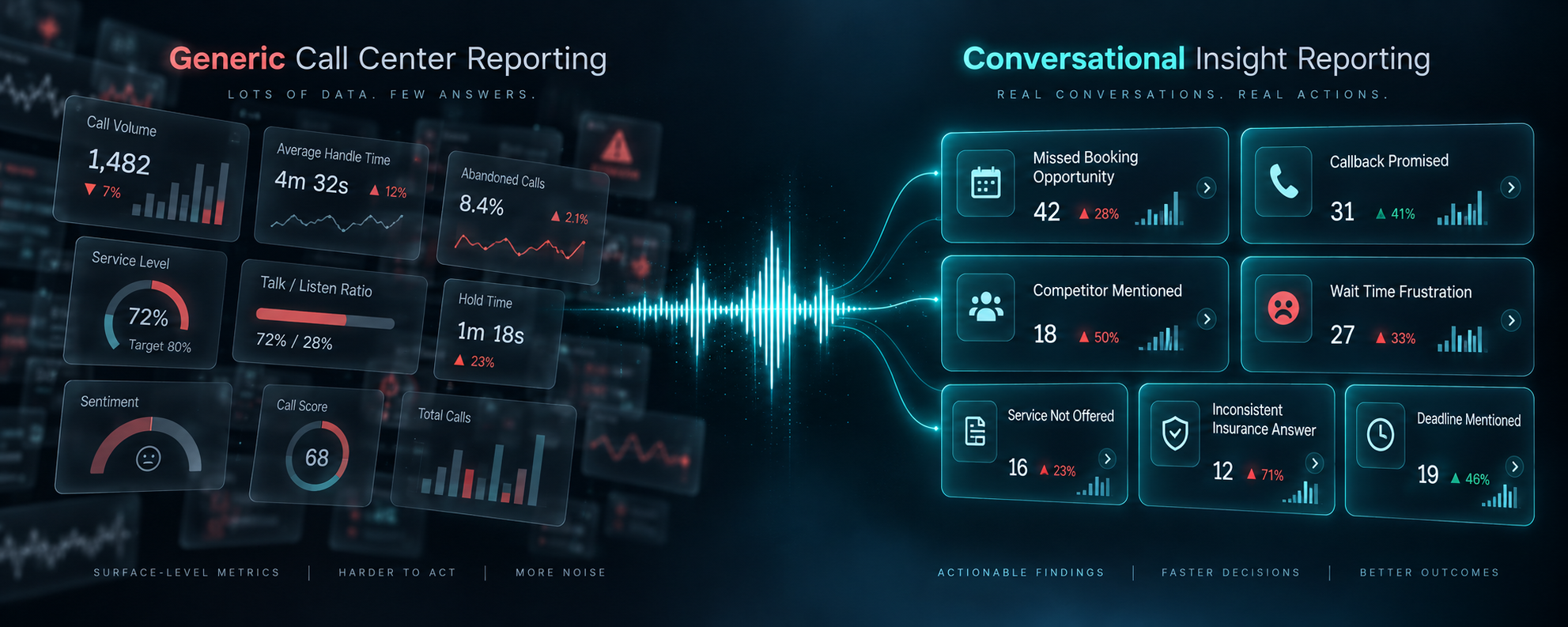
Standard call reports tell you what happened: volume, duration, hold time. Sentinel tells you why it happened and what to do about it: which bookings were missing details, which callers asked about price and never booked, what got promised on last night's emergency call.
Can Sentinel actually catch missed upsell opportunities?
Yes. When a caller mentions an aging system, a repeated breakdown, or a maintenance plan that was never offered, Sentinel flags it, so those moments get followed up on instead of forgotten once the call ends.
How quickly can we see results?
Sentinel starts analyzing calls from the day it's turned on. Most companies see their first useful patterns, like a recurring gap in after-hours dispatch or a specific CSR who consistently books incomplete jobs, within the first few weeks.
Do we need a certain call volume for this to be worth it?
Sentinel scales to businesses of any size, but the value grows with call volume, with the number of locations or techs a manager can't personally track, and with how much of your dispatch happens after hours. If you're relying on spot-checks today, that's usually the sign it's time.
Is TeleCloud Sentinel a conversation intelligence platform?
Yes. TeleCloud Sentinel is built on the same conversation intelligence technology as tools like Gong or CallRail. We call what it surfaces "Conversational Insights," because that's what actually matters: not the technology category, but the specific answers your team gets to act on.
Will Maddox is the Digital Marketing Coordinator at TeleCloud, overseeing content, brand, and outbound strategy for the company. He writes about cloud communications, AI tools for business, and what SMBs and urgent care operators need to know to run better phone systems. Connect with Will on LinkedIn or email him directly to learn more.