
How TeleCloud Sentinel Conversational Insights Helps Auto Dealerships
September 2nd, 2026
6 min read
By Will Maddox
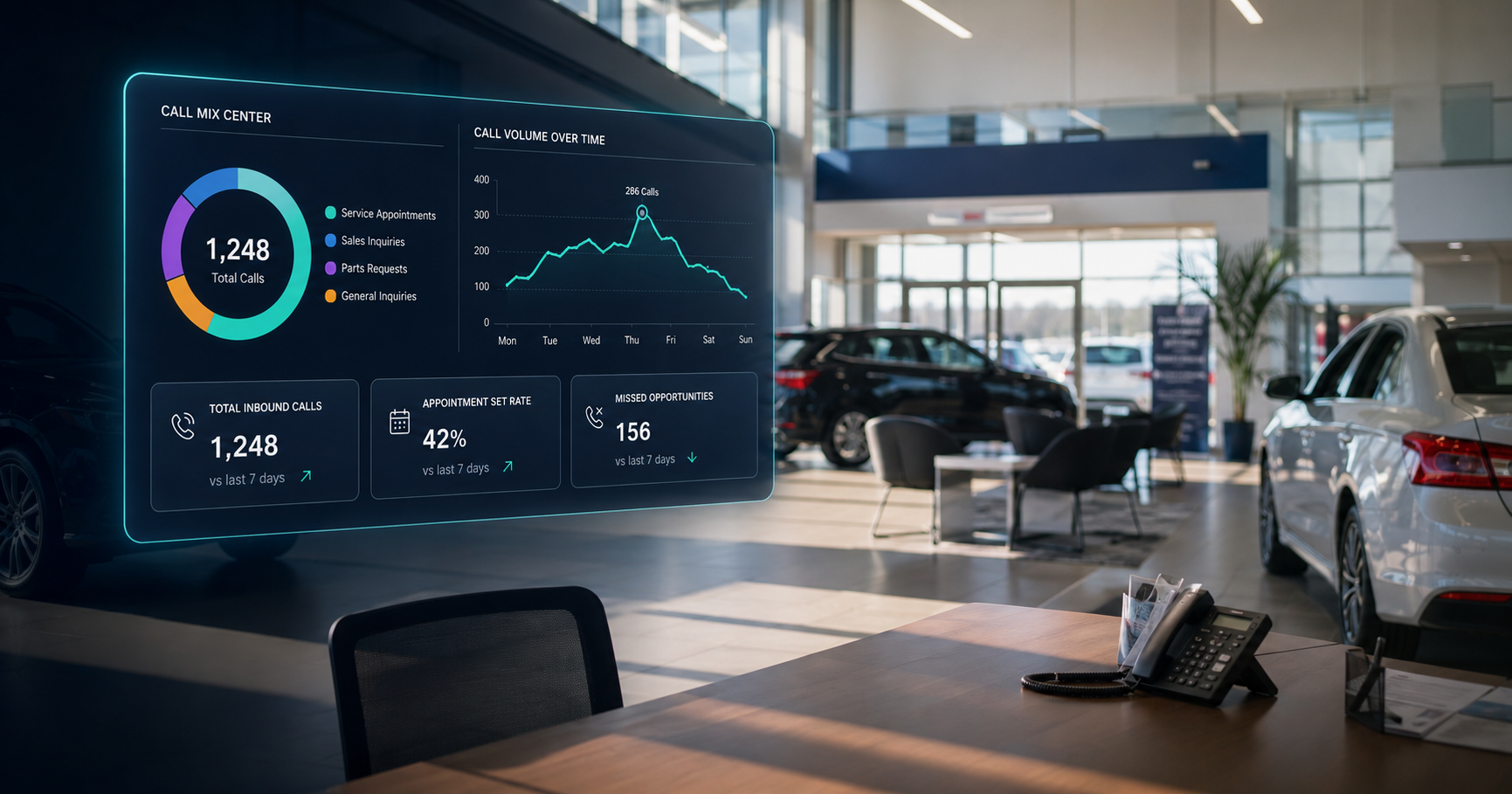
Every day, your BDC and service lane handle dozens of conversations that never make it into a CRM note or a manager's inbox. A price-shopper who never got an appointment offer. A service caller who left unclear on what their warranty actually covers. A customer who sounded frustrated enough to leave a one-star review, but nobody on your team heard it happen.
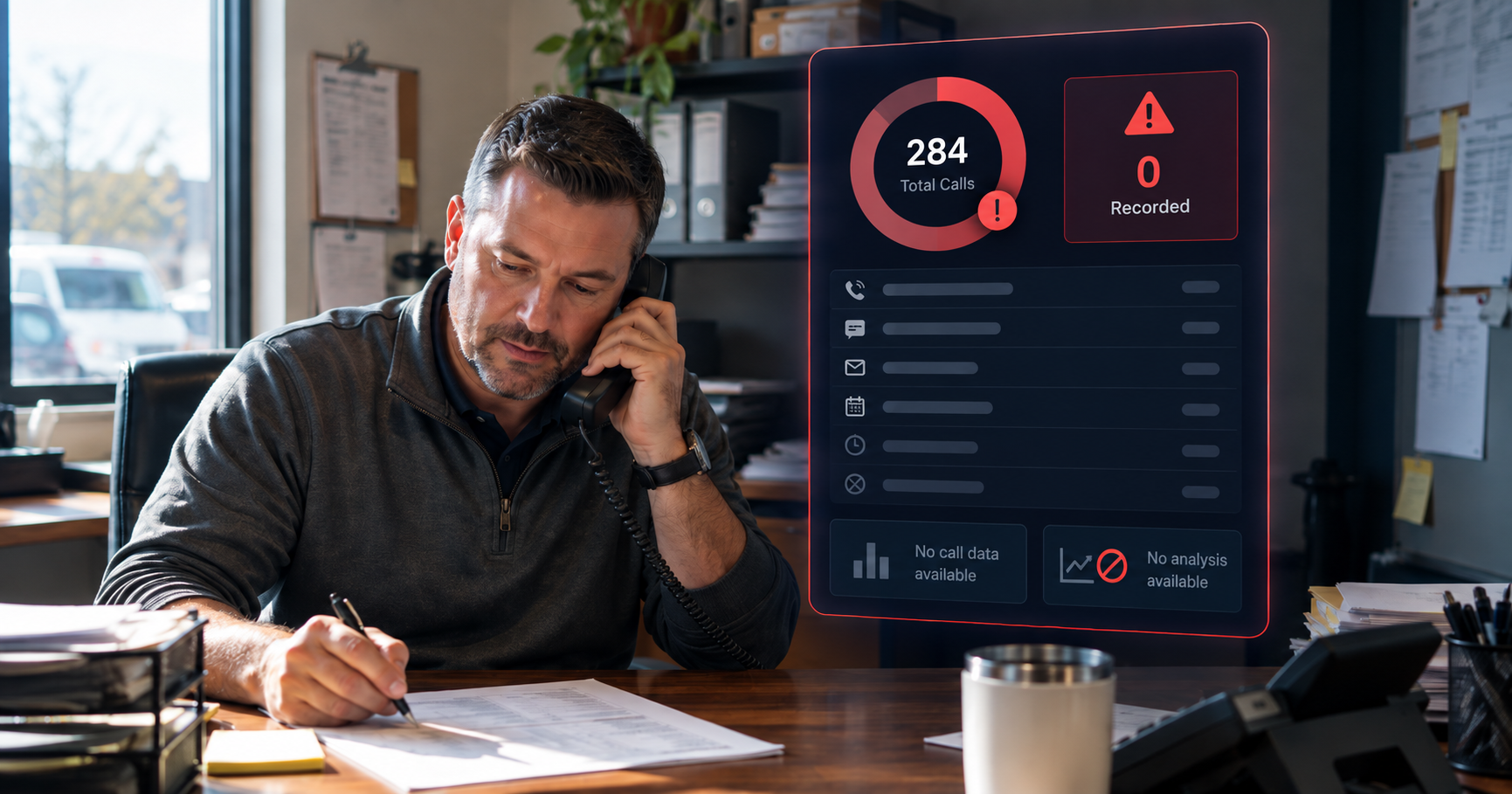
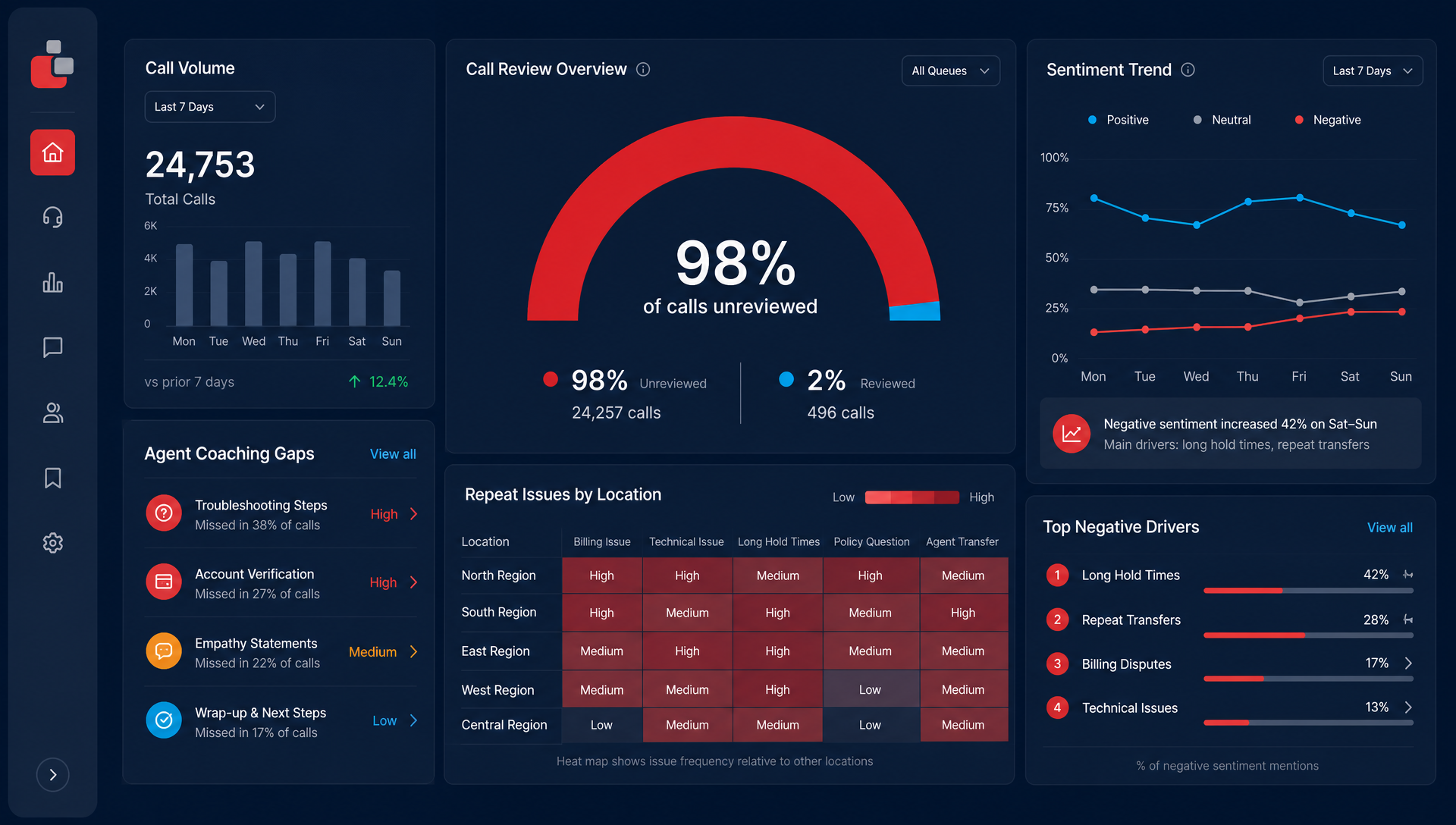
None of that shows up in your call volume report. It shows up in appointment-set rates that don't add up, CSI scores that dip without a clear reason, and gross that quietly walks to the dealer down the street. You can't fix what you can't see, and right now, most stores are reviewing somewhere in the range of 2 to 10% of their calls on a good day: whatever a BDC manager or service director has time to spot-check between everything else on their plate.
This is what TeleCloud Sentinel Conversational Insights was built to change. Not by asking your team to listen to more calls, but by making every call reviewable automatically, and turning that visibility into a working picture of what it's worth.
What's Actually Happening on Your Showroom and Service Lane Calls?
Every call into a dealership, whether it lands on the sales floor, in the BDC, or in the service lane, carries information that already decided whether that caller becomes a customer:
- Did the sales inquiry end with a clear appointment or quote, or did the call just end after a price question?
- Is a service caller leaving with a booked RO, or hanging up still unsure what their recall or warranty actually covers?
- Is the same customer calling back two or three times about the same unresolved issue?
- Is your BDC actually following the script, name, callback number, appointment offer, or is that only happening when someone happens to be listening?
Individually, each of these looks like a small thing. Across hundreds of calls a week, they add up to real lost gross, real CSI risk, and real advertising spend driving traffic that never converts, and almost none of it is visible without listening to the actual calls.
Why Manual Review Was Never Going to Solve This
The instinct is to spot-check: pull a handful of BDC calls, listen for missed appointment offers, coach where needed. It's reasonable, and it's also nowhere near enough. A manager sampling calls by hand catches a fraction of what's happening, and almost never in time to prevent the outcome that mattered: the lead who went to a competitor, the service customer who never rebooked, the review that already posted.
The problem was never that dealership managers didn't care about how their phones were being handled. It's that there was no practical way to review 100% of sales and service calls without adding headcount whose only job was listening to recordings.
How Sentinel Changes What's Visible
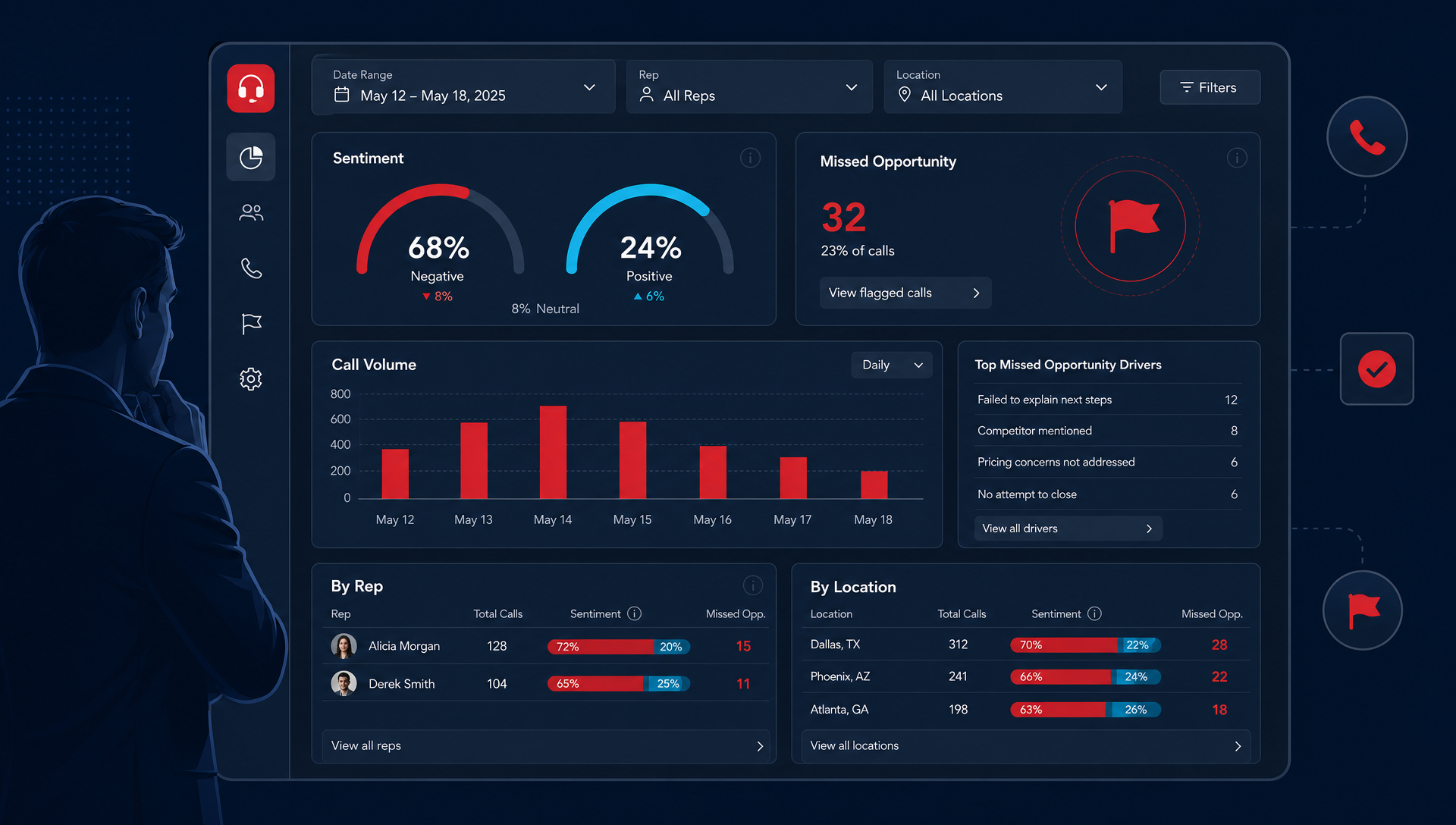
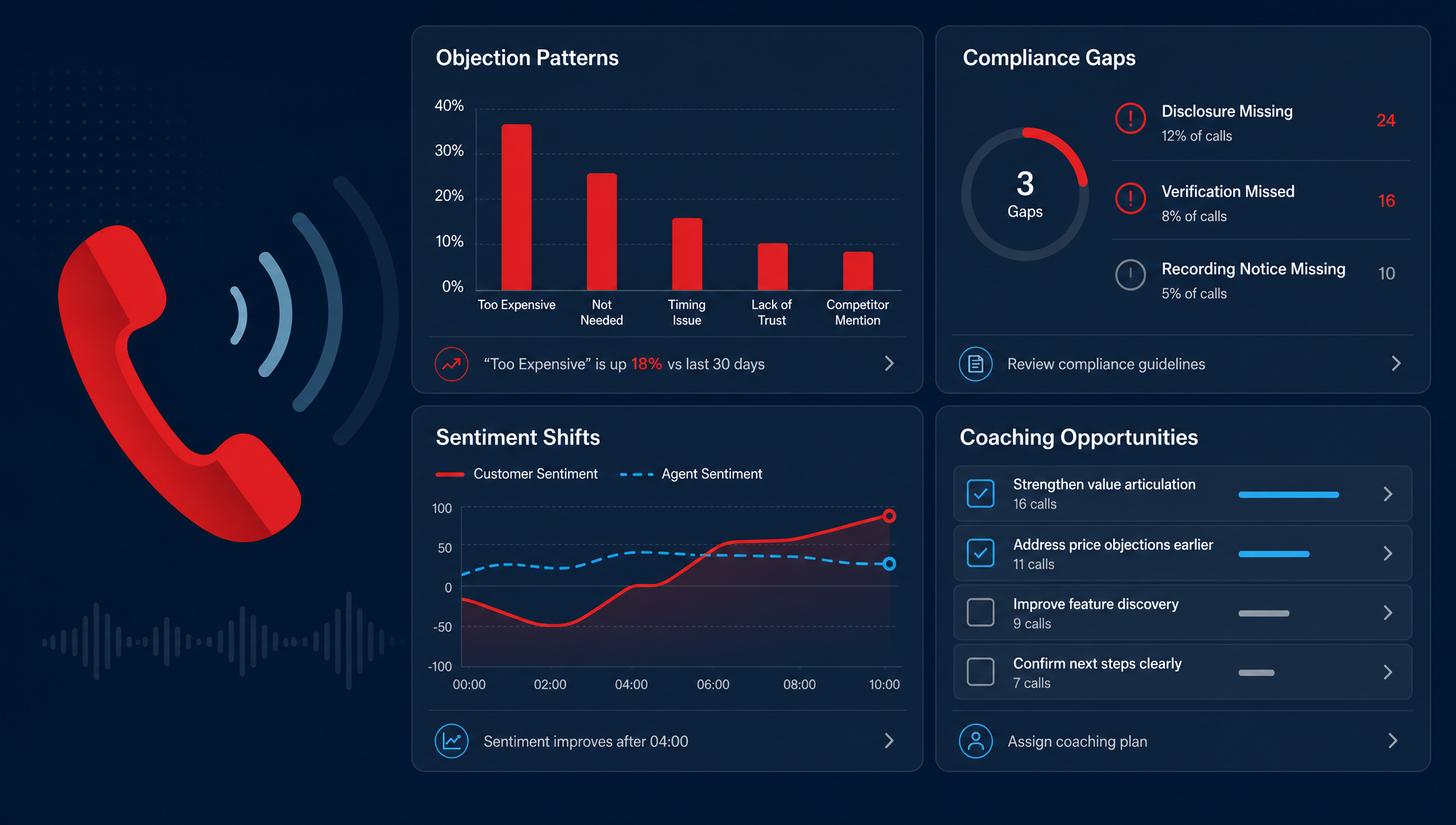
TeleCloud Sentinel Conversational Insights transcribes and analyzes every recorded call automatically after it ends, and flags the ones that matter the same day. No sampling, no end-of-week review sessions, no manager listening to hours of audio. It surfaces:
- Sales calls without an appointment set. High-intent callers who asked real questions but never got a next step offered.
- Service calls with no RO booked. Calls where a customer described a problem and the conversation ended without a scheduled visit.
- Price-only shopper patterns. Calls that end the moment price comes up, with no attempt made to earn an appointment.
- CSI risk calls. Conversations with frustration indicators or escalation signals, including explicit mentions of surveys, reviews, or wanting to speak with management.
- BDC script adherence. Whether agents are consistently getting the name, callback number, and appointment offer, not just on the calls a manager happened to catch.
- Recall and warranty confusion. Calls where a customer hangs up still unclear on what's covered or what happens next.
None of this requires a new phone system or a new tool for your BDC and service team to learn. It runs on the calls you're already having.
On a dealership's calls, that looks like this: the sales call that ended after a price question with no appointment offer, the service caller who left unsure if their recall was even covered, the customer who called three times about the same RO. A dealership feels it fast, in appointment-set rate, in CSI, and in gross.
What Sentinel Could Mean for a Store Your Size
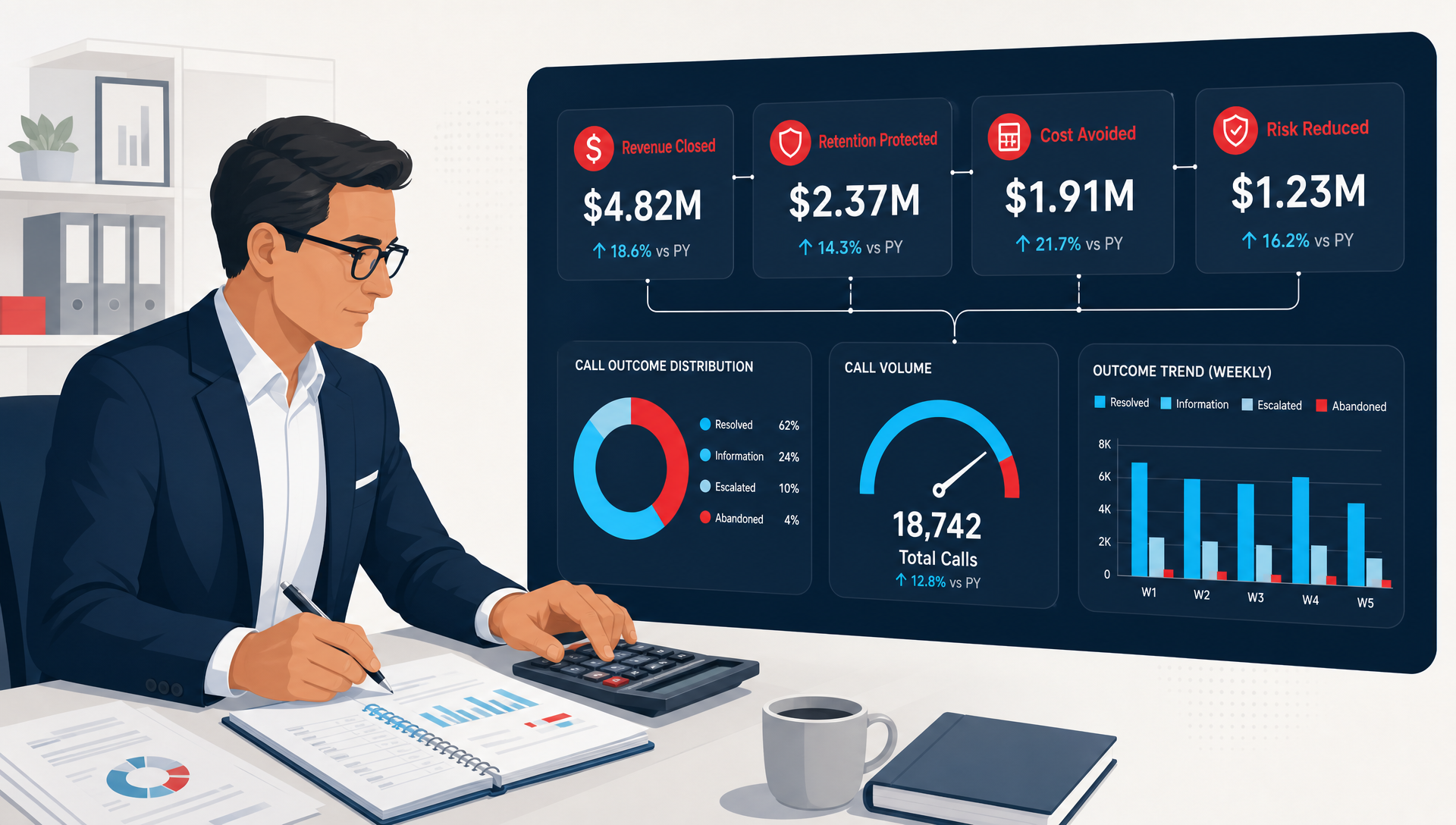
TeleCloud estimates that Sentinel reviews 100% of recorded calls automatically, cuts the time it takes to find a problem call by roughly 90%, catches roughly twice as many escalation risks and negative outcomes before they turn into a CSI hit or a lost customer, and cuts missed follow-ups by around half. Those are platform estimates, not measured results, and not a promise for any specific store.
Here's a rough way to translate that into what it could mean for a dealership your size, using industry-typical numbers rather than one customer's result. A single-point franchise store fielding a combined 3,000 to 4,000 sales and service calls a month can easily have its BDC manager and service director spending 15 to 20 hours a month spot-checking calls, on top of whatever coaching that spot-checking turns into. At a loaded management wage, that's real, recurring cost before anyone has fixed a single missed appointment.
Now put a number on what a handful of missed calls actually cost. If even a small share of sales calls end without an appointment set, and a similar share of service calls end without an RO booked, that's dozens of opportunities a week that already called you, already showed intent, and left without a next step. One missed service appointment is lost labor and parts gross on a repair order that was already sitting in your queue. One missed sales appointment is a lead you already paid for in advertising, walking to a competitor with the same inventory.
Sentinel doesn't eliminate the review work, it redirects it. Instead of a manager sampling a handful of calls and hoping they picked the right ones, every call is already reviewed, and only the ones that need a person (the price-shopper who never got an appointment offer, the confused warranty call, the customer with a frustration indicator worth acting on) actually reach one. For most stores, that puts the majority of manual review time back on the table, spent coaching the calls that need it instead of guessing which ones do.
What This Means for the Customer Experience
Buyers and service customers don't remember your hold music or your ad campaign. They remember whether someone offered them an appointment, or a real answer about their warranty, or followed up on the quote they were promised. A store that can see, and fix, the calls where that didn't happen is a store that keeps customers instead of losing them quietly to the dealer down the street.
That's the real return here: not just the labor hours back, but the ability to catch the calls that were about to become a bad review, a CSI hit, or a customer who doesn't come back, while there's still time to do something about it.
See What Your Calls Are Already Telling You
You don't need to change your phone system or ask your BDC and service team to do anything differently. TeleCloud Sentinel Conversational Insights works with the calls you're already taking.
If you're only reviewing a handful of calls a week and hoping that's enough, it's worth finding out what the other 90-plus percent would tell you, appointments you're missing, and calls that are quietly turning into a CSI problem.
Get a demo to see what this could surface for your store. Every call is a customer experience.
Frequently Asked Questions
Does Sentinel require us to switch phone systems?
No. Sentinel works with the call recordings and transcripts you already have. If you're on TeleCloud's phone system, setup is tighter and more automatic; if you're on another system, we connect to your existing recordings or transcripts to get you started.
Can Sentinel tell us which BDC agents are actually following the script?
Yes. Sentinel flags agent behavior against the pattern you define, whether that's asking for a callback number, offering an appointment, or following your specific objection-handling process, across every call instead of the handful a manager happens to catch.
Will this replace our BDC or service advisors?
No. Sentinel doesn't answer calls or make decisions for your team. It reviews the calls your staff already handle and flags what needs attention, so managers spend their time coaching instead of sampling recordings at random.
How is this different from the call reports we already get?
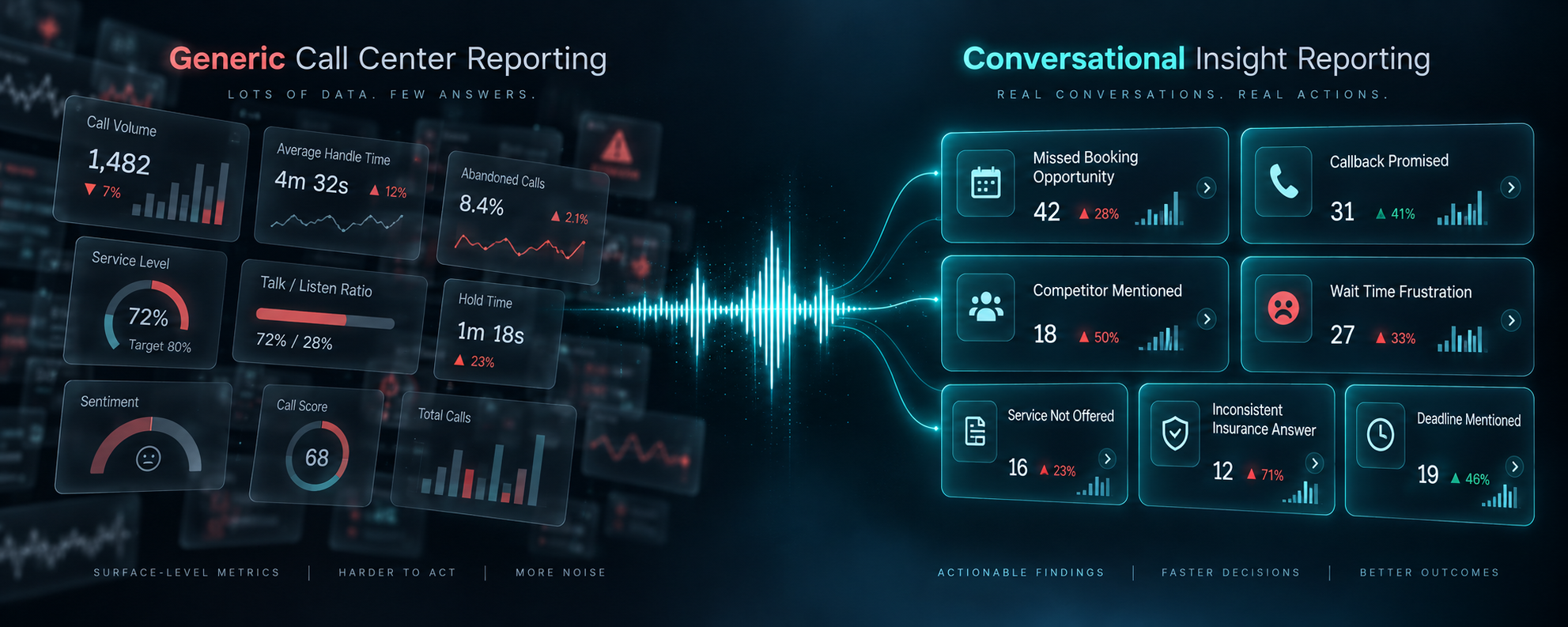
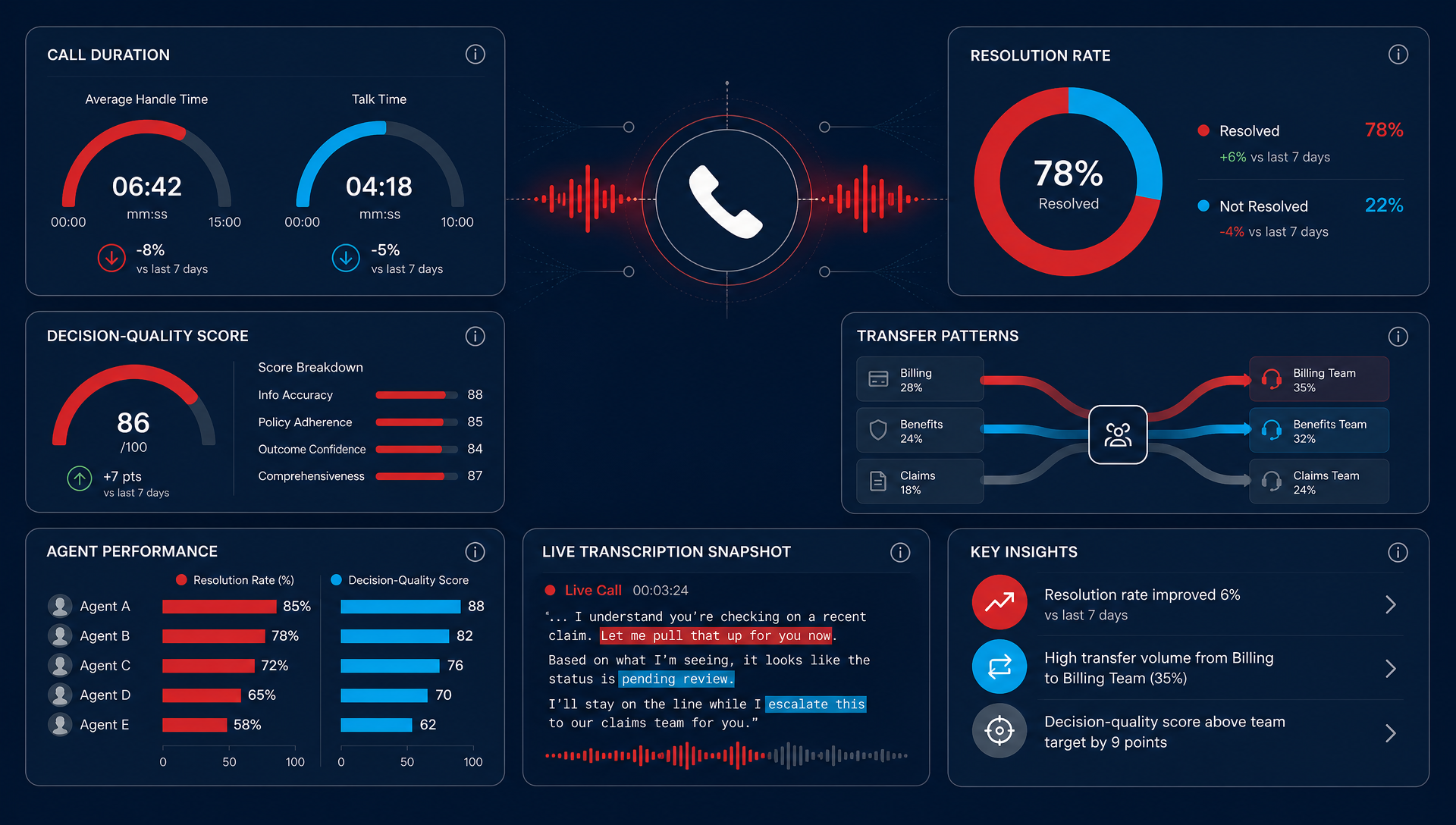
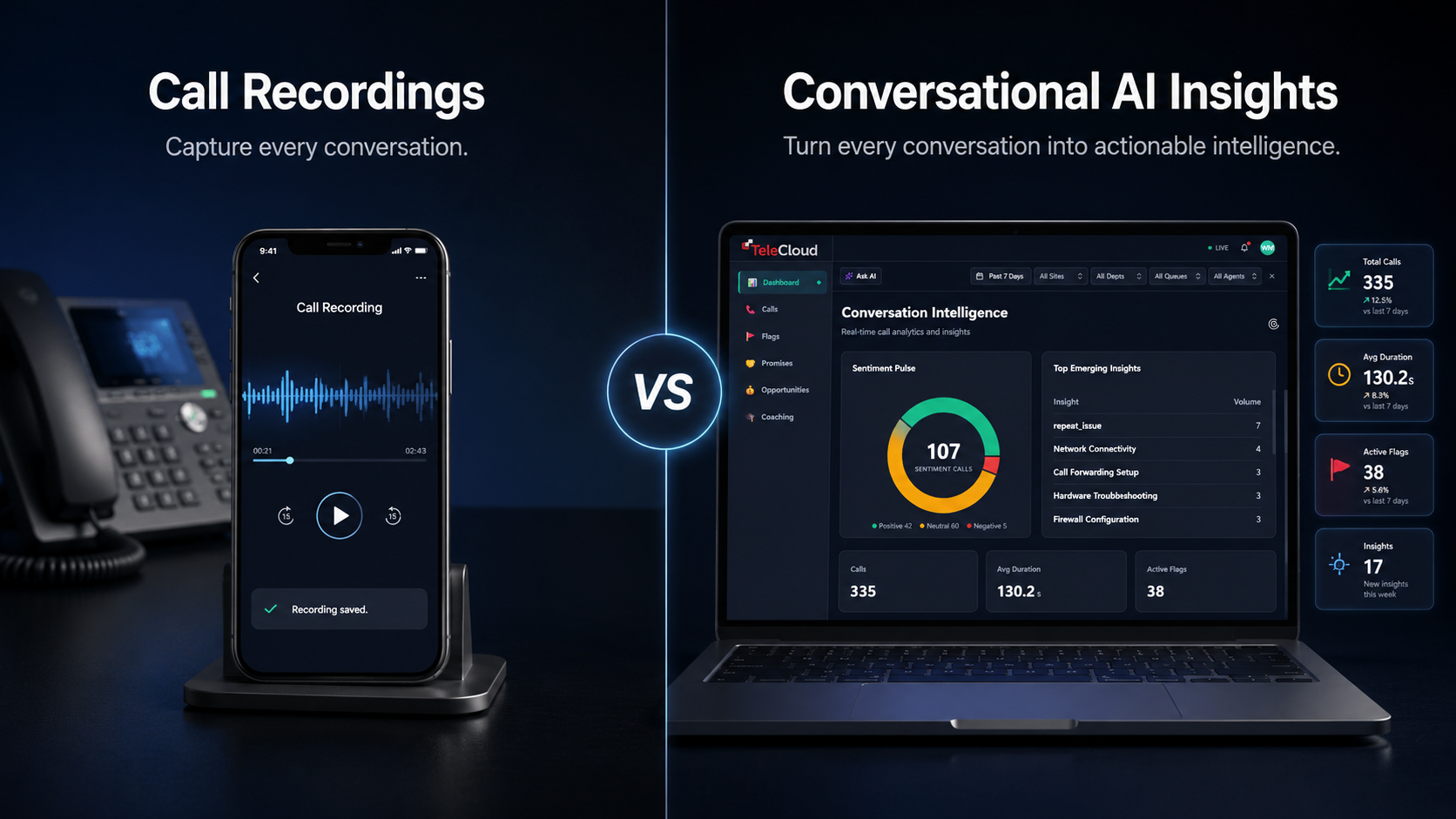
Standard call reports tell you volume, duration, and hold time. Sentinel tells you why a call ended the way it did: which calls skipped an appointment offer, which service calls left without a booking, where a specific agent or location needs coaching.
Can Sentinel help us tell serious buyers from price-only shoppers?
Yes. Sentinel classifies call intent and outcome, which helps you see which calls turned into appointments and which ended the moment price came up, and can support how you assess which advertising sources are driving quality traffic versus tire-kickers.
Do we need a certain call volume for this to be worth it?
Sentinel scales to stores of any size, but the value grows with call volume and with the number of BDC agents or service advisors a manager can't personally monitor. If you're relying on spot-checks today, that's usually the sign it's time.
Is TeleCloud Sentinel a conversation intelligence platform?
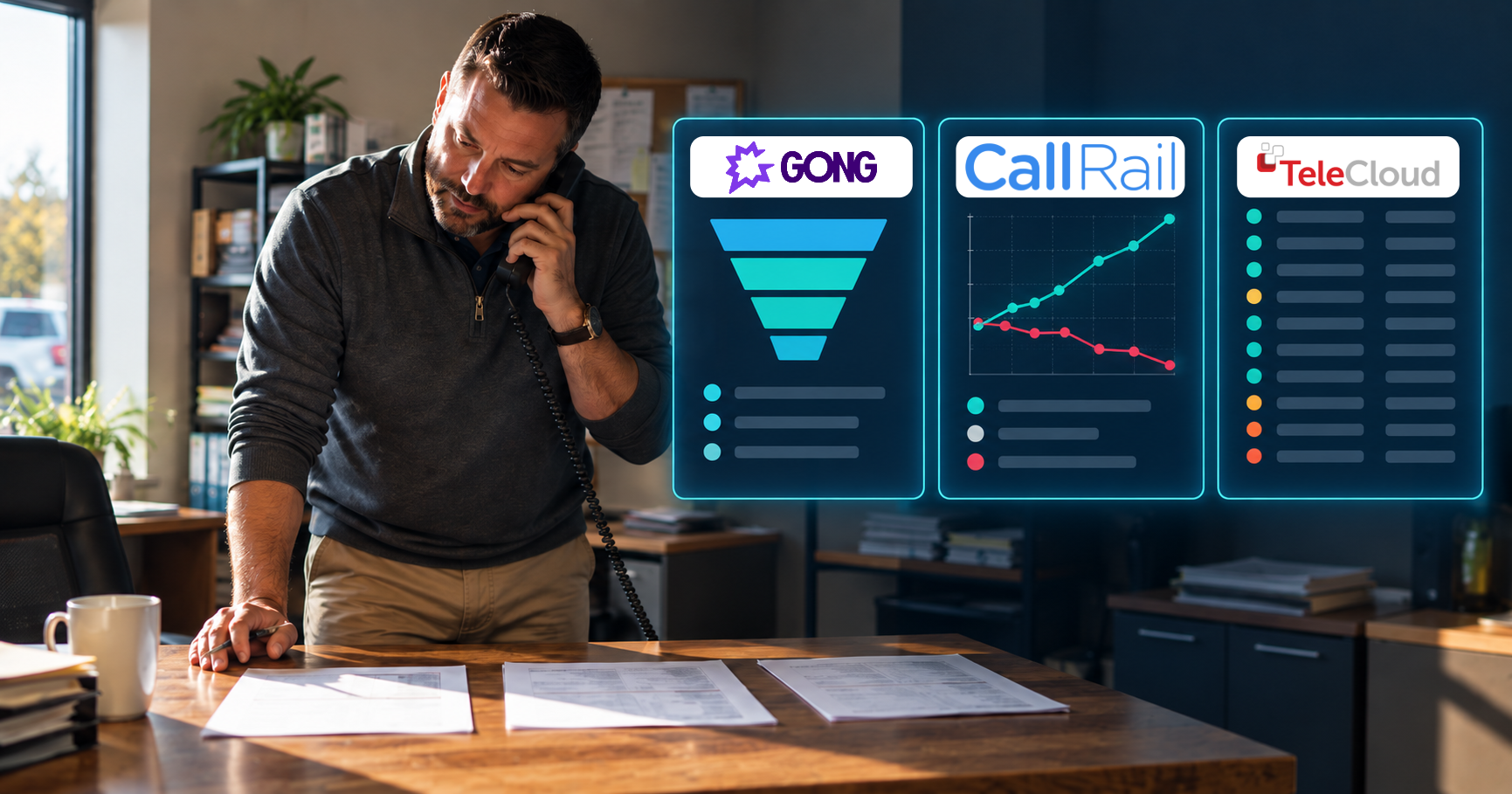
Yes. TeleCloud Sentinel is built on the same conversation intelligence technology as tools like Gong or CallRail. We call what it surfaces "Conversational Insights," because that's what actually matters: not the technology category, but the specific answers your team gets to act on.
Will Maddox is the Digital Marketing Coordinator at TeleCloud, overseeing content, brand, and outbound strategy for the company. He writes about cloud communications, AI tools for business, and what SMBs and urgent care operators need to know to run better phone systems. Connect with Will on LinkedIn or email him directly to learn more.