
How do you prove phone system ROI to your CFO?
July 21st, 2026
4 min read
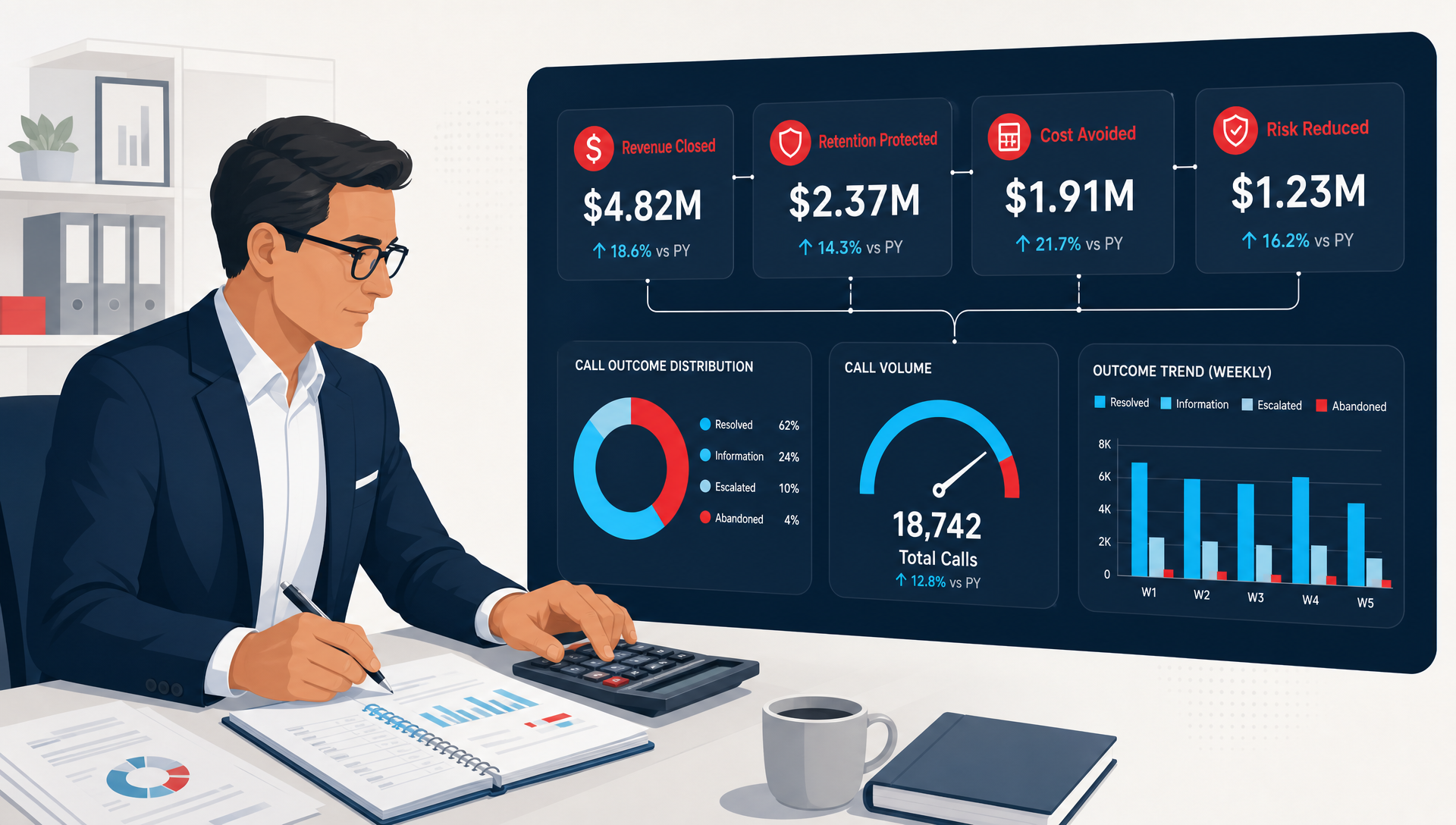
You prove it by tying calls to money the CFO already tracks, closed revenue, retained accounts, lower churn, and less rework. If your reporting stops at answer rate and average handle time, you will keep losing the argument.
That usually means the front desk, the queue, or the team lead already knows the center is carrying real load, but the spreadsheet does not show it. You get asked to justify staffing, software, and service levels without a clean line from conversation to outcome. We see that gap all the time in SMB inbound teams, especially when the phone is still where sales, renewals, and damage control happen.
What a CFO will actually count as ROI
A CFO does not care that a dashboard looks busy. They care whether calls changed revenue, protected margin, or reduced cost in a way you can defend.
Start with four buckets:
- Revenue closed, new sales, booked appointments, converted leads
- Retention protected, saved renewals, fewer cancellations, fewer escalations
- Cost avoided, fewer repeat calls, less supervisor time, less manual review
- Risk reduced, better compliance handling, fewer missed follow-ups
If you can connect call behavior to one of those buckets, you are no longer asking for a budget favor. You are showing a business result.
For a simple benchmark on revenue math, use the call value logic finance teams already understand: if one booked customer is worth $250 and better handling creates 40 more bookings a month, that is $10,000 in monthly gross value before you even talk about efficiency.
What data you need before you walk into the meeting
You do not need a full data science project. You need enough proof to show pattern, volume, and dollar impact.
Pull these items for the last 30 to 90 days:
- Call volume by team, queue, or location
- Missed calls and abandoned calls
- Outcomes tied to the call, booked, sold, retained, escalated, lost
- Repeat callers and repeat issues
- Supervisor time spent on call review and coaching
- Any churn, cancellation, or no-show patterns that start on the phone
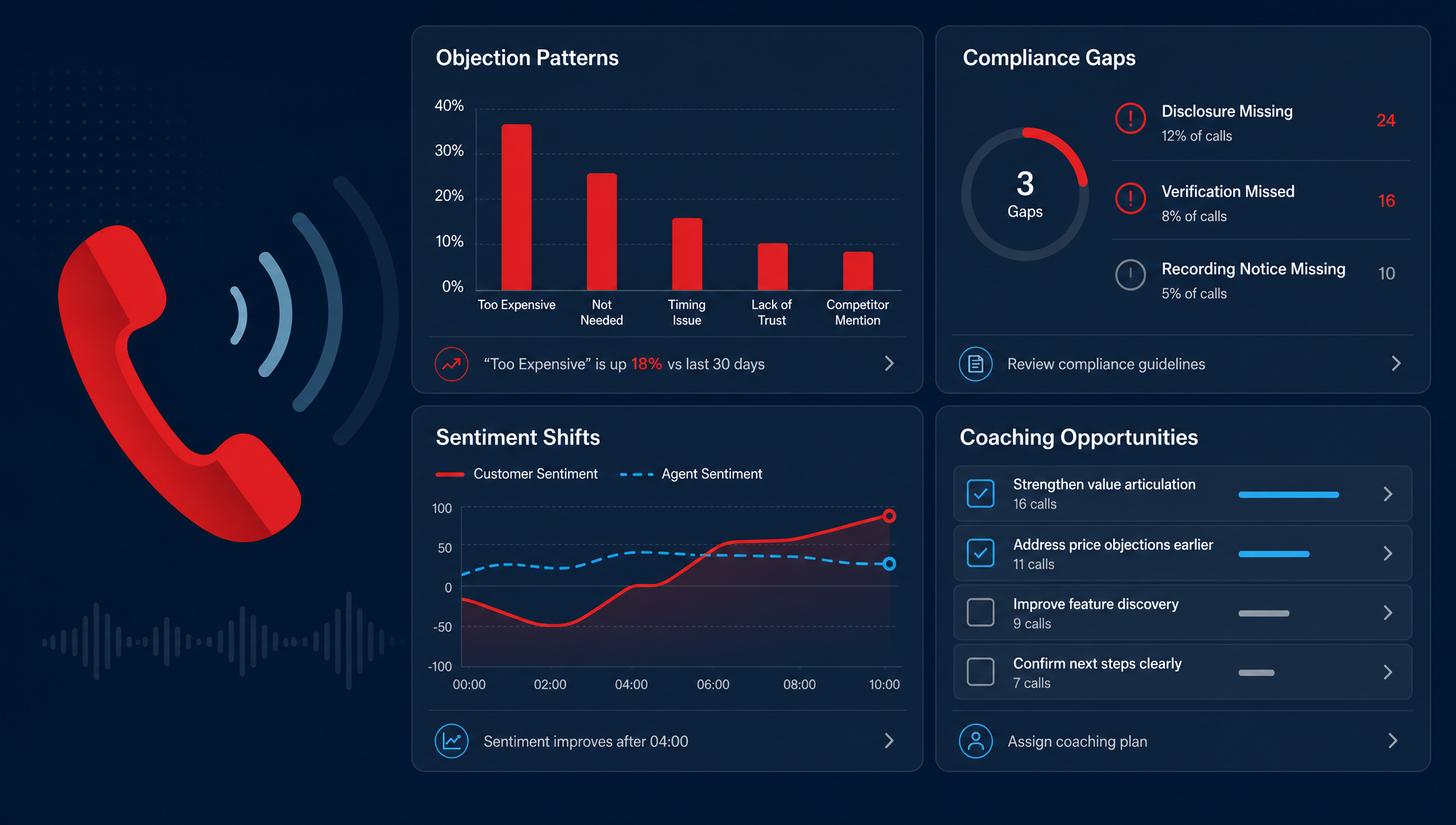
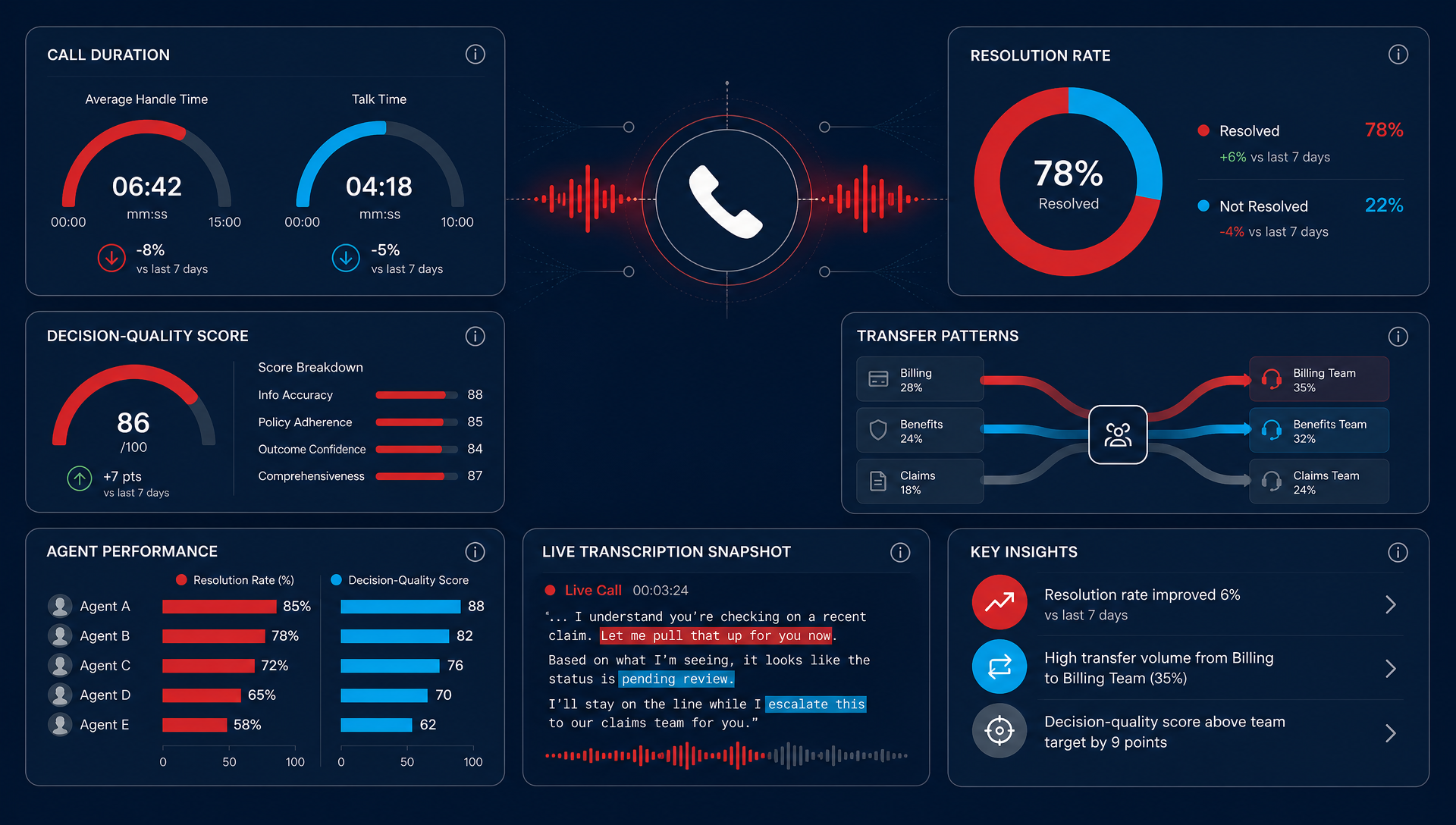
If your team already records calls, you are halfway there. The problem is that recordings are hard to scan at scale, so the signal stays buried in one-off reviews and anecdotes. Conversational AI Insights turns those recordings into structured call data, which is what makes the CFO conversation possible.
That is the change for Monday morning, not a vague AI promise. You stop arguing about whether the calls matter and start showing which calls matter most.
What this looks like in practice
The cleanest ROI story usually comes from one of three places.
1. Missed revenue
An inbound team misses or mishandles a call, then the buyer goes somewhere else. If you can show how many calls were abandoned, how many were never returned, and what a converted call is worth, the math gets concrete fast.
2. Retention protection
For subscription, service, or healthcare teams, a hard conversation on the phone can decide whether an account stays or leaves. AI call insights can flag friction, frustration, and repeated service complaints so managers can coach before the issue turns into churn.
3. Supervisor efficiency
A manager cannot listen to every call. If they spend two hours a day hunting for examples, that is expensive labor with little scale. In our deployments, the biggest early win is usually faster review cycles, because supervisors stop sampling blindly and start looking at the calls that carry risk or opportunity.
TeleCloud’s Conversational AI Insights is built for that kind of review. It reads recorded calls, tags the patterns, and surfaces coaching and revenue signals by team, location, or topic. That gives you a cleaner bridge from phone activity to business outcome, without making the CFO sit through a pile of call recordings.
How to frame the ROI conversation with finance
Use a simple structure. Keep it boring. Boring wins in finance meetings.
- State the business problem: missed revenue, churn, or review time.
- Show the volume: how many calls, how many misses, how many repeat issues.
- Assign a dollar value: bookings, retained accounts, or labor hours.
- Show the trend: better or worse over time, by site or team.
- Name the operating fix: coaching, routing, staffing, or AI call insights.
If you can do that on one page, your CFO does not need to believe in AI. They only need to believe in the math.
Where the numbers usually get stronger
The ROI case gets easier when you move from broad averages to specific call types.
A billing issue call is not worth the same as a new lead. A cancellation save is not worth the same as a routine status check. The more precisely you classify the call, the easier it is to defend the result.
That is where call insights beat gut feel. They help you sort by topic, sentiment, repeat intent, and outcome, then compare one location or rep set against another. The pattern is often obvious once it is laid out, but not before.
If you want the operational side of that story, see how TeleCloud handles the call center layer with our cloud call center solution. It is the part that gives you queues, routing, and performance insight, while AI insights tells you what happened on the calls themselves.
What not to promise your CFO
Do not promise perfect attribution. Not every sale starts and ends on one phone call.
Do not promise zero missed calls or instant payback, either. CFOs usually trust the team more when you admit the messy parts. The stronger claim is simpler: we can measure enough of the call path to make better staffing, coaching, and revenue decisions.
That is a durable case. It is also one a finance team can audit without rolling their eyes.
What to put in the next deck
If you need a practical CFO-ready slide, make it this:
- call volume
- missed or abandoned calls
- conversion or retention rate on those calls
- estimated dollar value per successful outcome
- time saved in review and coaching
- one example of a call insight that changed a decision
That gives you a real business story instead of a generic technology pitch. And it gives the CFO something they can compare against staffing, churn, or growth targets.
The real point is not better reporting, it is better decisions
The point of contact center ROI is not to prove that phones matter, everyone already knows that. The point is to show where the money is leaking, where the team is winning, and what to fix first.
If you want a cleaner way to turn call recordings into revenue proof, talk to us about Conversational AI Insights. We will walk you through the metrics, the workflow, and what it looks like in a real inbound team.
FAQ
How do I calculate contact center ROI?
Start with one measurable outcome, like bookings, renewals, or saved labor hours. Then compare the dollar value of that outcome against the cost of staffing and tools tied to the center.
What metrics do CFOs care about most?
They usually care about revenue, retention, cost per interaction, and labor efficiency. If you can tie call data to one of those, you have a better chance of getting approval.
Can call recordings really prove ROI?
Recordings alone are hard to scale, which is why the proof often gets stuck in anecdotes. AI call insights makes the patterns visible across every recorded call, so you can show trends instead of cherry-picked examples.
What if my team already tracks answer rate and handle time?
Those metrics are useful, but they do not tell the full financial story. You still need to know which calls close business, which ones prevent churn, and which ones waste supervisor time.
Is this only useful for large contact centers?
No. Smaller inbound teams often see the clearest payoff because one missed booking, one retained account, or one coaching fix can move the numbers quickly. The main requirement is that you can measure outcomes consistently.
Damon Finaldi is the President of TeleCloud, where he leads the company's strategic direction after two decades in telecommunications, including hands-on stints in cable installation, sales, and operations. He's driven by one goal: making sure every TeleCloud client gets the kind of service that keeps them a customer for life. Read Damon's full bio or reach out directly to learn more.