How TeleCloud Sentinel Conversational Insights Helps Insurance Agencies
October 20th, 2026
4 min read
By Will Maddox

A client calls in March and mentions, almost in passing, that they've bought a second truck for the business. The account manager says they'll take care of it. In September the truck is in an accident, and it turns out it was never added to the policy. Now the question isn't what the policy says. It's what was said on a phone call six months ago, and whether anyone can prove it.
That's not a rare story. In the Big "I" Professional Liability program's claims data, about 30% of agency E&O claims come from failure to procure coverage, the single biggest cause by a wide margin. The next most common cause barely reaches 10%. Most of those start the same way: a request made out loud that never made it into the system.
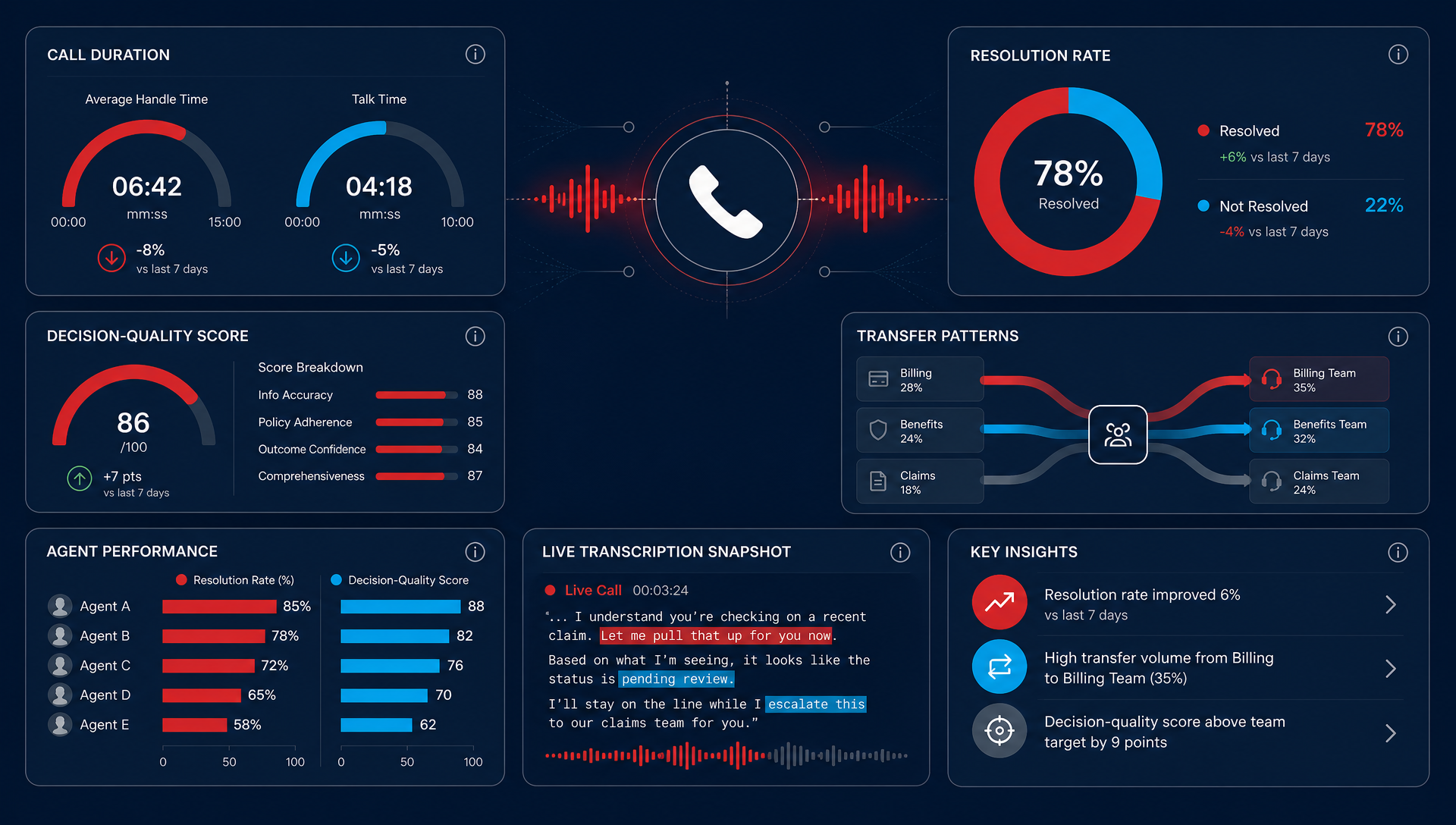
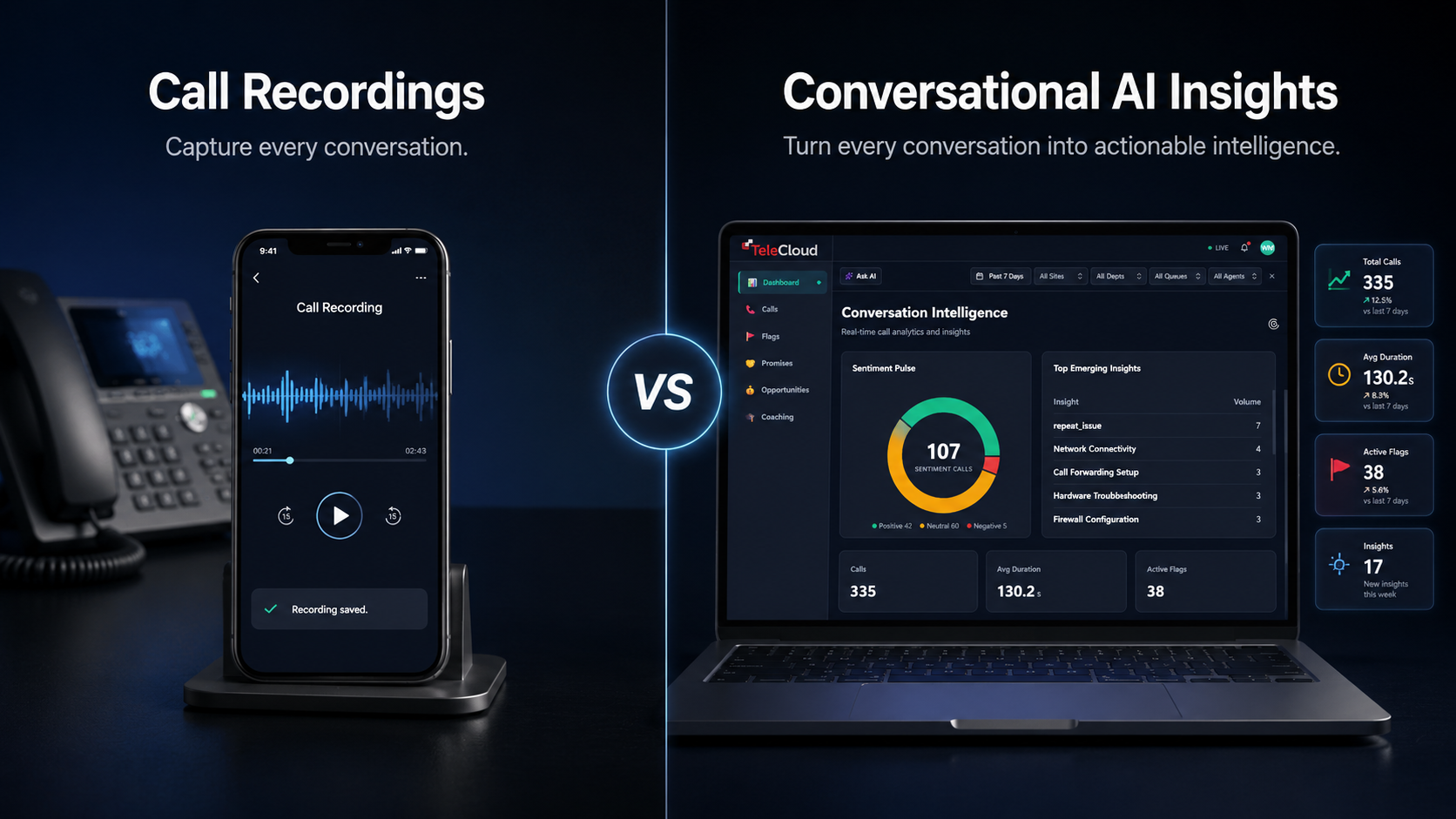
TeleCloud Sentinel Conversational Insights was built for exactly that gap. It reads every recorded call your agency takes, gives you a searchable record of what was said, and flags the calls where a request, a promise or an unhappy client needs someone's attention, the same day.
What's Actually Happening on Your Agency's Calls?
Most of what gets explained on the phone at an agency never gets written down in full. A note in the agency management system says "client called re: auto." It doesn't say what the client asked for, what they were told, or what was promised.
- A client asked to add a vehicle, a location or a coverage, and there's no sign it was ever processed.
- A new inquiry, a quote request or a referral that never got a callback.
- A client who waited days for an answer on a claim or a billing question, and called back to say so.
- A deadline mentioned on a call, like a closing date or a certificate a contractor needs by Friday, with nobody assigned to it.
- A client hinting they're shopping their renewal, and nobody heard it in time to do anything.
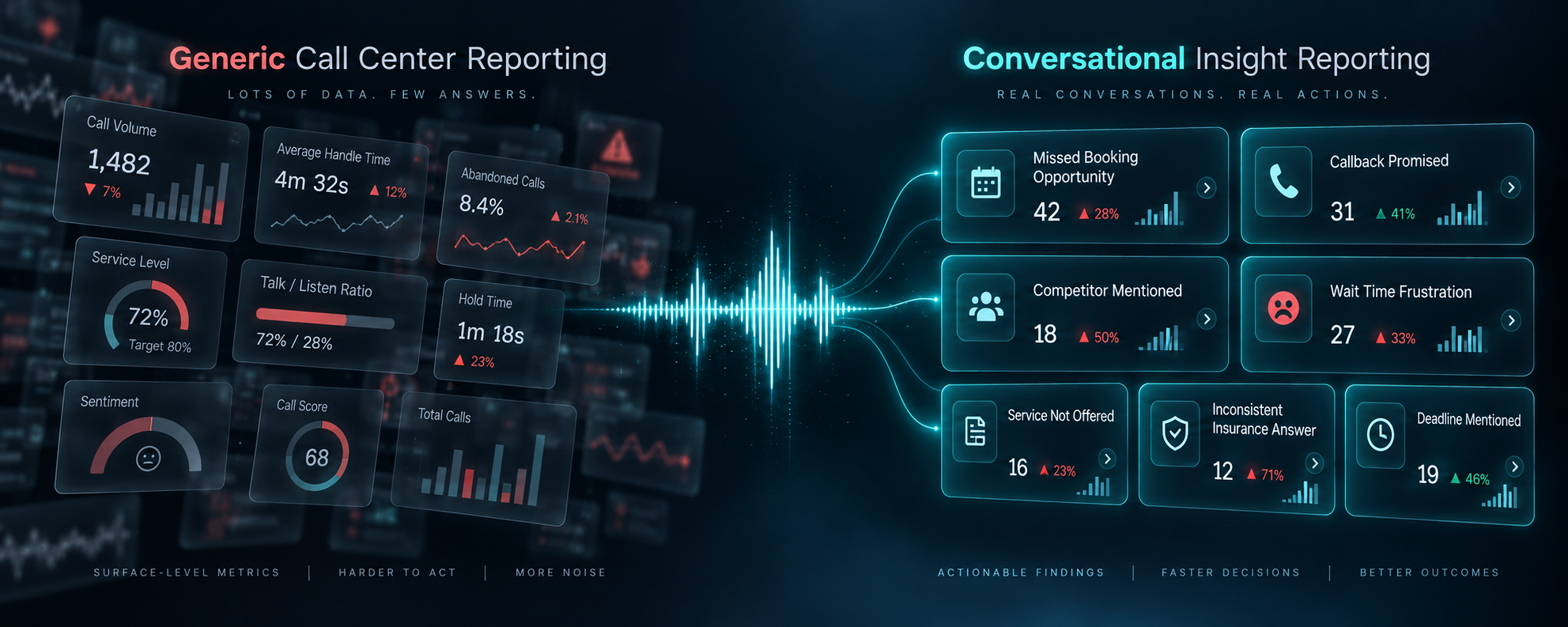
None of this shows up in a call report. The report says the call came in and lasted six minutes. It can't tell you a coverage request was made and never acted on.
Why Can't a Principal Just Spot-Check Calls?
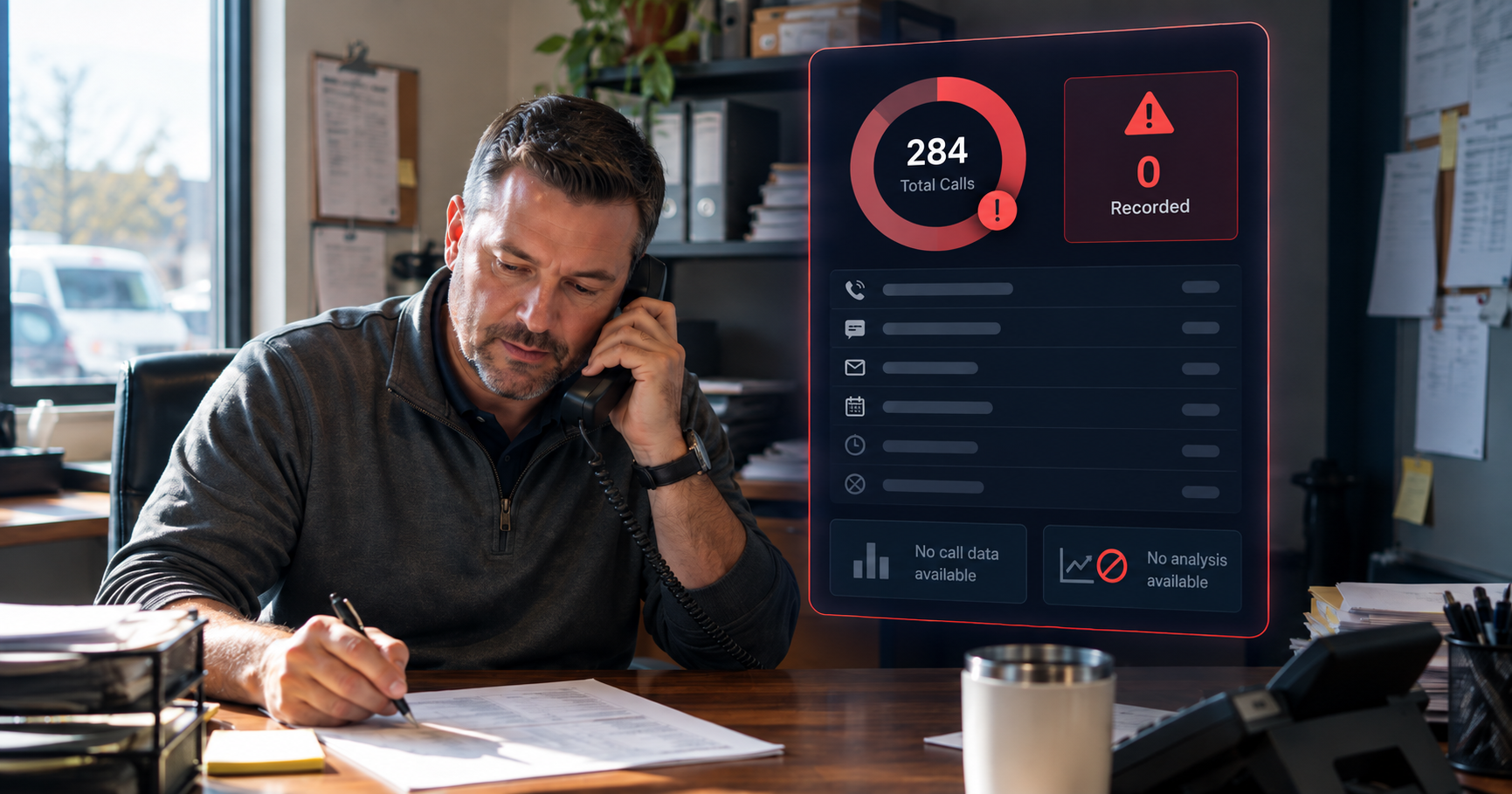
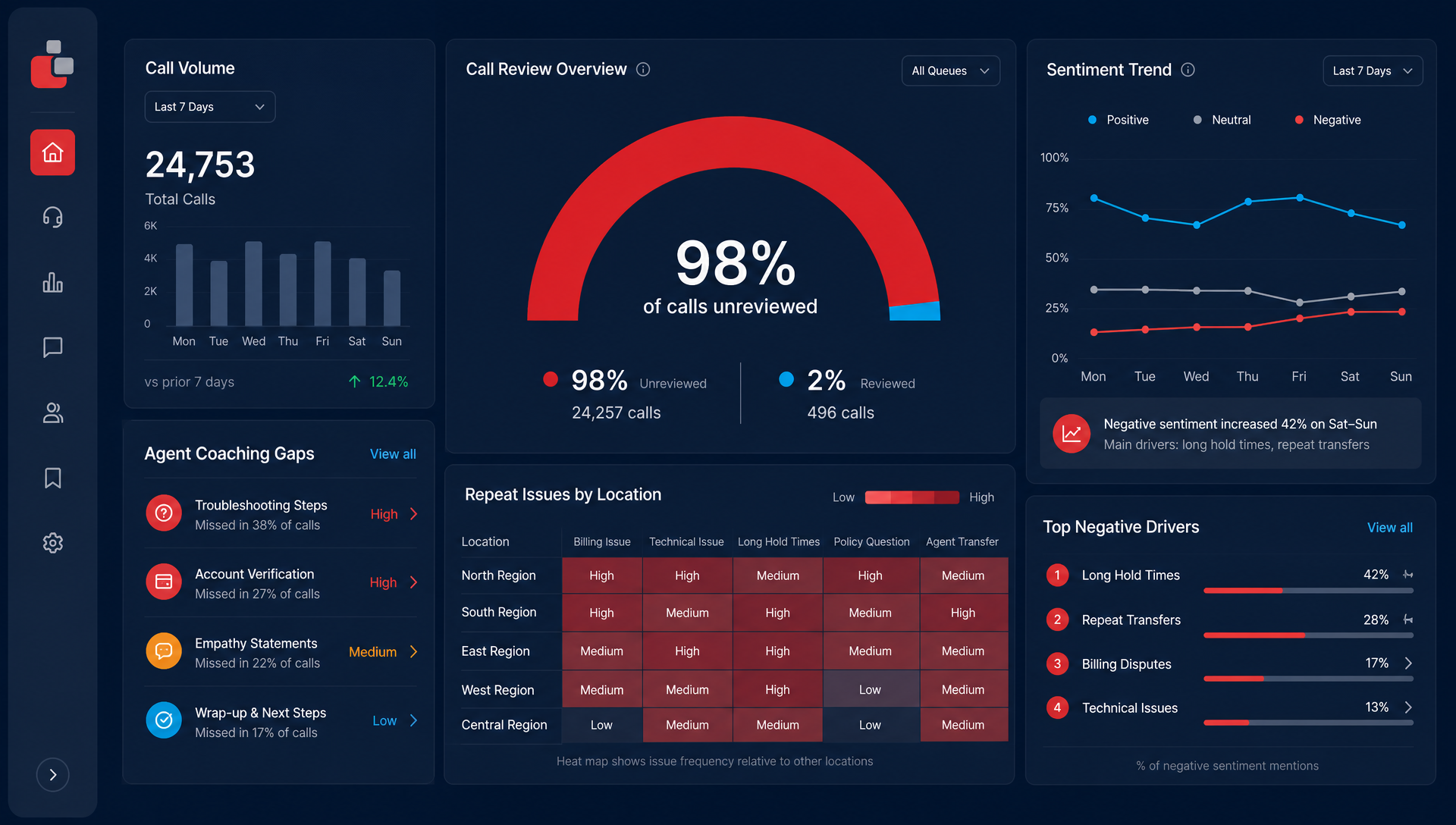
Some do, a handful a week. It's a sensible instinct, and it still leaves almost every call unreviewed. The call that turns into an E&O claim is rarely the one someone happened to pick. It's an ordinary call on an ordinary Tuesday where one sentence mattered.
Reviewing every call by hand would mean paying someone to do nothing else. No agency can justify that, which is why most agencies only find out what was said when they're forced to reconstruct it.
What Does Sentinel Show an Insurance Agency?
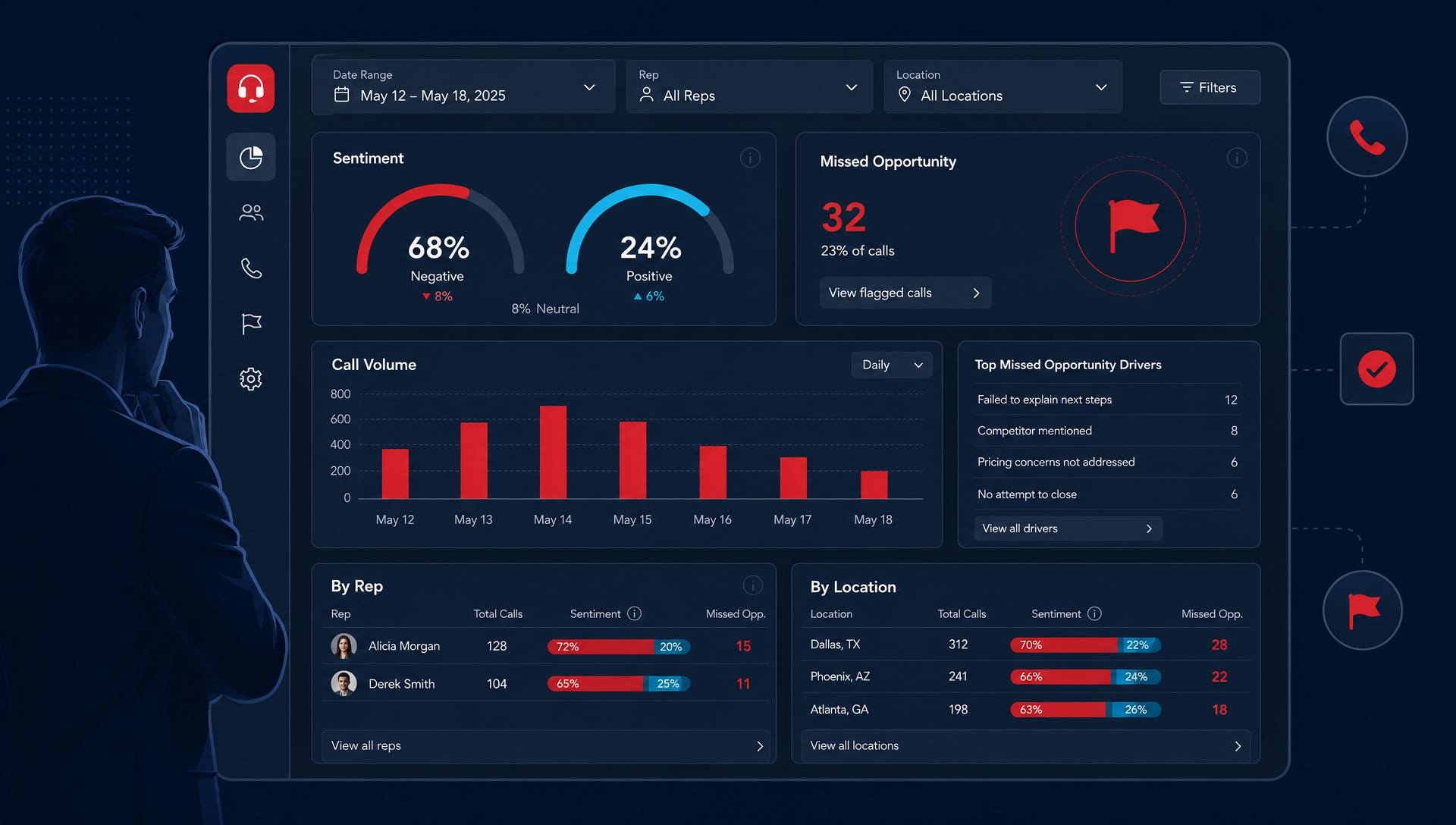
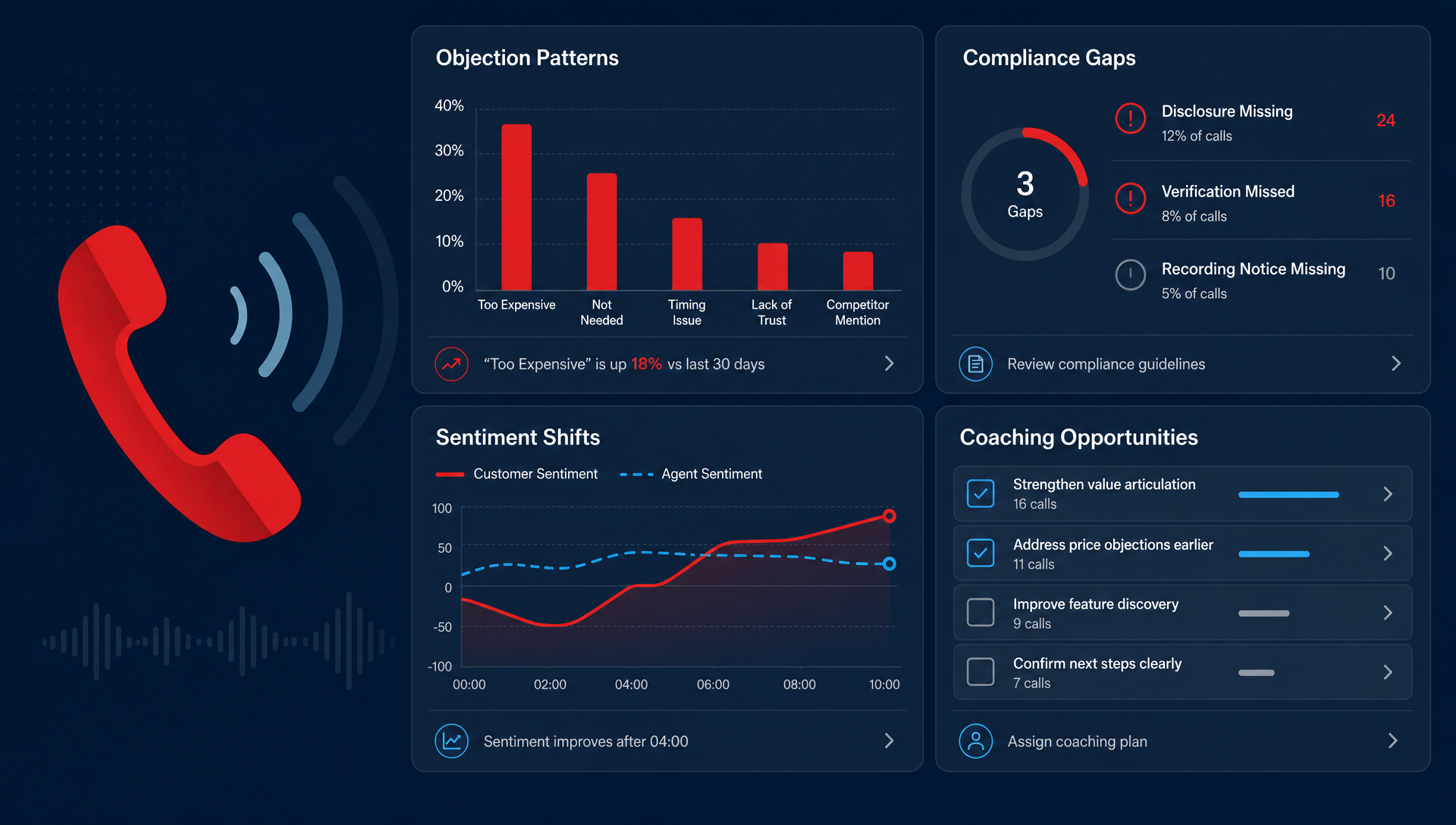
Sentinel reads each recorded call after it ends, checks it against rules written for how your agency works, and emails the calls that matter to the person you name. It sits beside your agency management system rather than inside it, so nobody logs a note twice and nothing has to sync. The rules are built around:
- Coverage requests with no follow-through. A client asked for something to be added, changed or quoted, flagged so someone can confirm it was done.
- New inquiries that went nowhere. Quote requests and referrals that ended without a callback or a next step.
- Slow callbacks. Clients calling back to chase an answer they were promised, grouped so a pattern stands out.
- Deadlines with no owner. Dates mentioned on a call that someone needs to act on before they pass.
- Clients shopping around. Renewal-time calls where a client mentions another quote or sounds ready to leave.
And when you need to know what was said on a specific call, you can search for it instead of hoping somebody remembers.
Policy numbers, account numbers, card and bank details can be redacted before a finding is written or emailed. Sentinel can flag that a payment was discussed without carrying the numbers into a report.
What Could This Look Like for an Agency Your Size?
Here's a rough illustration using round numbers, not a customer result. Say an agency with eight people takes about 1,200 calls a month. Most are routine. A few each month carry a request that changes what's covered. If even one of those slips through, the cost isn't the premium you didn't write. It's the claim, the deductible, and the client relationship.
Sentinel doesn't process the request. Your team does. What changes is that every request made on a recorded call gets surfaced, so the ones that slipped are caught in days rather than discovered at the worst possible moment. The everyday saving is time: account managers stop digging through recordings, or their own memory, to reconstruct what a client was told.
A record of what was said won't make an agency immune to E&O claims, and it isn't legal advice. It does mean you're working from what actually happened on the call, not from a two-word note.
What Does This Mean for Your Clients?
Clients don't stay with an agency for the carrier. They stay because when they called and asked for something, it got done, and when they called back, someone already knew what they'd asked. An agency that can see, and close, the calls where that broke down is one that keeps its book at renewal.
See What Your Calls Are Already Telling You
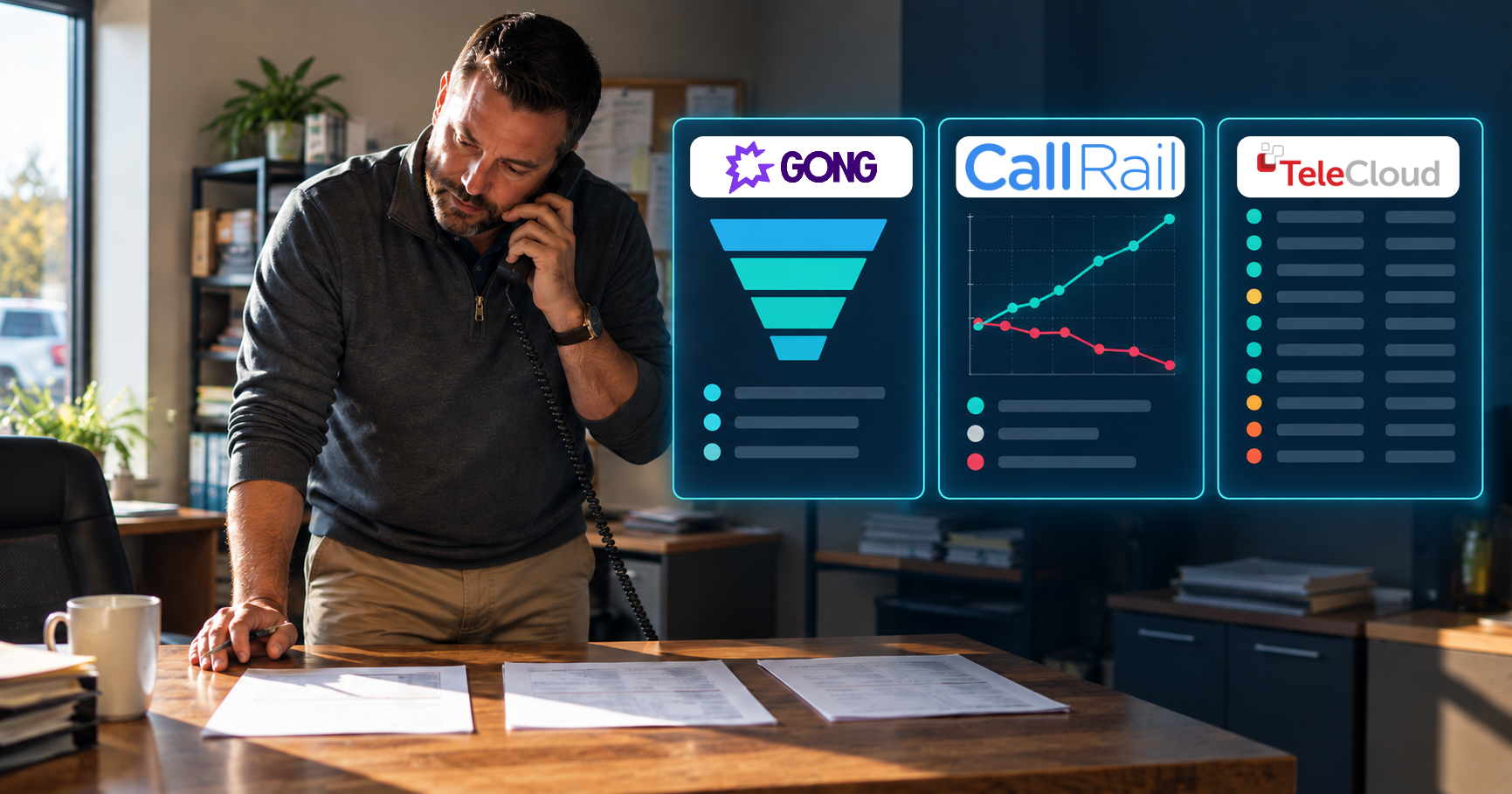
You don't need to change your phone system or your agency management system. Sentinel works with the calls you're already recording, on TeleCloud or on another provider.
If the only time anyone reviews a call is after something has gone wrong, it's worth finding out what the rest of your calls would tell you.
Get a demo to see what this could surface for your agency. Every call is a customer experience. Now you can see all of them.
Frequently Asked Questions
Do we need TeleCloud's phone system to use Sentinel?
No. Sentinel needs recordings, not a particular provider. Agencies run it on the phone system they already have. Treat your phones and your call analysis as two separate decisions.
Do we have to record calls first?
Yes. A call nobody captured leaves nothing to read. If you aren't recording, we set that up first, then check which of your lines actually record, because a producer line nobody switched on quietly shrinks every number that follows. If you're unsure about the rules for recording, start with our guide to consent for recording and analyzing calls.
Does this duplicate our agency management system?
No, and it doesn't integrate with it either, which is deliberate. Sentinel sits beside the AMS and reads recordings. Nobody logs a note in two places and nothing has to sync. If your team never opens it, the findings still arrive by email.
Does Sentinel listen to calls live?
No. It reads each call after it ends. It doesn't join calls and it doesn't answer them. Findings from a morning's calls reach you the same day.
What happens when it gets something wrong?
It will, sometimes. Every finding carries the quote that triggered it, so a person can check it in seconds. Nothing is sent to a client automatically, and nothing changes in your other systems. If a rule is wrong, we rewrite the rule.
Where do our recordings go, and who can see them?
They stay in TeleCloud's own AWS account, and Sentinel reads them there. Your call content is never used to train models and is never sold or shared. How long recordings are kept is a setting, so get the retention you need written into your agreement.
Will Maddox is the Digital Marketing Coordinator at TeleCloud, overseeing content, brand, and outbound strategy for the company. He writes about cloud communications, AI tools for business, and what SMBs and urgent care operators need to know to run better phone systems. Connect with Will on LinkedIn or email him directly to learn more.