
Why AI Receptionists in Urgent Care Work Better With EHR Context
March 10th, 2026
5 min read
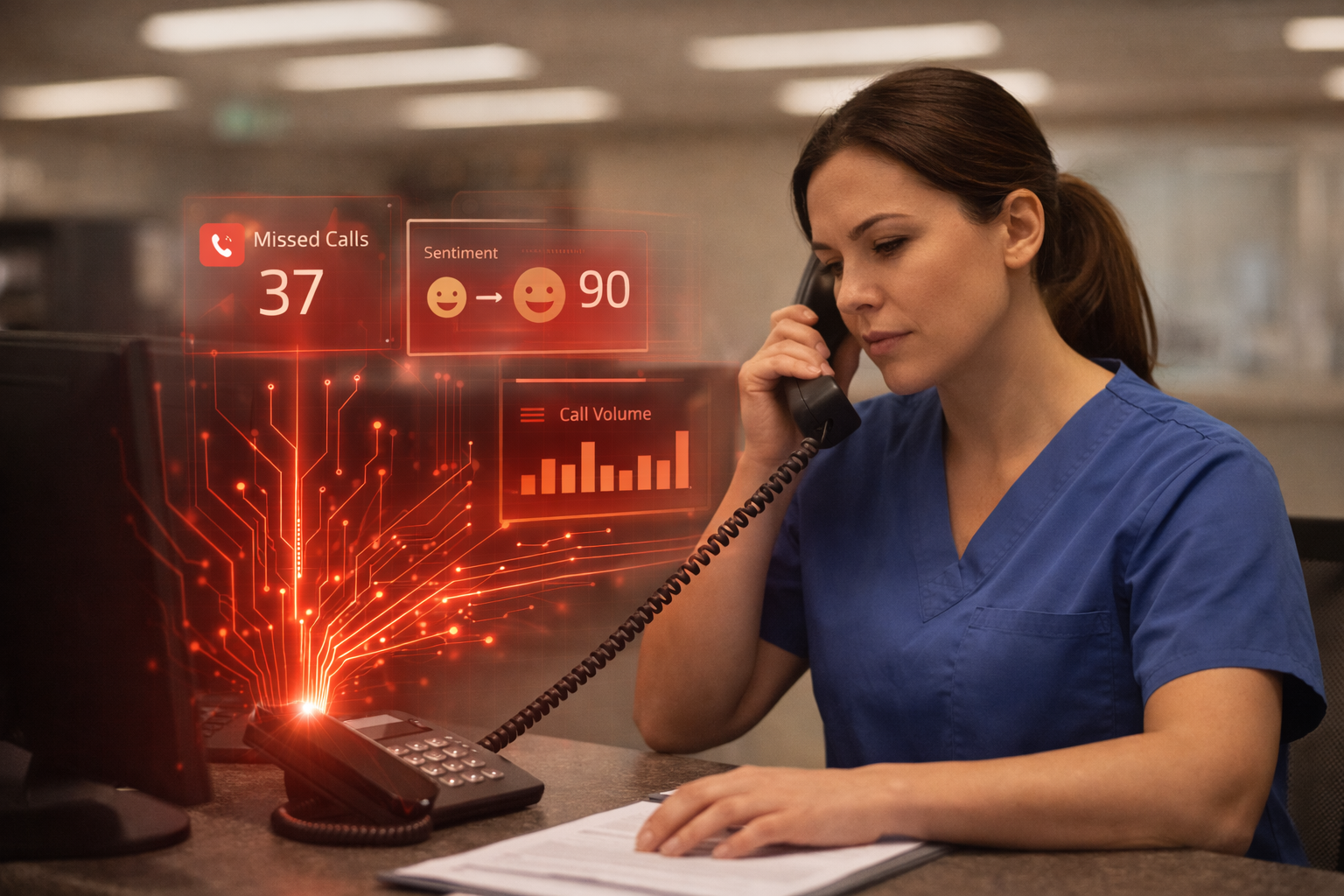
AI receptionists in urgent care become far more effective when they have access to scheduling systems and EHR data. Without that context, they can answer basic questions but cannot fully resolve many patient requests.
Many urgent care centers are exploring AI voice agents to manage high call volumes and reduce front desk overload. The promise is simple. An AI receptionist answers calls instantly so patients do not wait on hold.
But urgent care calls are rarely simple. Patients want to know if they can come in today, how long the wait might be, or whether their insurance is accepted. If an AI receptionist cannot see scheduling availability or patient information, it cannot resolve those requests.
Instead of improving patient access, the AI becomes little more than an answering service.
In this article, we will explain why AI receptionists struggle without EHR and scheduling context, what problems this creates for urgent care centers, and how clinics should think about adopting AI over time.
What Is an AI Receptionist in Urgent Care?
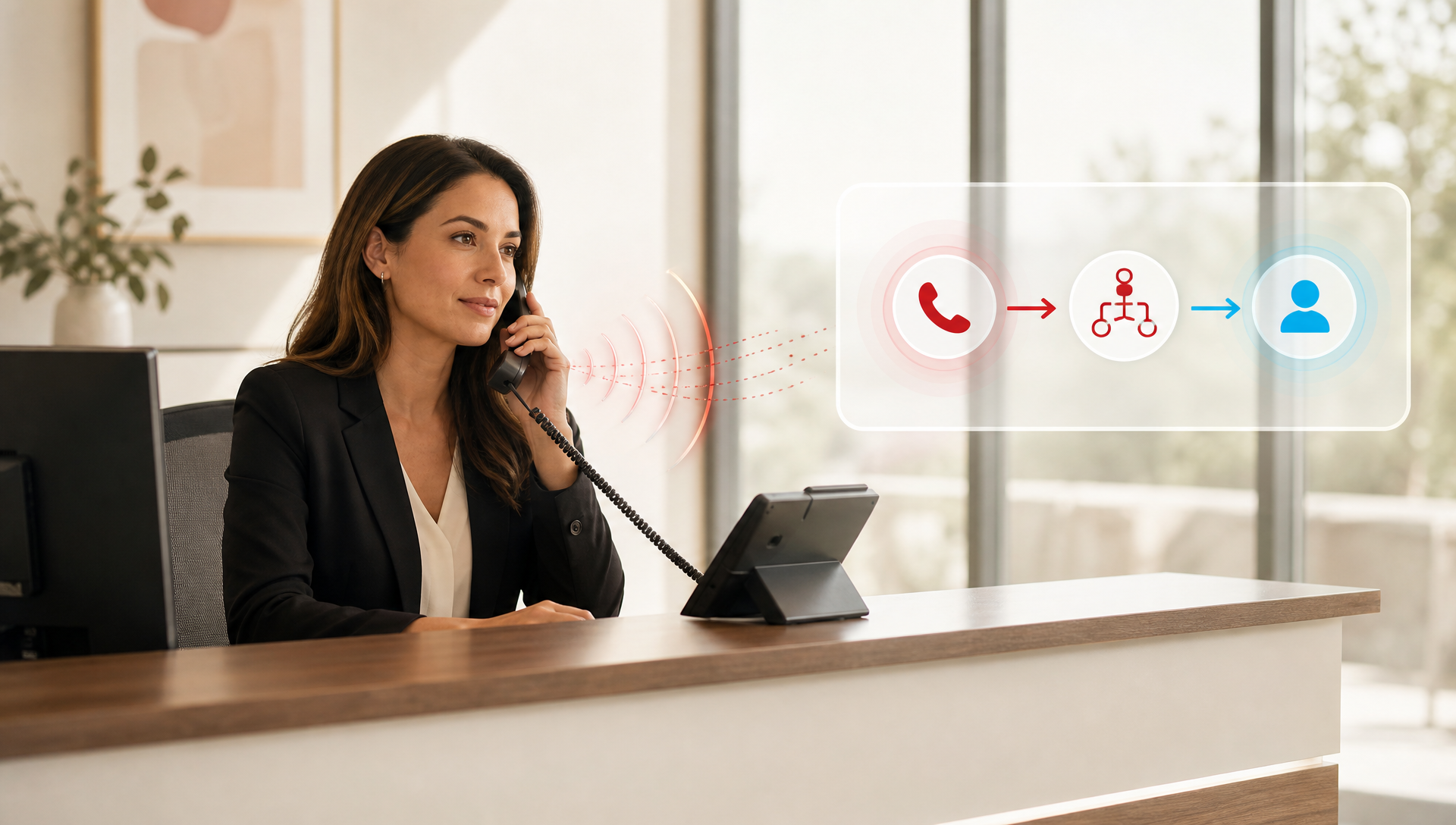
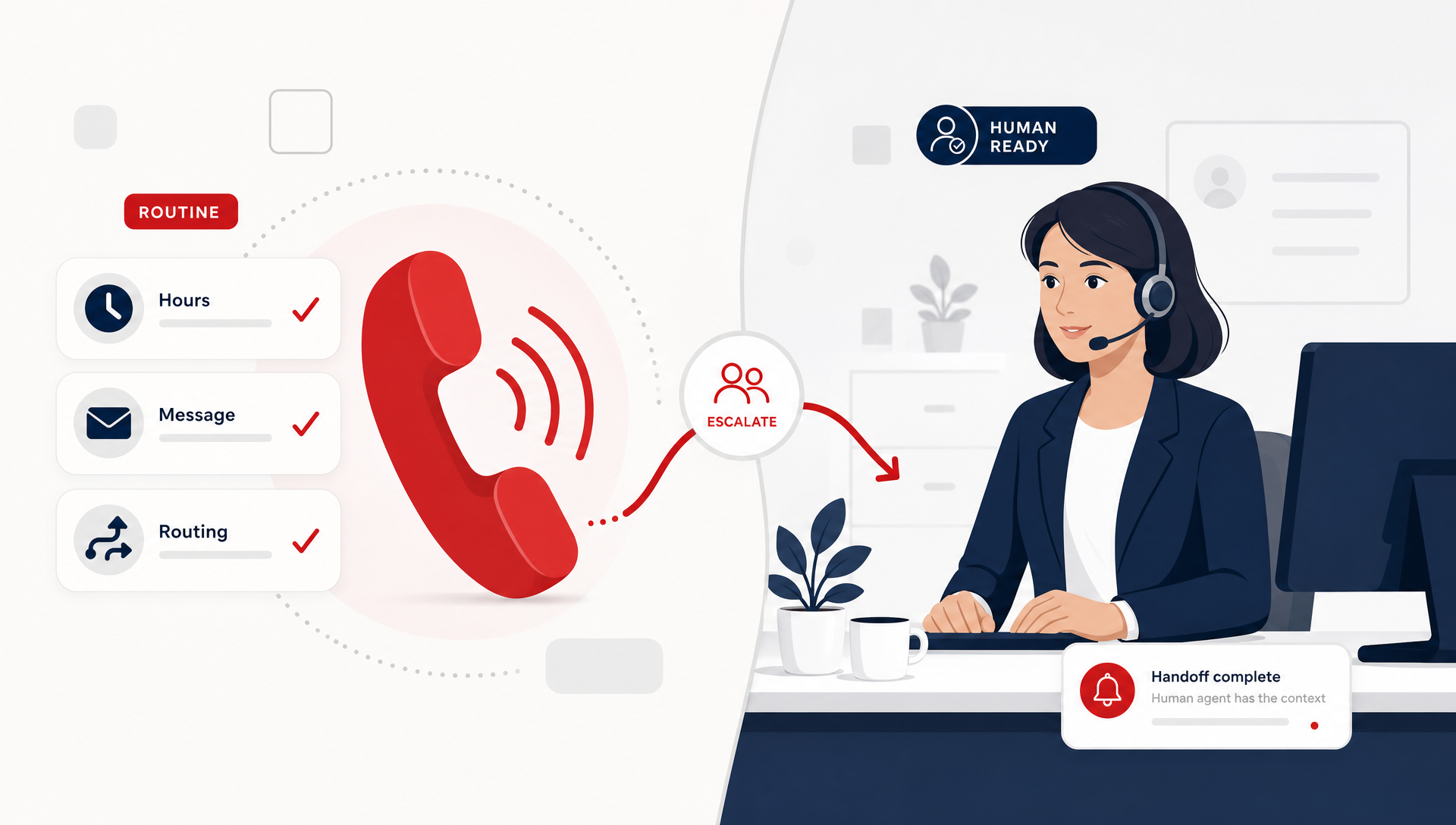
An AI receptionist is a voice-based AI agent that answers inbound patient calls, handles common requests, and routes patients to the right team.
Instead of calls going directly to the front desk or voicemail, the AI answers immediately and begins helping the caller.
Most AI receptionists are designed to assist with tasks such as:
- Answering inbound patient calls
- Providing clinic hours and location information
- Routing calls to the correct department
- Taking messages for staff
- Answering frequently asked patient questions
- Scheduling visits when connected to scheduling systems
For urgent care centers where phones ring constantly, this can make a major difference. Front desk teams are often juggling check-ins, paperwork, insurance verification, and incoming calls at the same time.
An AI receptionist ensures every call gets answered immediately, improving patient access while reducing staff stress.
Are AI Receptionists a Good Fit for Urgent Care?
Yes. Urgent care is one of the environments where AI receptionists can have the biggest impact.
Clinics receive a high volume of repetitive calls such as:
- “Can I come in today?”
- “What are your hours?”
- “Do you accept my insurance?”
- “How long is the wait?”
An AI receptionist can answer these questions instantly and ensure every call gets answered, even during busy periods.
However, many patient calls involve scheduling or visit-related questions. When an AI receptionist cannot access scheduling systems or EHR data, it cannot resolve those requests.
Without that context, the AI functions more like an answering service than a true patient access tool.
Why Many AI Receptionists Are Ineffective in Healthcare
AI receptionists in urgent care aren’t reaching their full potential when they cannot access scheduling systems or EHR data. Without this context, the AI cannot book visits, personalize conversations, or accurately answer patient questions.
Many AI phone systems can:
- Answer calls
- Recognize caller intent
- Route calls
- Provide general information
But they cannot see operational data such as:
- Appointment availability
- Provider schedules
- Patient visit history
- Insurance information
- Wait times
Without this information, the AI lacks the context needed to resolve patient requests.
Think of it this way.
Hiring a receptionist without giving them access to the clinic calendar would make their job nearly impossible. Most conversations would end with, “Let me transfer you to someone who can help.”
AI behaves the same way when it lacks operational visibility.
What Happens When AI Lacks Scheduling Context
In urgent care, many patient calls revolve around one question: “Can I come in today?”
Without scheduling integration, AI receptionists can only:
- Provide general information
- Transfer calls to staff
- Take messages
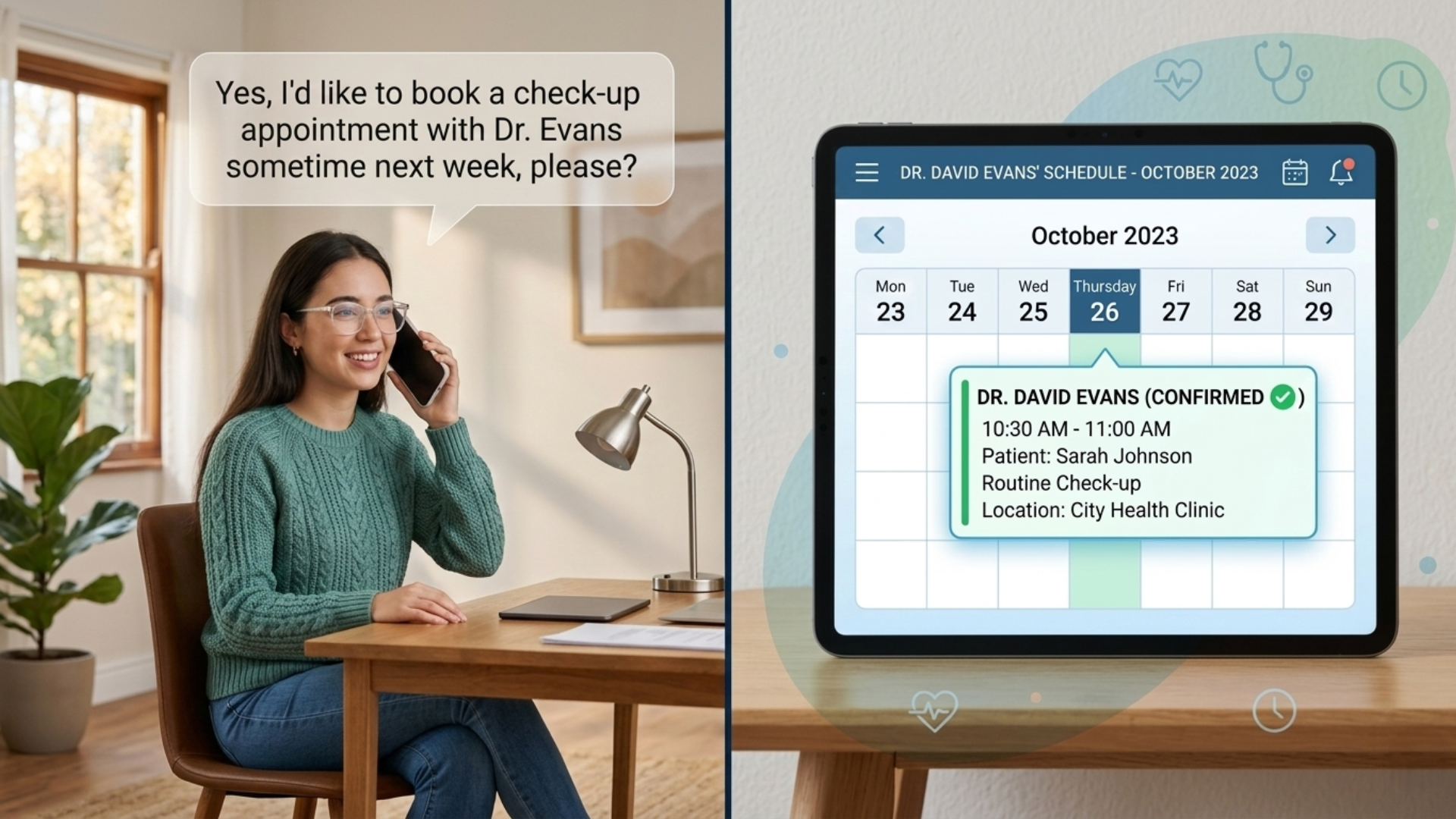
With scheduling integration, the AI can:
- Check appointment availability
- Offer the earliest opening
- Schedule visits
- Route patients to nearby clinics
Quick Comparison
|
Without Scheduling Context |
With Scheduling Integration |
|
Transfers calls to staff |
Books visits automatically |
|
Provides general information |
Checks appointment availability |
|
Cannot answer wait-time questions |
Routes patients to open clinics |
|
Acts like an answering service |
Improves patient access |
This difference determines whether AI reduces workload or simply redirects it.
Why EHR Context Improves Patient Conversations
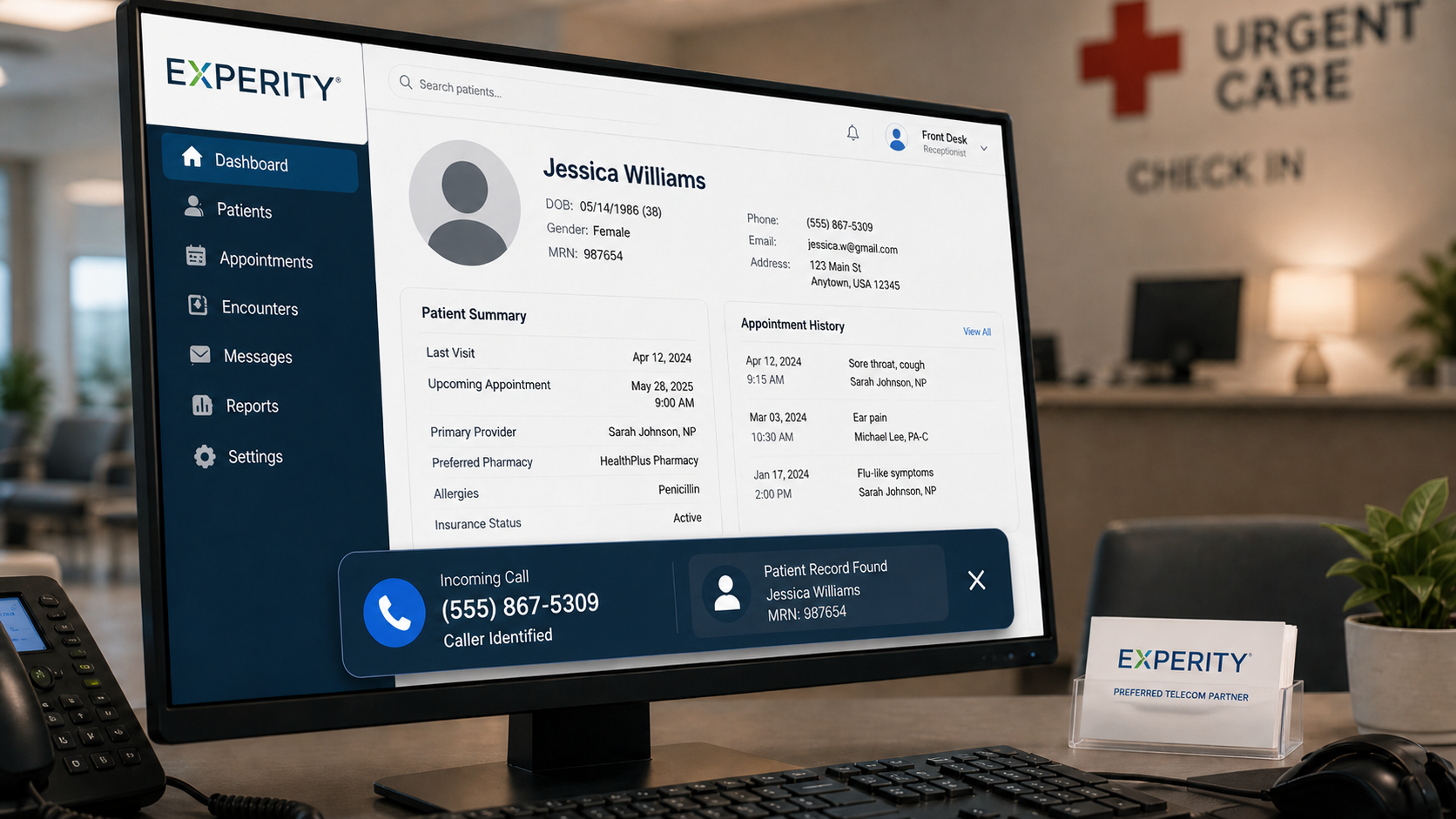
EHR integration allows AI receptionists to personalize conversations and route calls more intelligently.
Patients often expect healthcare providers to recognize them and understand their history. When AI receptionists have access to patient context, conversations can become faster and more helpful.
For example: “Hi Sarah. I see you visited last week. Would you like to schedule your follow-up appointment?”
EHR context also improves call routing. Instead of guessing where a call should go, the AI can route based on patient needs.
Examples include:
- Lab result inquiries routed to clinical staff
- Billing questions directed to billing teams
- Prescription refill requests routed appropriately
This reduces unnecessary transfers and improves the patient experience.
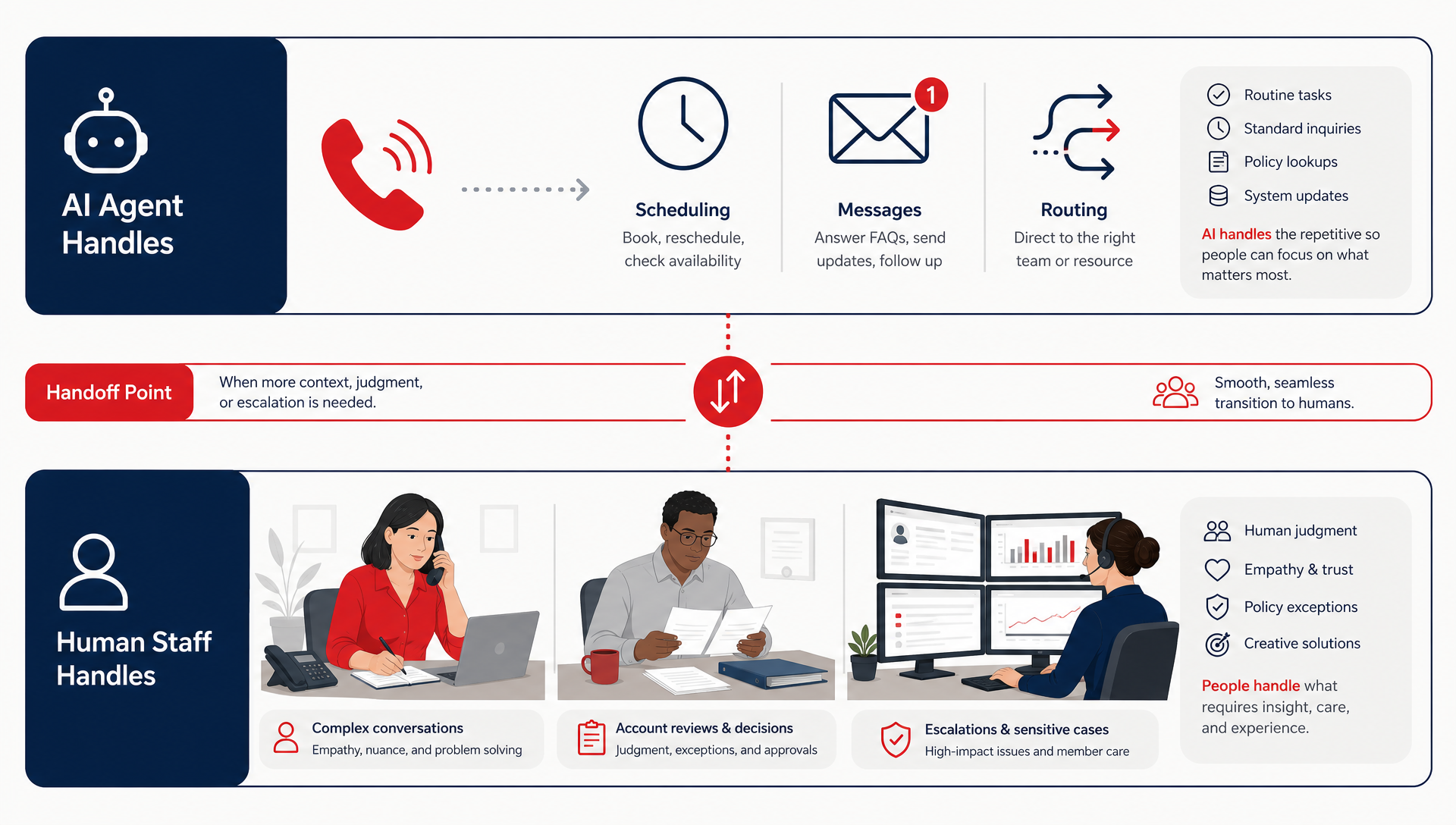
Importantly, AI is not designed to replace front desk teams. It supports them by handling repetitive requests so staff can focus on more complex patient needs.
The Reality: Not Every AI Can Integrate With Every EHR Yet
It is important to recognize that not every AI receptionist platform can integrate with every healthcare system today.
EHR platforms vary widely, and integrations often take time to develop. Even vendors that specialize in healthcare cannot connect to every system immediately.
What matters most is whether the AI provider understands your workflow and is actively developing integrations that support the way your clinic operates.
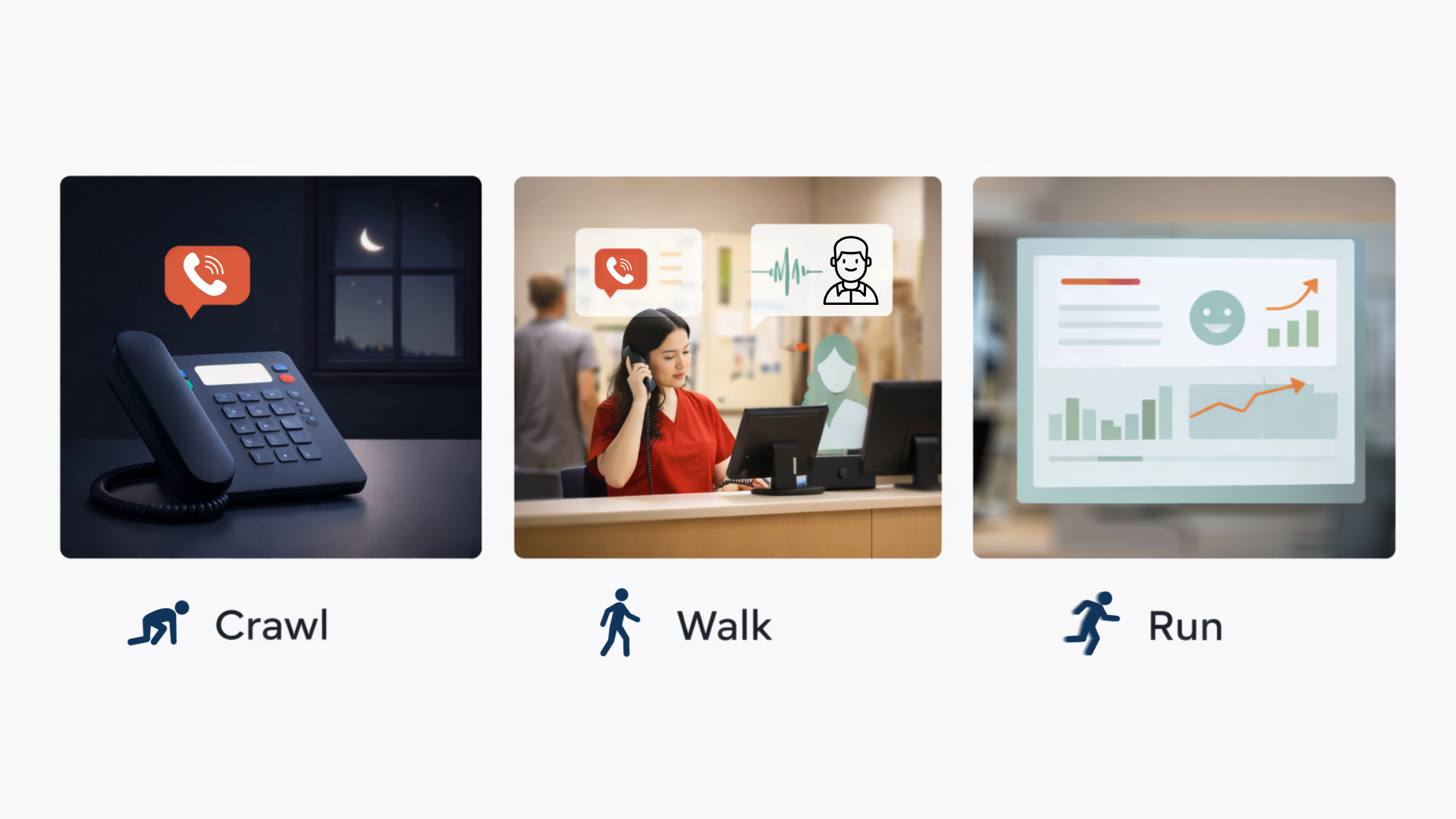
This is why many urgent care centers adopt AI gradually, using a crawl, walk, run approach.
The Crawl, Walk, Run Approach to AI in Urgent Care
AI adoption does not need to happen all at once. Many urgent care centers start small and expand capabilities over time.
Crawl: Basic AI Receptionist
At the crawl stage, the AI handles simple calls using general business context.
Examples include:
- Clinic hours
- Directions
- Insurance questions
- Message taking
- Call routing
Even this basic level can reduce missed calls and relieve pressure on the front desk.
Walk: Scheduling Integration
As integrations develop, the AI can begin interacting with scheduling systems.
At this stage the AI can:
- Check appointment availability
- Schedule visits
- Help patients reschedule appointments
This is where AI begins to meaningfully improve patient access.
Run: Context-Aware Conversations
At the most advanced stage, AI integrates with EHR systems and analytics tools.
This allows the AI to:
- Recognize returning patients
- personalize conversations
- route calls based on patient history
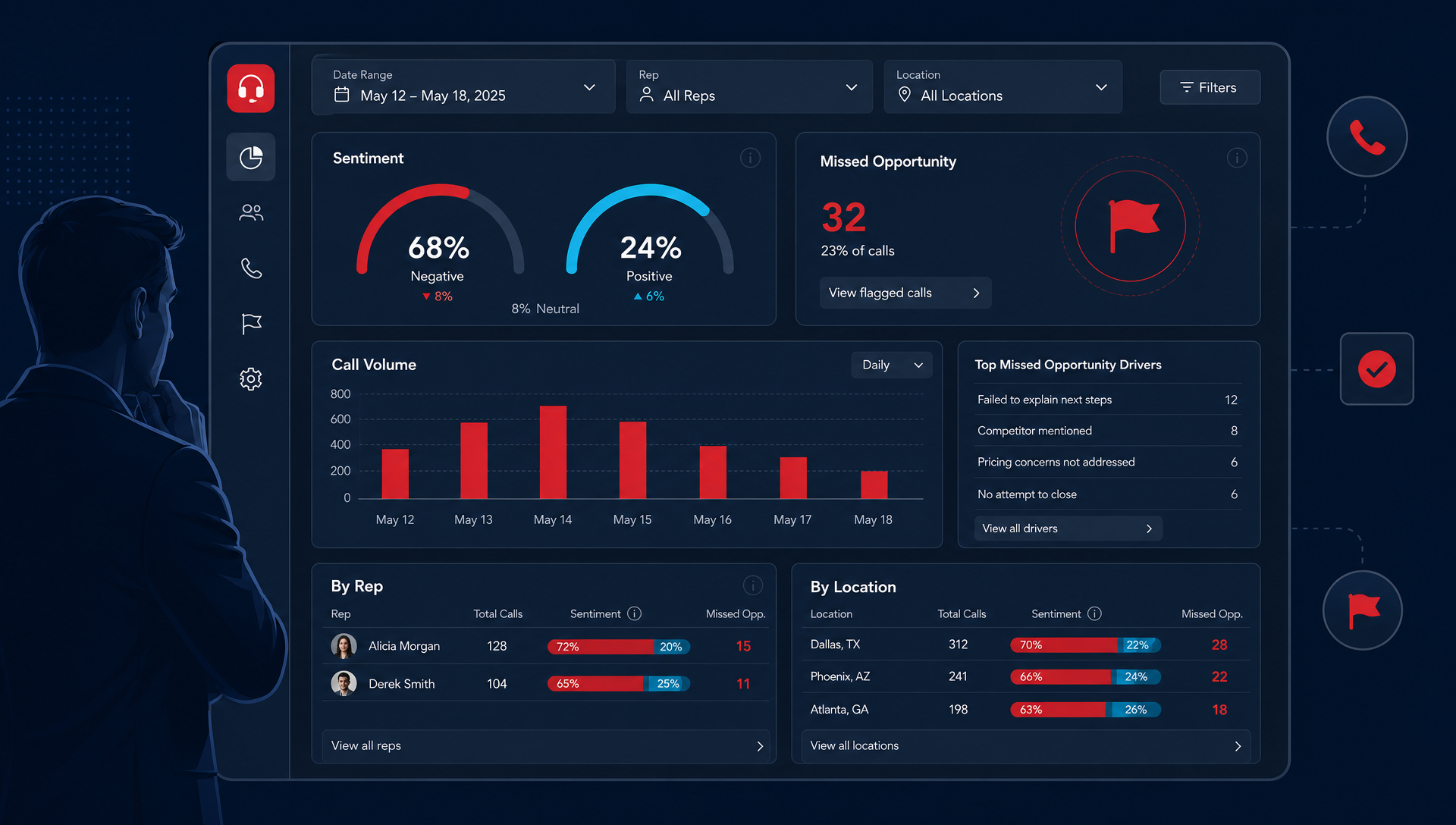
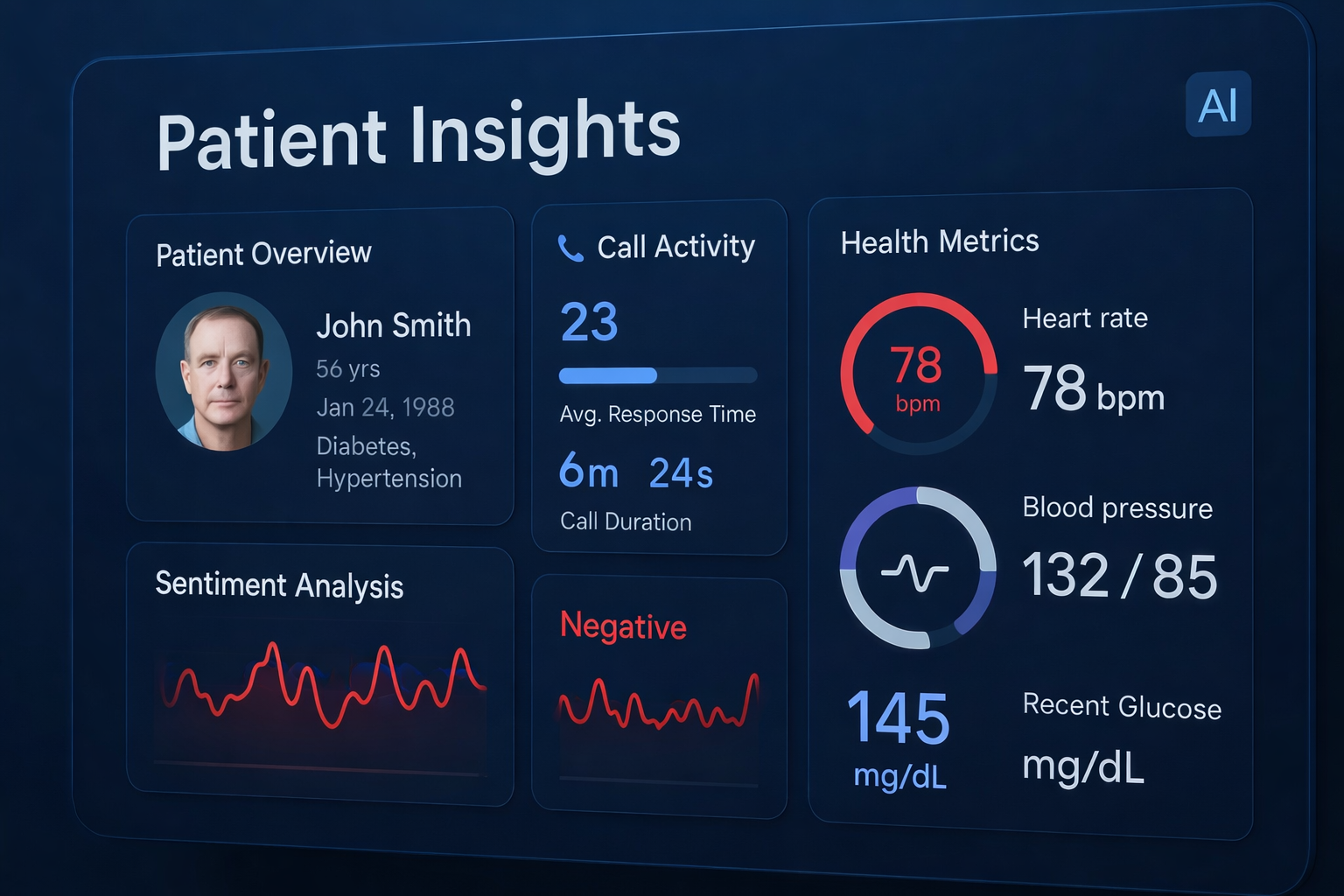
- provide insights into call patterns and patient needs
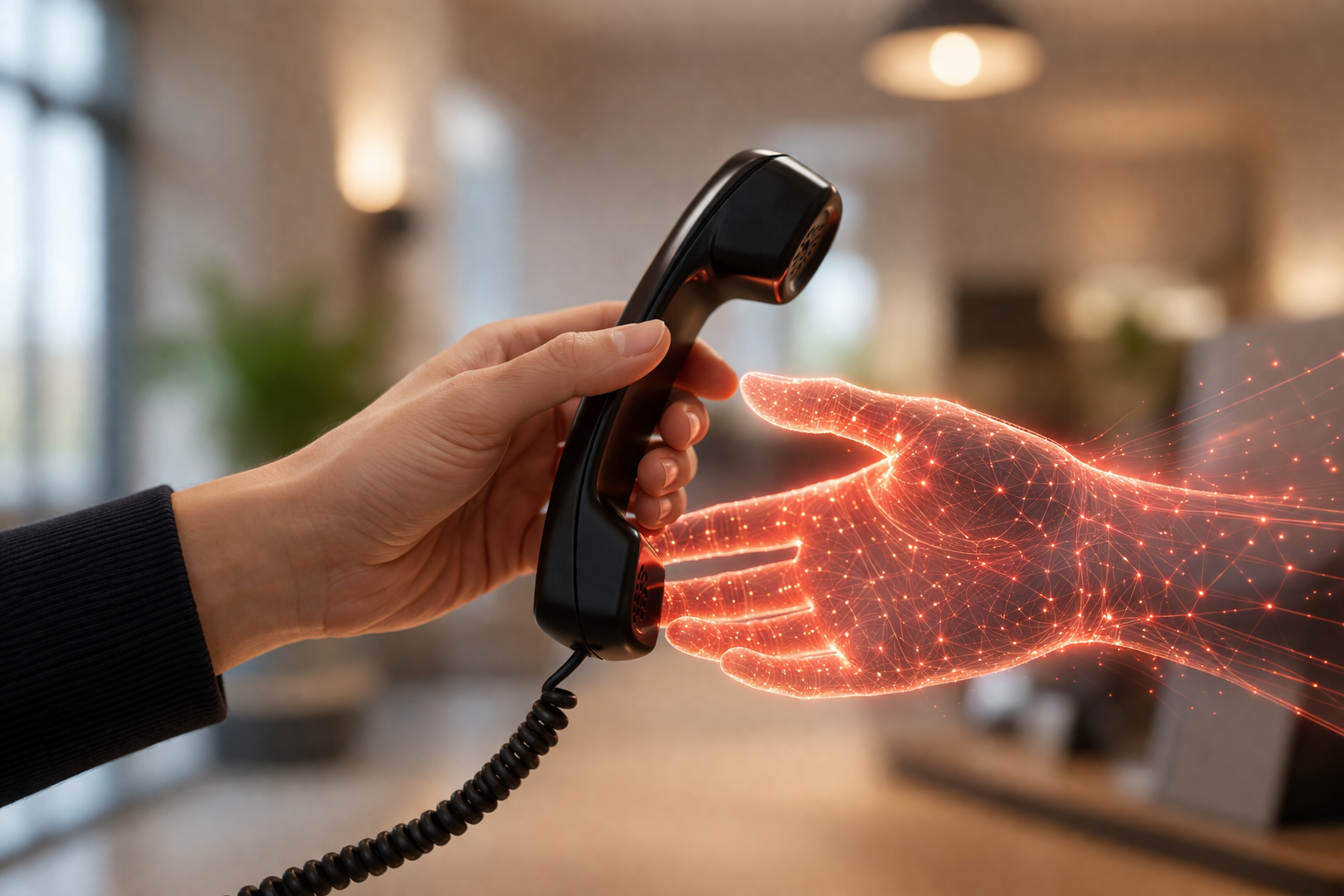
At this stage, AI becomes part of the clinic’s communication infrastructure rather than just a call answering tool.
How Urgent Care Leaders Should Evaluate AI Receptionist Solutions
Not all AI receptionists are designed for healthcare environments.
Before adopting one, urgent care leaders should ask several important questions:
- Does the AI integrate with our scheduling system?
- Can it eventually connect to our EHR platform?
- How does the system escalate calls to staff?
- Can the platform evolve as our workflows grow?
The goal is not simply to adopt AI. It is adopting AI that can grow alongside your clinic’s operations.
The Real Question Urgent Care Leaders Should Ask About AI Receptionists
AI receptionists can significantly improve patient access in urgent care. But their effectiveness depends on one thing: context.
Without access to scheduling systems and EHR data, AI voice agents cannot resolve many patient requests. Instead of reducing workload, they simply transfer calls back to staff.
That is why urgent care leaders should ask a different question when evaluating AI.
Not: “Does this system use AI?”
But instead: “Does this AI understand our workflows today and have the ability to grow with our clinic over time?”
AI adoption in urgent care is not a single step. It is a process that evolves from basic call handling to fully context-aware patient conversations.
If you are exploring AI receptionists for your urgent care center, schedule a conversation with a TeleCloud healthcare communications specialist to see how AI can support your patient access strategy today while preparing for the integrations of tomorrow.
Frequently Asked Questions About AI Receptionists in Urgent Care
What is an AI receptionist in urgent care?
An AI receptionist is a virtual voice agent that answers patient calls, responds to common questions, routes callers to staff, and can assist with appointment scheduling. It helps urgent care centers ensure every call gets answered while reducing pressure on front desk teams.
Can AI receptionists schedule urgent care appointments?
Yes, but only when the AI is connected to a scheduling system. Without scheduling integration, AI can answer general questions but cannot check availability or book visits. With scheduling access, it can confirm appointment times and help patients find the next available slot.
Why does EHR context improve AI receptionist conversations?
EHR context allows AI to recognize patients, reference recent visits, and route calls more intelligently. This helps conversations feel more personalized and allows the AI to resolve more patient requests without transferring the call.
Do AI receptionists replace front desk staff?
No. AI receptionists support staff by handling repetitive tasks such as answering common questions, routing calls, and helping schedule appointments. This allows front desk teams to focus on patient care and more complex requests.
How should urgent care clinics adopt AI receptionists?
Many clinics start with a crawl, walk, run approach. The crawl stage handles basic calls and FAQs. The walk stage adds scheduling integration. The run stage introduces deeper integrations like EHR context and advanced call routing.
Damon Finaldi is the President of TeleCloud, where he leads the company's strategic direction after two decades in telecommunications, including hands-on stints in cable installation, sales, and operations. He's driven by one goal: making sure every TeleCloud client gets the kind of service that keeps them a customer for life. Read Damon's full bio or reach out directly to learn more.
Topics: