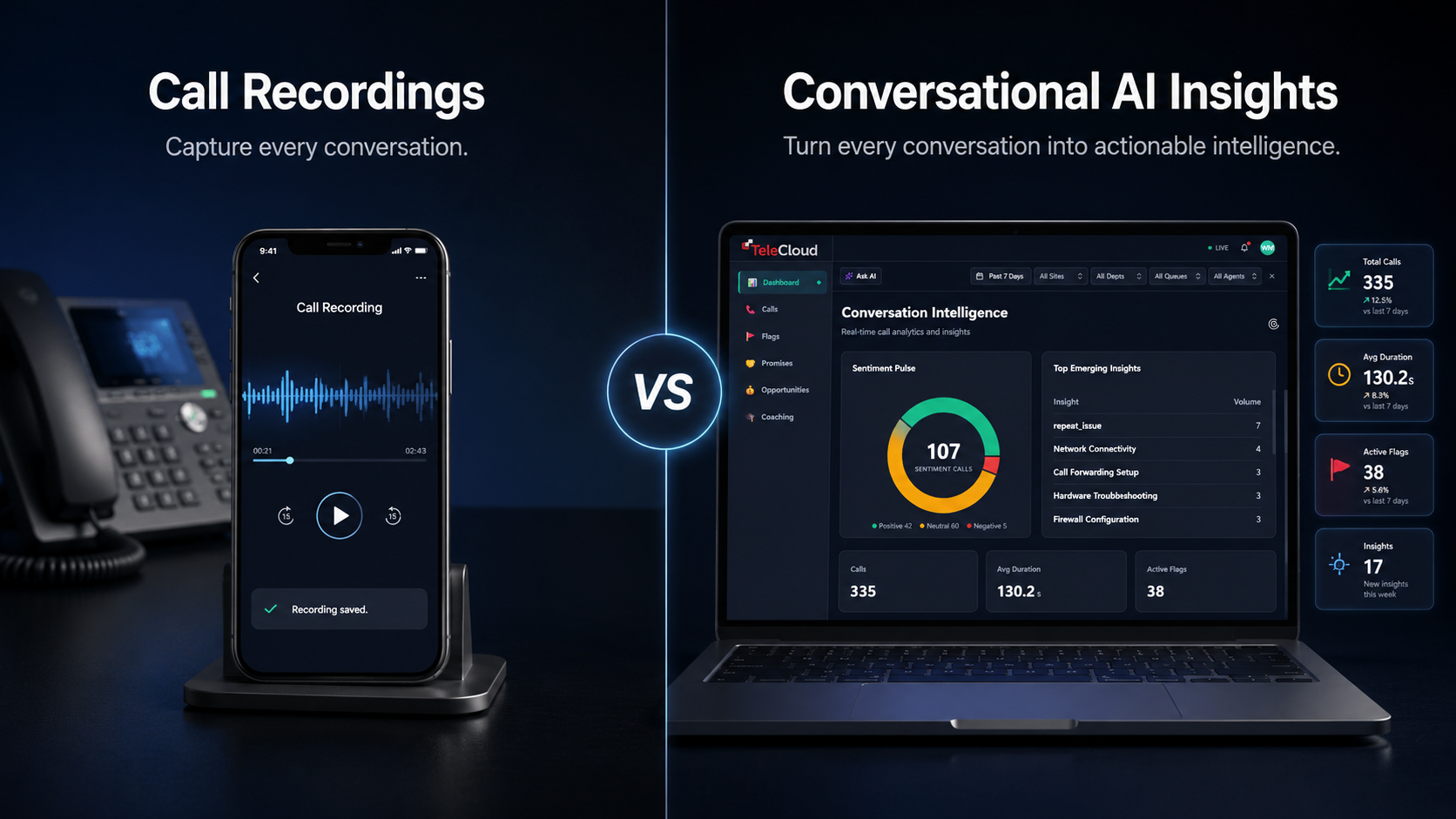

Call reports show what happened. Conversational insights explain why
September 22nd, 2026
4 min read
By Will Maddox
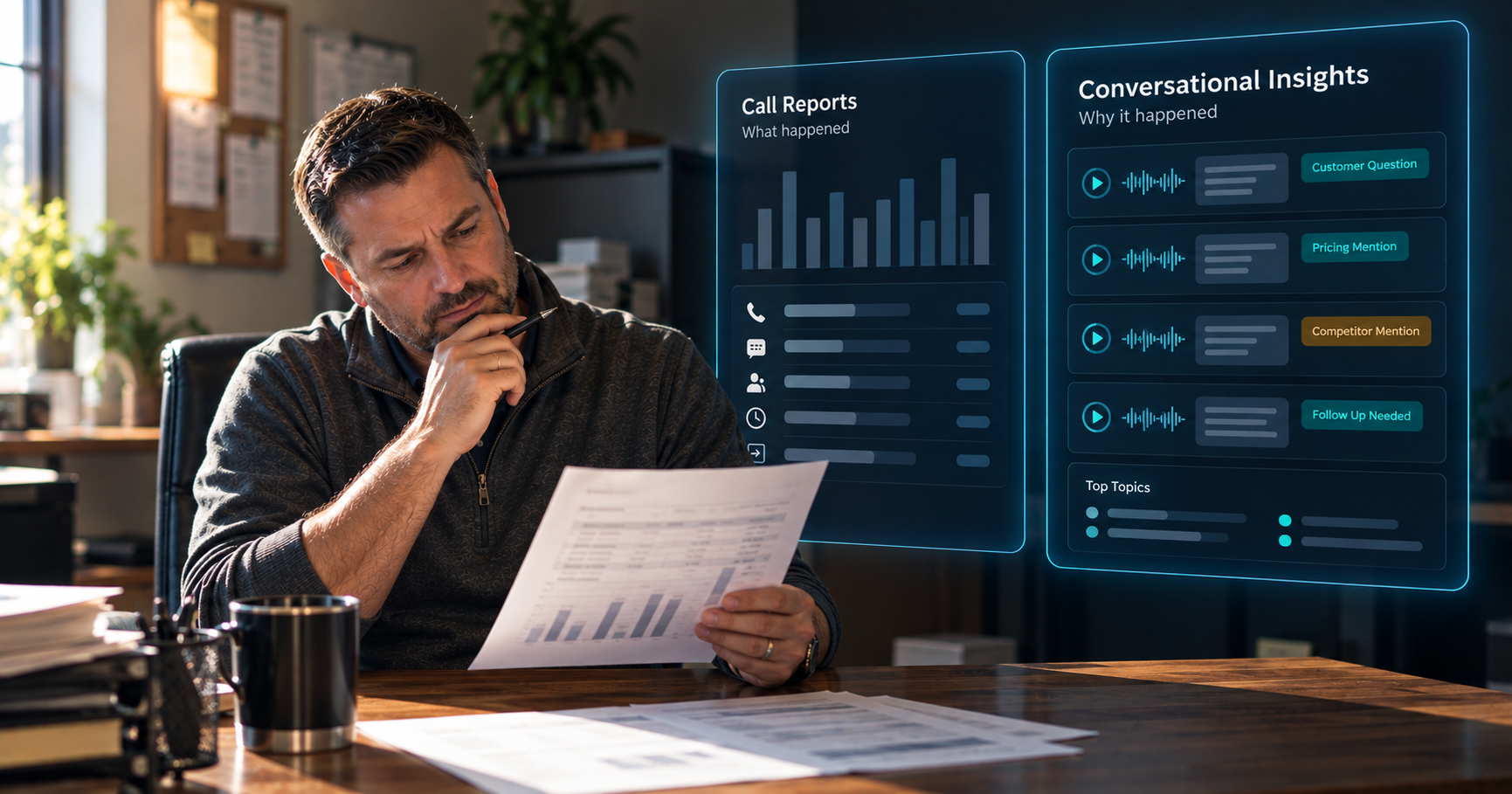
You already have call reports. You still cannot answer the question your reports were supposed to answer. That gap is not a reporting failure. It is the difference between counting calls and reading them.
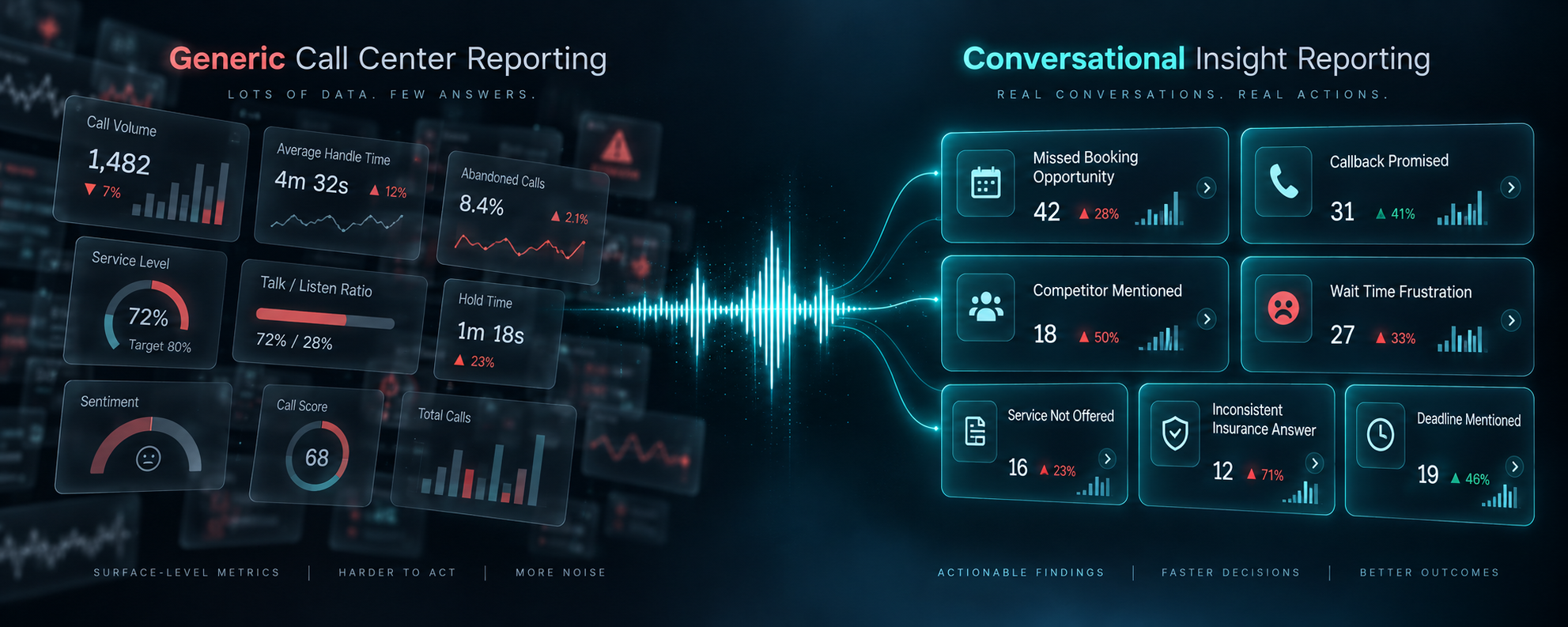
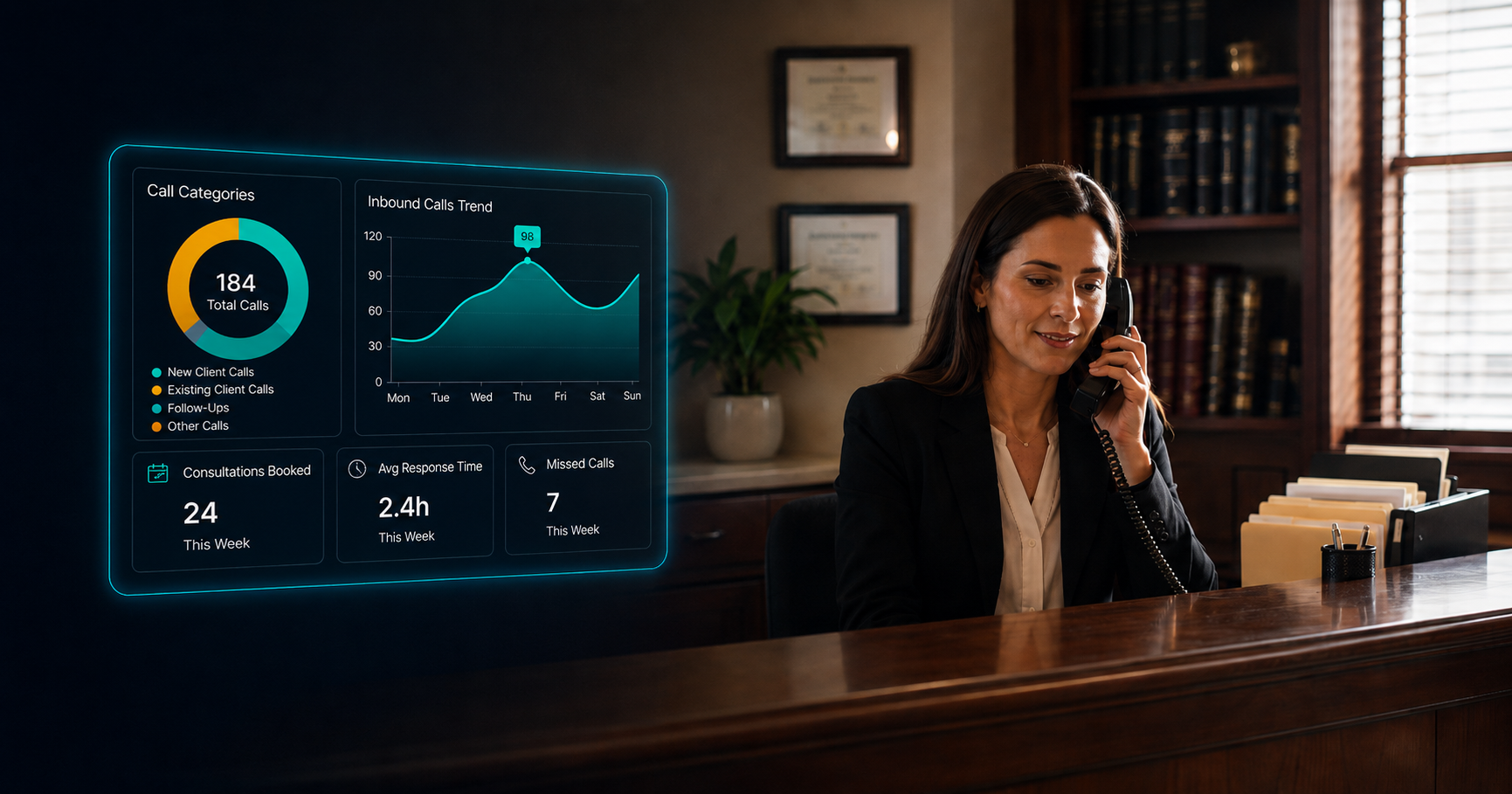
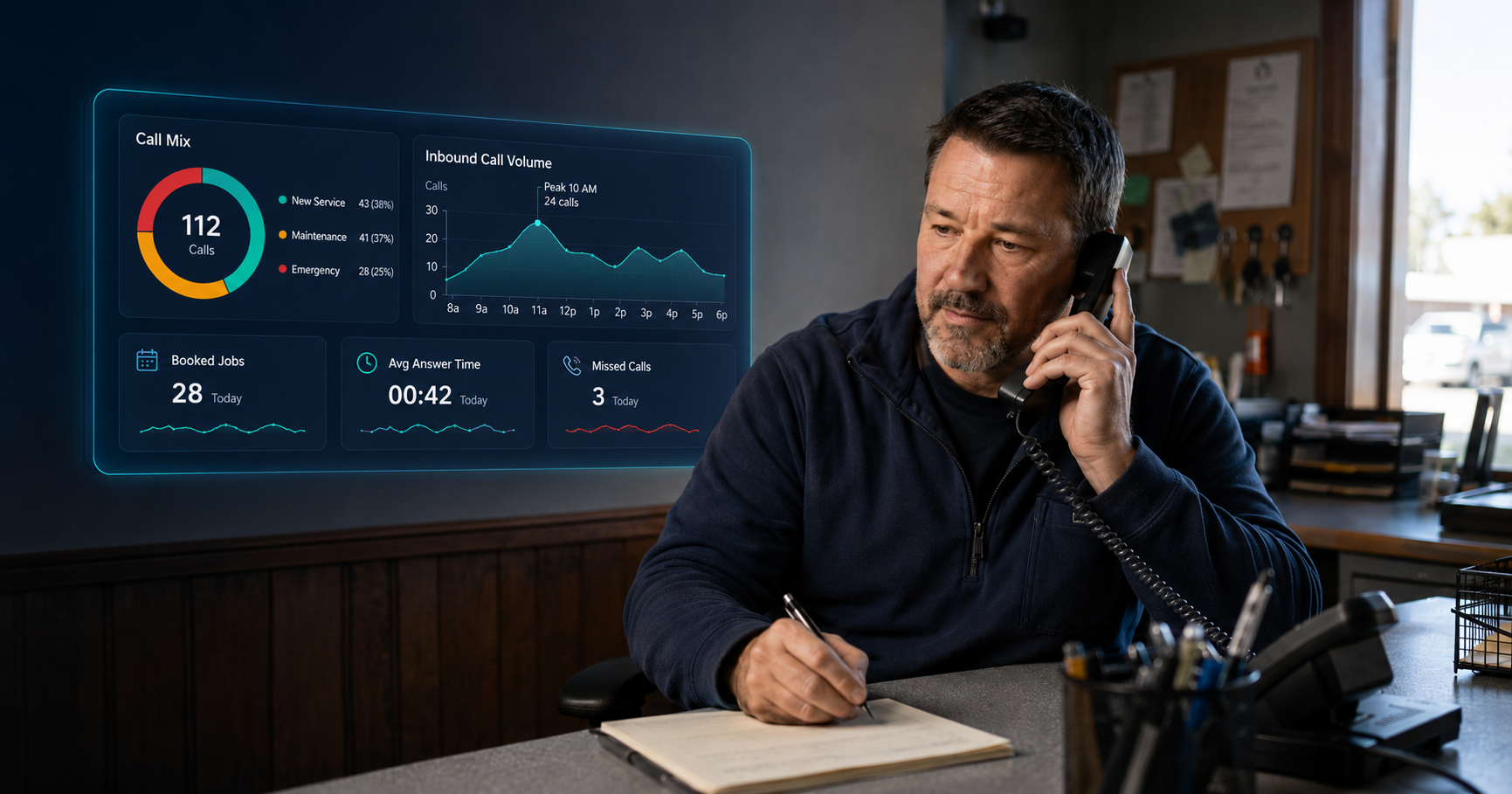
Most business phone systems produce a respectable set of numbers. Calls answered, calls abandoned, average wait, average handle time, volume by hour and by extension. If you have ever been asked to explain a bad month, you have probably opened that report, stared at it, and found that it confirmed something was wrong without telling you what.
This is worth naming clearly, because a lot of businesses conclude they need better reporting when what they actually need is a different kind of information.
What your call reports are actually measuring
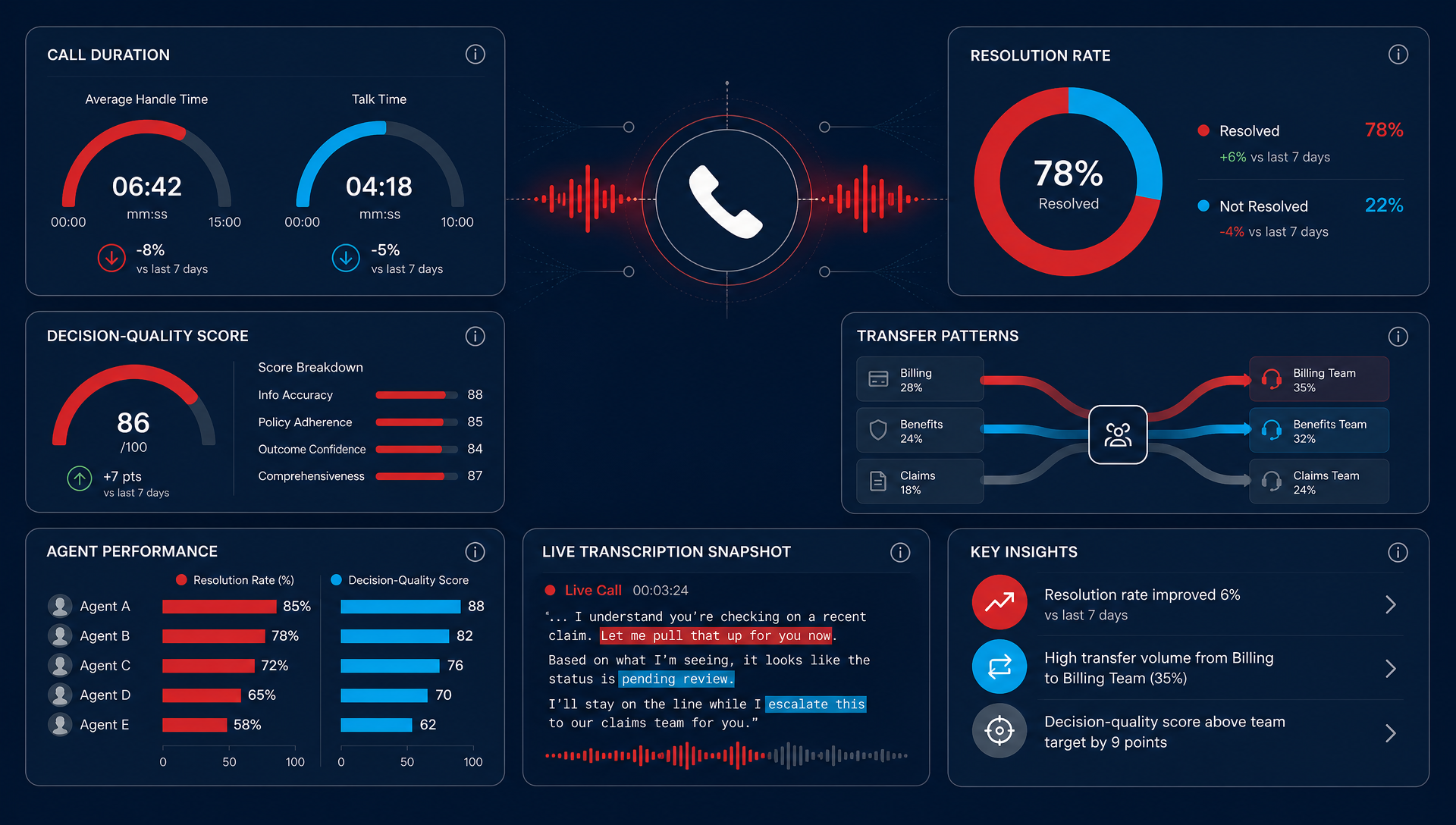
Call reporting measures the shape of a call from the outside. It knows a call arrived, how long it rang, who picked it up, how long they were on it, and how it ended. Everything in that list is metadata. None of it requires knowing a single word that was said.
That is genuinely useful for the questions it was built for. Staffing, queue design, hold times, whether Monday mornings need another person on the phones. If your problem is capacity, your reports will find it.
The trouble starts when the problem is not capacity.
What does a report look like when the problem is quality?
Here is the part that catches people out. A call that goes badly and a call that goes well often look identical in a report.
Two calls, both answered in nine seconds, both four minutes long, both ended normally. In the first, the caller booked. In the second, the caller was quoted a price nobody had approved, was promised a callback that never happened, and went to a competitor that afternoon. Your report shows two identical rows.
Now scale that up. Across a month of a few thousand calls, the ones that quietly went wrong are averaged into the ones that went right, and the average looks fine. Reporting is very good at showing you a problem that is large and structural. It is close to blind to a problem that is small and repeated.
Small and repeated is where most lost revenue on a phone line actually lives.
What does reading the conversation add?
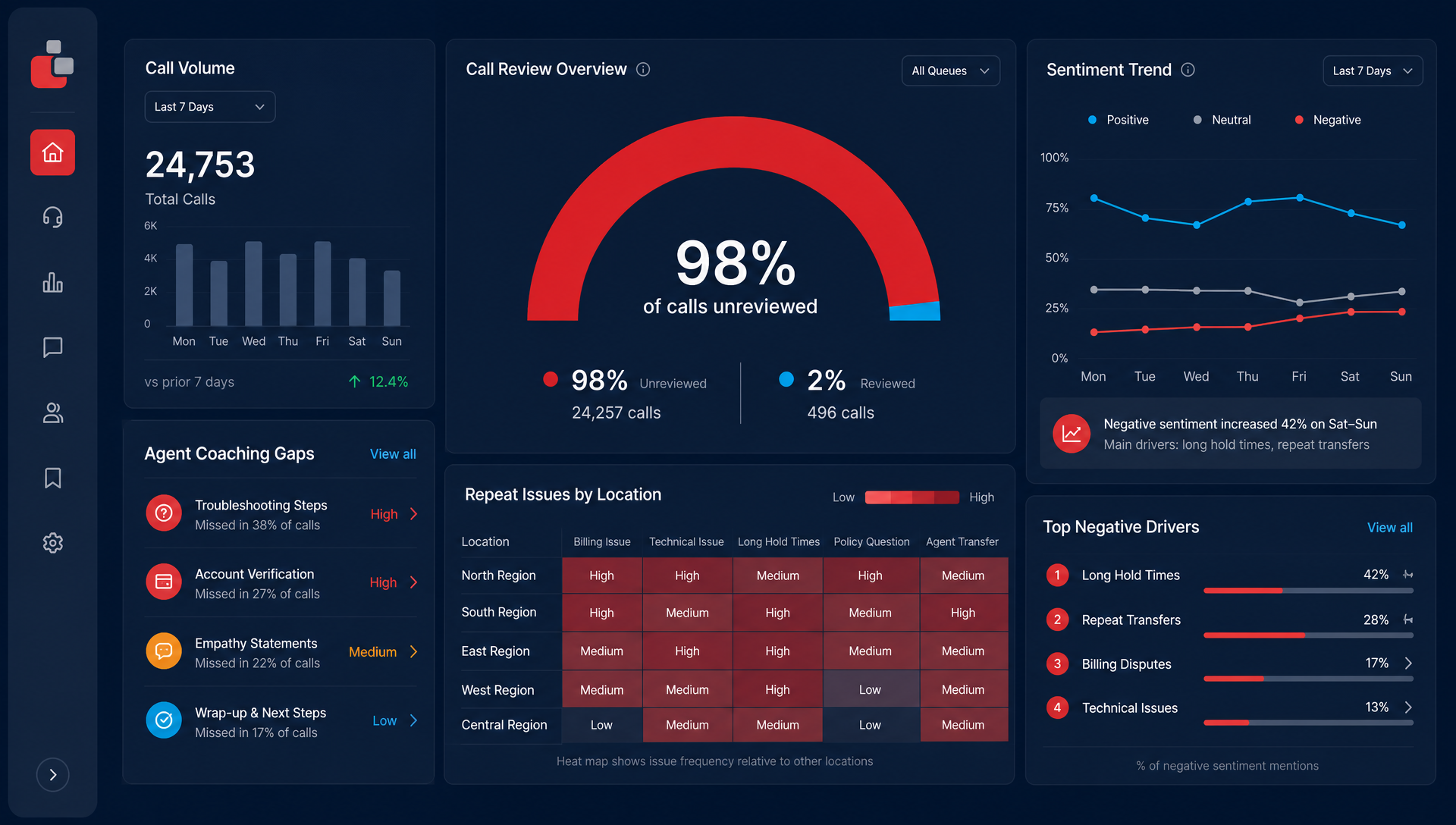
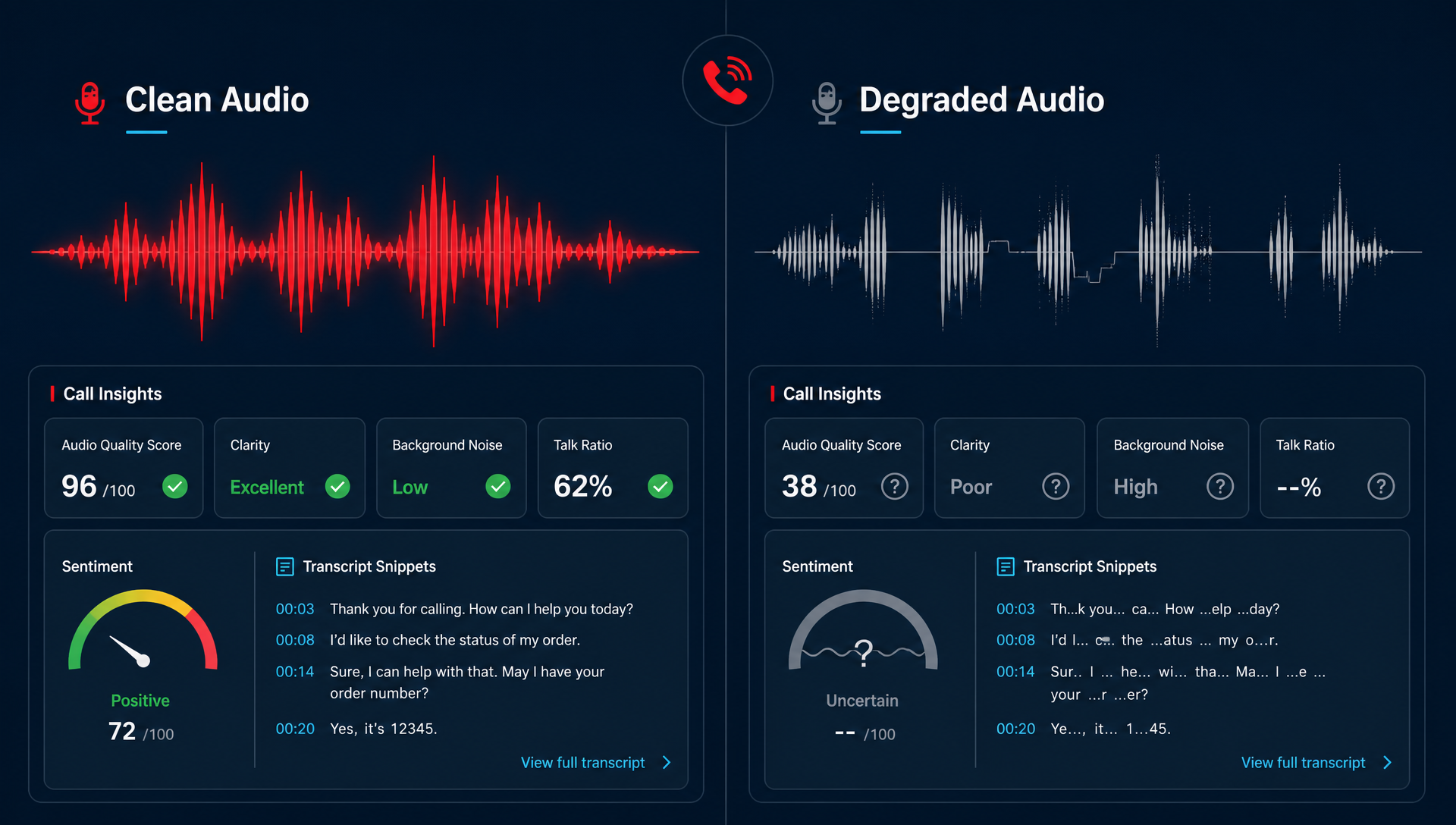
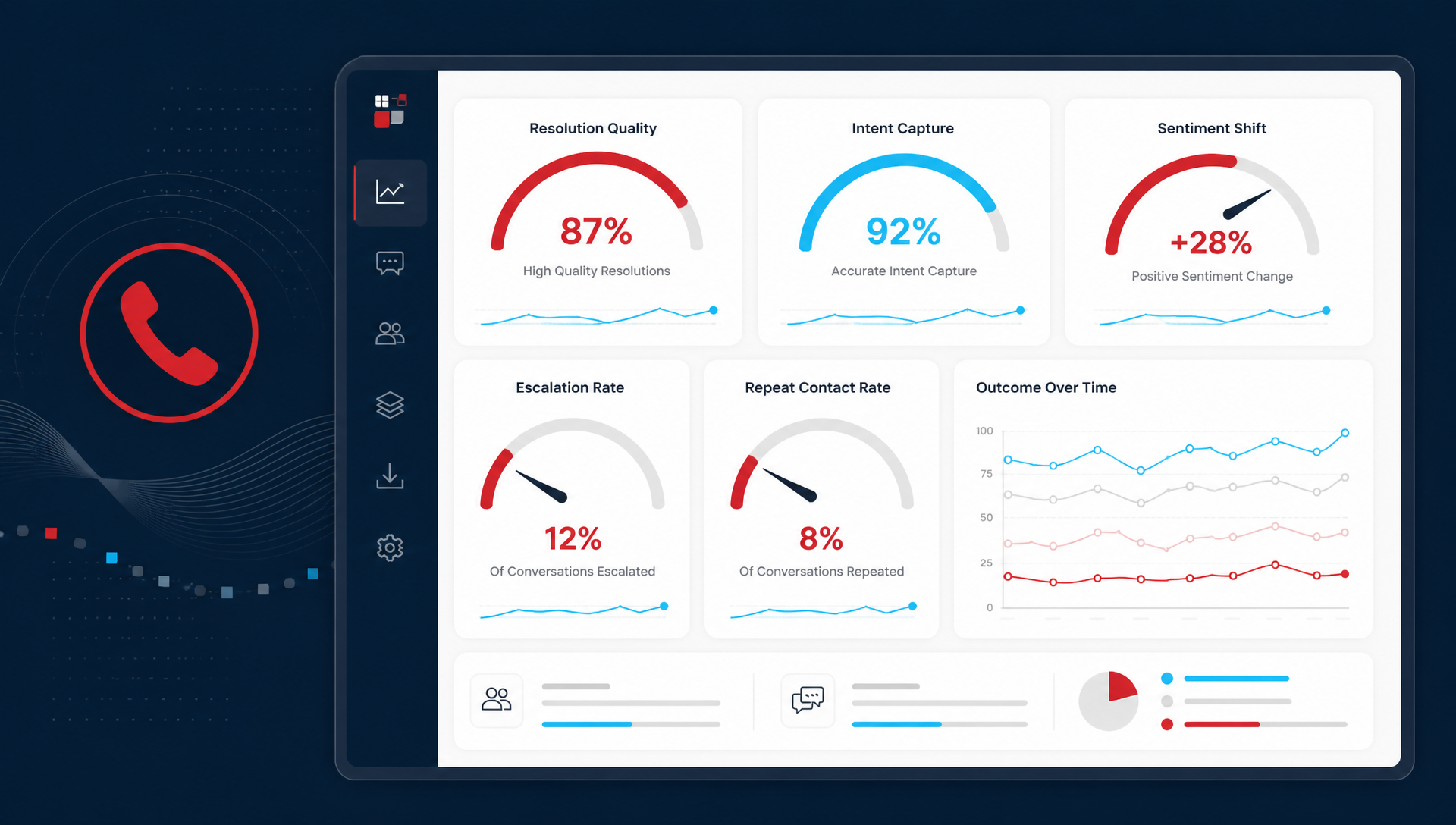
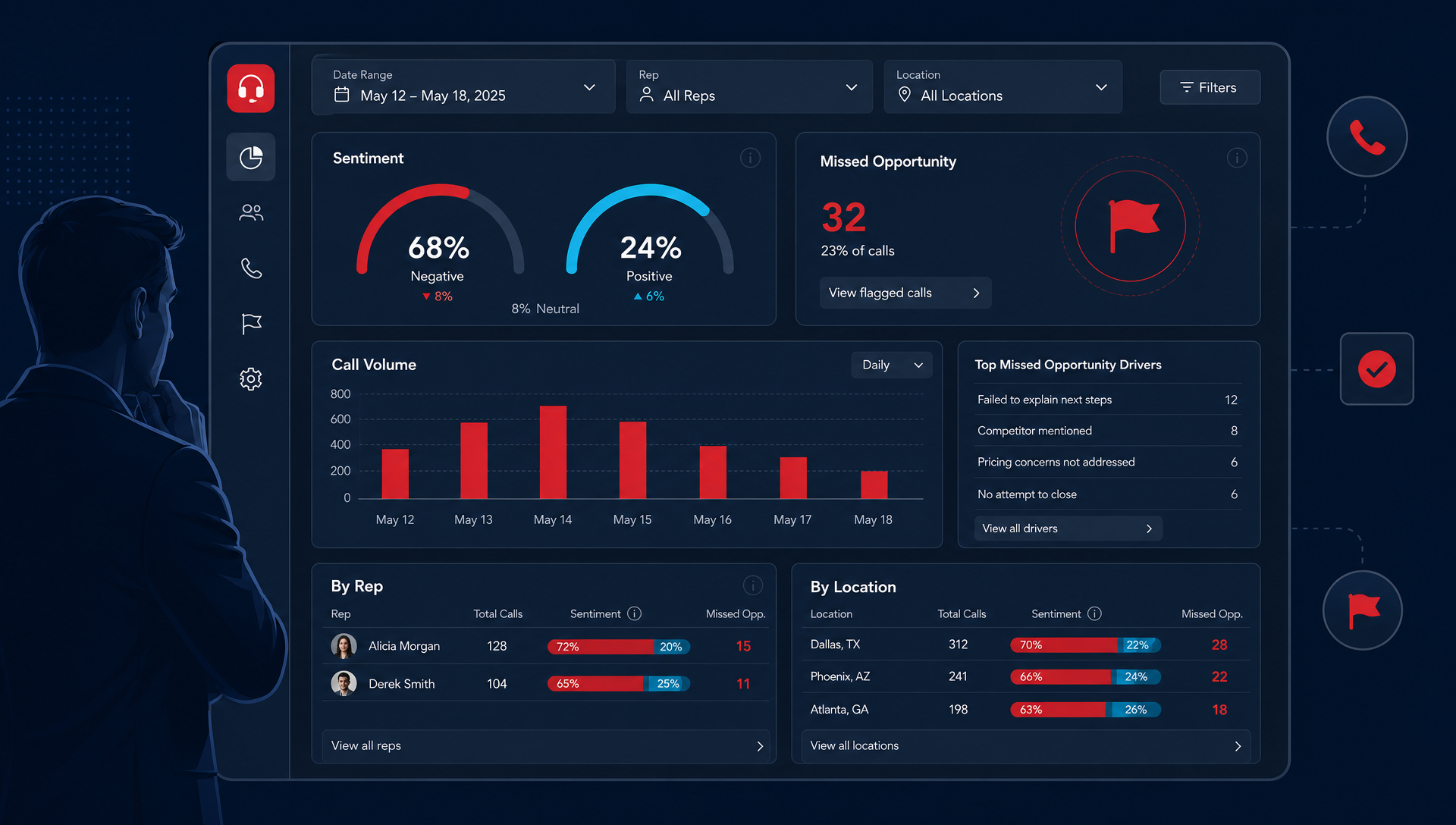
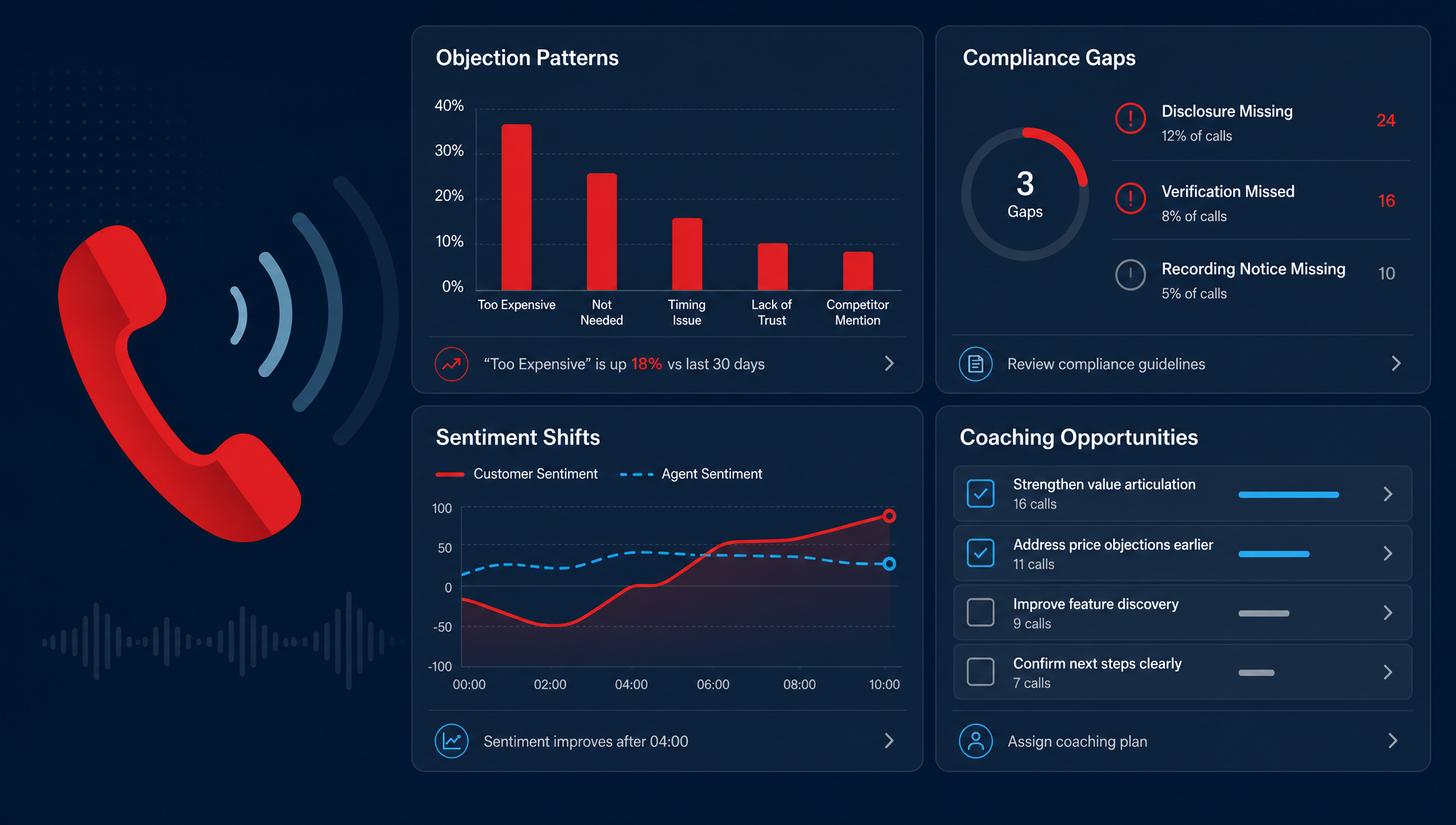
Conversational insights works from the recording and the transcript rather than the call record. Instead of counting calls, it reads them, and it looks across all of them for patterns a person would spot if a person had time to listen to every call, which nobody does.
The output is a different kind of sentence. A report tells you that abandonment rose four points. Reading the calls tells you that eleven callers last week asked whether you service a particular model and were told no by someone who was not sure, and that three of those eleven called a competitor within the hour.
One of those is a metric. The other is something you can act on this afternoon.
That is the whole distinction. Reports answer what happened. Reading the conversation answers why, and more usefully, what to do about it.
A worked example: the bad Tuesday
Say bookings dropped and you want to know why. Walking it through both views makes the difference concrete.
What the report gives you. Volume was normal. Answer rate was normal. Handle time was up about forty seconds on average. Abandonment ticked up slightly in the late afternoon. You now have a hypothesis and no way to test it, so you listen to four calls at random, find nothing obviously wrong, and move on.
What reading the calls gives you. The same volume, and one finding: a recurring question about a service you started offering three weeks ago, asked on nineteen calls, answered four different ways, including twice with a flat no. Handle time is up because people are improvising. Abandonment is up because the improvising takes longer.
The fix is a twenty minute conversation with the team and one line added to whatever they work from. You would never have found it in the report, because the report had no way to know the calls had a subject.
Does this replace your call reporting?
No, and anyone telling you otherwise is selling. The two answer different questions and you want both.
Keep your reports for the operational questions they are good at:
- Are we staffed correctly at the times we are busiest?
- How long are people waiting, and when do they give up?
- Is call volume growing, and where is it coming from?
Use conversation-level insight for the questions reporting cannot reach:
- What are callers asking that we keep answering badly?
- Which promises are being made on our behalf, and are they being kept?
- Where in the conversation do people decide to go elsewhere?
- Which of our people are doing something the rest of the team should copy?
Where to start if your reports are not enough
Two things worth doing before you look at any product.
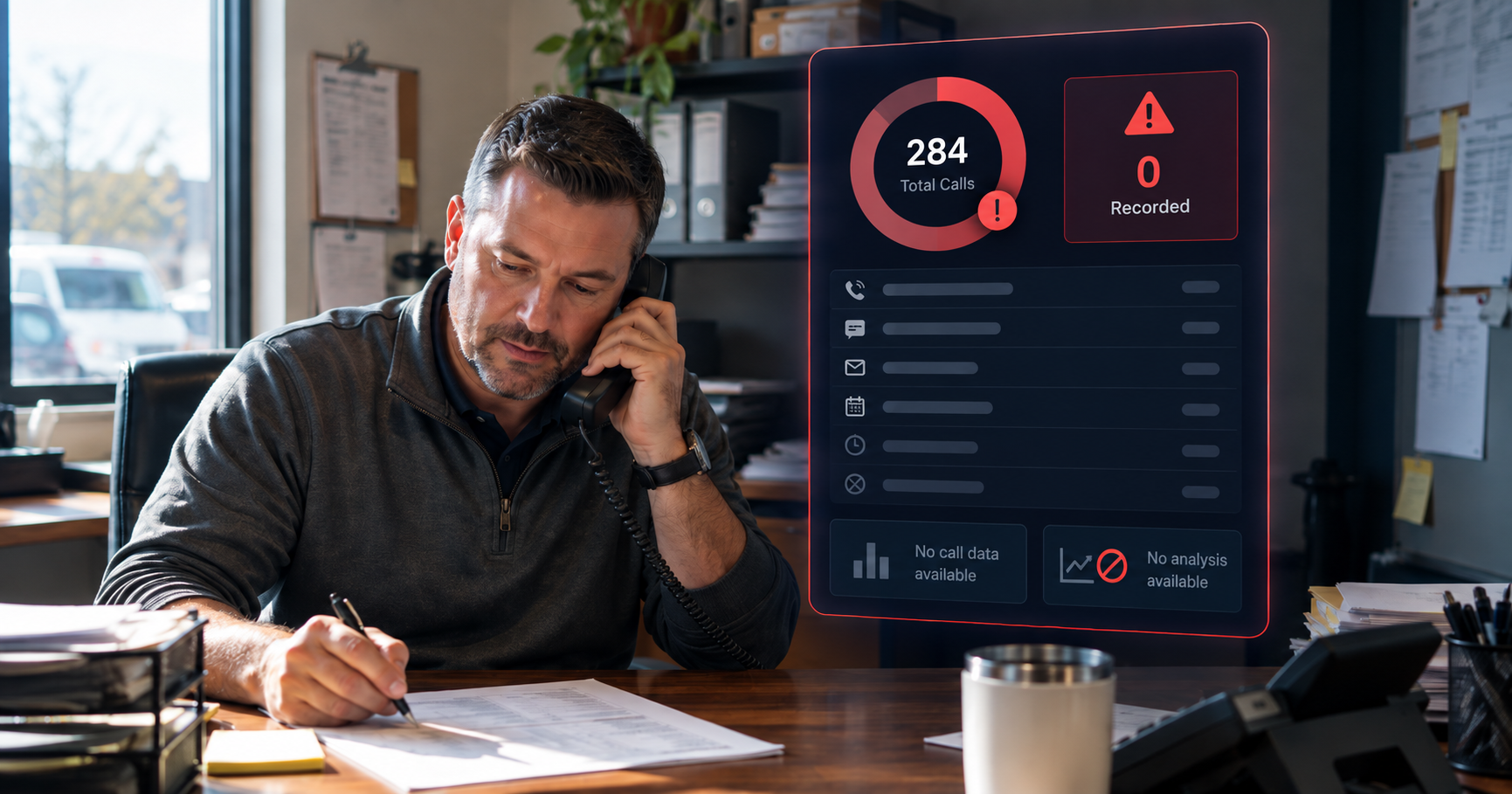
First, check what proportion of your calls are actually recorded. Reading calls only works on calls that were captured, and partial recording is far more common than most operators expect. We wrote a four step coverage audit you can run yourself in an afternoon.
Second, write down the three questions you have asked your reports that they could not answer. If those questions are about staffing and timing, better reporting really is your answer and you should stop there. If they are about what was said, what was promised, or why people left, that is a different product and a different conversation.
Every call is a customer experience. Your reports can tell you how many of them you had. What happened inside them is a question worth being able to answer.
FAQ
What is the difference between call reporting and conversational insights?
Call reporting measures the metadata around a call: when it arrived, who answered, how long it lasted, how it ended. Conversational insights reads the recording and transcript to understand what was actually discussed, then looks for patterns across all your calls. Reporting tells you what happened. Insights explain why.
Do I need to replace my phone system reports?
No. They answer different questions and most businesses use both. Reports stay the right tool for staffing, wait times, and volume trends. Conversational insights covers what reporting cannot see, which is the content of the conversation itself.
Is this the same as sentiment analysis?
Sentiment analysis labels the tone of a call, which is one signal among many and rarely actionable on its own. Conversational insights is broader: it identifies what was asked, what was promised, what went unanswered, and which of those repeat across calls. Knowing a caller sounded annoyed matters much less than knowing what annoyed them.
How many calls do we need before patterns show up?
Enough that a repeated issue appears more than once, which in practice is most businesses with a real inbound line. The useful test is not your total call volume but how many of those calls are recorded, since only recorded calls can be read.
Who in a small business should be reading this?
One named person, usually whoever owns the customer experience day to day. The common failure is buying an insight product and leaving it unowned, at which point it becomes another dashboard nobody opens. Twenty minutes a week from one accountable person is worth more than access for everybody.
Will Maddox is the Digital Marketing Coordinator at TeleCloud, overseeing content, brand, and outbound strategy for the company. He writes about cloud communications, AI tools for business, and what SMBs and urgent care operators need to know to run better phone systems. Connect with Will on LinkedIn or email him directly to learn more.