
Are You Losing Customers Due to Long Hold Times on the Phone?
May 26th, 2026
7 min read
By Will Maddox

Yes, long hold times can directly cause customer loss. Research consistently shows that most callers will hang up after waiting two minutes or less, and a significant portion will not call back. If your business is regularly putting people on hold, it is worth asking how much that silence is actually costing you.
Most businesses do not set out to frustrate their customers on the phone. The problem usually starts gradually. Your team gets busier, call volume climbs, and before long, hold times creep up and become the norm. Nobody flags it as a crisis because the calls eventually get answered. What gets missed is everyone who hung up before that happened.
This post breaks down why hold times drive customers away, what is causing the problem in the first place, and what practical options exist to fix it. No pressure, no sales pitch, just a clear look at a problem that affects businesses of every size.
Why Do Long Hold Times Drive Customers Away?
The short answer: because time is the one thing people cannot get back. Putting a customer on hold sends a message, even if unintentional. It says their time is less valuable than your current workload. After a certain point, most people agree with that message and hang up.
Here is what the data generally shows:
- The majority of callers will abandon a call after waiting two minutes or less
- Many of those callers will not try again, at least not right away
- A portion will simply take their business elsewhere
- Negative phone experiences are more likely to be shared publicly than positive ones
The frustration is not just about the wait itself. It is the uncertainty. Hold music offers no indication of how long the wait will be, whether the call is progressing, or whether anyone is actually coming back. That uncertainty compounds the frustration at every passing second.
|
"The single most expensive minute in customer service is the one where someone is waiting on hold wondering if they should bother." |
What Actually Causes Long Hold Times?
Before jumping to solutions, it helps to understand the root cause. Hold time problems usually fall into a few predictable categories.
More calls than staff can handle
This one is obvious but worth naming. If your incoming call volume exceeds your team's capacity at any given hour, hold times will grow. This is especially common during peak windows, mornings, lunch hours, post-weekend Monday rushes, and any point following a service disruption or promotion.
Too many low-complexity calls taking up high-complexity time
This is a sneakier problem. Your most skilled team members end up spending the first half of every call answering questions that could have been handled automatically. Hours, directions, appointment availability, basic pricing, and account lookups. When every call takes five minutes because the first two are spent on information retrieval, hold queues pile up fast.
Inefficient call routing
If callers are landing in the wrong queue or with the wrong person, they either wait again for a transfer or the agent has to spend time figuring out who should actually handle it. Both outcomes extend hold time. Both erode customer patience.
After-hours and overflow coverage gaps
Many hold time problems do not happen during core hours. They happen at 7 AM, at 6 PM, on weekends, and on holidays, when there is minimal staff, but demand does not slow down to match. Voicemail is not a solution. Customers who need an answer in the moment rarely leave one.
|
The root cause of most hold time problems is not having too few employees. It is having too many calls that should not require an employee at all. |
How Much Is This Actually Costing You?
Hold times are not just a customer experience problem. They translate directly into missed revenue.
Think through it this way. If your business receives 500 calls in a month and 10% of callers hang up due to hold time, that is 50 conversations that never happened. Depending on your industry and average transaction value, that number can represent a meaningful chunk of lost revenue, and that is before you account for repeat business and referrals those customers would have generated.
There are also downstream costs that are harder to quantify but very real:
- Negative reviews and word-of-mouth after a frustrating experience
- Increased inbound call volume from customers calling back to try again
- Staff burnout when call queues feel unmanageable for extended periods
- Lost competitive ground when a nearby competitor answers faster and more consistently
The math is rarely in favor of ignoring the problem.
|
Ready to stop losing customers to hold times? Talk to a TeleCloud communications specialist about your current call flow. Schedule time with Vin at telecloud.net. |
What Are Your Options for Reducing Hold Times?
There is no single fix that works for every business. The right approach depends on your call volume, team size, and the nature of the calls you are receiving. Here are the main levers available.
Add more staff
The obvious answer is sometimes the right one, particularly if your team is genuinely short-staffed relative to call demand. But hiring is expensive, and it does not solve the underlying problem if a large portion of your call volume is routine. You will have more people answering the same repetitive questions faster.
Improve call routing and IVR
If callers are landing in the wrong queue, better routing logic can reduce transfers, cut handle time per call, and get customers to the right person faster. Even a simple IVR menu that separates new inquiries from existing customers can meaningfully reduce average hold time by distributing volume more intelligently.
Offer a callback option
Rather than forcing callers to sit on hold, a callback system lets them hang up and receive a return call when an agent is available. Customer satisfaction scores for callback options are consistently higher than for hold-based queues, and they reduce the likelihood of a caller abandoning without a resolution.
Automate routine inquiries with an AI Receptionist
This is where modern phone systems earn their keep. A large share of inbound calls, questions about hours, location, appointment availability, basic account information, common service inquiries, do not actually need a person to resolve them. When those calls are handled automatically, hold times for the calls that do need a live agent drop significantly.
AI Receptionist tools are built specifically for this. They answer, route, and assist callers around the clock without putting anyone on hold for routine questions. The better ones sound like a professional receptionist rather than a phone tree, and they hand off to a human agent smoothly when the situation calls for it.
|
TeleCloud's AI Receptionist is a virtual voice agent that handles calls 24/7 without requiring additional headcount. It manages after-hours volume, overflow during peak hours, and routine inquiries that do not need a live agent.
The goal is not to replace your team. It is to make sure the calls that genuinely need them are not buried under a queue of questions that did not.
Up to 70% reduction in missed after-hours calls. 60-80% of routine inquiries handled without staff involvement. |
To be fair, AI call handling is not a fit for every situation. Complex inquiries, emotionally sensitive calls, and anything requiring real judgment still benefit from human handling. The value is in removing the volume that should never have reached the queue in the first place.
Get visibility into what is actually happening on your calls
You cannot fix what you cannot see. If you do not know when hold times peak, how long callers are waiting before abandoning, or which call types are consuming the most handle time, you are guessing. And guessing is expensive.
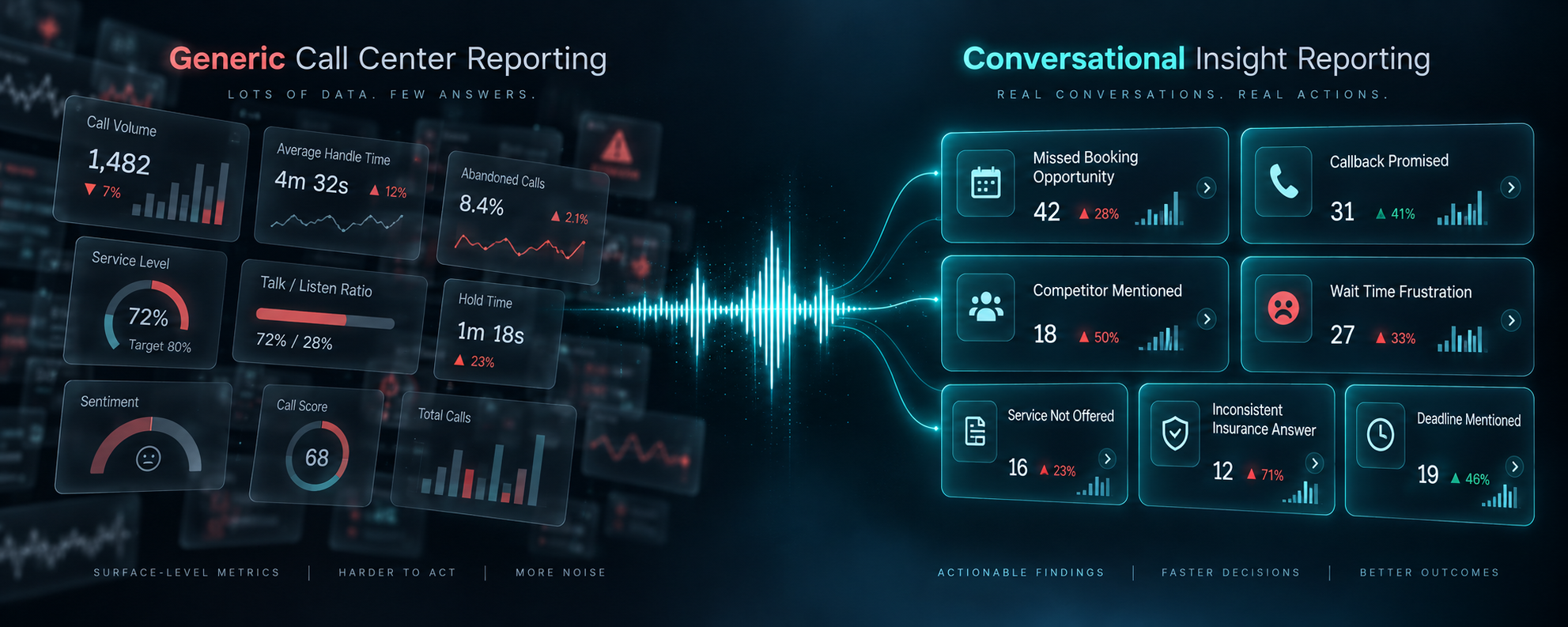
Modern call analytics platforms go beyond basic reporting. They transcribe and analyze every call automatically, surfacing patterns that would take weeks to identify through manual review. You can see where callers are dropping off, which call types are driving hold time, and where your team is spending the most time on calls that could have been handled differently.
|
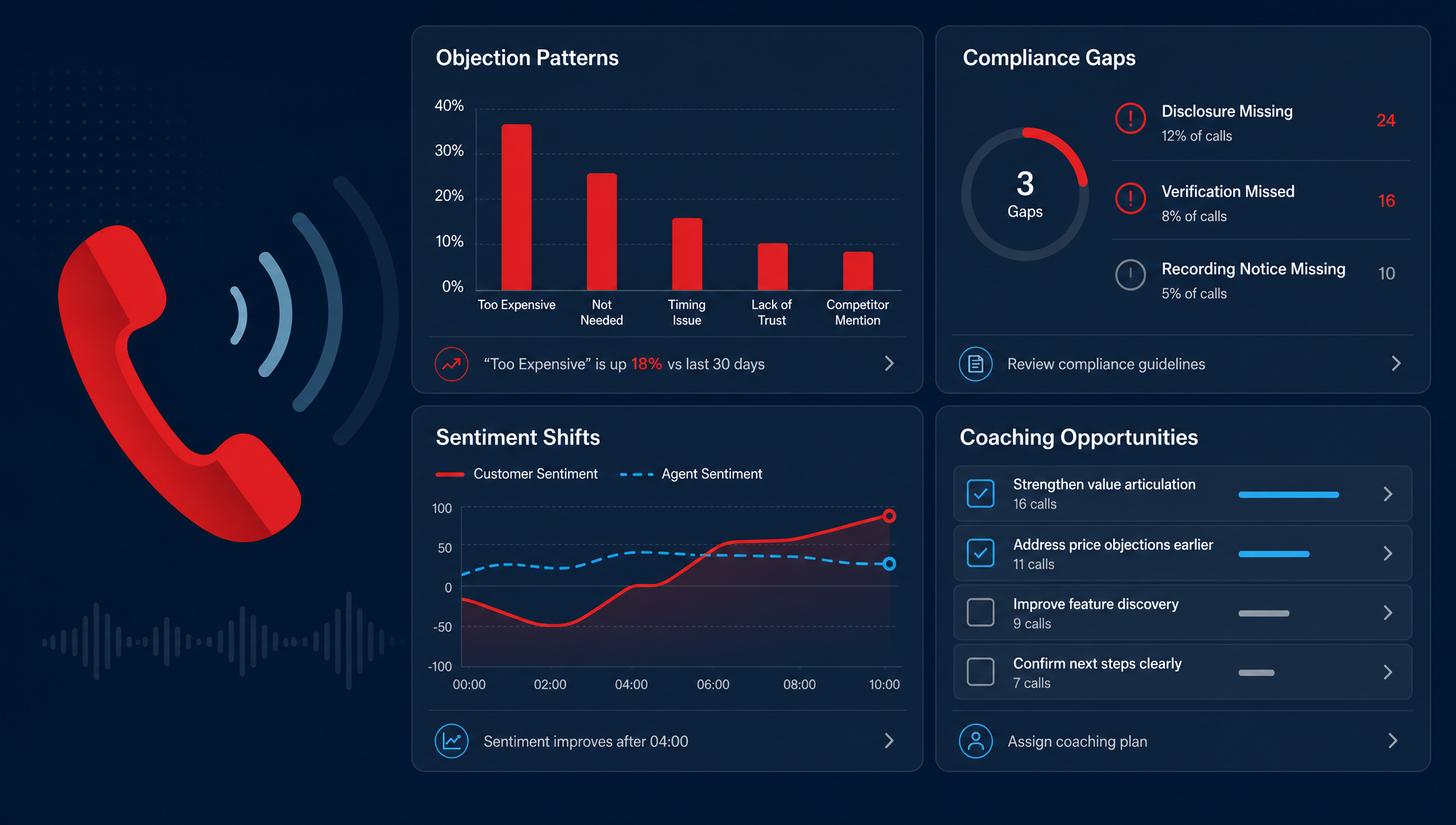
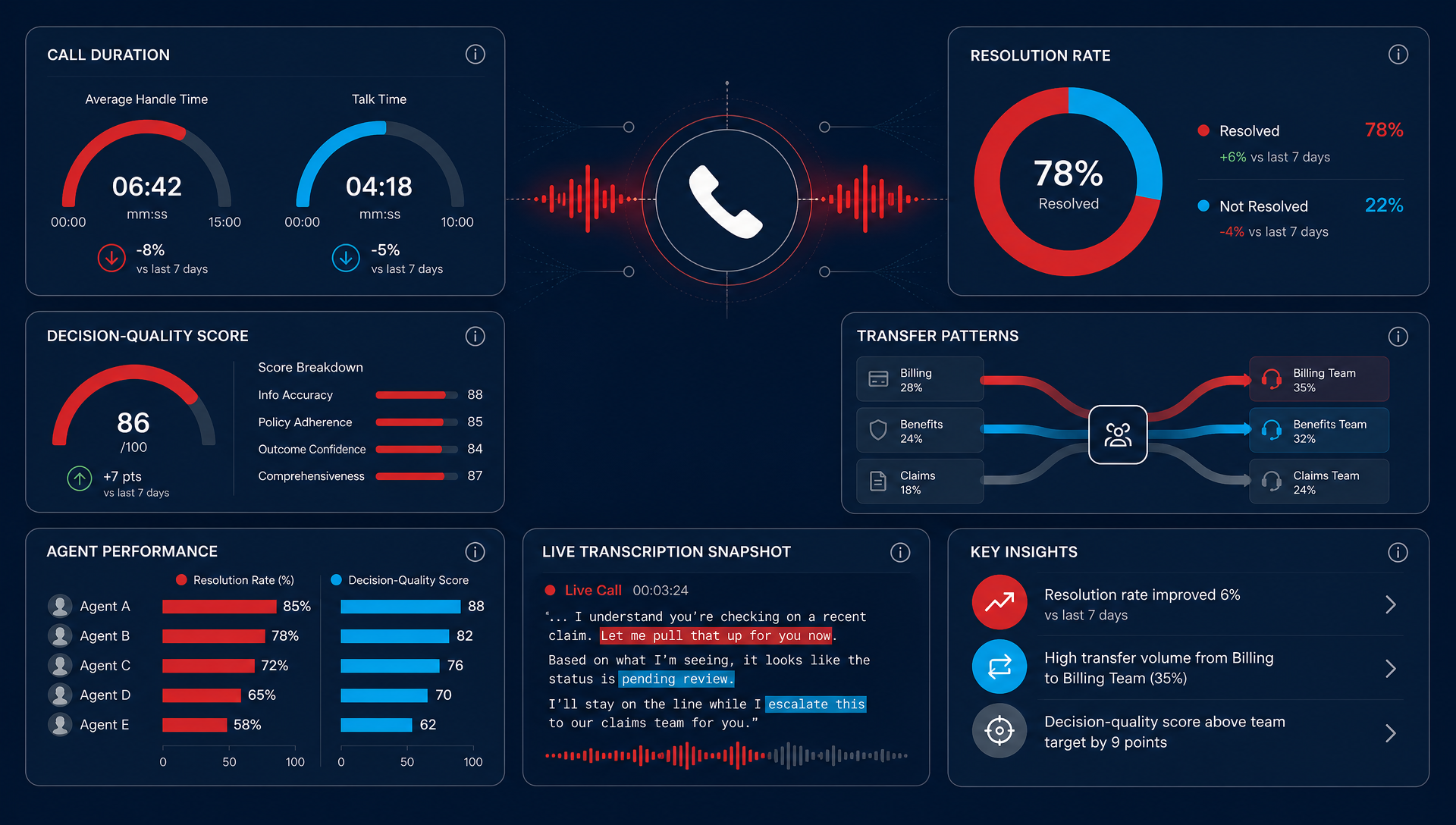
TeleCloud's Conversational AI Insights is a call analytics dashboard. It transcribes and analyzes every recorded call to surface trends, sentiment patterns, and operational blind spots automatically.
Rather than manually listening to recordings, managers get a clear view of what is happening across all calls, including where hold times are concentrating, which call types are taking the longest, and where customers are expressing frustration before it shows up in a review.
90% faster call review cycles. 2x improvement in identifying negative-sentiment calls. |
One useful feature for hold time specifically: the platform can identify calls where customers expressed frustration during a wait, allowing you to correlate that data with your staffing patterns and routing logic. That kind of visibility turns a vague problem into a specific one you can actually solve.
Is Your Phone System Part of the Problem?
Sometimes the hold time issue is not about staffing or routing logic. It is the phone system itself.
Older phone systems were not built for modern call volume or the kind of flexibility businesses need today. Limited call queuing, no analytics, no integration with the tools your team already uses, no support for mobile or remote workers. If your system cannot give you visibility into what is happening on every call, it is working against you.
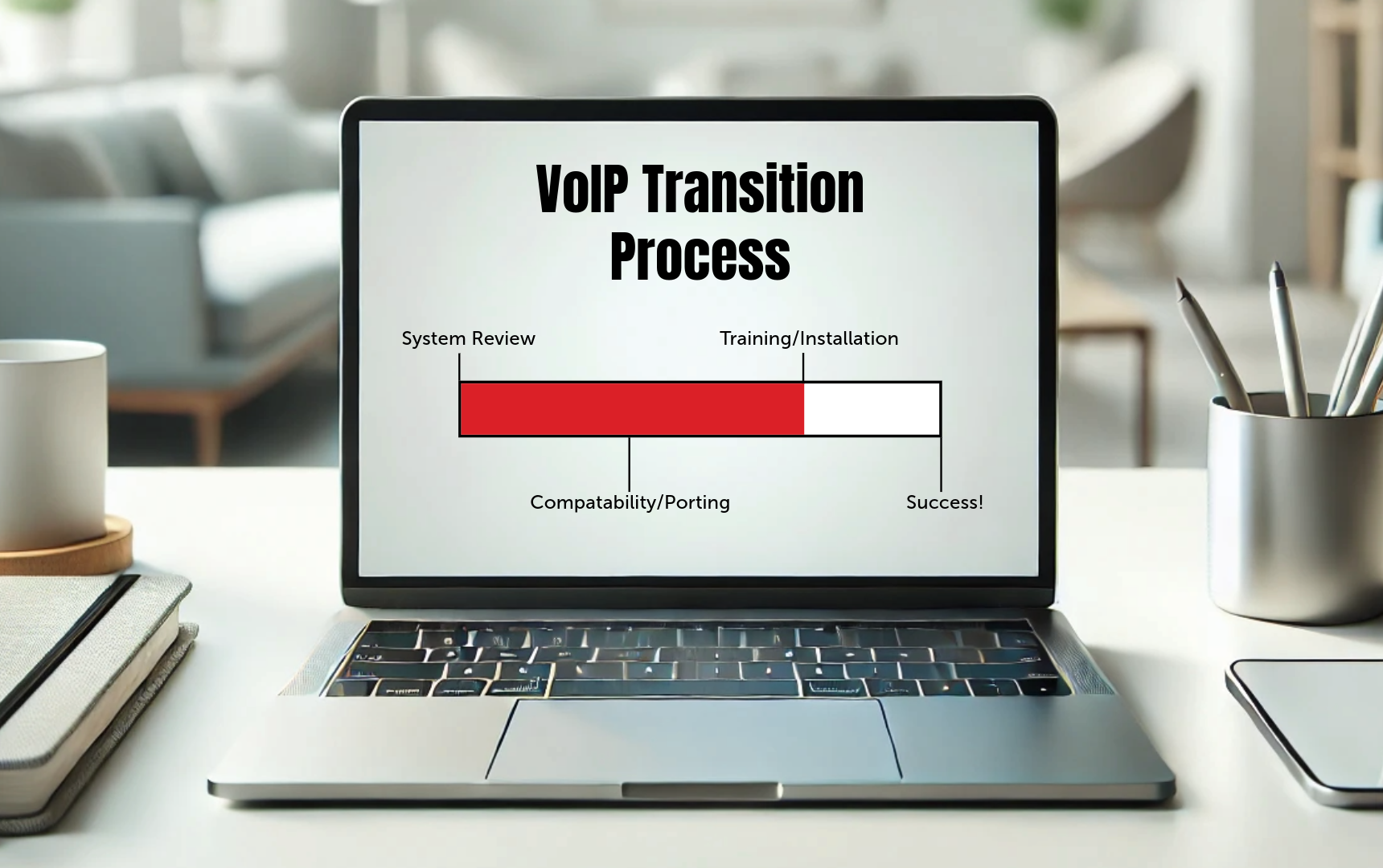
A cloud-based phone system typically offers better queue management, call analytics, and integration options than legacy hardware. That does not mean every business needs to replace their system immediately. But if your phone system is making it harder to track and manage hold times rather than easier, it is at least worth a conversation.
The Bottom Line: Protect Customer Experience
Long hold times are a solvable problem, but only if you treat them as one. Most businesses underestimate how many callers are hanging up and how much that is costing them. The callers you never hear from again are the hardest loss to measure.
Start by pulling whatever data you have on hold time and abandon rate. If you do not have that data, getting access to it is the first step. From there, the options range from simple routing improvements to AI-assisted call handling to a full system assessment, depending on how deep the problem runs.
The businesses that get this right are not necessarily the ones with the largest teams. They are the ones that make it genuinely easy to get through on the phone. That is a standard any business can meet with the right setup in place.
Frequently Asked Questions
How long will most customers wait on hold before hanging up?
Most research puts the threshold at around two minutes. After that point, a significant percentage of callers will abandon the call. The exact number varies by industry, caller urgency, and whether an estimated wait time is communicated. In general, the less information a caller has about how long they will wait, the faster they tend to give up.
Does offering a callback option actually help with customer satisfaction?
Yes. Studies consistently show that customers prefer the option to hang up and receive a callback over waiting on hold indefinitely. Callback options reduce the frustration of dead air and uncertainty, and they allow your team to manage outbound calls during lower-volume windows rather than scrambling to answer everything in real time.
What is an acceptable average hold time for a small business?
There is no universal standard, but most customer service benchmarks suggest targeting under one minute for average hold time. That said, the more important metric is probably abandon rate. A business with a two-minute average hold time but near-zero abandonment is doing better than one with a 45-second average and high abandonment, because the latter likely has callers giving up before the hold even registers.
Can AI handle customer calls well enough to actually help?
For routine, predictable inquiries, yes. AI phone tools have improved significantly and can handle questions about hours, locations, availability, and basic account information without frustrating callers. The important caveat is that the handoff to a human agent still needs to be smooth and readily available. Customers who cannot reach a person when they need one will associate the bad experience with your business, not the technology.
What data should I track to understand my hold time problem?
The most useful metrics are average hold time, call abandon rate (calls that disconnect before being answered), and average handle time per agent. If your phone system supports it, look at when abandonment peaks by time of day and day of week. That pattern usually tells you exactly where your staffing or routing needs adjustment.
How does call analytics software help with hold time?
Call analytics platforms transcribe and analyze every call automatically, giving managers visibility into patterns that would be nearly impossible to catch through manual review. For hold time specifically, they can surface when abandonment is peaking, which call types are taking the longest, and where customers are expressing frustration. That data lets you make targeted changes to routing, staffing, or automation rather than guessing at the root cause.
Will Maddox is the Digital Marketing Coordinator at TeleCloud, overseeing content, brand, and outbound strategy for the company. He writes about cloud communications, AI tools for business, and what SMBs and urgent care operators need to know to run better phone systems. Connect with Will on LinkedIn or email him directly to learn more.
Topics: