
After-hours answering service or AI receptionist: which fits your business?
November 24th, 2026
4 min read
By Will Maddox
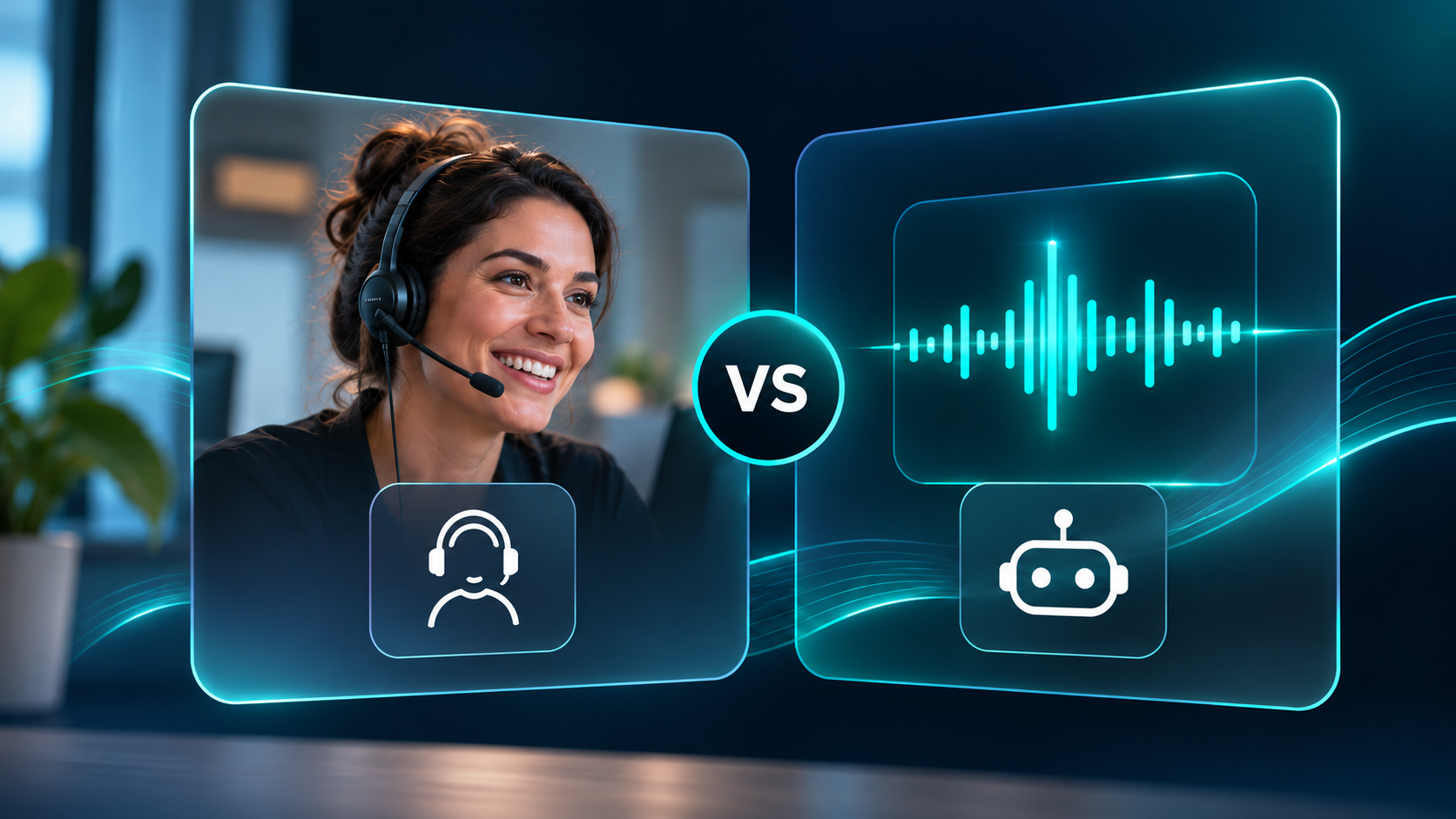
Most businesses have four ways to handle calls after hours: a live answering service, forwarding to an on-call phone, voicemail that someone is reminded to check, or an AI receptionist. A live answering service fits calls that need a human touch. An AI receptionist fits repeat questions and simple rules. The right choice depends on what your after-hours callers actually need.
That difference shows up fast on a Monday morning. If your front desk starts the week with a pile of message slips, if the same basic questions come in every night after 5 p.m., or if callers keep saying nobody got back to them, it's worth looking at how your after-hours calls are handled.
What are your options for after-hours calls?
- A live answering service. People at a call center answer for you, take messages and follow your script.
- Forwarding to an on-call phone. Calls ring a manager's or technician's cell after hours.
- Voicemail with reminders. Callers leave a message, and your phone system keeps reminding your team until someone deals with it. That's what our voicemail reminder feature does.
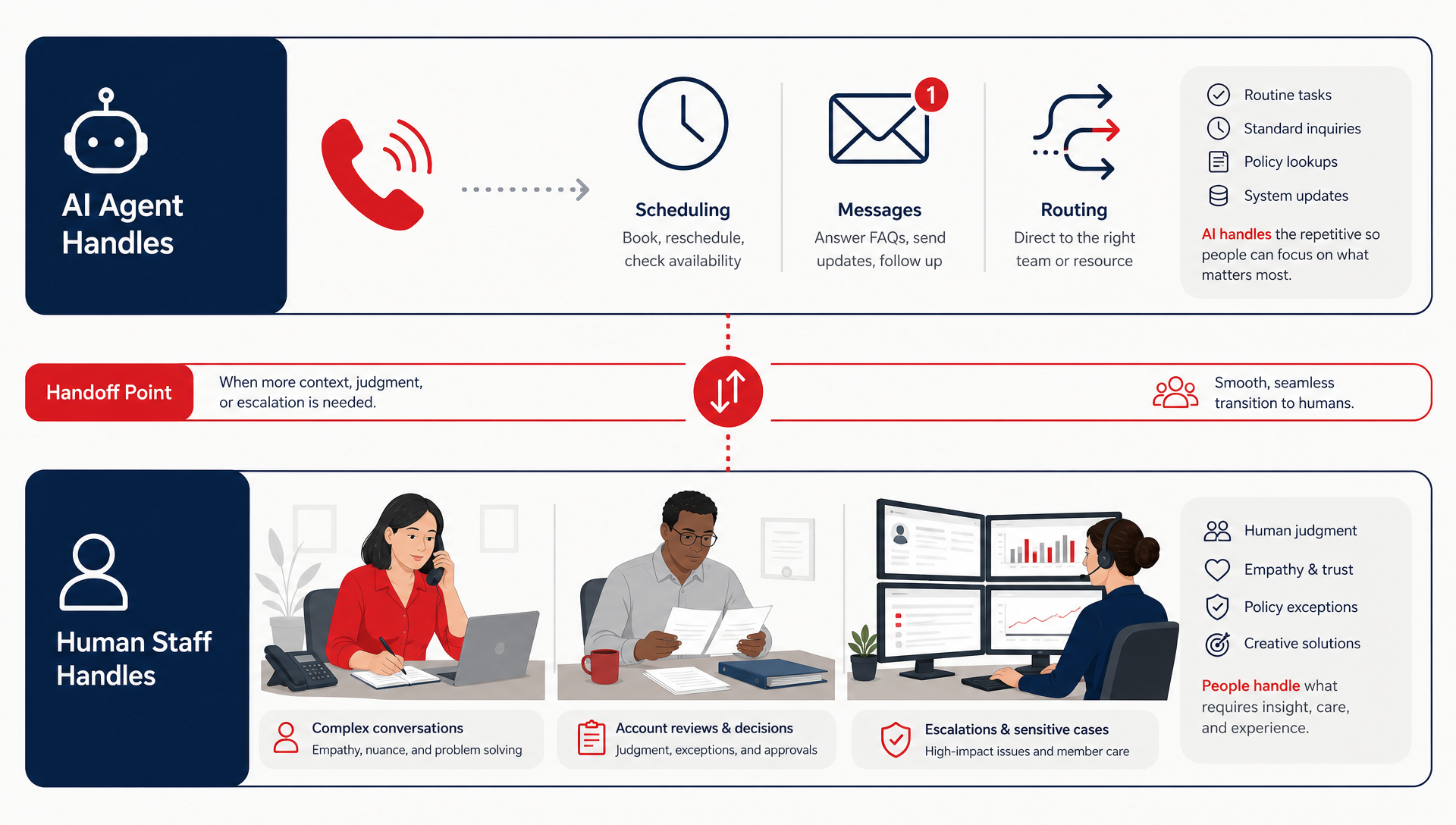
- An AI receptionist. AI answers the call, handles common questions and sends the rest to a person.
Most of the decision comes down to the first and last, so that's where the rest of this post focuses.
What an after-hours answering service actually gives you
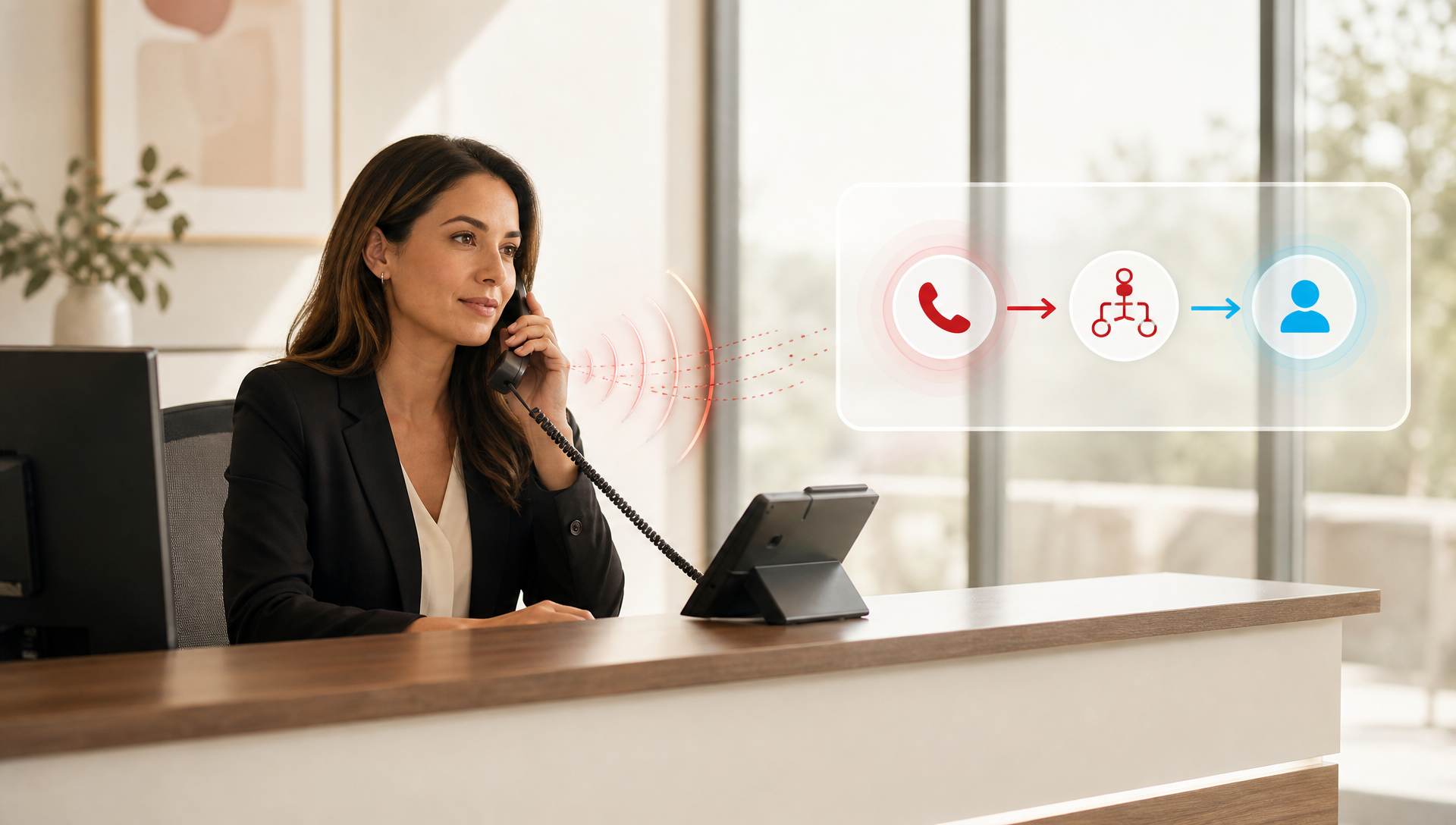
An after-hours answering service usually routes calls to a live agent who takes messages and follows a script. That works well when the caller just needs a human voice, a note passed along, or a basic escalation for something urgent.
The tradeoff is consistency. Shared agents may not know your schedule, your pricing, your booking rules or which calls should jump the line. If the caller asks for something beyond the script, the message can get vague fast.
What an AI receptionist changes after 5 p.m.
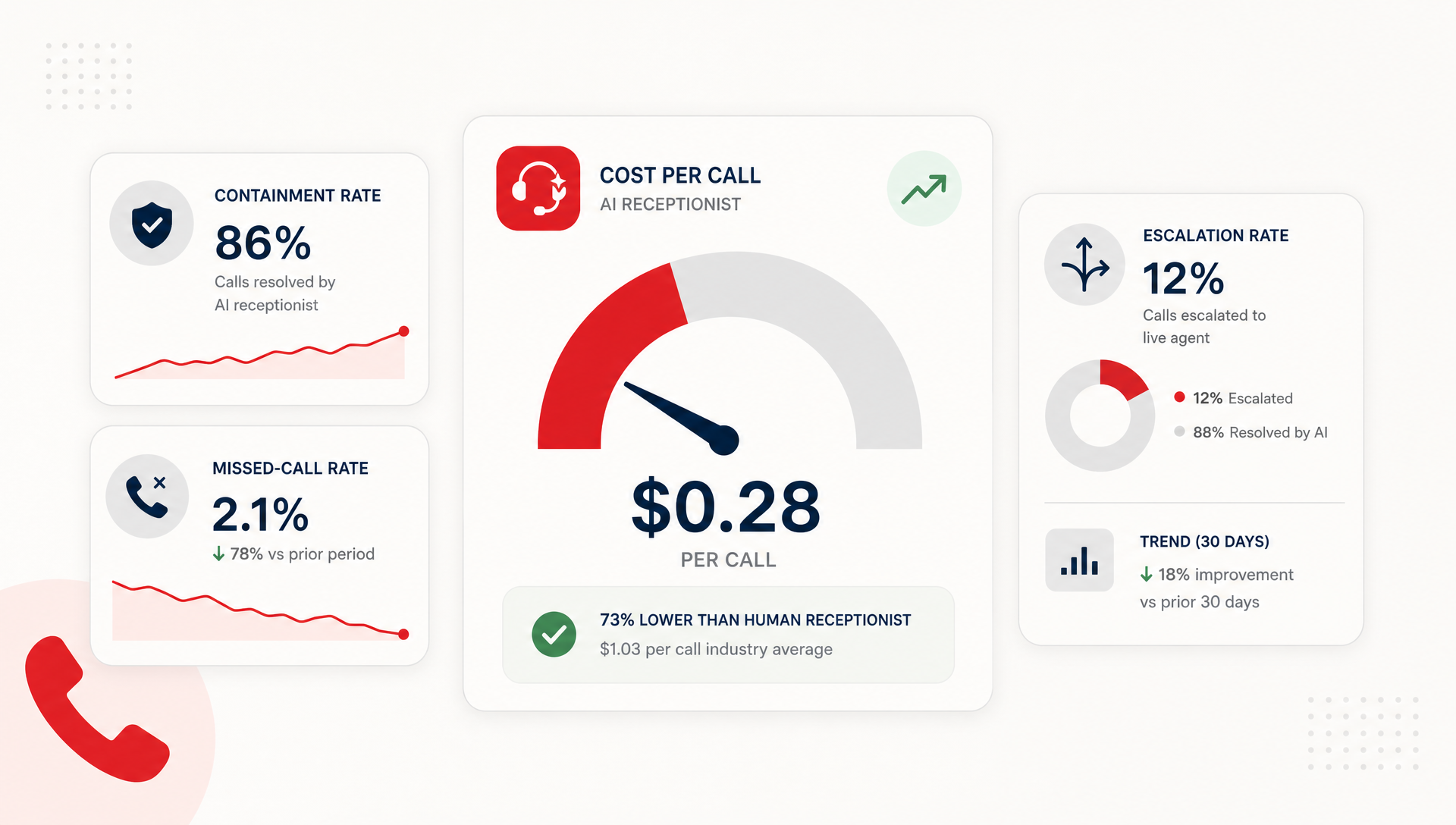
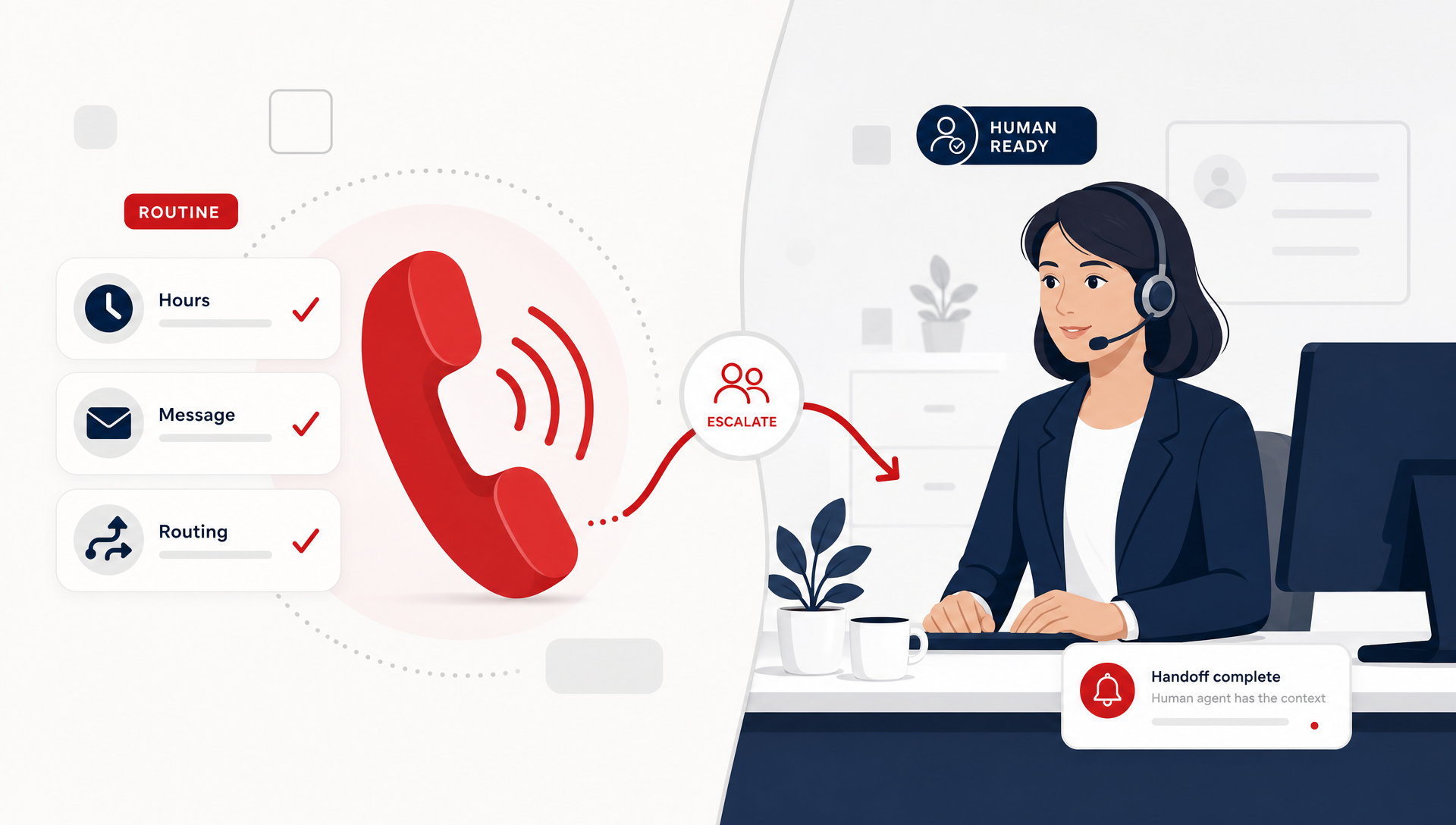
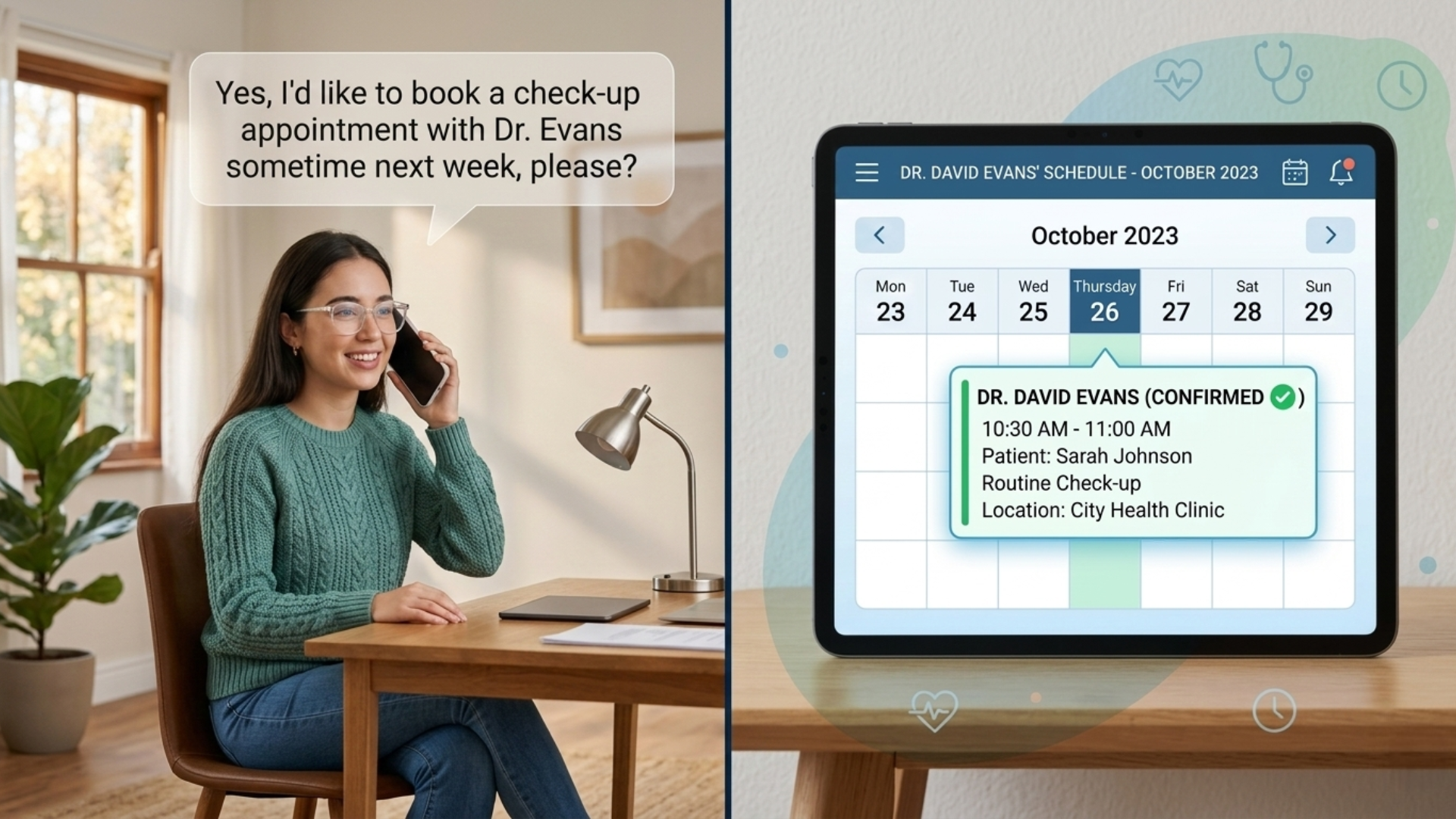
An AI receptionist answers every call the same way, even at 2 a.m. It can handle common questions, book appointments when your setup allows it, and send urgent calls to the right person by rules you set.
That gives you a different kind of after-hours coverage. The win isn't just that the phone gets answered. It's that the answer is the same every time. For a manager, that can mean fewer callbacks in the morning. For an owner, it can mean fewer missed opportunities when nobody is at the desk.
Which one fits your business?
Use a simple test. If your after-hours calls are mostly messages, reminders and a few urgent issues, a human answering service, or even forwarding to an on-call phone, may be all you need. If callers ask the same questions every night and you want those answers to sound the same every time, an AI receptionist starts to make more sense.
| Question | After-hours answering service | AI receptionist |
|---|---|---|
| Who answers the call | A live agent, often shared across many businesses | AI, following your script every time |
| How consistent is the answer | Depends on the agent and the notes they have | Very consistent, if it's set up well |
| Can it book appointments | Usually not; it takes a message instead | Yes, when your setup allows it |
| How are urgent calls handled | Message or call to your on-call contact | Sent to the right person by your rules |
| Morning cleanup | Often more callbacks and follow-up | Usually less, if the setup is tight |
When a human service still makes sense
A live answering service isn't outdated. It still makes sense when callers expect a real conversation, when your rules change often, or when calls need more judgment than a script can carry.
It's also a reasonable fit if you only get a few after-hours calls and don't want to build and maintain a detailed call flow. The better option is the one that matches your actual calls, not the one with the flashier pitch.
How to decide before you switch
Before you change anything, write down three things: the questions callers ask most after hours, your rules for what counts as urgent, and the calls you never want to miss. That gives you a far better comparison than asking which option costs less.
A quick cost check helps too. Live answering services usually charge per minute, per call or per message, and the bill climbs when calls run long or volume spikes. AI receptionist pricing is usually tied to the platform and what you want it to handle. The real cost question isn't only the monthly fee. It's how much follow-up, missed-call risk and message cleanup you're still carrying.
| Decision point | After-hours answering service | AI receptionist |
|---|---|---|
| Control over the script | Moderate, depends on the call center | High, if you define the rules well |
| Repeat questions | Answered by a different person each time | Answered the same way each time |
| Booking | Usually message only | Can book when it's set up to |
| Emergencies | A person decides, and quality varies by agent | Follows your escalation rules; not a replacement for 911 |
| Staff follow-up | Often higher the next morning | Usually lower if the setup is tight |
Where does your phone system fit in?
Whichever you choose, it has to work with your phone system: after-hours routing, forwarding to on-call phones, and voicemail that somebody actually hears. That's what we set up for TeleCloud customers today.
AI receptionists are on our roadmap too, and they're worth having on your radar going into 2027, whoever you end up working with. If you're looking at one now, ask three questions:
- Does it hand callers to a real person easily?
- Is it connected to your phone system, or bolted on from the outside? Here's why that matters.
- Who checks what it tells your customers?
Our guide to AI receptionists covers the basics.
Most businesses don't need a big overhaul. They need after-hours coverage that's steady, clear and easy to manage. Every call is a customer experience, including the ones that come in after you've gone home.
FAQ
Can an AI receptionist answer every after-hours call?
It can answer every call that reaches it, but what happens next depends on how it's set up. Some calls get handled with answers or a booking; others are sent to a person by your rules.
Is an answering service still better for complex calls?
Sometimes, yes. If after-hours calls need judgment, back-and-forth conversation or a person to think on their feet, a live service can still be the better fit.
Can an AI receptionist book appointments after hours?
Yes, if it's set up to. The important part is deciding what can be booked, what needs confirming, and what should always wait for your staff the next day.
Does an AI receptionist cost less than an after-hours answering service?
It can, but compare total cost against coverage: the monthly fee, how much staff follow-up you still need, and how many calls you're still missing.
Will Maddox is the Digital Marketing Coordinator at TeleCloud, overseeing content, brand, and outbound strategy for the company. He writes about cloud communications, AI tools for business, and what SMBs and urgent care operators need to know to run better phone systems. Connect with Will on LinkedIn or email him directly to learn more.
Topics: