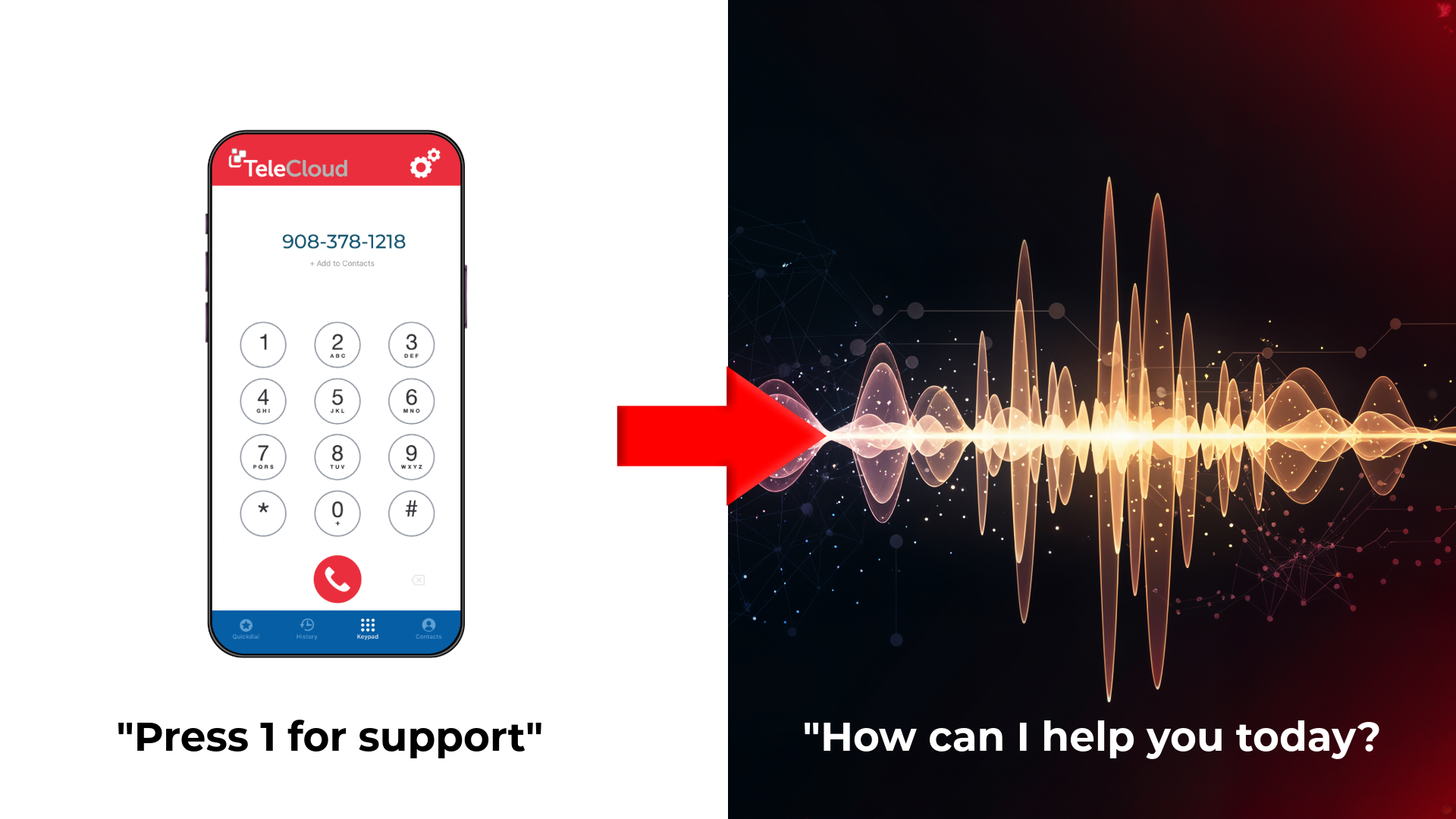

Will your AI receptionist understand callers in noisy rooms?
October 8th, 2026
4 min read
By Will Maddox
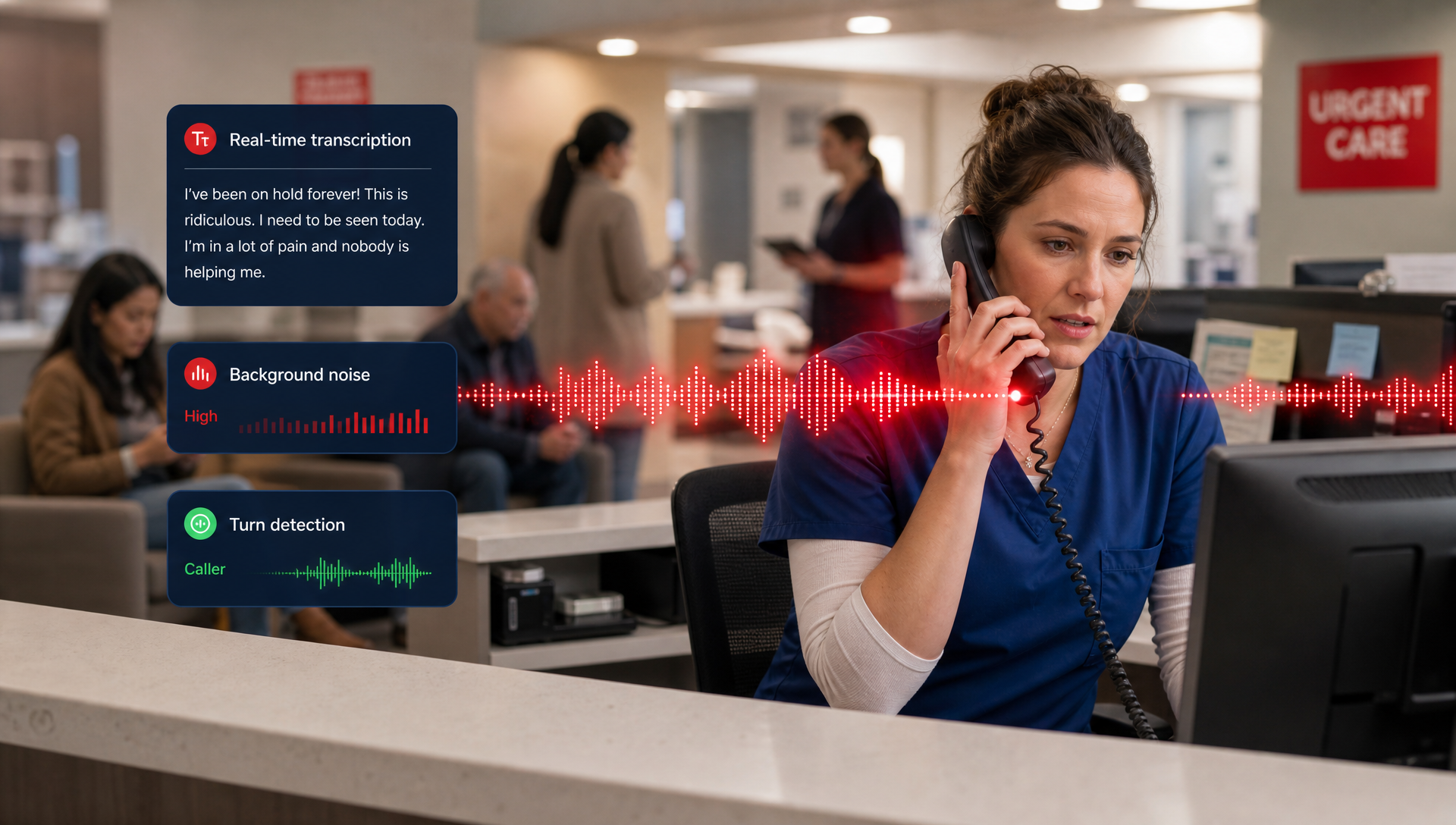
Yes, if it is built for interruptions, not just clean demo audio. The real test is whether it can hold the thread when a patient talks over it, a kid is crying in the background, or the front desk hands off a call mid-sentence.
If you run a clinic, dental office, or small business, you already know how messy the phone gets. People call from parking lots, waiting rooms, job sites, and cars. They interrupt themselves, correct themselves, and ask the same question twice. In our deployments, the AI receptionist has to keep its place without sounding lost, because that is where trust gets won or blown.
What actually breaks an AI receptionist on a real call?
The failure points are usually simple:
- Barge-in: the caller starts talking before the prompt finishes.
- Overlapping speech: two people speak at once, or the caller cuts across the prompt.
- Background noise: waiting rooms, road noise, kids, TV, or a speakerphone in a shop.
- Context drift: the system hears part of the answer, then loses the thread and asks the same thing again.
That last one is the most annoying for the caller. It makes the experience feel dumb, even if the first few seconds sounded polished.
For background on why these interaction problems matter in real phone conversations, the UX patterns behind interruption handling are well documented in voice design work from vendors like Twilio, which is the kind of source we look at when we want to separate demo polish from real call behavior: https://www.twilio.com/en-us/blog/insights/ai-voice-agent-interruption-handling
What does good turn detection sound like in practice?
Good turn detection means the system knows when the caller is done, when they are not done, and when they are interrupting on purpose. That matters because a good AI receptionist should not wait for perfect silence before it responds.
In a clinic, that might sound like this:
Caller: “I need to reschedule my 3 o'clock, my son is sick and we are stuck in traffic.”
System: “No problem, I can help with that. Is this for today or tomorrow?”
The point is not fancy wording. The point is that it stays with the call even when the caller keeps talking.
A clean script can still fail if the system is too slow to notice the caller has taken the floor. A noisy room does not need a prettier voice, it needs faster speech handling and better context retention.
How should your clinic test this before go-live?
Do not test with a quiet office and one careful speaker. That tells you almost nothing.
Use a short test set that sounds like the real world:
- Put the caller on speakerphone.
- Play mild background noise, then heavy background noise.
- Have the caller interrupt the prompt halfway through.
- Ask two questions in one sentence.
- Change the caller's answer midstream.
- Make the caller talk fast.
If the AI receptionist still keeps the booking or routing path straight, you are getting closer to a production-ready setup.
What you are listening for is not perfect audio, it is recovery. The best systems do not need every word to be pristine. They need to stay on task when the conversation gets messy.
How TeleCloud handles noisy calls differently
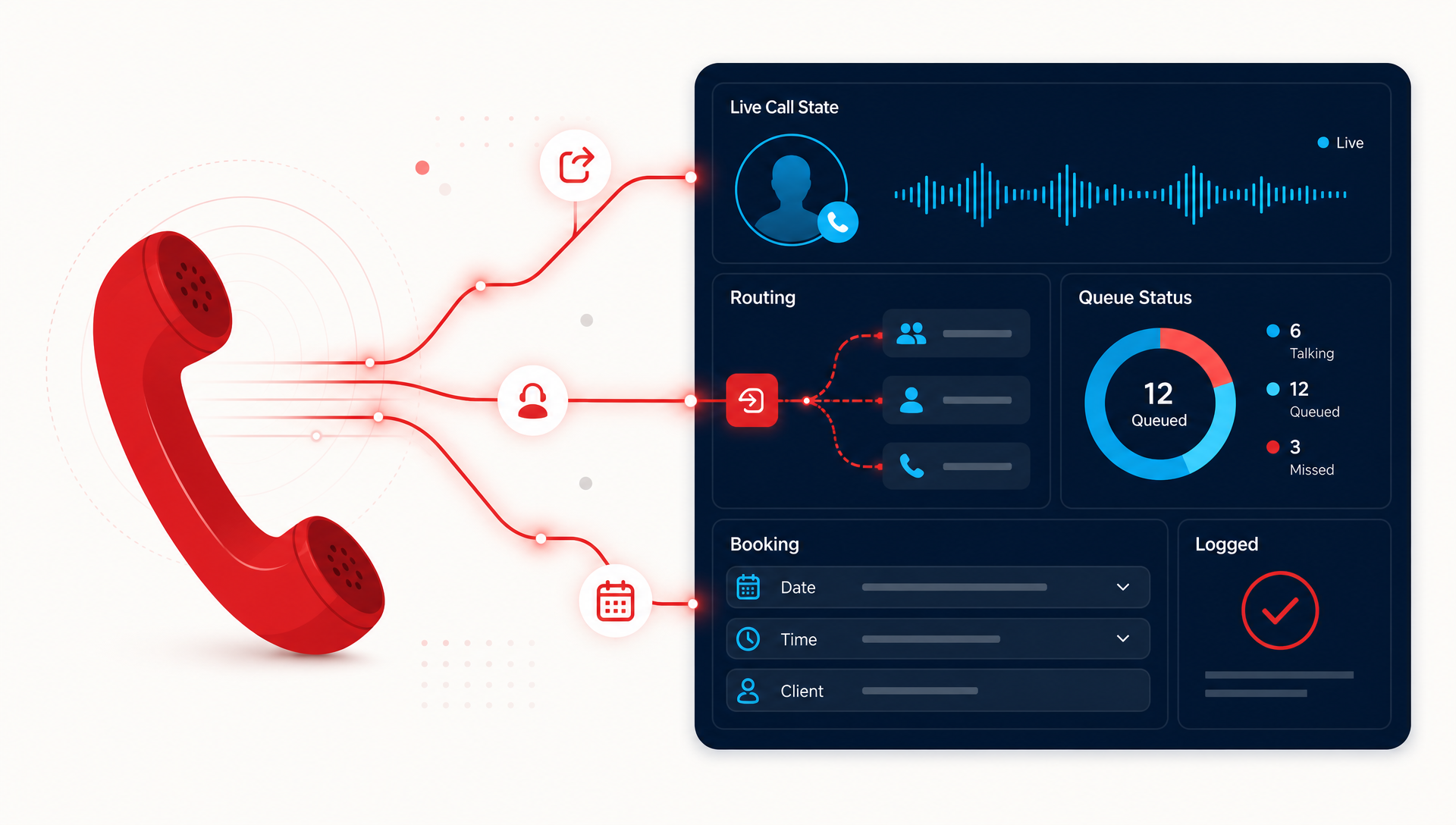
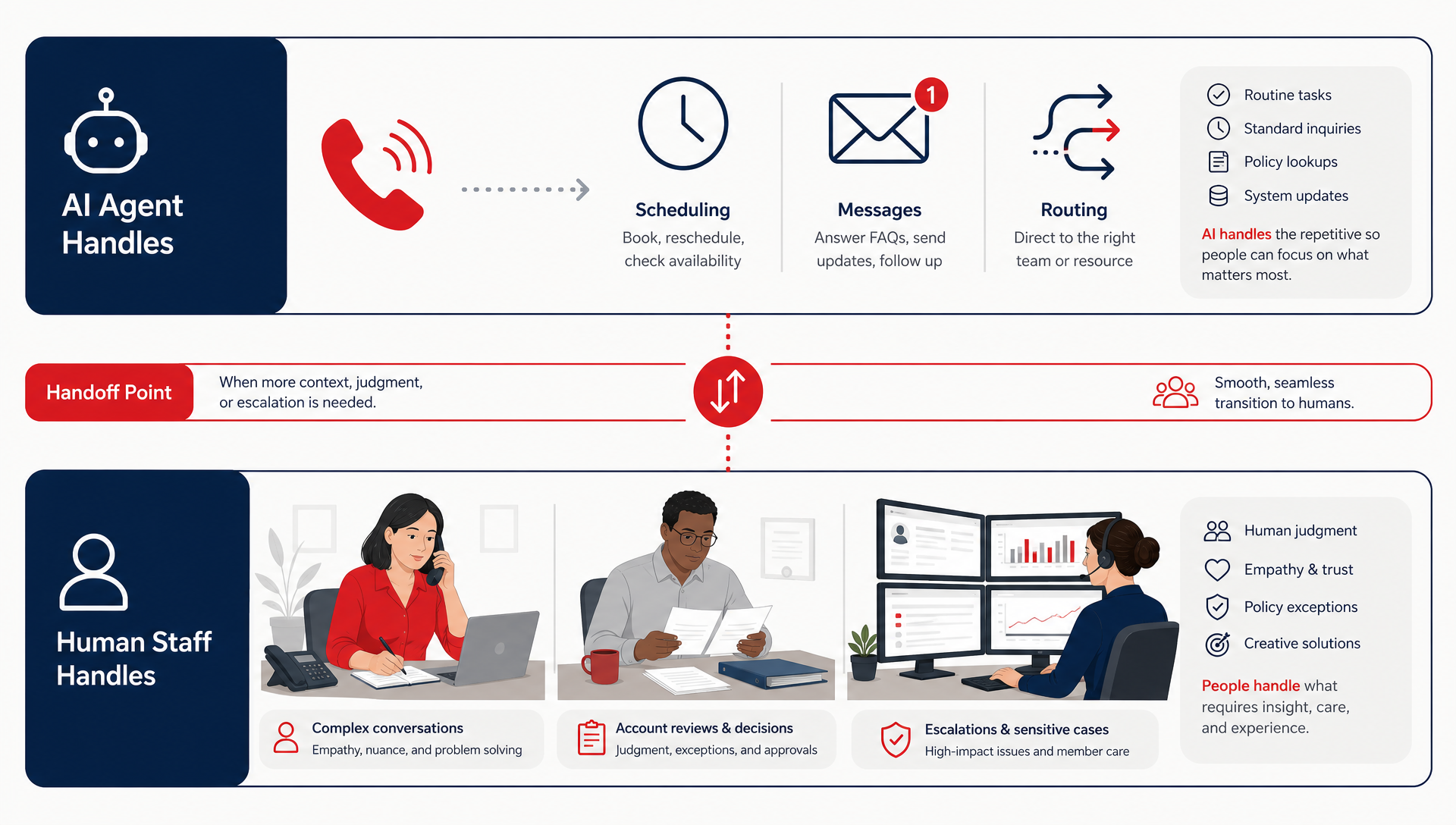
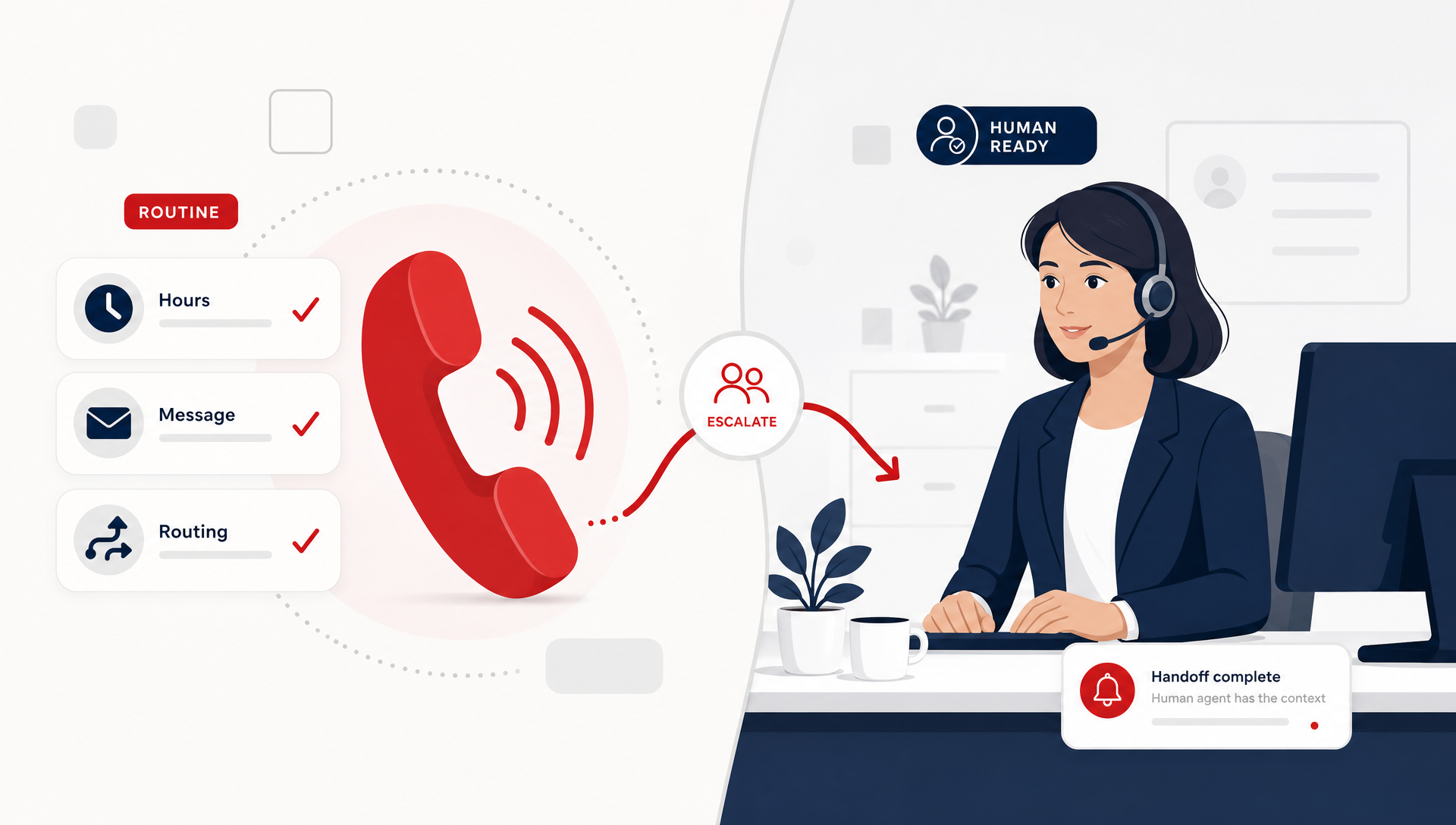
TeleCloud's AI Receptionist is set up to handle the parts of the call most people only notice when they fail, turn detection, context preservation, and clean handoff when the call needs a human. That matters in a clinic, because a rushed patient does not wait for the system to catch up.
We have seen this in urgent care and dental-style call flows, where callers often start with one question and pivot into another before the first answer is done. The setup needs to preserve the thread, then hand off cleanly if the caller moves outside the script. That is the difference between a good demo and a usable front door.
TeleCloud's job is not to make the call sound artificial. It is to keep the call moving, even when the room is loud and the caller is not being polite.
When this is not a good fit
If your calls are mostly short, scripted, and low-stakes, an auto attendant may still be enough. Not every phone tree needs an AI layer.
If your team expects the system to guess, improvise, or make judgment calls outside the script, that is a different problem. The AI receptionist should route, answer, and recover, not invent policy.
And if your callers are often in extremely noisy environments, you should test that reality first, not after launch. The goal is to know where the system holds up and where a human handoff still needs to kick in.
What to look for before you buy
Ask for a live test with messy audio, not just the cleanest demo line they have.
Look for three things:
- Does it keep the caller's place when interrupted?
- Does it recover after a noisy sentence?
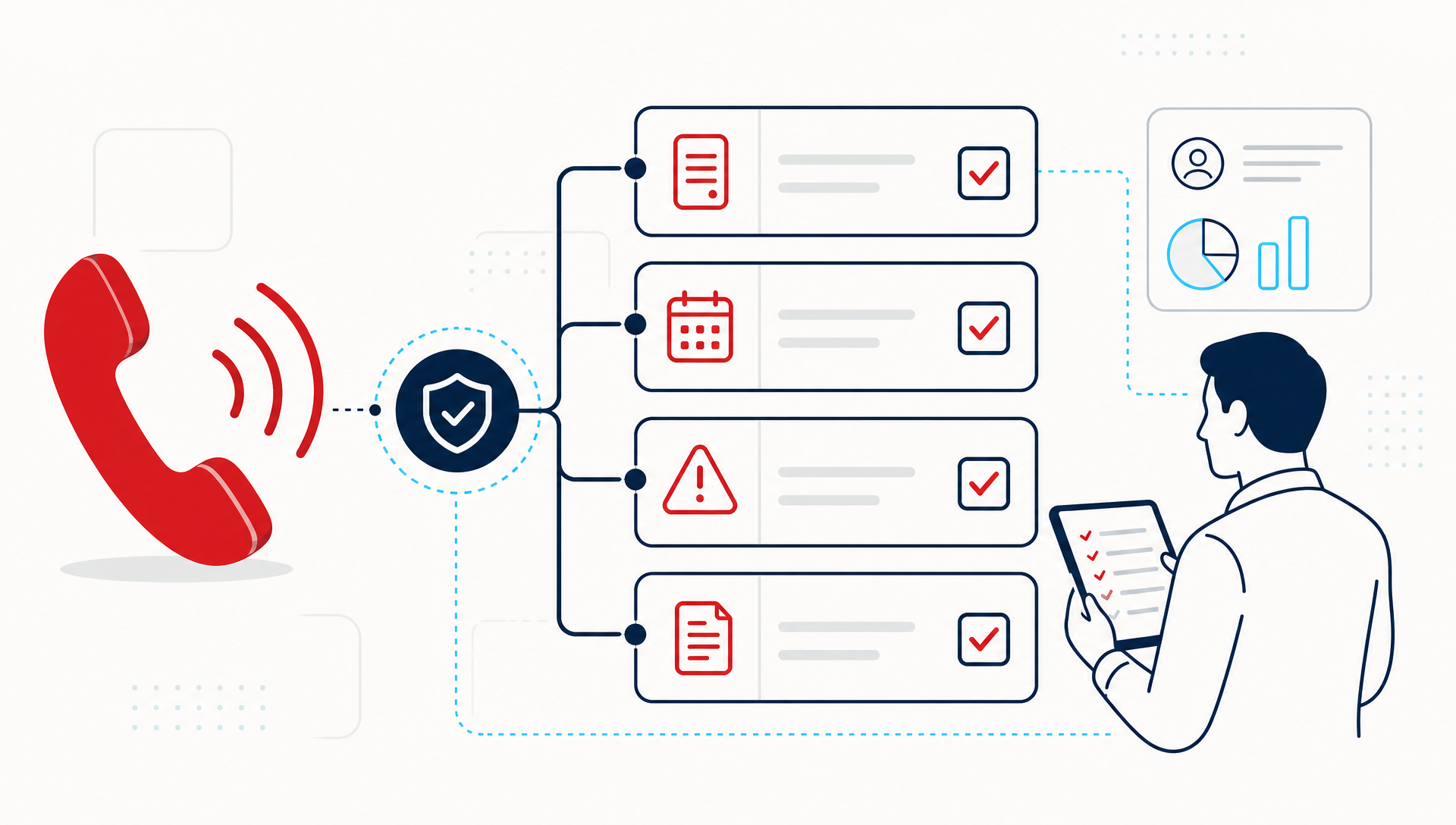
- Does it hand off cleanly when it is not sure?
If the answer is yes on all three, you are looking at a system that can work in the real world. If not, the problem is not the script, it is the conversation handling.
What to put in place before your next rollout
The safest way to judge an AI receptionist is to test it against the calls you actually get, not the calls a vendor wishes you got. Noisy rooms, overlapping speech, and impatient callers are normal, so the system should be judged on that normal.
If you want to see how TeleCloud sets up AI Receptionist for real call flow, noise, and handoff handling, Talk to an Expert and we will walk through the setup with you.
FAQ
Can my AI receptionist handle speakerphone calls?
Yes, but speakerphone makes the test harder, which is the point. A good system should still understand enough of the caller's intent to keep the call moving, even if every word is not perfect.
What is the biggest failure in noisy environments?
Usually it is not a full crash, it is losing context. The system hears part of the request, then asks the caller to repeat something they already said, which makes the call feel clumsy.
Should I use AI receptionist for every call type?
No. It works best for common routing, FAQs, scheduling, and basic intake. If the call needs judgment or a human decision, the better setup is to hand it off fast.
How do I test interruption handling before launch?
Use a noisy script with interruptions, overlapping speech, and fast talkers. If the system can keep the thread through those cases, it is much more likely to hold up with real callers.
What should I ask before buying an AI receptionist?
Ask how it handles barge-in, overlapping speech, and context drift. Then insist on a live test with the kind of noise your front desk or waiting room actually creates.
Will Maddox is the Digital Marketing Coordinator at TeleCloud, overseeing content, brand, and outbound strategy for the company. He writes about cloud communications, AI tools for business, and what SMBs and urgent care operators need to know to run better phone systems. Connect with Will on LinkedIn or email him directly to learn more.
Topics: