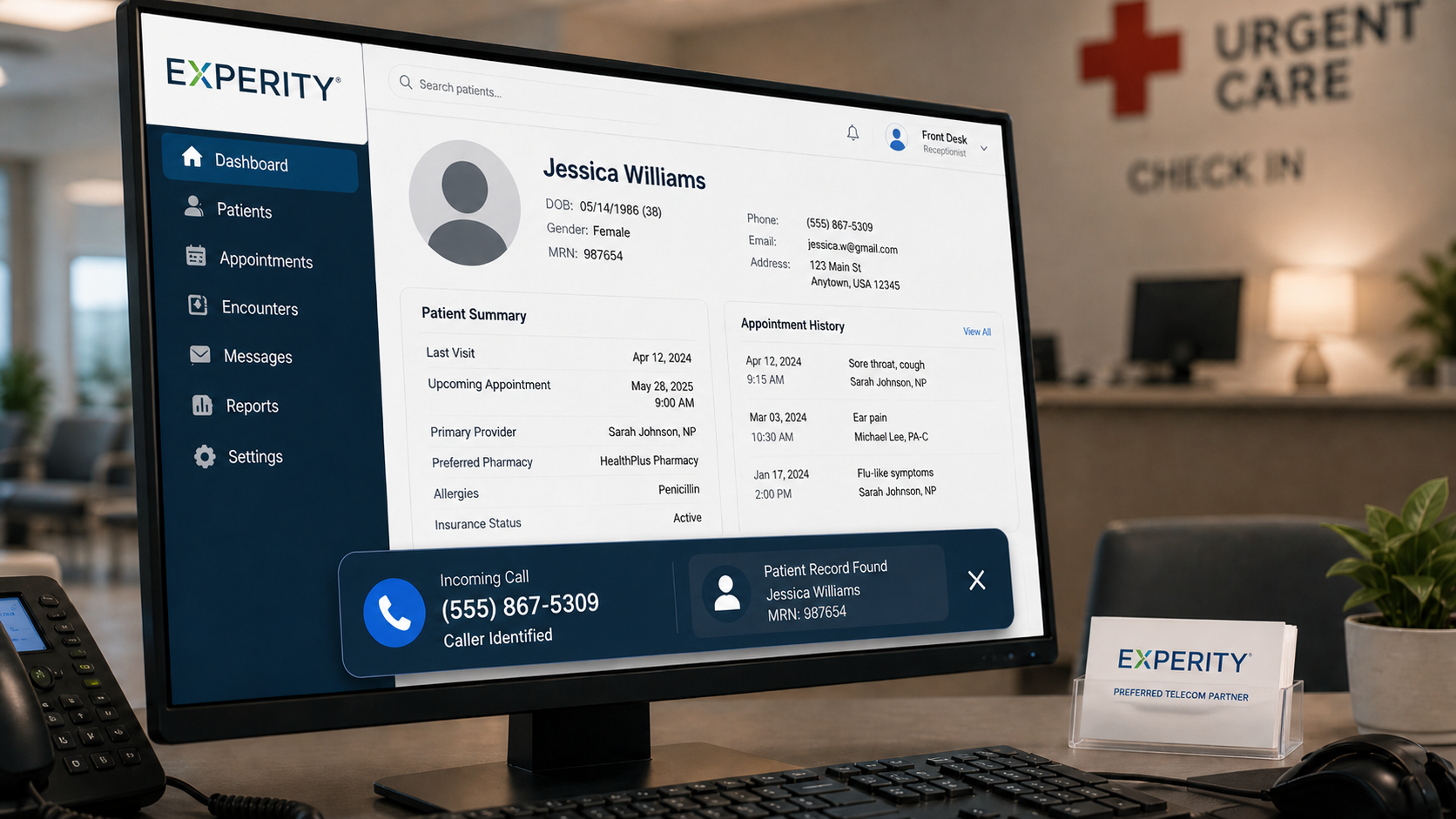

An AI receptionist is a virtual call-handling system that uses artificial intelligence to answer, route, and assist callers, helping your team manage more conversations efficiently without replacing real employees.
Every business depends on calls. They connect customers to your brand, but they also take time and attention that your team might not always have, especially during busy hours or after closing time. Hiring more staff or relying on voicemails and answering services can only go so far.
That’s where an AI receptionist comes in. It’s not about replacing people, it’s about supporting them. By handling repetitive or routine calls, an AI receptionist helps your team focus on higher-value work that drives growth and customer satisfaction.
In this article, we’ll explore what an AI receptionist actually does, why it’s becoming an essential part of business communication, and how you can start implementing it in a gradual, low-risk way that fits your team and your customers.
 What Is an AI Receptionist?
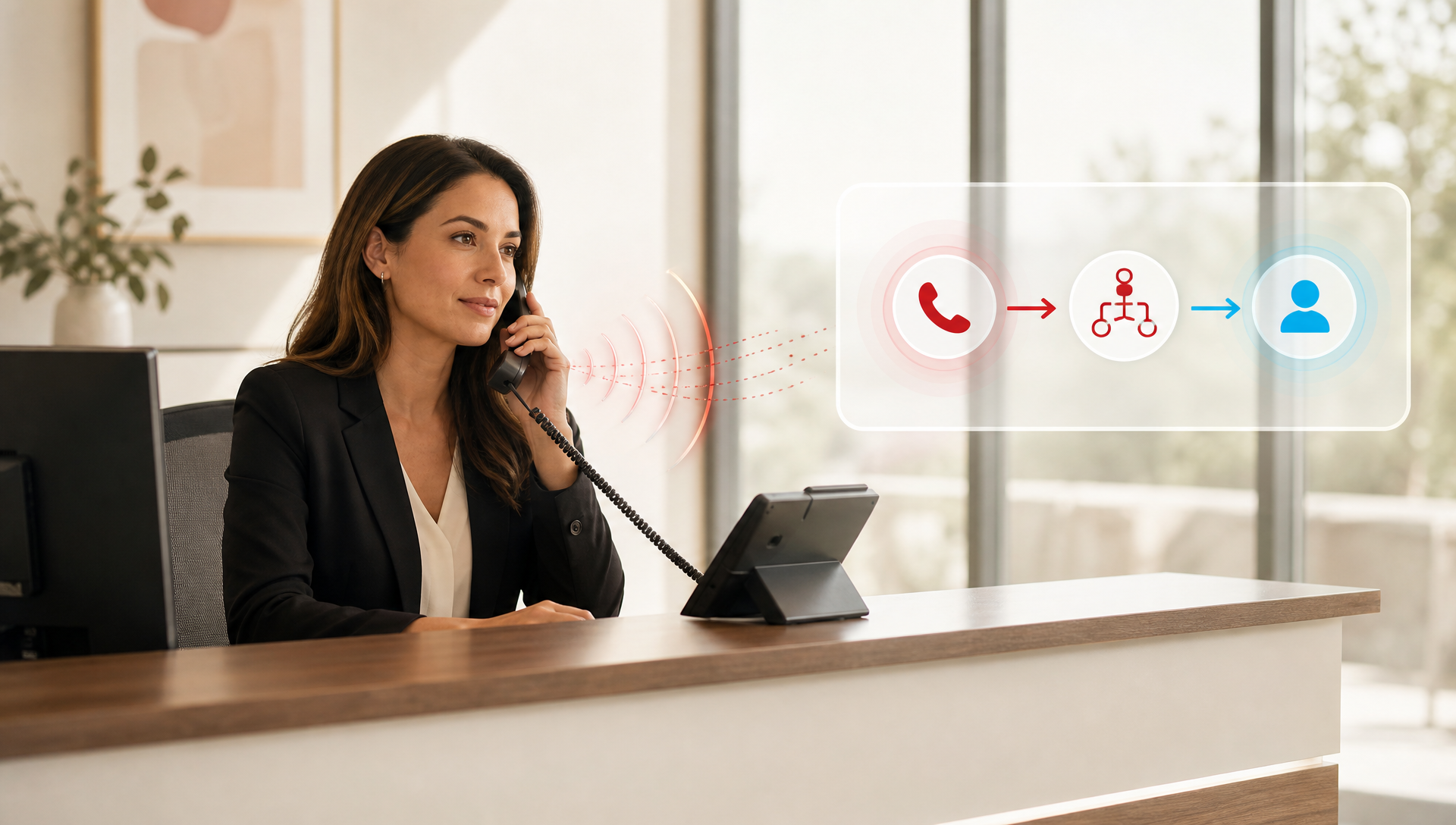
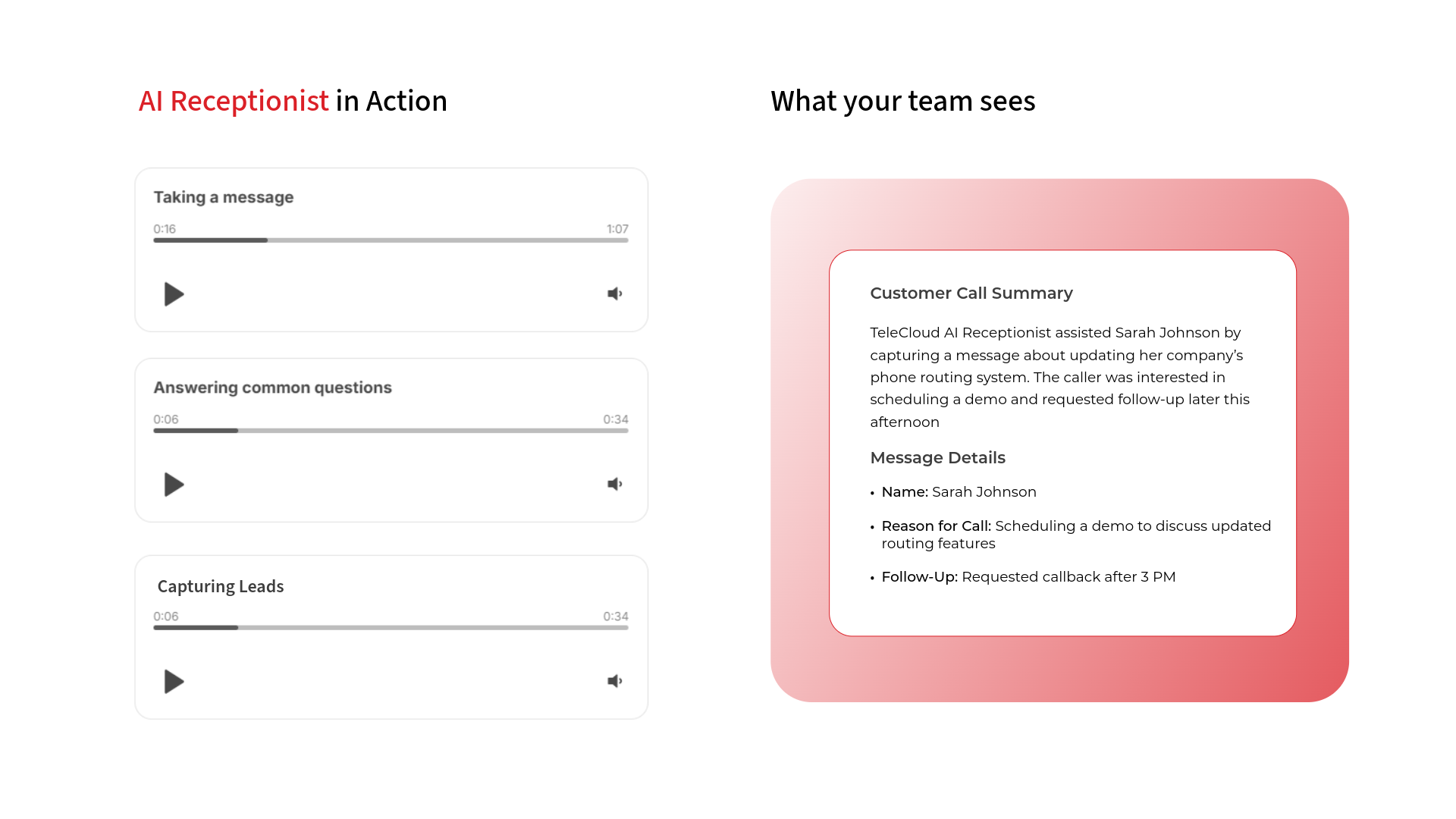
An AI receptionist is a virtual system that uses voice technology to answer and manage inbound calls for your business. It’s designed to sound natural, handle basic requests, and route calls efficiently, just like a skilled front desk employee, but available 24/7.
Instead of relying on a static “Press 1 for Sales” menu or sending callers to voicemail, an AI receptionist interacts in real time. It can provide business information, take messages, confirm details, or transfer callers to the right person without needing a live agent for every interaction.
Think of it as a digital teammate: always professional, always on time, and always aligned with your brand’s tone.
How AI Receptionists Fit Into the Way Businesses Communicate
Traditional call handling options are limited: an auto attendant, a live person, a queue, or voicemail. Each has value, but also challenges. Voicemails get missed. Queues frustrate customers. Hiring extra receptionists or answering services can be costly.
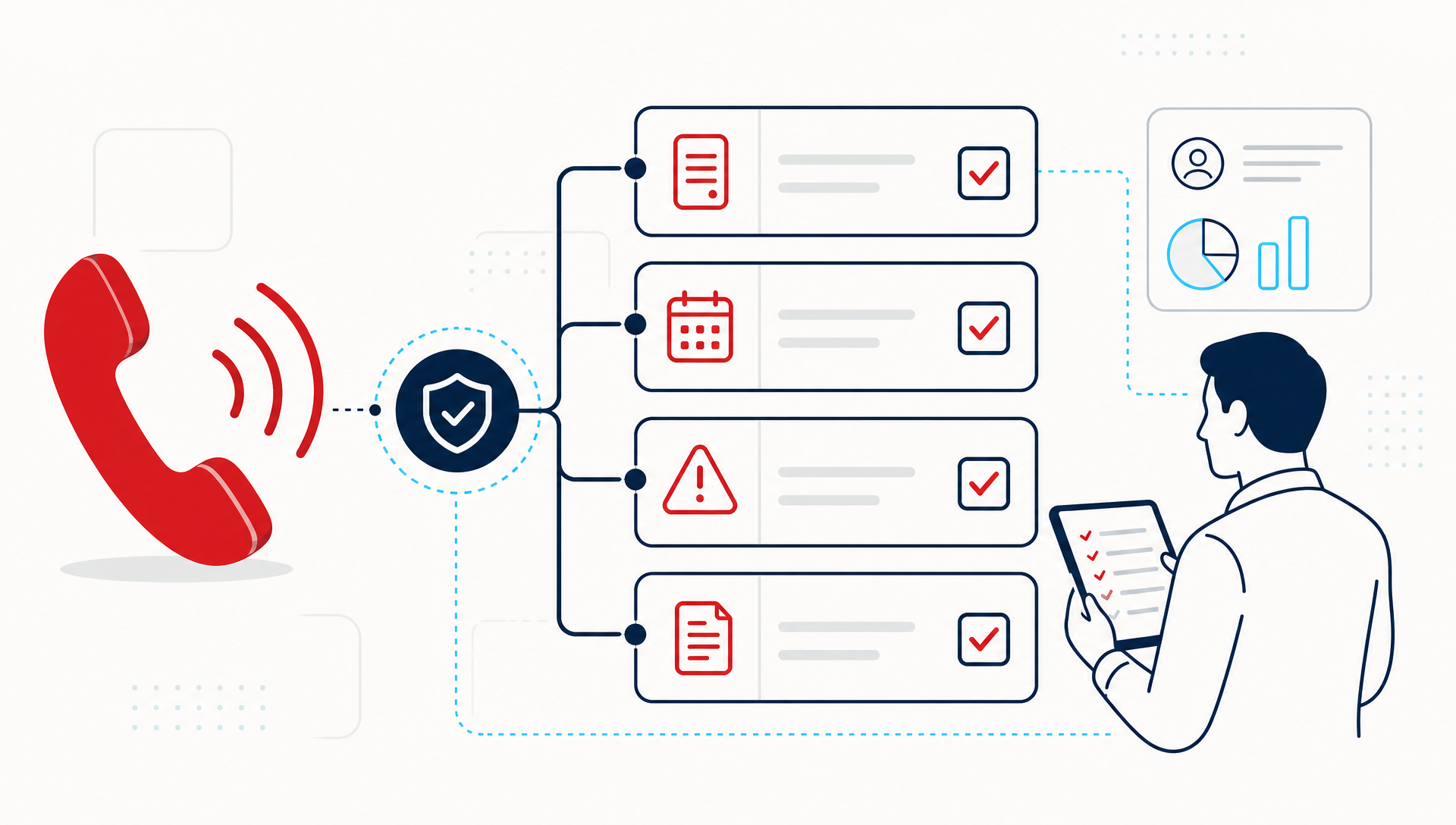
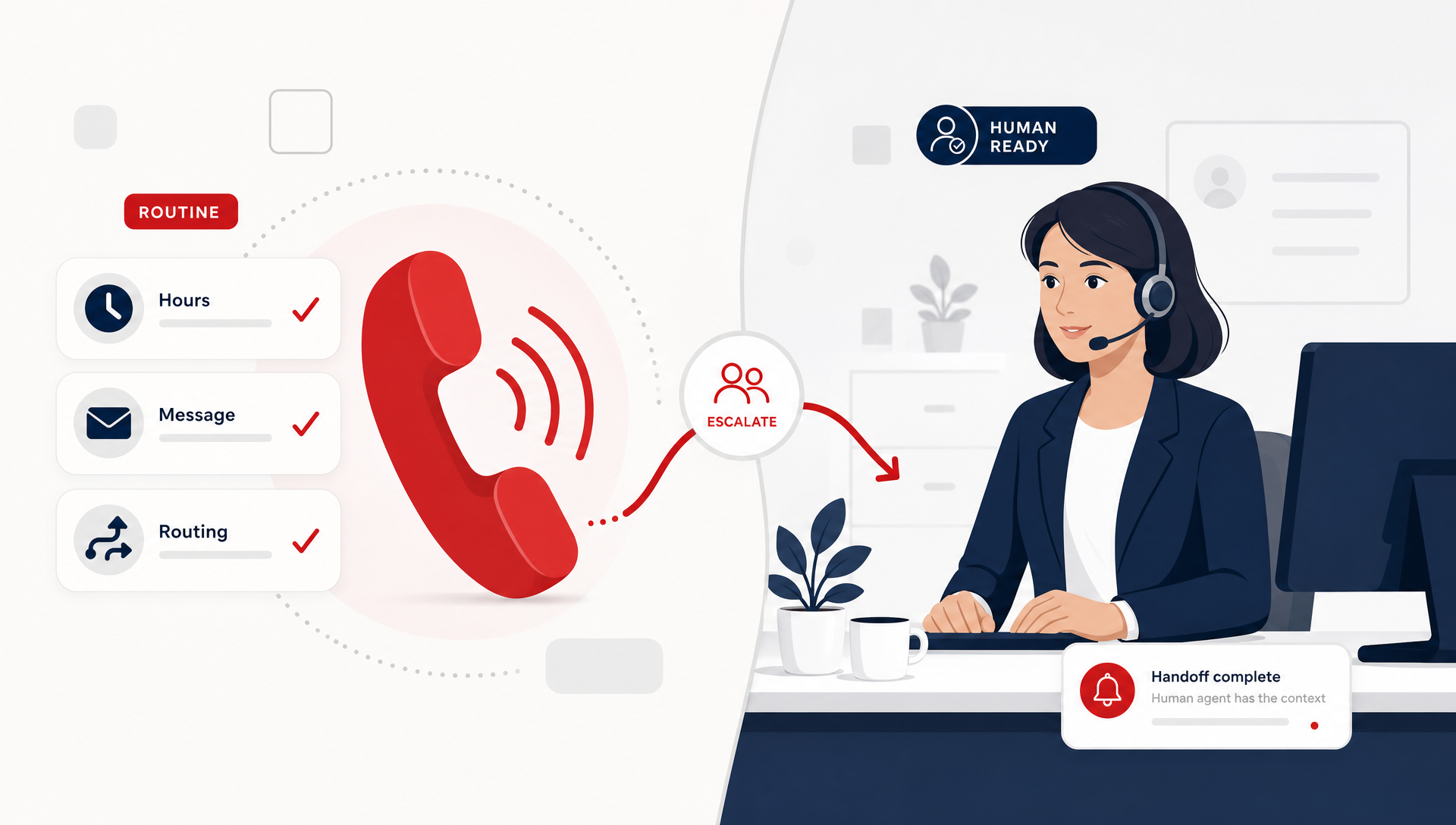
An AI receptionist fills that middle ground. It can:
- Answer calls after hours or when staff are busy.
- Provide answers to common questions.
- Capture important details for follow-up.
- Route calls to the right department or person.
The result is simple: your customers get faster responses, and your employees get more time to focus on what matters most.
You’re not replacing people, you’re removing bottlenecks.
Why AI Receptionists Aren’t About Replacing People
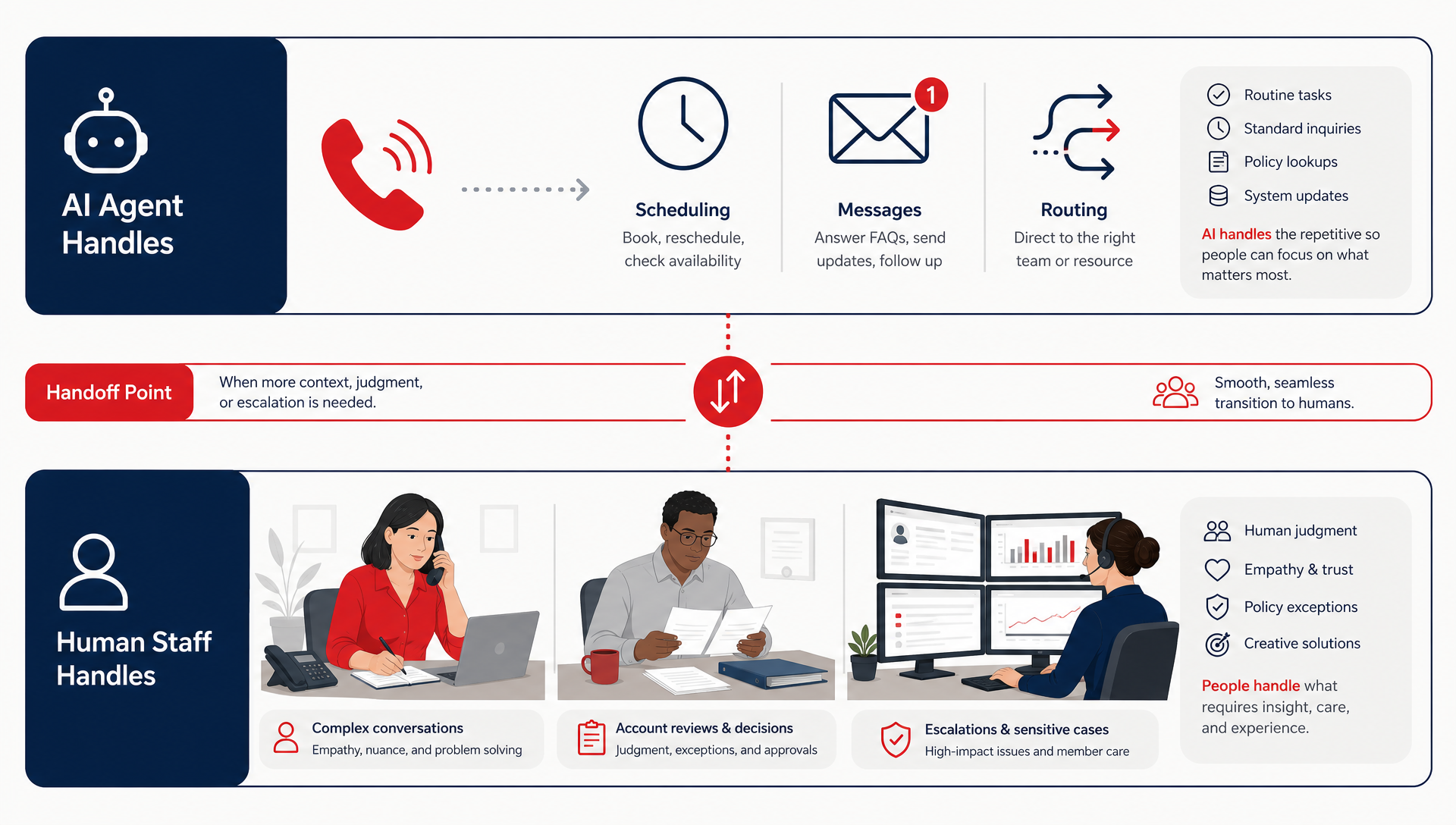
Many business owners worry that AI might take away jobs. The truth is, AI receptionists are designed to make human teams stronger, not smaller.
Here’s how that works in practice:
- Offload Routine Calls
Every business receives repetitive calls: questions about hours, appointments, directions, or service availability. These are important interactions, but they don’t require human judgment. AI can handle them quickly and consistently, leaving your staff free to focus on complex issues that build relationships and trust. - Support Your Team, Don’t Replace It
An AI receptionist never calls in sick, takes lunch breaks, or misses after-hours calls. That consistency means fewer interruptions and better coverage for your staff. It’s like giving your team a reliable assistant who takes care of the basics while they tackle the big stuff. - Improve the Human Experience
When your employees aren’t overloaded with repetitive calls, they can give better attention to the customers who really need them. That’s how AI creates more human experiences, not fewer.
AI receptionists are at their best when they work alongside people, not instead of them.
How Businesses Are Starting to Use AI Receptionists (The Crawl–Walk–Run Approach)
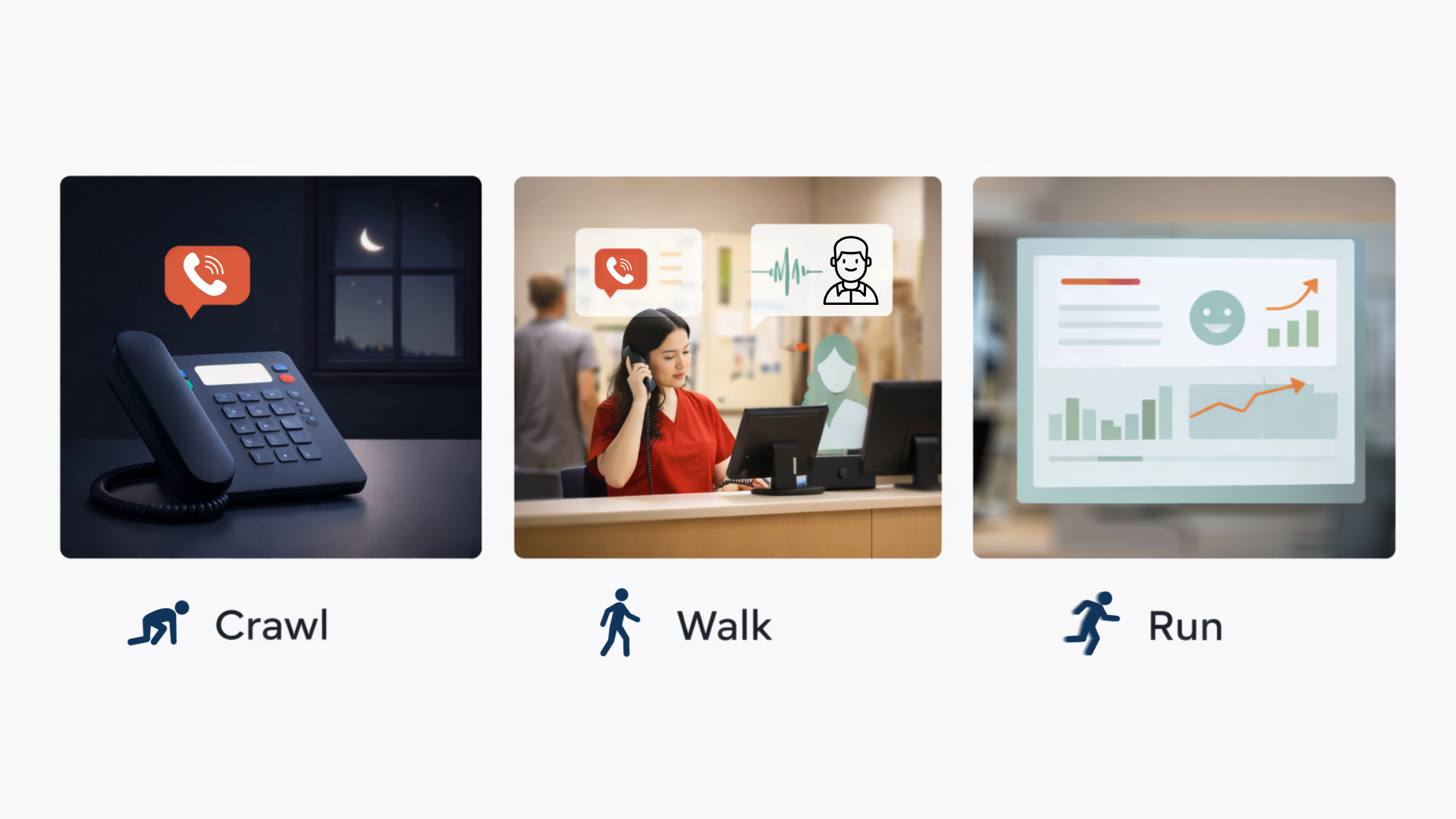
Adopting AI doesn’t have to be an all-or-nothing change. The smartest companies are introducing AI receptionists gradually, using a “Crawl–Walk–Run” approach.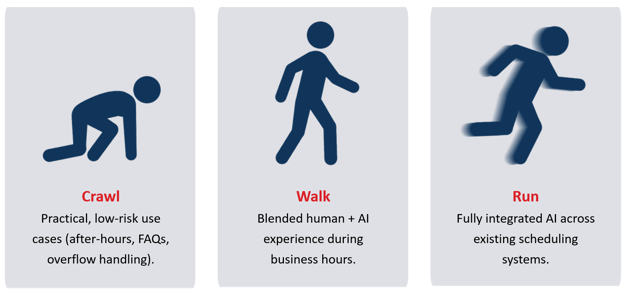
Crawl: Start Simple
Begin with one low-risk use case, like replacing your nighttime voicemail.
Your AI receptionist can take messages, answer common questions, and route urgent calls to the right person. It’s an easy first step that immediately improves responsiveness without changing how your daytime team works.
Walk: Add Everyday Support
Once you’re comfortable, use AI to help with daytime overflow or busy periods. If your phones ring off the hook between 4–6 PM, AI can step in to answer overflow calls and capture key details for your team.
You can also program it to handle routine functions like appointment confirmations or general inquiries.
Run: Personalize and Refine
Over time, you can customize the AI receptionist’s behavior to match your brand voice and caller expectations. The system can be trained to use friendly language, recognize repeat callers, and provide more personalized service.
The key is to move at your own pace. Start small, measure results, and expand once you’re confident it’s improving customer experience.
Common Pitfalls to Avoid When Implementing AI Call Handling
Getting started with an AI receptionist is simple, but success depends on thoughtful setup. Here are common pitfalls to avoid:
- Automating too fast: Don’t replace your entire front desk overnight. Test, listen, and refine.
- Lack of clear direction: Define which calls AI should handle and which should go to a human.
- Neglecting brand voice: Customize scripts so your AI receptionist sounds like your business, not a robot.
- Skipping feedback: Ask your customers and staff for feedback early to ensure the experience feels natural and helpful.
The most successful deployments focus on solving one small problem first, like handling after-hours calls, before expanding. Read More
The Payoff of Getting It Right
When businesses implement AI receptionists thoughtfully, they see results quickly.
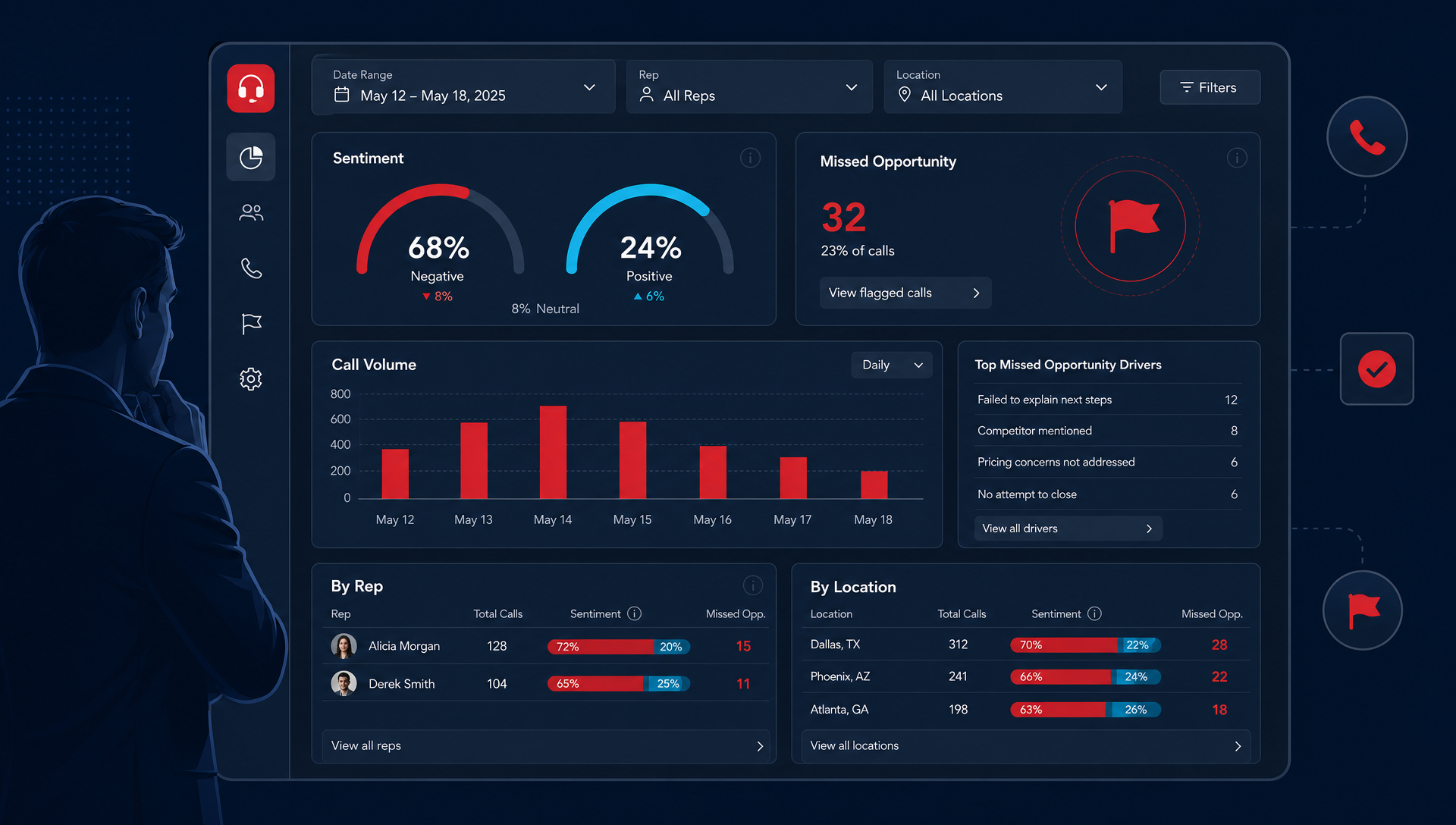
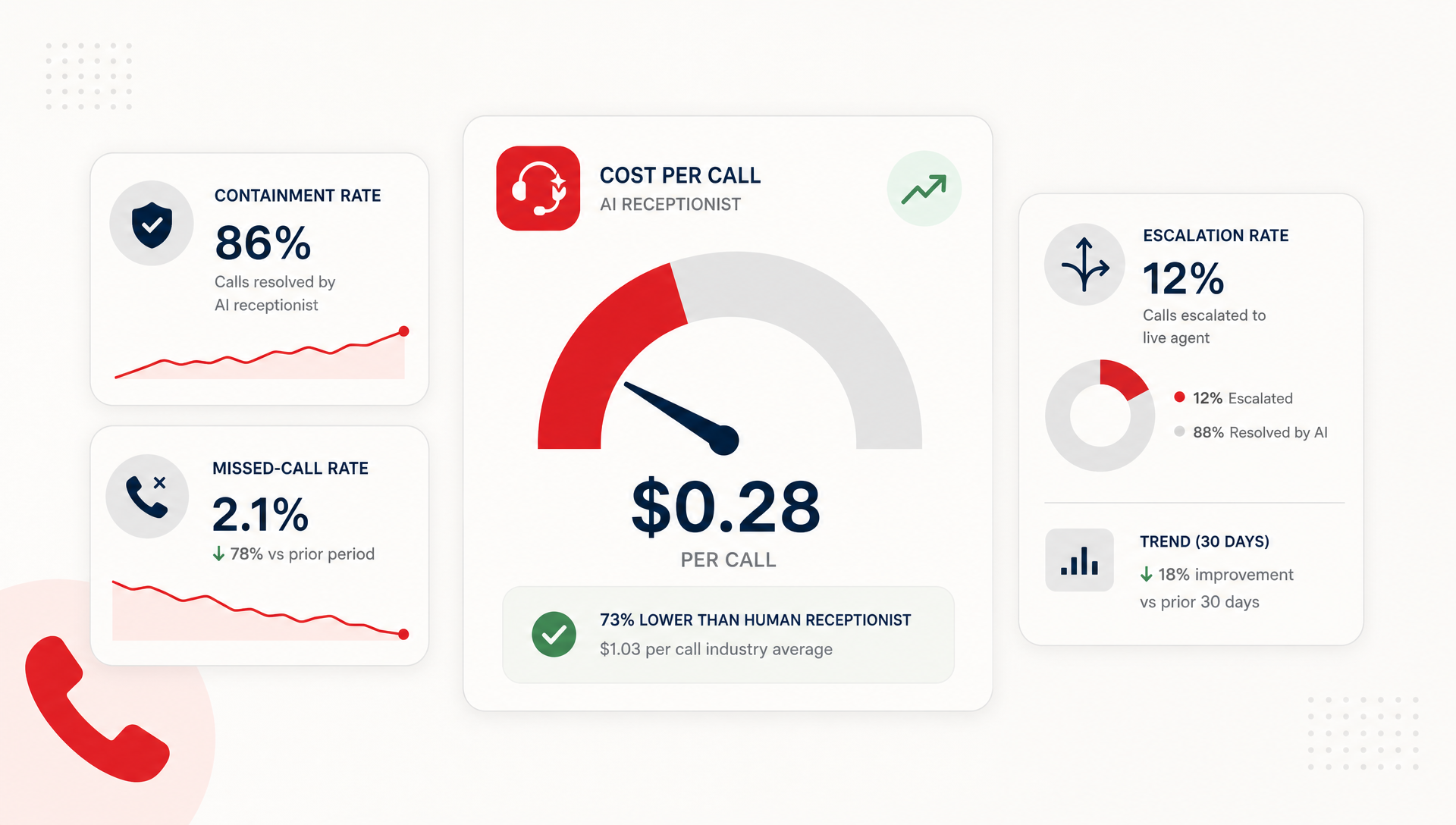
- Fewer missed calls: Every ring gets answered, even after hours.
- Faster service: Customers get immediate attention instead of waiting on hold.
- Happier staff: Employees spend more time on meaningful work instead of repetitive tasks.
- Better customer experiences: Calls feel smoother, more consistent, and more professional.
Each call that gets answered by AI keeps your customers connected and your business responsive, without increasing staff costs or sacrificing quality. Read More
Getting Started With AI Receptionists in Your Business
If your business struggles to keep up with calls or relies heavily on voicemail, AI receptionists are a natural next step. You don’t need to rebuild your phone system, just layer AI on top of what already works.
Here’s a simple starting point:
- Identify repetitive call types (voicemail overflow, basic inquiries).
- Customize tone and messaging to fit your brand.
- Test it after hours or during high-volume times.
- Review feedback from staff and callers.
- Gradually expand as comfort and performance grow.
At TeleCloud, we often recommend starting with after-hours coverage first. This lets you test the AI’s tone, accuracy, and flow in a low-risk environment before introducing it during business hours.
The Human Side of AI Reception
AI receptionists represent a practical and human-centered step forward in how businesses handle calls. They don’t eliminate jobs or replace people; they take care of the routine tasks that distract your team from higher-value work.
By starting small and implementing thoughtfully, businesses can enhance responsiveness, improve customer experience, and give employees more time to focus on what matters most.
AI isn’t the future of communication; it’s the next natural evolution of it. When used with care and strategy, it becomes the quiet force that helps your business stay connected, professional, and personal, no matter when the phone rings.
Topics: