
How to answer the phone professionally: scripts for your front desk
November 26th, 2026
4 min read
By Will Maddox

To answer a business phone professionally, pick up within three rings, greet the caller with your business name and your own name, offer to help, then listen. Before you hang up, confirm what happens next. That's most of it. The hard part is doing it the same way on every call, across everyone who answers your phone.
Most people have called a business and been met with a mumbled "hello," a long hold with no explanation, or a transfer that sent them back to the start. Callers decide how they feel about your business in the first few seconds. Here are scripts your whole team can use, word for word, for the moments that matter.
What's the best way to greet a caller?
Use four parts: your business name, your own name, an offer to help, and a tone that sounds glad they called.
"Thank you for calling [Business name], this is [your name]. How can I help you?"
A few variations that work:
- Busy front desk: "Good morning, [Business name], this is [name]. How can I help?"
- Medical or dental office: "Thank you for calling [Practice name], this is [name]. How can I help you today?"
- Service business: "[Business name], this is [name]. What can we help you with?"
Skip "Hello?" and a bare business name. Callers want to know they reached the right place and that a real person is listening.
How do you put someone on hold politely?
Ask first, say why, and say how long.
"Would you mind if I put you on a brief hold while I check that for you? It should be about a minute."
Wait for a yes. If it's taking longer than you said, come back: "Thanks for waiting. I'm still checking. Can you hold another minute, or would you like me to call you back?" Long, silent holds are one of the fastest ways to lose a caller. Here's what long hold times cost you.
How do you transfer a call without losing the caller?
Tell the caller where they're going and why, and pass along what they told you, so they don't have to repeat themselves.
"Our service manager, Mike, is the best person for that. I'm going to connect you now and let him know what's going on. One moment."
Then, to Mike: "I have Sarah on the line about a quote she was promised last week." If Mike doesn't pick up, go back to the caller rather than leaving them in a voicemail box they didn't ask for.
How do you take a message that actually gets returned?
Get four things, read them back, and give an honest callback time.
- Name
- Number
- What it's about
- The best time to reach them
"Let me read that back to make sure I have it: Sarah Lopez, 555-0123, about the quote from last week, best after 2 p.m. I'll make sure Mike gets this, and you should hear back by end of day tomorrow."
Only promise a callback time you know someone will keep.
What do you say when the person they want isn't available?
Offer options instead of a dead end.
"Mike is with a customer right now. I can take a message, put you through to his voicemail, or see if someone else can help you right away. What works best?"
How do you handle an upset caller?
Let them finish, acknowledge it, and own the next step. Don't argue and don't pass the blame.
"I'm sorry this has been frustrating. Let me make sure I have the whole picture, and then I'll tell you exactly what happens next."
Then do what you said, and give a time. An upset caller who gets a clear next step is often more loyal than one who never had a problem.
What if you don't know the answer?
Say so, and commit to finding out.
"That's a good question, and I want to get it right. Let me check and call you back by 3 p.m. Is this the best number?"
How should you end the call?
Recap what happens next, then close warmly.
"So Mike will call you tomorrow before noon about the quote. Is there anything else I can help with today? Thanks for calling, Sarah."
Which habits matter more than the script?
- Answer within three rings. If you can't, make sure the call goes somewhere useful.
- Smile when you talk. It sounds corny, but callers can hear it.
- Skip the speakerphone unless the caller agrees to it.
- Use the caller's name once or twice, not every sentence.
- Keep it quiet behind you. Background chatter and eating come through more than you'd think.
- Never promise what you can't control. "I'll find out" beats a wrong answer.
How do you keep the whole team consistent?
Scripts only help if everyone uses them.
- Write them down and keep them next to the phone, or in the notes on your phone system.
- Practice the hard ones: holds, transfers and upset callers.
- Set up your phone system to back them up. Calls should go to a real next step when nobody picks up: a greeting, a voicemail someone checks, an after-hours plan. Here are voicemail greetings you can copy and your after-hours options.
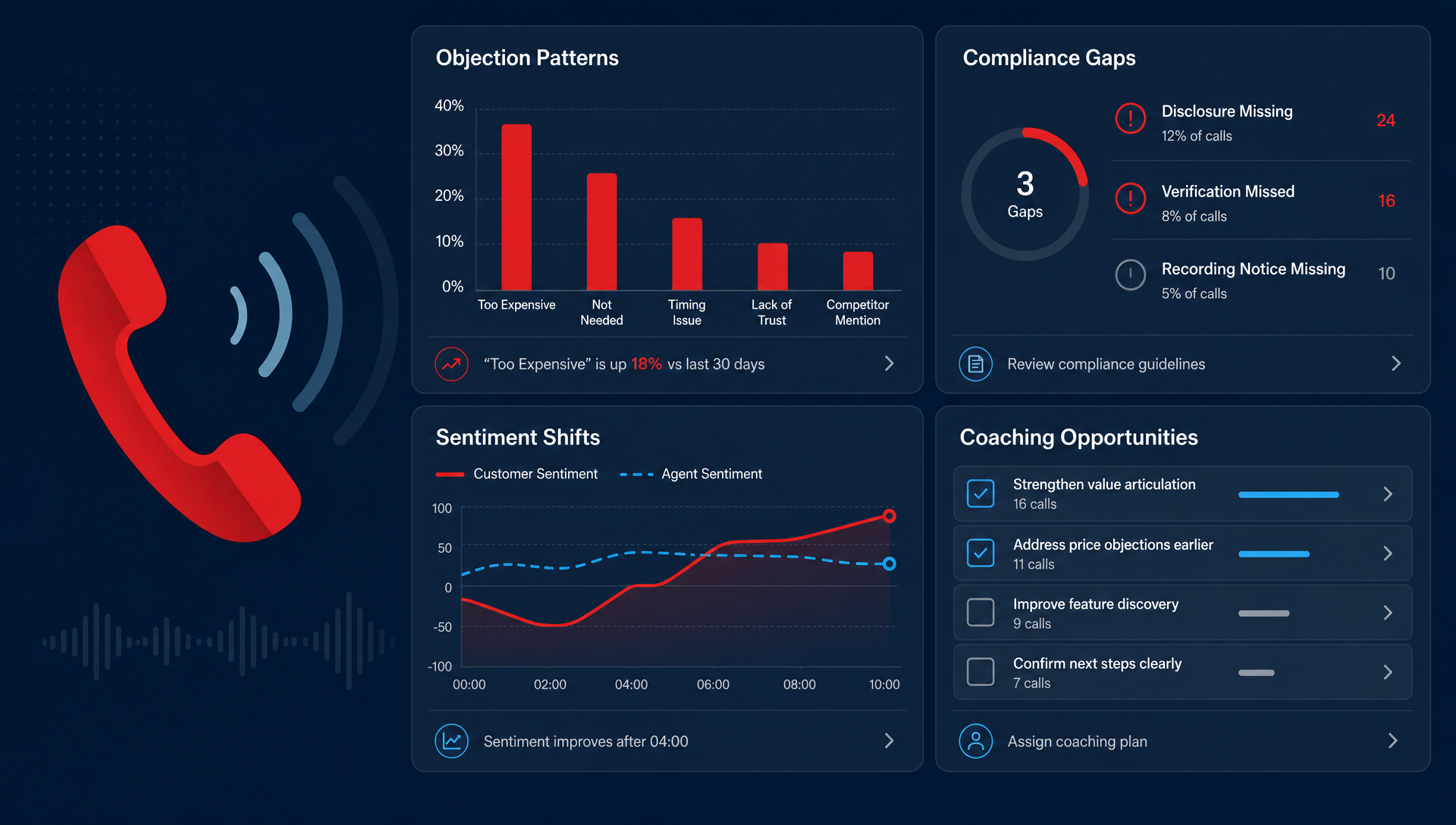
- Listen to real calls. A few minutes a week reviewing actual calls tells you whether the scripts are being used and where they break down. Here's how to run call reviews without a QA team.
Every call is a customer experience, and the first few seconds set the tone for all of it.
FAQ
How should you answer a business phone?
Within three rings, with your business name, your own name and an offer to help: "Thank you for calling [Business name], this is [name]. How can I help you?"
How long can you leave someone on hold?
Ask before you put them on hold, tell them roughly how long, and check back within about a minute. If it will take longer, offer a callback instead.
What's the most professional way to end a business call?
Recap the next step, ask if there's anything else, thank them by name, and let them hang up first if you can.
What should you avoid saying on a business call?
"I don't know" without a follow-up, "That's not my department," and any promise you can't keep. Offer to find out, connect them to the right person, or take a message with a realistic callback time.
Will Maddox is the Digital Marketing Coordinator at TeleCloud, overseeing content, brand, and outbound strategy for the company. He writes about cloud communications, AI tools for business, and what SMBs and urgent care operators need to know to run better phone systems. Connect with Will on LinkedIn or email him directly to learn more.