Call quality assurance for small teams: how to review calls without a QA department
November 17th, 2026
4 min read
By Will Maddox

Most small businesses don't have a call quality team. They have an owner or an office manager who listens to a call when a customer complains. Call quality assurance is just a routine for checking how calls are handled, so you can fix problems before customers notice them. You don't need a department to do it. You need a short standard, a regular habit, and someone who acts on what they hear.
Here's how to run one with the people you already have.
What is call quality assurance?
Call quality assurance, or call QA, is a regular routine of listening to calls, checking them against a short standard, and using what you find to coach people and fix processes.
Contact centers have whole teams for it. A dental office, a dealership service desk or an HVAC company needs the same thing at a smaller size: a way to know whether customers are getting what they called for, without waiting for a bad review to tell you.
What should you listen for?
Not a 40-point form. Start with five questions you can answer for any call:
- Did the caller get what they called for? An answer, a booking, a quote, a callback.
- Was the next step clear? Both sides should know what happens next and when.
- Was anything promised, and was it kept? A callback, a quote, a part ordered.
- Was the caller passed around? Every transfer is a chance to lose them.
- Did we do the few things that matter most here? Get a callback number, offer an appointment, confirm the address. Your business decides what these are.
The fifth question is where your business is different from everyone else's. At a dealership it's whether a service call ended with an appointment. At a medical practice it's whether a patient who asked to be seen got booked. For a contractor it's whether someone actually asked for the job. Generic scorecards miss this, which is why generic call scoring is mostly noise.
How many calls should you review?
As many as you can keep up every week. A routine that survives beats an ambitious one that stops in March.
A practical starting point is five calls per person per week, spread across different days and times, not just the ones someone complained about. In our experience, most teams review somewhere between 2 and 10% of their calls by hand.
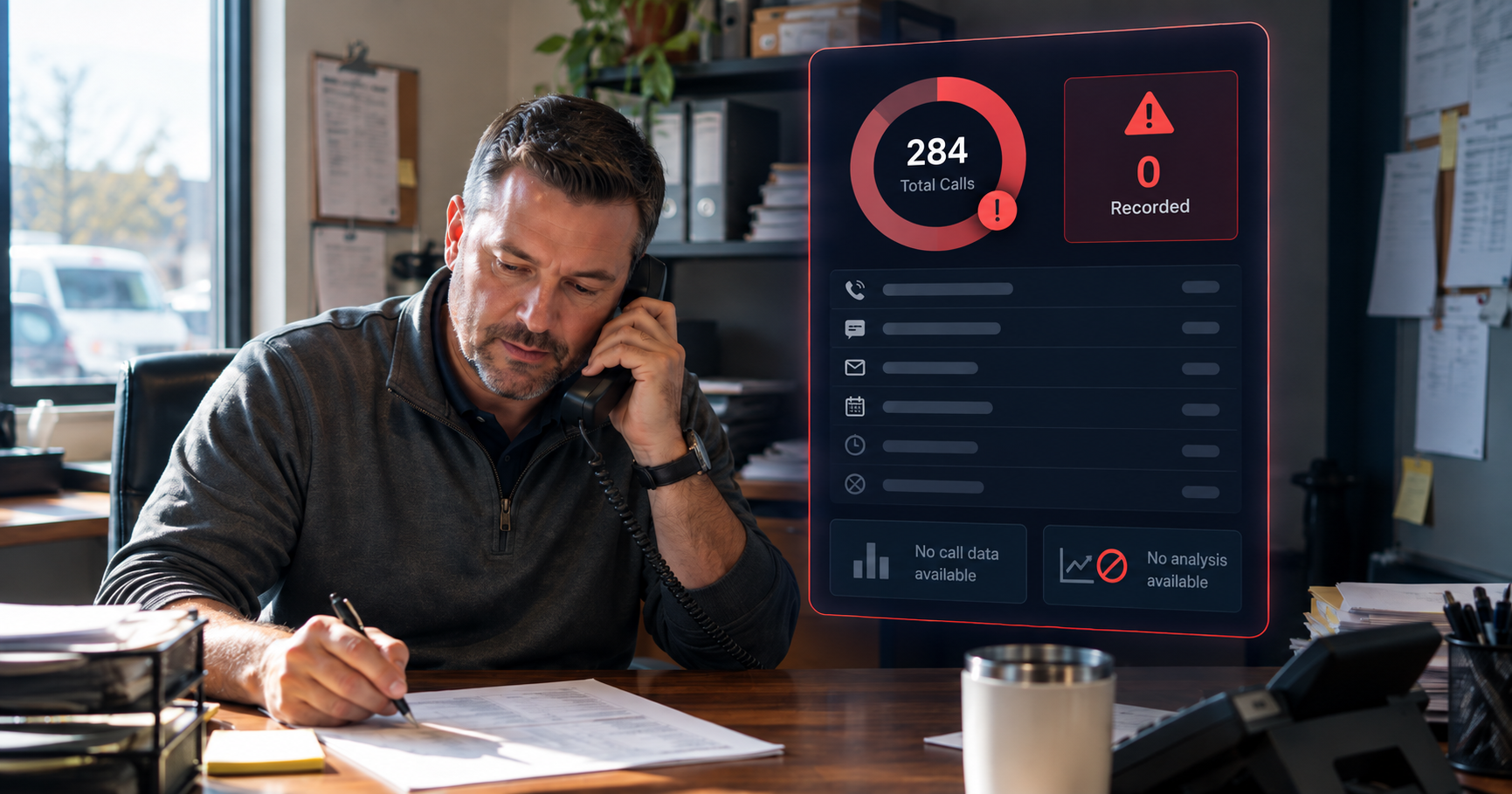
The catch is that a sample is a guess. The call where a customer quietly decided to go elsewhere is rarely the one that happens to get picked.
How do you score calls without it feeling like surveillance?
The goal is better calls, not catching people out. A few habits help:
- Share the standard. Tell the team exactly what you're listening for. No surprises.
- Score the call, not the person. "The caller left without a booking" lands better than "you didn't book them."
- Pair every score with two things: one to keep doing and one to change.
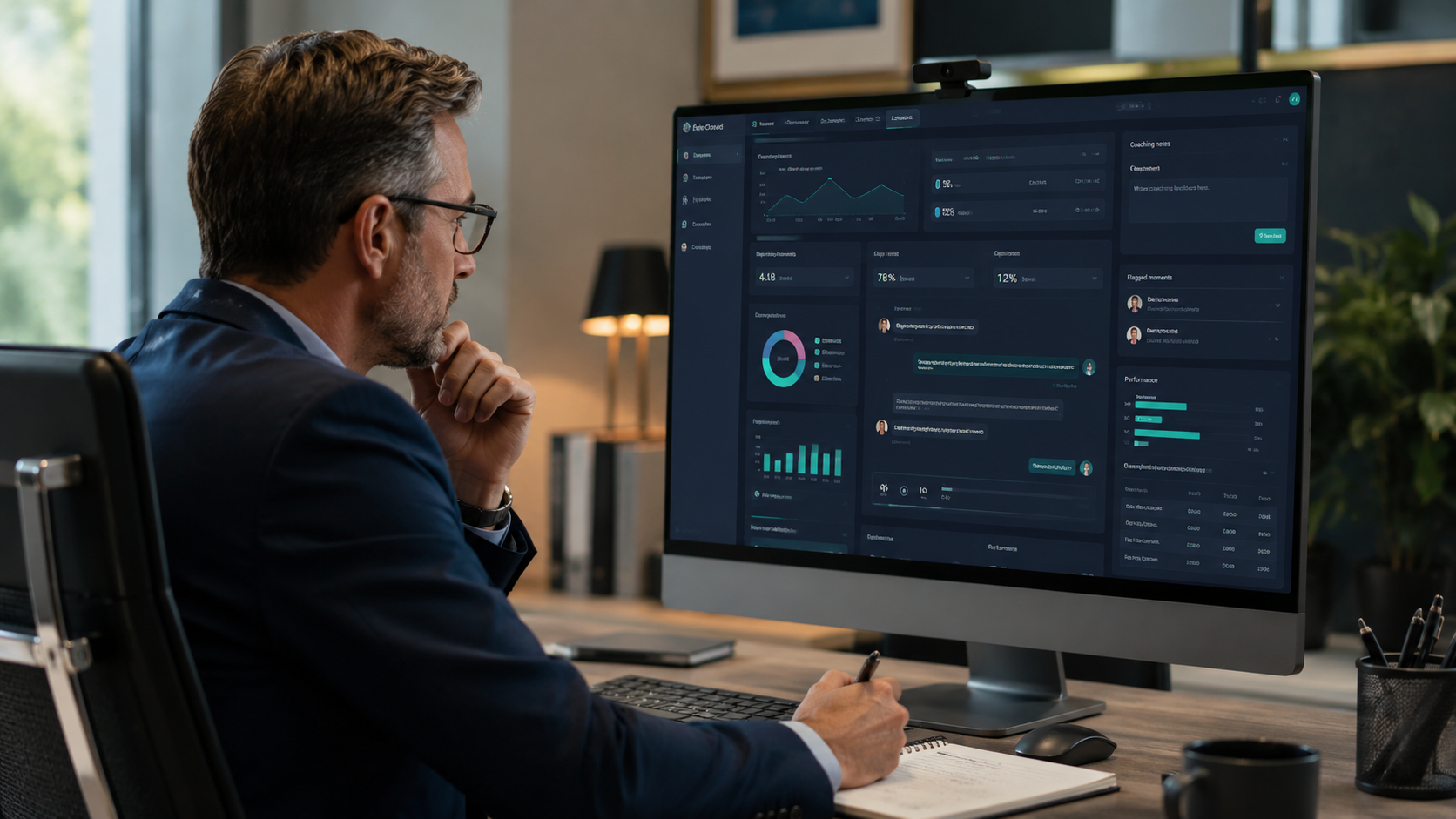
- Listen together. Ten minutes reviewing a real call side by side does more than any written score. Our guide to coaching your team from real calls goes further.
How do you turn what you hear into fixes?
Look for patterns, not just individual calls. If one person forgets to take a callback number, that's coaching. If everyone does, it's a process problem, and the fix is a script, a checklist or a change to how calls are routed.
A simple weekly rhythm:
- Twenty minutes, once a week. Review the calls you scored and pick the one pattern that matters most.
- One fix. Coach it, change the process, or both.
- One number to watch. Bookings per call, callbacks made, repeat callers. Check it again next week.
- One owner. Someone whose job it is to make sure the fix happens.
What changes when every call gets reviewed?
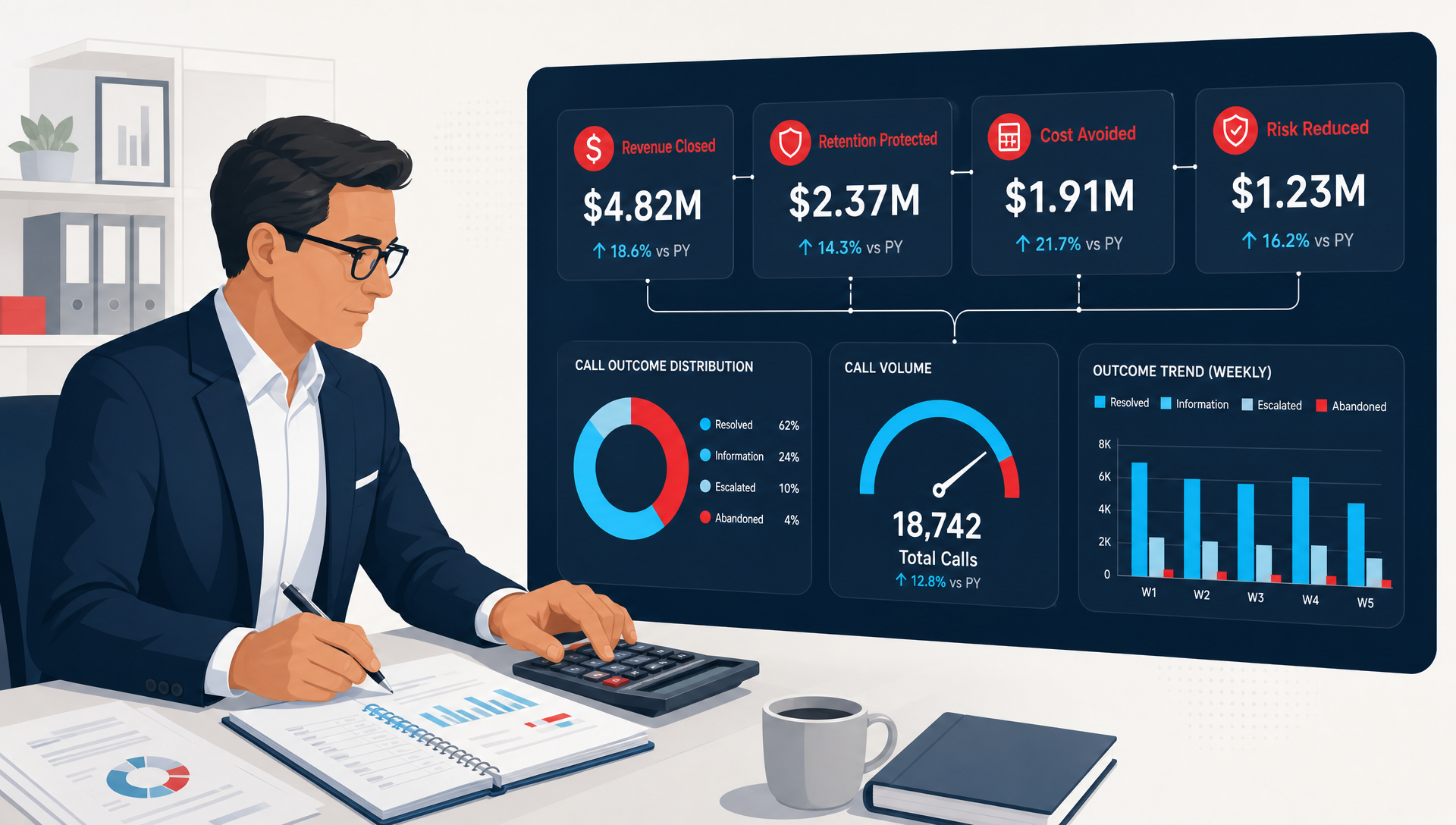
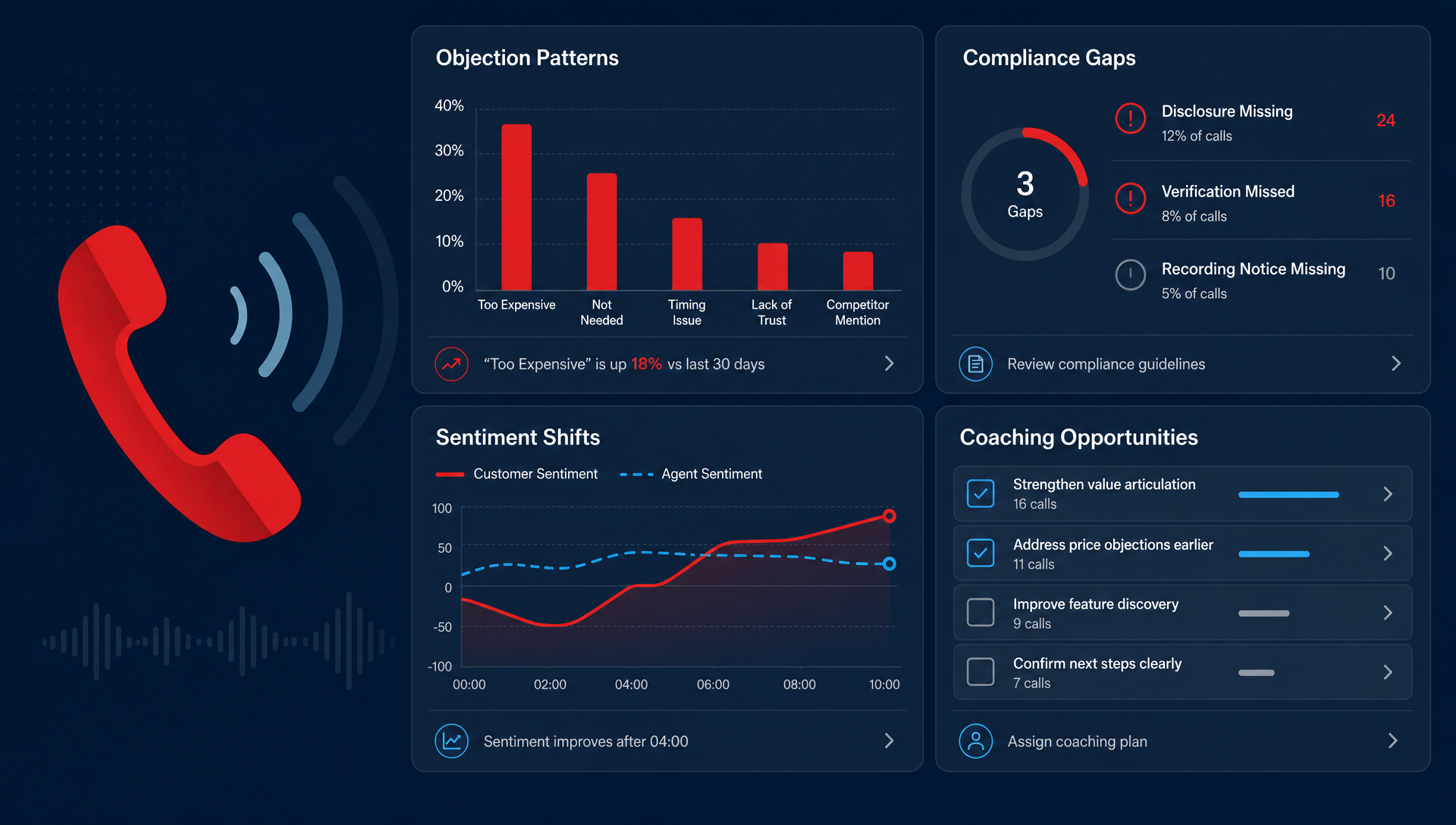
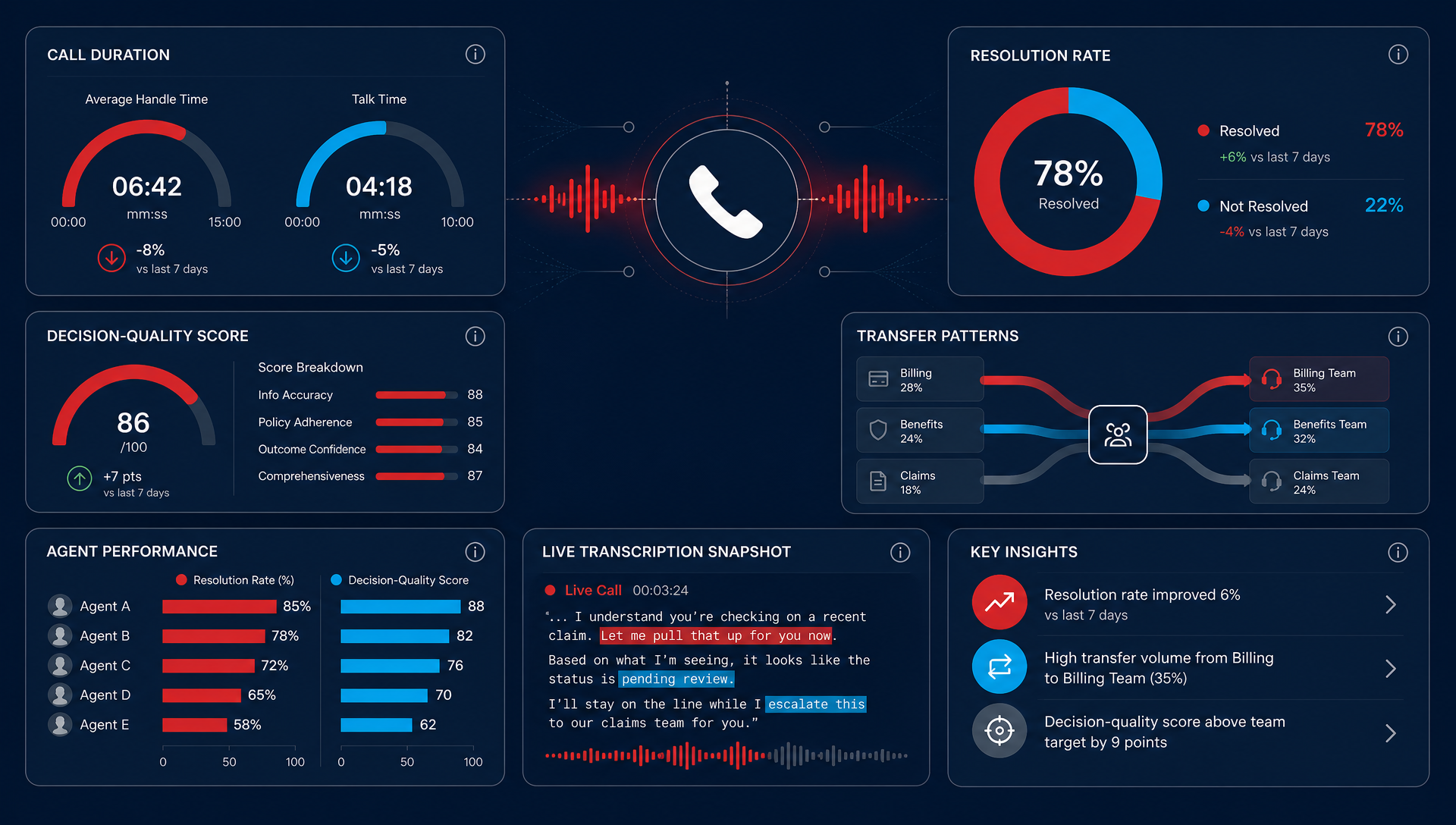
This is where TeleCloud Sentinel Conversational Insights comes in. It helps you find missed revenue, keep your customers and coach your team, because it reviews 100% of your recorded calls instead of a handful.
- Missed revenue. Callers who were ready to book and never got asked, quotes promised and never sent.
- Customers you're about to lose. The person calling for the third time about the same problem.
- Coaching from real calls. Who's great on the phone and who needs help, against your own standard.
The five questions above become rules written for your business. The calls that need attention go to the person you name, the same day, so nobody has to dig. Your team still does the coaching and the fixing. Sentinel shows you where to start, and checks whether it got better.
It can only read calls you record, so if you're not recording yet, start with our call recording checklist.
A simple call QA routine to start this week
- Write down your five questions, including the one or two that matter most in your business.
- Share them with the team.
- Pick five calls per person, across different days and times.
- Score them, with one thing to keep and one to change.
- Meet for twenty minutes, pick one pattern, and make one fix.
- Watch one number and check it next week.
Every call is a customer experience. A QA routine is how you find out what that experience actually is.
FAQ
What's the difference between call monitoring and call quality assurance?
Monitoring is listening to calls, sometimes live. Quality assurance is what you do with what you hear: checking calls against a standard, coaching and fixing processes. You can monitor without doing QA, but QA is what changes results.
How many calls should a small business review?
Start with about five per person per week, spread across different times. Keep it small enough that you'll still be doing it in three months.
What should a call QA scorecard include?
A few questions every call should pass (did the caller get what they called for, was the next step clear, was a promise kept, were they passed around) and one or two that are specific to your business, like whether an appointment was offered.
Can AI do call quality assurance?
AI can review every recorded call and point out the ones that need attention, which no sampling routine can do. People still decide what a good call looks like and do the coaching.
Will Maddox is the Digital Marketing Coordinator at TeleCloud, overseeing content, brand, and outbound strategy for the company. He writes about cloud communications, AI tools for business, and what SMBs and urgent care operators need to know to run better phone systems. Connect with Will on LinkedIn or email him directly to learn more.