
How Much Does a VoIP Phone System Cost? (2026 Pricing Guide)
Updated: July 23rd, 2025 | Published: February 27th, 2025
7 min read
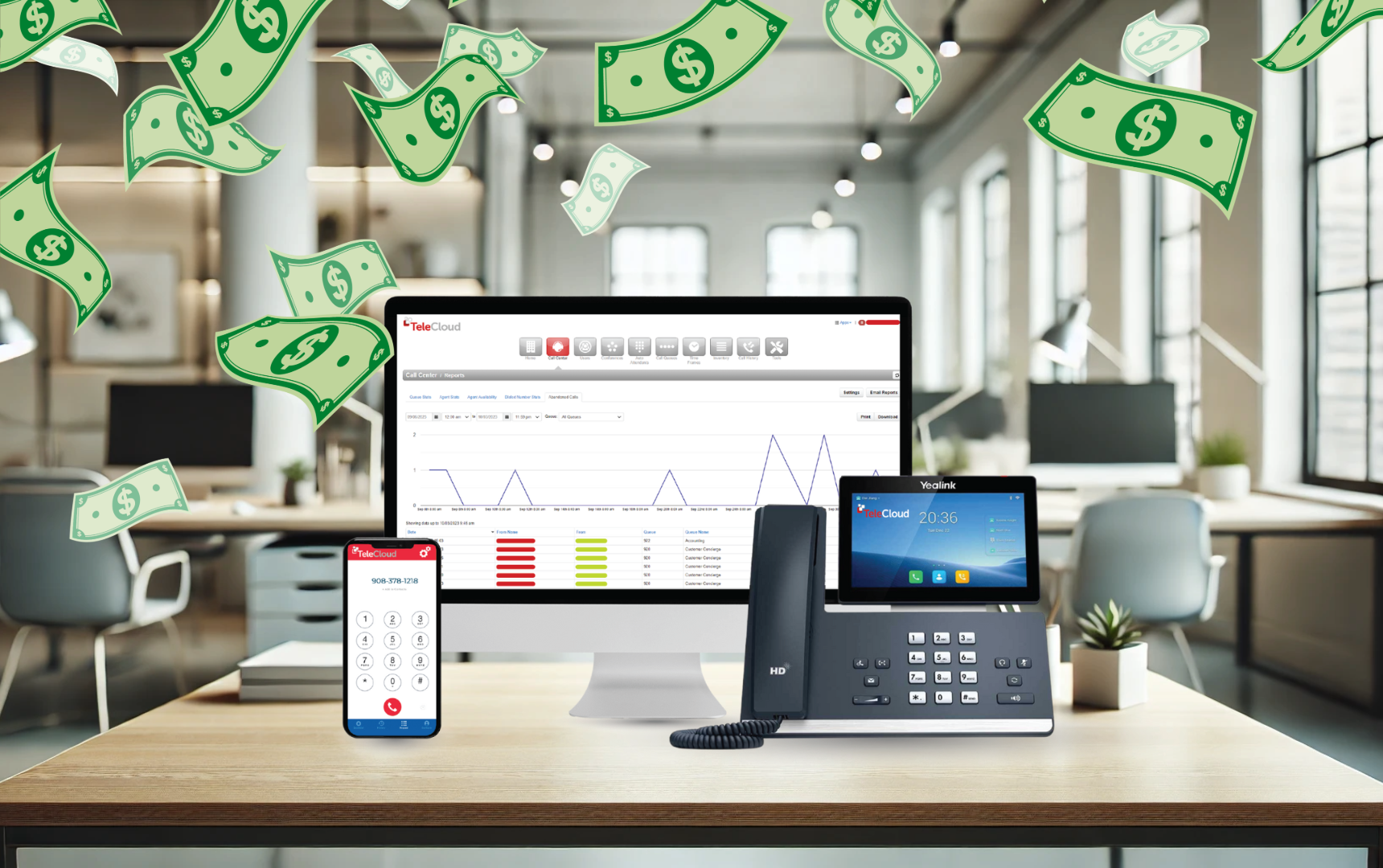
Most cloud phone systems cost $15 to $50 per user, per month in 2026. Where you land depends on the features each person needs, how many users you have, your agreement length, and whether you can reuse your current phones. TeleCloud’s plans are $14.99, $24.99 and $35.99 per user per month for teams of 10 or more. One-time setup is scoped up front and can be reduced or waived with a term agreement.
That said, the process of pricing out a phone system can feel overwhelming. Many businesses overpay for features they don’t need or get locked into rigid contracts that don’t scale as they grow.
At TeleCloud, we’ve helped hundreds of businesses cut through the confusion and design smarter, more cost-effective phone systems.
In this guide, we’ll show you what actually impacts pricing, how to spot and avoid hidden costs, and how to choose a solution that fits your business, not just your budget.
Table of Contents:
- How Much Does a Cloud Phone System Cost?
-
Can You Save Money by Re-Using Your Existing Phone Hardware?
-
How do You Choose the Right Cloud Phone System for Your Business?
How Much Does a Cloud Phone System Cost?
Cloud phone systems typically operate on a per-user, per-month pricing model, making budgeting more predictable.
What Factors Influence VoIP Pricing?
- Number of Users – More users mean a higher total cost, but volume discounts may apply.
- Features & Functionality – Some features, such as call recording and CRM integrations, may add to the base cost.
- Service Agreements – Longer-term agreements will provide better pricing for recurring and non-recurring fees (one-time).
- Hardware Considerations – Many businesses can reduce costs by using their existing VoIP-compatible phones or adopting more software technology.
By understanding these pricing components, businesses can tailor their cloud phone system to meet both their technology requirements and budget.
How Much Will a VoIP Cloud Phone System Cost You?
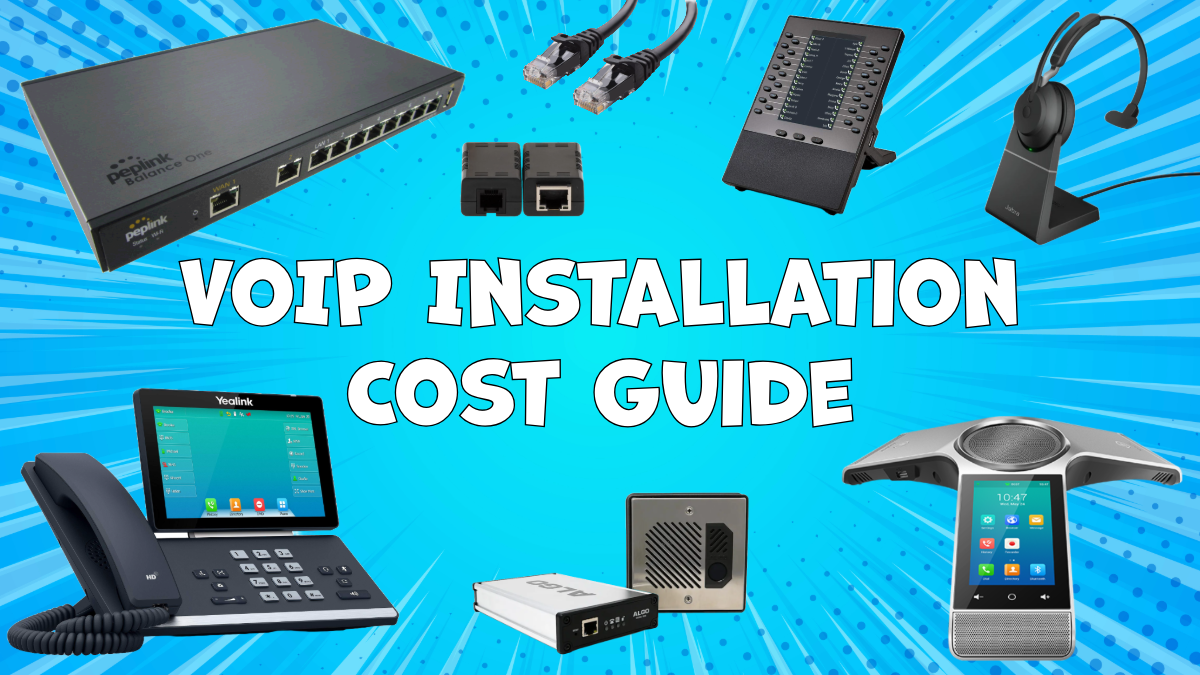
Across the industry, plans fall into three rough tiers. These are typical market ranges, not TeleCloud’s prices (ours are in the next table). While pricing reflects monthly service costs, there are one-time setup requirements such as hardware, cabling, installation, and network appliances, which can often be reduced or waived with a multi-year agreement.
|
|
Price Range |
Ideal For |
Key Features |
|
Basic Users |
$15 – $20 (/User/Month) |
Employees needing essential calling features without advanced tools |
VoIP calling, voicemail, call forwarding, basic call routing |
|
Professional Users |
$20 – $30 (/User/Month) |
Businesses needing more functionality (e.g., call recording, analytics) |
CRM integrations, business SMS, conferencing features, mobile access |
|
Premium Users |
$30 – $50 (/User/Month) |
Organizations requiring high-level collaboration and security |
Call Center Technology, AI-driven analytics, advanced reporting, multi-location support |
TeleCloud’s Plans (Teams of 10 or More)
|
Plan |
Price |
What’s Included |
|
Basic |
$14.99 (/User/Month) |
50+ features, mobile and web phone apps, voicemail to email, a direct number, unlimited calling, web portal |
|
Pro |
$24.99 (/User/Month) |
Everything in Basic, plus SMS/MMS, call recording, call log reporting, CRM and Microsoft Teams integration, and a Yealink T73W desk phone |
|
Premium |
$35.99 (/User/Month) |
Everything in Pro, plus call center agent and supervisor tools, call analytics dashboard, AI transcription and sentiment analysis, API access |
Fewer than 10 users? We have minimum options, so talk to us for a quote. Full details are on our pricing page.
How Do Other Providers Compare in Price?
Pricing structures vary across the industry; each provider offers their own packaging. Some may include more bundled features, while others could have separate fees or fewer contract incentives. It’s important to understand what’s included, how flexible the plan is, and whether long-term agreements provide meaningful savings.
| Provider | Plans | Billed Annually (Per User) | Billed Monthly (Per User) |
|---|---|---|---|
| TeleCloud | Basic to Premium | $14.99 – $35.99 | $14.99 – $35.99 |
| RingCentral | RingEX | $20 – $35 | $30 – $45 |
| Zoom | Zoom Phone | $16 – $24.50 | $18 – $29 |
| Nextiva | NEXT | $15 – $75 | $23 – $75 |
| Vonage | Business Communications | $19.99 – $39.99 (list) | Not published |
| Dialpad | Connect | $15 – $25 | $27 – $35 |
| 8x8 | X Series | About $24 – $44 (est.) | About $28 – $57 (est.) |
List prices from each provider’s website, November 2026, per user per month. Promotions, taxes and fees not included. 8x8 doesn’t publish prices; figures are third-party estimates.
What Does a Cloud Phone System Cost in Total?
Per-user pricing is only part of the bill. Here’s an example for a 20-person office on TeleCloud, mixing plans by role:
|
Users |
Plan |
Monthly |
|
10 |
Basic ($14.99) |
$149.90 |
|
8 |
Pro ($24.99) |
$199.92 |
|
2 |
Premium ($35.99) |
$71.98 |
|
20 |
|
$421.80, about $21 per user |
Before taxes and regulatory fees, which vary by state.
On top of the monthly service, plan for these one-time costs:
- Phones. None if you reuse compatible Yealink or Poly phones or use the apps. Our Pro plan includes a Yealink T73W.
- Installation and setup. On-site or remote, scoped before you sign. Often reduced or waived on a term agreement.
- Number porting. Moving your existing numbers over.
- Network work, if your office needs it for call quality.
Ask any provider for an all-in quote: monthly service, one-time costs, taxes and fees. If they can’t give you one in writing, that’s your answer.
Does Your Business Size Affect Phone System Cost?
At TeleCloud, your company’s size plays a significant role in determining overall cloud phone system costs.
- Small Businesses (5-50 users): Simple pricing plans and pay-as-you-go models allow better cost control.
- Medium-Sized Businesses (50-250 users): Scalable pricing models and bulk user discounts can provide cost efficiency while fulfilling more advanced requirements.
- Larger Organizations (250+ users): Custom pricing, dedicated support options, and lower per-user costs.
Key Consideration: If your business is growing, choose a provider with scalable plans that can grow with you.
How Do Features Impact Cloud Phone System Costs?
Cloud phone systems come with a wide range of features, but not every business needs all of them.
Essential Features (Typically Included in Base Plans):
- Mobile & Webphone Calling Apps
- Voicemail-to-Email
- Business Phone Numbers
- Unlimited Calling
- Auto-Attendants
- Call Forwarding & Routing
- Conference Bridge
- Web Portal
Advanced Features (May Require Additional Fees):
- Call Log Reporting
- Automatic Call Recording
- CRM Integrations (Salesforce, HubSpot, Microsoft Teams)
- Business SMS & Team Messaging
- Call Center & Queue Management
- AI-Powered Call Transcriptions & Analytics
Businesses should assess their needs practically and invest in features that they will actually use.
Example: A healthcare provider may need a call center with advanced call recording and compliance monitoring for sensitive patient data. In contrast, an engineering firm may only need basic call routing and voicemail-to-email.
How Does Agreement Length Affect Pricing?
The length of your service agreement can significantly impact your overall costs.
Longer agreements (36-60 months) typically offer lower per-user rates and substantial discounts on upfront setup fees, making them ideal for businesses looking to lock in savings.
Shorter agreements (12-24 months), usually come with higher one-time setup fees and fewer opportunities for seat pricing discounts. If your business is exiting or leadership is changing, the ability to adjust your service without a long-term commitment might be worth the extra cost.
Can You Save Money by Re-Using Your Existing Phone Hardware?
One major benefit of cloud phone systems is that you don’t necessarily need to purchase all-new hardware. Businesses can often reduce costs by using:
- Existing VoIP-compatible desk phones (typically Yealink or Poly models)
- Softphones (PC & Mobile Apps) eliminate the need for desk phones
- Less change management for your staff
This flexibility helps minimize upfront costs and simplifies the transition to a cloud-based system. If you need new phones, consider renting vs buying new desk phones.
Key Consideration: Before making any new hardware purchases, check with your new provider to ensure your current equipment is compatible.
Which Add-Ons & Integrations Are Worth the Cost?
Beyond standard features, cloud phone systems offer integrations and add-ons that enhance efficiency and customer service.
- CRM Integration – Sync calls with Microsoft Teams, Salesforce, HubSpot, or Zoho.
- Call Center Solutions – Advanced call queueing, analytics, and AI-powered reporting.
- Business SMS – Send and receive text messages using your business phone number.
- Video Conferencing – Built-in video calling for remote teams.
These features might raise costs, but they usually boost efficiency, enhance customer service, and grow revenue. This makes the investment worthwhile.
How do You Choose the Right Cloud Phone System for Your Business?
To keep costs low while ensuring your business gets the most value, consider these best practices:
- Assess Your Needs – Make sure you understand what features you actually need, and what features would be nice to have.
- Compare Pricing Models – Look for discounts based on contract length and user volume.
- Reuse Existing Hardware – Save money by using VoIP-compatible phones or softphones.
- Choose a Scalable Provider – Your system should be able to grow with your business.
- Service Experience - Choose a provider with a stellar reputation!
Assess your needs, compare pricing models, and use existing hardware. This way, you can keep costs low without losing functionality. Choose a scalable provider to help your system grow with your business. This keeps expenses predictable and optimized.
Is TeleCloud Right for Your Business?
At TeleCloud, we make cloud phone systems simple, transparent, and cost-effective. Our flexible pricing ensures you get the features your business needs, without unnecessary add-ons or hidden fees. We prioritize scalability, reliability, and ease of use, so your communication system grows with you, not against you.
Finding the right balance between cost and functionality shouldn’t be a guessing game. Let us help you break down pricing, explore your options, and ensure you're investing in a solution that truly fits your business.
Frequently Asked Questions (FAQ)
Is there a minimum number of users?
TeleCloud’s published pricing applies to teams of 10 or more. For smaller teams we have minimum options, so ask for a quote.
Are setup fees included in the monthly price?
No. Installation and setup are one-time costs that depend on your project, and they’re scoped and priced before you sign. With a term agreement they can often be reduced or waived.
What happens if my business grows or downsizes mid-contract?
Most scalable VoIP providers allow you to adjust user count and features as your needs change. Ask about upgrade/downgrade flexibility before signing.
Can I switch providers without downtime or losing numbers?
Yes, number porting is standard. Your new provider should assist with seamless porting and minimal disruption during the transition. Read More
How do I evaluate feature value without overbuying?
Focus on core pain points (e.g., missed calls, remote team collaboration, or call quality) and invest only in features that solve them. Read More
Do cloud phone systems integrate with CRMs and collaboration tools?
Many do. Look for providers offering native or API-based integrations with Salesforce, HubSpot, Microsoft Teams, etc.
Are there any tax or regulatory fees I should expect?
Yes, VoIP services often include taxes, e911 fees, and regulatory surcharges. Ask for a fully loaded quote before committing. Read More
What kind of support should I expect post-installation?
Look for providers with dedicated account management, live support, and onboarding services to ensure long-term success.
Vincent Finaldi is Vice President at TeleCloud, where he's worked in the telecom and voice industry since graduating from Fairfield University in 2006. He works closely with clients and partners to help businesses adopt better technology and communicate more effectively. Read Vincent's full bio, email him, or call 908-378-1218 to learn more.
Topics: